A Throwback Thursday Photograph – Miami University Circa 1968

“We didn’t realize we were making memories. We were just having fun.”
Andra Watkins

Picture

Today’s image will have little meaning to you guys, but the story on how it found its way to Throwback Thursday is a great lesson in how small the world has become.

Last Sunday morning I shared a post about hanging out with one of my old roommates from college, “Rich.”  We hadn’t been together in over 35 years, which was the last time we caught up to each other. During that visit we talked a lot about friends from our freshman year at Miami of Ohio. We’ve both lost track of so many of them. 

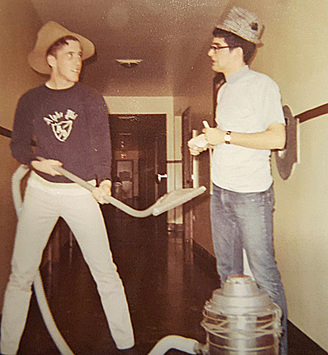
One of those was “Gary S.”  That night I jumped on Linkedin and did a quick search and there he was. I fired off an email and yesterday, just in time for Throwback Thursday, I had an response from him with two photographs. My apologies for the quality of the image. It’s a scan of an old print close to fifty years old,  but it’s good enough to make the point.

I have no idea what Rich and I were doing in the shot above. Nor do I know whose hat I stole to ham it up in the hallway. What I do know is that life is simply too short to not take the time to kick back now and then, and just laugh over those unexplainable moments from the past. 

Throwback images bring back so many memories. We didn’t have cell phones and while photographs were fun they weren’t part of our daily routine, as they are for all of us today. And, if you’re like me, those old images are all over the place in drawers, shoe boxes and files.

So, here’s my point – First, share an old image on your blog as a post to remind your readership how important photographs can become, especially if they’re moments captured by a professional. Second, take the time to track down an old friend. The farther you go back the more fun it will be to catch up.  Third, protect those images on your phone on a regular basis. Print a few of them and file them away, because years from now they’re going to be some of your most valuable possessions!


SkipCohenUniversity – SCU Blog

Posted in Photograpy How To | Tagged , , , , , , | Leave a comment

Technicolor Black and White

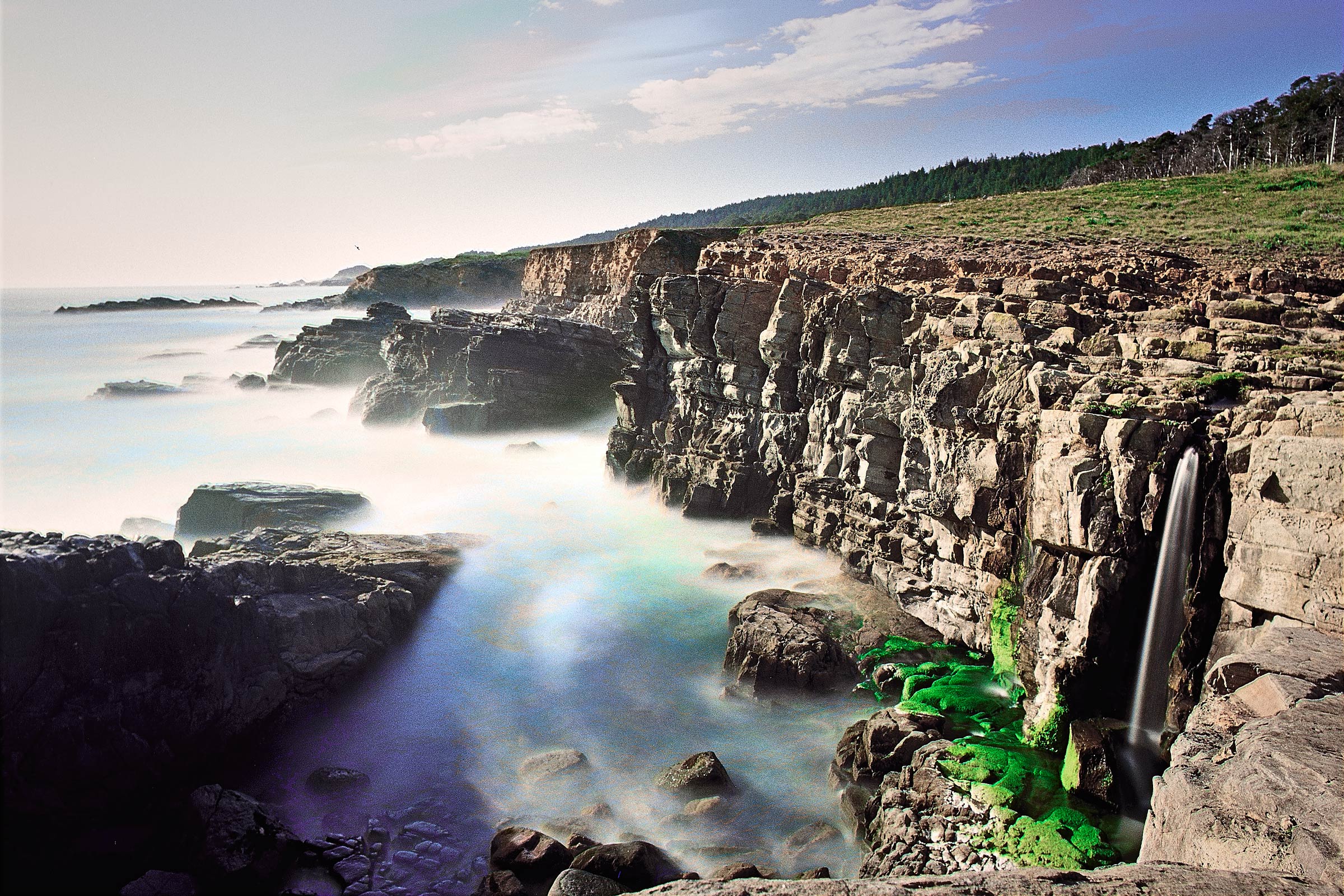
Recently I returned to one of my enduring passions: shooting film. I’m Italian and I recently moved to California. In Italy, it’s really hard to find a good lab to develop film and it’s even more difficult to find rolls of film of the brands I like. Here in the US, I felt reborn with new joy: everything is so much easier when it comes to shooting film. All over the world shooting film is getting more popular, it’s in fashion again, and it’s even possible to find photographers returning to analog, ditching digital for paid jobs. In Italy, the business of photography completely revolves around shooting digital: almost no one thinks about film anymore. So for me, it was amazing to take my four 120 rolls to the lab to discover they could be processed only after the order for the previous customer was finished… the lab told me a well-known company with a blue logo based in the Bay area had just delivered a big batch of 70 rolls for processing! I was kind of sad when I discovered my batch was delayed by 48 hours (beyond the usual 24 hours needed for developing, printing the contact sheet and scanning everything in high resolution), but I finally received my processed rolls and you can see some results in the images of this article.

Phillips Gulch Falls

Phillips Gulch Falls

As a consequence of my return to shooting film more frequently than in the past, and the priceless commodity of having a lab around the corner, I finally decided to focus on medium format, but without going all-in. I bought a Mamiya 645 AF, a Phase One 645 AF, three film backs, a Polaroid back and my three lenses in my favorite focal length range: 35mm, 55mm and 150mm (about 20mm, 35mm and 95mm respectively in the 35mm format). I have a couple more projects brewing that I’d like to develop with this gear, maybe we will talk about this in a following post.

One thing I love about shooting film is the opportunity to do some experimenting with real black and white, the silver halide one, not digital simulation! I have a pretty strong opinion about black and white and it might not be the most common one: I think shooting black and white it is so much easier than color! I would even say an excellent method to make any mediocre color picture interesting… is to convert it to black and white! I know… you might disagree with me.

Black and white photography is extremely simple. It’s simple for our brain to decipher and understand. In digital, it becomes slightly more complex to create, retouch or edit in black and white. In my opinion it’s more challenging to create really stunning images using color photography, as color adds many more complex layers for interpretation. And, things get much more complicated when you try… to do color photography with black and white film! But, I like challenges and this is my current one!

It might sound weird, but what I’m talking about is not only possible, it is a concept theorized just after the invention of photography itself by the physicist James Clerk Maxwell. In 1855, Maxwell was the first to suggest the possibility of creating a color image using the additive RGB color space through the combination of three different black and white images using projection through colored filters (you can see some examples of my interpretation of this method in the article’s pictures). This technique was used also commercially (frankly without huge success) starting in 1897, after Frederic Eugene Ives‘ invention of the Kromscop projector in 1894, a method he used to document the disastrous effects of the earthquake in San Francisco in 1906. Until then, color photography was created by taking three separate shots in three different moments and then combining them. The first real camera to take pictures with this method in one single shot was invented by the Russian photographer Sergey Prokudin-Gorsky in 1902.

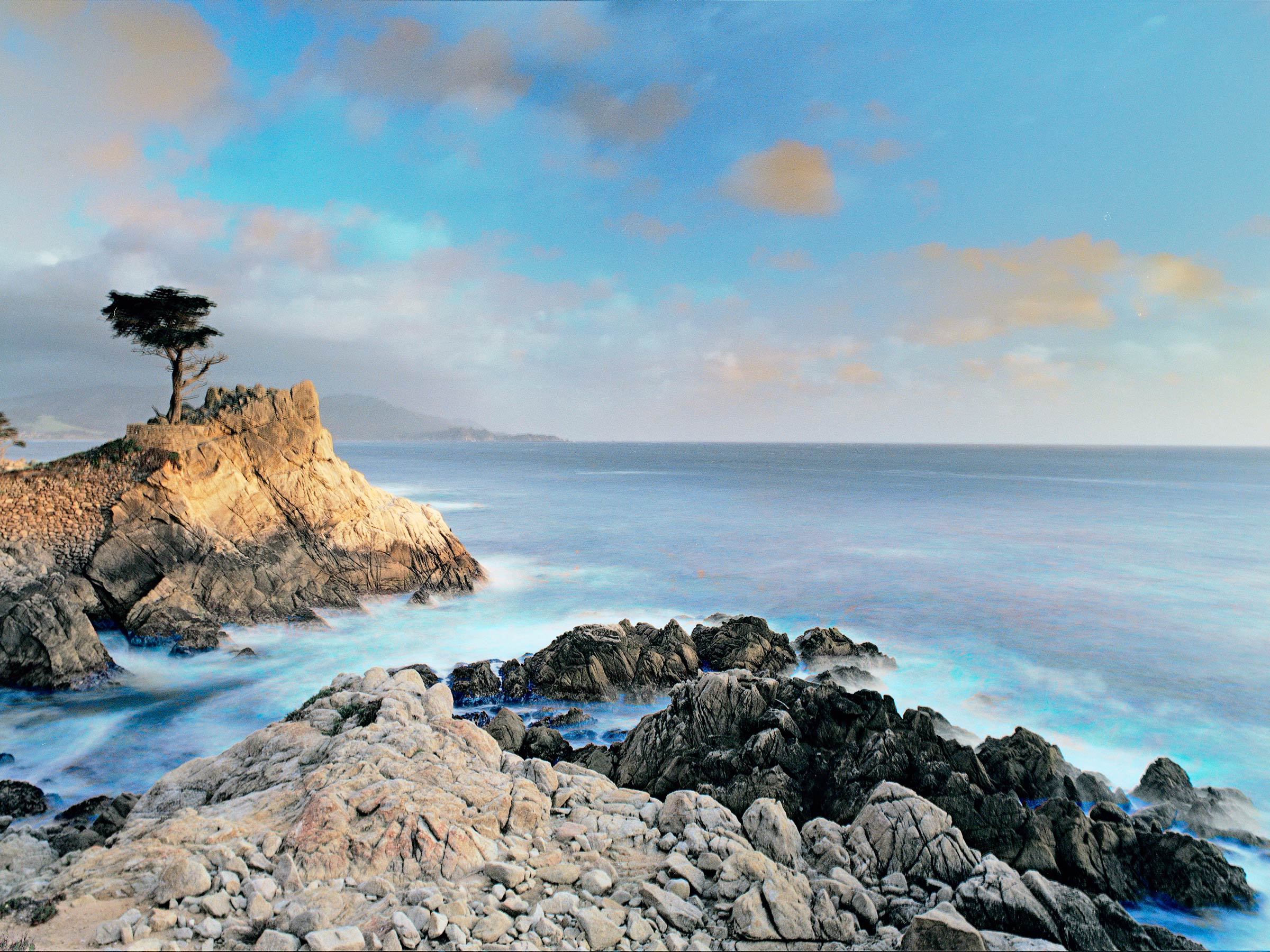
The Lone Cypress

The Lone Cypress

Capturing the moment through three separate shots was never easy. Already at that time, the world of photography was dominated by the need for speed and the request to take images of quickly moving subjects. This was the main reason this process never became popular. Ironically it was in the field of cinematography, however, that this principle was applied very successfully. In 1916, Technicolor invented a post-production process that combined two different reels shot on black and white film through a green and red filter respectively (Technicolor Process 1 – RG). Obviously this process allowed the rendering of only a very limited color palette and they even employed specialized professionals to assure make-up and clothes respected the available gamut on the set of movies. Only in 1924 was the process finally perfected to include the whole color spectrum which was called the Technicolor “process 4 – RGB”. That was the process which was to give Technicolor the prestige it enjoyed and would lead, even today, to most people associating Technicolor as a synonym for colorfulness. The process 4 was a post-production technique that involved the binding of the separate black and white film footage to get color projection in theaters. The film was exposed using a custom cinecamera running the three rolls of film simultaneously through a complex series of color filters, mirrors and prisms.

By this point you might be asking yourself “Why is this guy taking me back through the history of photography?”

The answer is easy! I’m so fascinated by color photography and by this amazing analog technique that I decided to study it more and tried to replicate it with a twist of modernity, which I would like to share with you. I’ve just started, but the results so far are definitely encouraging and interesting!

I decided to combine this personal research with another passion of mine: long-exposure landscape photography. Landscape photography is really ideal for this purpose because the subject tends to be amazingly steady, or it doesn’t move at all, especially if you “erase” any movement using long-exposure techniques you get the perfect conditions!

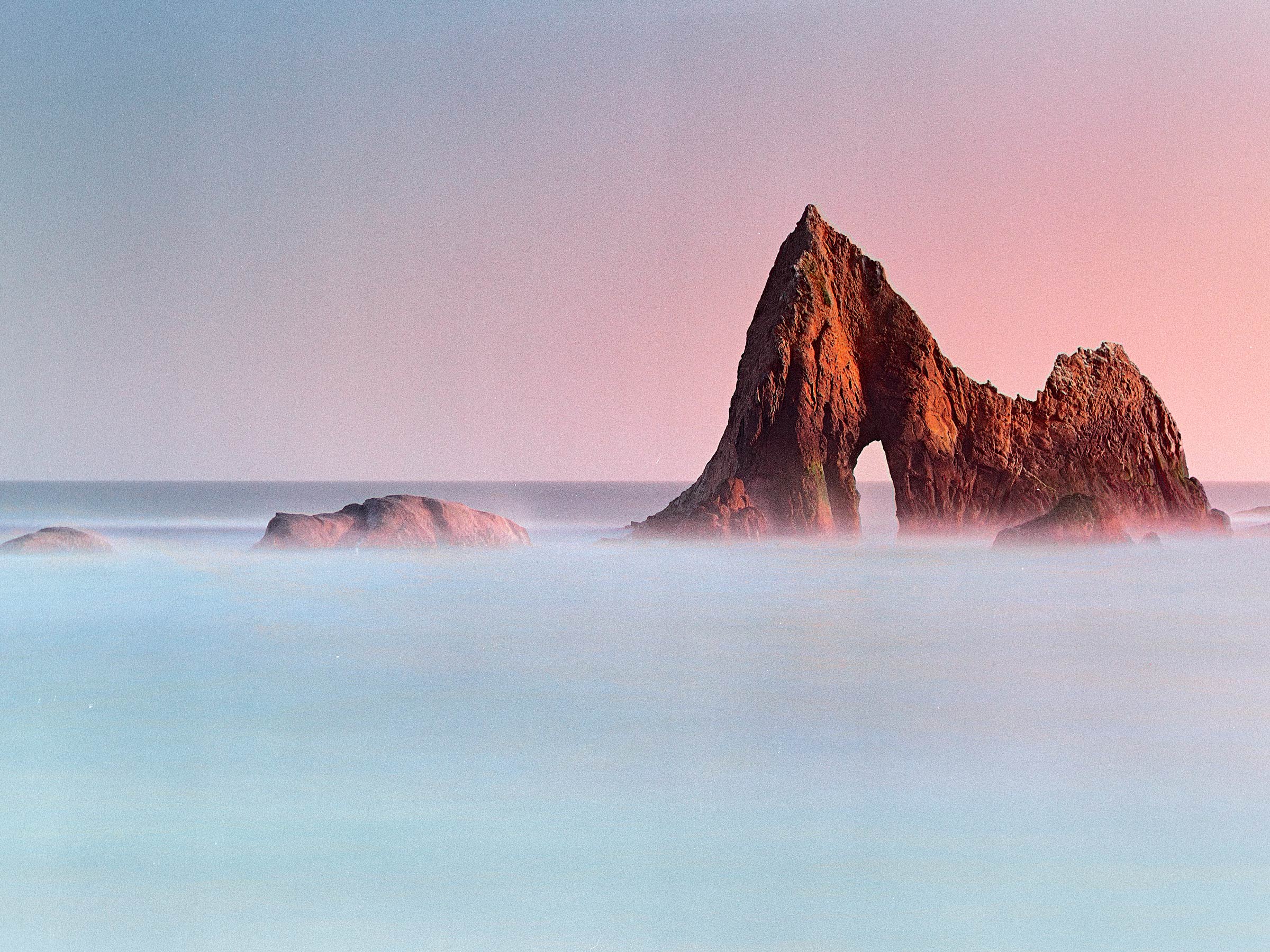
Martins Beach

Martins Beach

If you are familiar with the concepts behind film photography you know the problem the reciprocity failure brings when using film for long exposures: as light becomes more scarce, the silver halide grains residing in the film will be less uniformly struck by photons, causing a steep drop in density after a few seconds of the needed exposure. Sometimes after just a second you have to operate corrections and with some color films you can have a noticeable color shift. Luckily a fantastic film made by Fuji is still available on the market which requires no compensation at all until it’s exposed more than 120 seconds: the FujiFilm Neopan ACROS 100, I’m in love with it!

Today, everything is much easier and, thanks to Adobe Photoshop, complicated gear and projectors are no longer needed to enjoy these kinds of images. The only thing you need is to assign each black and white shot taken through a colored filter to one of the RGB channels of an image! Take three black and white pictures using a red 25, green 58 and blue 47B filter respectively. My favorite filter brand is NiSi, particularly their V5 filter holder (this, combined with their glass ND IR filters, produce exceptional images). However, NiSi do not produce these kinds of color filters, so I had to get the Formatt Hitech ones (cheaper than Lee resin filters and better overall quality in my own opinion).

Not satisfied by the results of the classic process known as “Tri-Chrome” and annoyed by some ghost effects on my pictures, I evolved the technique a little bit and am now using a process I call “Technicolor Frequency Separation”. For my shots, I separated high frequencies from low frequencies, and processed color and luminance separately. It’s something quite popular in photo retouching for beauty shots, but I took advantage of it in pre-production while shooting! I usually shoot four pictures on FujiFilm Neopan ACROS 100 and got the results you can see in the picture below. Isn’t it cool?!

Martins Beach Channel Separation

Martins Beach Channel Separation

The first shot (for sunset shots) is used for the luminance channel (or the last shot for sunrises). I process my images in a mix of RGB and LAB and I use the other three shots, taken through color filters, to create the RGB color mix. The process is done in Photoshop after I develop and scan the negatives.

What do you think about this technique? Isn’t incredible what you can achieve processing four separate black and white film frames? Isn’t it magical how you can get color out of pure black and white silver halide film? If you are curious about this technique or you’d like to share something about similar experiences you might have had I’d be happy to answer questions in the comments below! I’m can’t wait to shoot some more 120 rolls to refine this technique!

Happy shooting,
Simone Conti


This guest post was submitted by Simone Conti, a professional photographer from Italy, currently living in California. You can see more of his work at his website.

The post Technicolor Black and White appeared first on Photography Life.

Photography Life

Posted in Photograpy How To | Tagged , , | Leave a comment

Wrapping up a Project With One Last Memory-Maker

Over the weekend I received an email from my good buddy, Nick Vedros. It contained one sentence and the animated image above.

                            “Shot at the end of yesterday’s long project…of the client, agency, creatives, and crew.”

Here’s why I chose to share it in a blog post:

Think about some of the bigger projects you’ve been involved in. Maybe you were part of a team covering an event or an unusually large wedding with make-up artists and hair stylists, a couple of videographers and a few photographers.  Or, perhaps you were working on a more commercial shoot like the one Nick shared above. How much fun would it be to have one classic image of everyone involved in the project?

I’m not sure whose idea the image above was, but if you know Nick, he’s all about having fun. He’s a work-hard-play-hard artist and every session for his team, and his clients becomes memorable. Making memories is his signature. And, he never compromises on the quality of anything – from his images to the relationships with clients, associates and friends!  Check out his website to see more of his work.

So, the next time you’re part of a team working on anything, not necessarily involved in photography, remember to bring everybody together for one last image – the memory-maker of working together! It’s a classic image and whether you save it for a Throwback Thursday post in the future or use it for blog content to talk about an event you’re involved in, it’s the perfect way to wrap things up.

P.S. By the way, that’s Nick on the bottom row, the first one vertical in blue jeans and a blue shirt.

SkipCohenUniversity – SCU Blog

Posted in Photograpy How To | Tagged , , , | Leave a comment

Sunday Morning Reflections: Sharing Your Dreams

Picture

© glisic_albina

It couldn’t be a more typical Sunday morning. As usual I still can’t find a way to sleep past 7:15. Sheila’s out cold and even Molly the Wonder Dog doesn’t want to be awake and is curled up in a corner of my office.  As I was trying to decide how to go off track from photography this morning, I decided to just open this great little quote book I have and write about whatever came up. Here’s the first quote I randomly turned to:
It takes a lot of courage to show your dreams to someone else.
Erma Bombeck
It couldn’t be more perfect for what I’ve been feeling lately and whether it’s totally coincidental or some sort of Sunday morning divine intervention, it’s the perfect thought to share.

There’s something that’s happened as I’ve gotten older – I’ve become more fearless at sharing things personal. I’m not afraid to share my thoughts and dreams, because I’ve already experienced rejection and emotional pain in my life. So, what’s the worse that could happen? I’ve been through enough to know there is no such thing as failure, as long as I get back up. I’ve learned life is simply too short to deal with negativity. And, most important of all, I’ve learned everything always works out for the better.

I was with one of my roommates from college last weekend and he said something that’s stuck with me all this past week. “The older we get, the faster time is flying by.”  Well, that could be what my driving force is with everything I do these days.

Knowing how fast time is flying by, I rarely waste it. On the business side I love my job. I love what, with help from so many of you, we keep building with SCU. At a time when most people slow down, for me that would be giving up – I’m simply not done yet. Every day I’m learning something new and I’m constantly blown away by how small the world has become thanks to social media.
 
On the personal side, maybe that’s why, while it hurts now and then, I just can’t take the time to care what my dysfunctional family feels about the choices I made in my life over the last few years. Seriously, I’ve been separated/divorced for almost nine years and they’re still passing judgement. I just don’t want to waste the time and that takes me to one more quote:

Life is short. Don’t waste it with negative people who don’t appreciate you.
Keep them in your heart, but keep them out of your life.
QuoteAddicts.com
That brings me full circle this morning and back to how important it so share your dreams. A dream never shared will eventually just fade away and die.

So, on this beautiful Sunday morning share a dream with those friends and family closest to you. Go for one of those therapeutic hugs lasting eleven seconds or more with one of your dream-sharers. Make it a day filled with, as sappy as it sounds, a smile on your face and a song in your heart. (Okay, I’ve gone over the edge and I’ll lose readers with that last line, but as nauseating an expression as it is, think about it – it really is accurate and you know when you’re talking to somebody with a song in their heart.)

As my good buddy Matthew Jordan Smith closes every post with, “ALWAYS dream big!”

Happy Sunday everybody – make it a GREAT one! 

SkipCohenUniversity – SCU Blog

Posted in Photograpy How To | Tagged , , , , | Leave a comment

Lets Get Digital Photography

Digital Photography is here to stay. The demise of film photography is now very apparent as more and more companies ditch selling film. The film photographer is now becoming the 21st century version of the dinosaur. For those people out there who need convincing then read on.

Convenience is the watch word. Digital cameras are so advanced that using them is a breeze. From the complex Single Lens Reflex camera to the camera on your phone, all you have to do is point and click. If you wish, the camera will do all the work for you. Digital cameras can fit in your pocket, your purse, your glove compartment, anywhere you like. They are easy to use and only require a data card that can be used again and again.

Digital cameras give you instant feedback so save you having to wait to review that shot. If you don’t like it, bin it. It’s that simple. No more expensive failed prints that end up in the rubbish bin because the head was chopped off or the sun burnt out the image. Review the shot and take it again and again until you get it right.

What about printing? Well you can print instantly if you like. Down load the files onto the computer, choose the shots, pop in the photo paper and print. Some cameras even have the capability of just slotting the camera directly onto the printer. How easy is that? With the old film cameras you either have to finish the film and have all the photos printed or wait until you use the camera again. With a standard film camera you can’t just go out and take a couple of shots then have them printed. However with Digital you can take one photo and print it, or take a hundred and print them, the amount is your choice.

The joy of digital photography is that you can share it with others. Once downloaded onto your computer the photos are digital files. Therefore they are not only stored electronically they can be moved around in many ways. The internet, a click of a button and your photos appear on the other side of the world in an instant. They means you Aunt Sally in Australia can have instant photos of her nephews and nieces in England within a few minutes of them actually being taken.

The internet can also be used to order your photos on line, selecting the photos only you want printed.
The CD or DVD Make copies on disk and review your photos on TV or a friends computer, You can make your own film show of an event or holiday, babies first steps or that high school graduation can be shared with all your loved ones.

The Digital card, stick or pen. These can be used to carry hundreds of photos on a device no bigger than a coin. Once inserted into a USB slot or card slot on a device such as a pocket PDA, Digital Photo frame or a friend’s computer, YOU SIMPLY DOWNLOAD THE FILES AND VIEW.

Digital card capacity has become enormous, being able to hold hundreds of pictures on just one card no larger than the nail on your finger. A 1GB card can hold 800 jpeg files. Today’s modern photo software packages give you an editing studio in the shape of a standard computer. Whether it is a lap top or a large desk top model, it doesn’t matter. You can do what you wish with your photo. Remove scratches, Dim or darken, remove red eye, make people look thin or fatter and even remove the spot off the end of your subjects nose. However be careful not to alter the image too much or otherwise the picture that you took will become so remote from the actual subject that it will no longer be recognizable as the photo seen in the viewfinder.

Your photos can also be used to help your job or business, because the images are digital files it makes it easy for them to be transferred to equipment that can produce commodities such as “T” shirts, advertising material, posters plates, mugs, key rings and so forth. You can even use them in your company presentations, giving a visual aspect to the show. That always helps to keep people alert and awake.

Once you have your bought your camera and a digital card, that is all the expenditure taken care of other then printing photos. The memory card can be used many times over were as once film is used, that is it, it needs to be replaced. Film is an expensive commodity and getting more expensive by the day. This is due to the materials required to produce film and the way it has to be stored and contained. Some companies won’t even stock film anymore due to the lack of demand. The chance of finding specialized film has become incredibly difficult. Yet with digital you can produce photos in color, black and white or even sepia at no extra cost.

Technology had advanced so quickly that even camera phones now enjoy 3 to 5 mega pixels or more. The average digital camera today starts on 5 mega pixels or more with SLR cameras being well into double figure numbers. This sort of quality is far in excess of what an average photographer needs. The standards that an average photographer enjoys today are the exclusive standards that professional film photographers enjoyed only a few years ago.
Most digital cameras also enjoy telephoto capabilities giving the user so much more scope then a fixed standard lens.
Lenses are better quality and with a SLR camera you have the ability to choose you lens in order to get the best photograph possible.

Don’t be a dinosaur change to digital photography, you won’t regret it.

Digital photography has really paved way for making photography convenient and easier for all and at the same time achieving high quality photos. It just shows that there’s no better time to opt to digital photography than now.

Happy clicking!!!

David and Mandy Harte have dedicated their websites to give others the opportunity to learn from their experience. Their websites have tips, advice and articles that inform and show people how to help improve their quality of life. David is a keen hill walker and photographer whilst Mandy is in to health and body. Both enjoy travel and outdoor recreation. Please feel free to visit their sites and enjoy the free advice given.
http://www.free-sky.net
http://www.dreamsanddesires.net

Posted in Photography How To | Tagged , , | Leave a comment