Building a Business in Photography is a Team Sport

Picture

© napatcha

 “Great things in business are never done by one person.
They are done by a team of people.”

Steve Jobs 
I shared the quote above earlier in the week on Twitter, but the more I’ve looked at it, the more significant it’s become. 

While photograph by itself is an individual contribution left to the vision of the artist, building a business around imaging is a team sport. You simply can’t do it alone. For many of you who are solo artists, that might seem like an insurmountable challenge, but it just takes a little focus. 

You might be a one person operation, but you do have a team you need to focus on to get the job done.

  • Your Family and Friends: It might seem incredibly simplistic, even stupid to suggest, but so many of you leave your family and friends in the dark about what you’re trying to accomplish with building a business. Often there are some good reasons, especially with close family members who just don’t get it. They don’t understand your passion and quest to be an artist. You don’t need negative people on your team, but don’t just exclude everybody. Look for that one close friend or family member who seems to understand and keep them in the loop.
  • Manufacturer/Vendor Support: Here’s where your network comes in. You should know one person at every manufacturer or vendor whose products/services you use. This is why it’s so important to attend every trade show you can work into your schedule. 
  • Retail Support: Yesterday I ran a post with a slide show of images from Tamron USA’s most recent photo contest. They recognized the sales associates at their retailers. The crew behind the counter at your local retailer will often be the unsung hero helping you through so many business and technique challenges. Why? Because they know everybody in the industry. They have access to all the reps at the various manufacturers of the products they sell. Many of them are also talented artists in their own right.
  • Staff: At some point, your business is going to grow enough to hire some help, whether part-time or full-time. Keep them plugged into your plans. If they’re in the dark, they can’t be there for you when you need it most. Do a weekly meeting every Monday or Tuesday morning and talk about the week ahead. It’s not easy to do, and you’ll miss a week here and there as life gets in the way, but it’s so essential to building a strong team.
  • Other Photographers: Yes, I’m talking about your competitors. Work to build relationships. Be active in the local affiliate, camera club, and photography guild. Build your network with artists who compliment those skills you might still be working on. Remember, there are only so many days you can work and sooner or later a client is going to want to hire you when you’re already booked. Work to build a network of artists you can refer business to and then make it reciprocal. 

Here’s the bottom line – sure you can run a business and be a solo act, but your creativity is going to be stifled by the operational workload. Your time is going to be absorbed by tasks you could delegate. Before you know it, your dreams are going to, one by one, move to the back burner because of the pressure of being alone.

Don’t be afraid to ask for help. Even if you’re just starting out, there are potential team members out there if you just take the time to think about your goals and the people in your network.  And yes, I’m one of them – if I can help you know where to find me!

SkipCohenUniversity – SCU Blog

Posted in Photograpy How To | Tagged , , , , | Leave a comment

Sony RX100 V Announcement

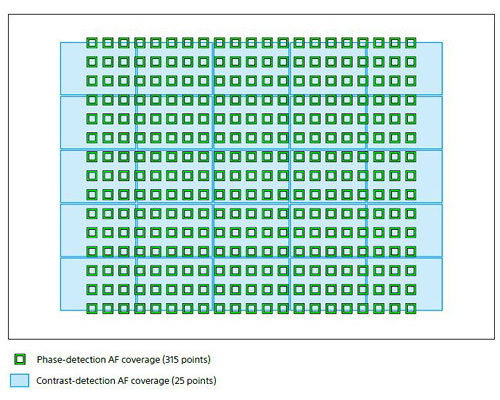
In addition to the A6500 mirrorless camera, Sony has also announced an update to the RX100 and the new iteration is now called Sony RX100 V, as expected. While most of the camera specifications stayed the same (20 MP 1″ sensor and 24-70mm equivalent f/1.8-f/2.8 lens), the new RX100 V gains on-sensor phase-detection system to improve its autofocus performance. With a total of 315 phase-detection autofocus points spreading to over 65% of the frame, the camera snaps into focus almost immediately, at record-breaking 0.05 seconds.

Sony RX100 V Phase Detection AF Coverage

In addition, there is now a faster processor to increase the overall speed of the camera and increase its buffer performance – the camera can shoot up to a whopping 24 fps at full 20 MP resolution, while continuing to maintain autofocus operation. The buffer can accommodate up to 150 RAW + JPEG images, allowing the camera to shoot continuously for over 6 seconds, which is very impressive (just as a comparison, the fastest DSLR on the market today can only handle up to 14 fps). So if one wants to shoot 6K video for 6+ seconds, it is now possible to do it on the RX100 V.

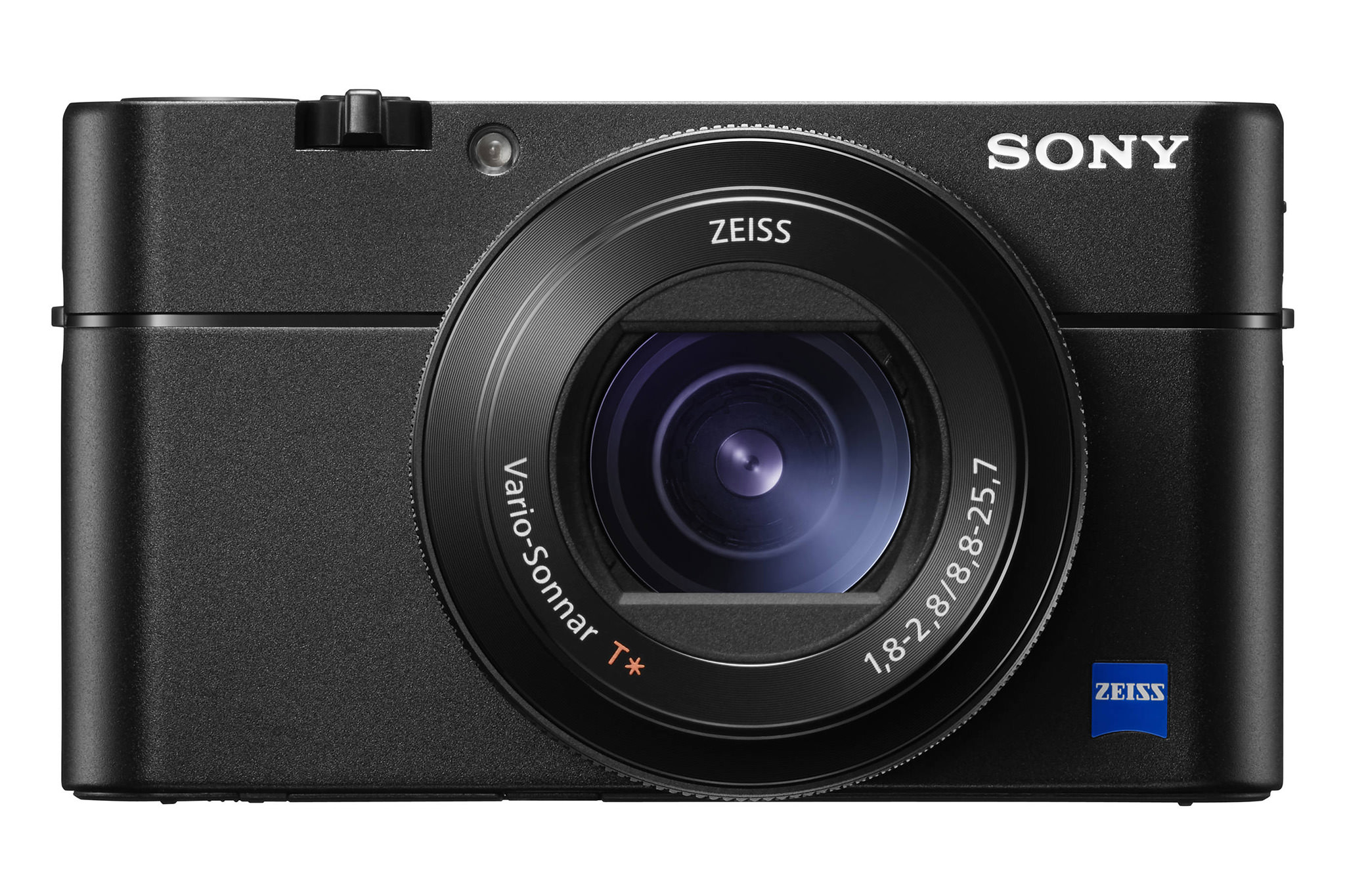
Sony RX100 V

The Sony RX100 V also improves in the video department. It can now shoot 4K video from a larger sensor region, oversampling by approximately 1.7x for very detailed video footage. One can also capture slow motion video at up to 960 fps at longer duration – the Sony RX100 V can shoot up to 8 seconds total, which is twice longer when compared to the RX100 IV.

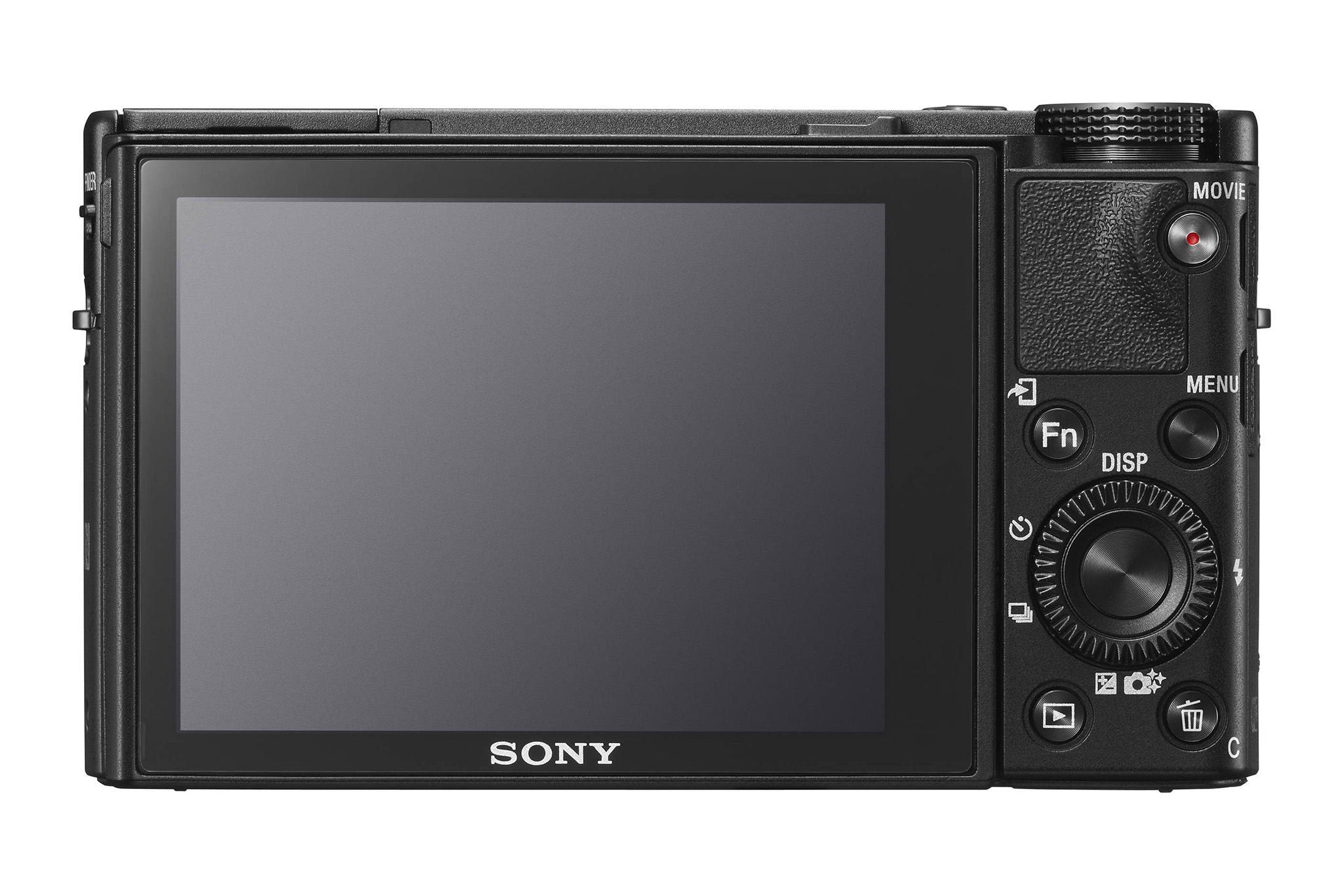
Sony RX100 V Back

And for those into videography, the camera now sports both S-Log2/S-Gamut and Picture Profiles, something we normally see only on higher-end mirrorless and DSLR cameras. The RX100 V will be priced at $ 999 once it hits the stores at the end of the month. Once the camera is released, I expect the price of the previous-generation RX100-series cameras to drop, especially closer to holidays. If you would like to take a look at the feature comparison between the various models, check out my Sony RX100 series camera comparison, which has now been updated with extra information from the RX100 V.

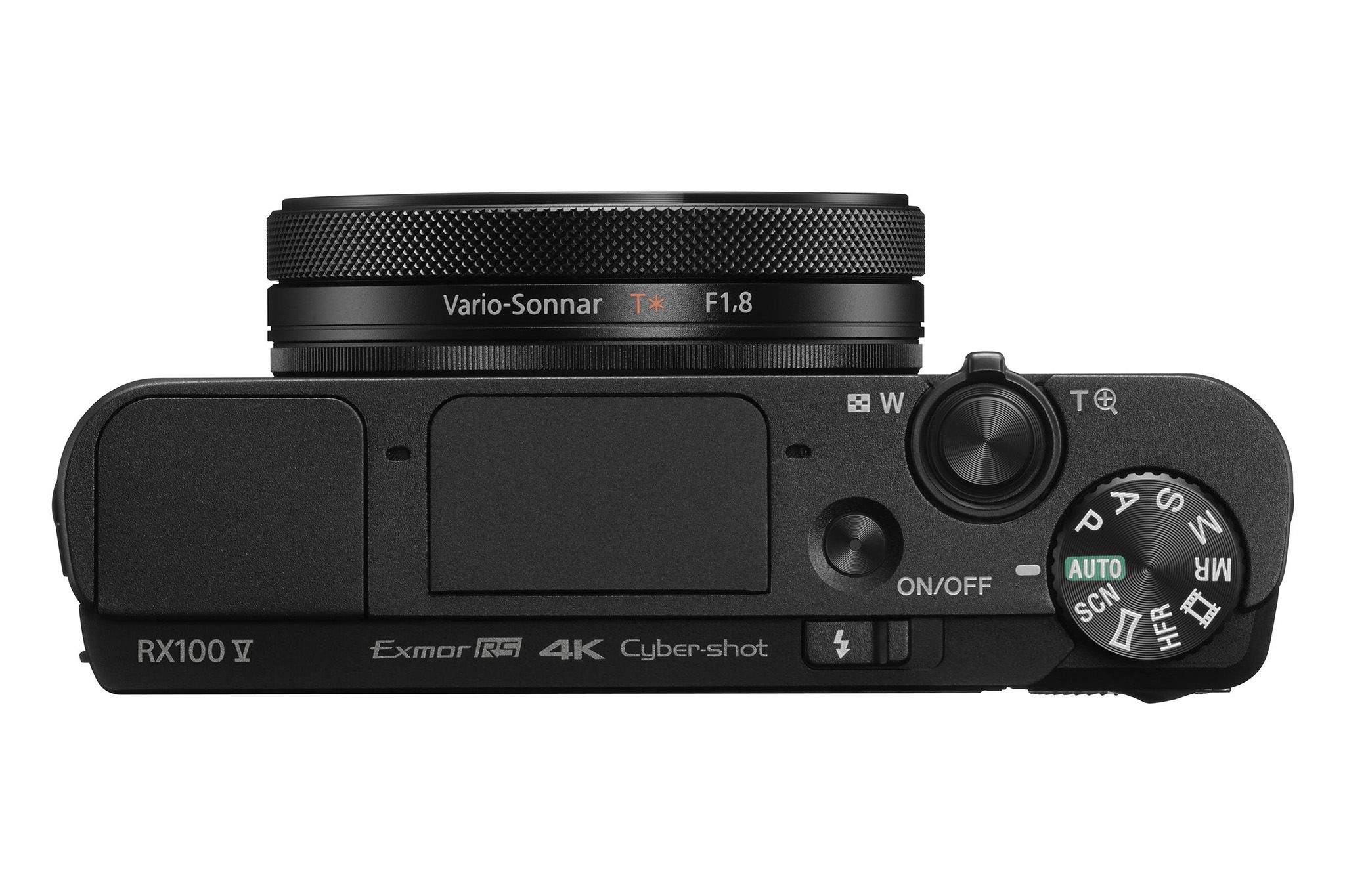
Sony RX100 V Top

Official Press Release

Here is the official press release from Sony:

NEW YORK, Oct. 6, 2016 – Sony – a worldwide leader in digital imaging and the world’s largest image sensor manufacturer – has today announced a new flagship model for their popular Cyber-shot RX100 series of compact cameras, the RX100 V (model DSC-RX100M5).

The exciting new camera brings a new level of AF performance and speed to today’s compact camera market. It is equipped with a Fast Hybrid AF system with the world’s fastest AF acquisition at 0.05 seconds and world’s highest number of AF points on sensor with 315 points covering approximately 65% of the frame. The camera can also shoot continuously at speeds of up to 24 fps – the world’s fastest for a compact camera – at full 20.1 MP (approx. effective) resolution with AF/AE tracking for up to 150 continuous shots.

The RX100 V is equipped with a newly developed 1.0-type stacked Exmor RS™ CMOS sensor with a DRAM chip, a ZEISS® Vario-Sonnar T* 24-70mm F1.8 – 2.8 large aperture lens and an enhanced image processing system with a new front-end LSI chip that maximizes processing speed, expands the memory buffer and optimizes image quality, in particular at high ISO settings. The camera also features 4K video recording with full pixel readout and no pixel binning, super slow motion recording at up to 960 fps with extended recording time and more.

“Featuring a level of power and performance that has never before been achieved in a compact, the new RX100 V redefines what it means to be a ‘pocket camera’,” said Neal Manowitz, Vice President of Digital Imaging at Sony Electronics. “This camera is yet another example of Sony innovating to a level far beyond what exists in the conventional marketplace.”

Fast Focusing, Fast Shooting
A first for Sony’s RX100 series of cameras, the new RX100 V model features a Fast Hybrid AF system that combines the respective advantages of focal-plane phase detection AF and contrast detection AF and ultimately enables the camera to lock focus in as little as 0.05 seconds. This high speed focusing is a perfect complement to the 315 dedicated AF points that cover 65% of the sensor, and ensures that shooters will be able to capture their intended subject with high speed and accuracy, even if it’s moving rapidly in unpredictable directions.

Additionally, processing speed has been greatly enhanced through the addition of a front-end LSI that perfectly supports the camera’s BIONZ X® image processing engine. These two components combined with the powerful AF system allow the camera to shoot continuously at speeds of up to 24 fps 3 at full 20.1 MP (approx. effective) resolution for up to 150 shots with AF/AE tracking. Viewfinder blackout between shots has also been minimized in this high-speed shooting mode, which greatly improves photographers’ ability to follow fast action and capture the decisive moment. Silent shooting is also available in these high-speed modes as well.

Other advancements to AF performance on the new RX100 V include the addition of AF-A mode, which allows the camera to automatically switch between continuous and single-shot AF modes. Users can also manually select if they’d like the continuous AF and phase detection AF areas to be displayed live on screen while they are framing a shot.

The RX100 V also has a high speed Anti-Distortion Shutter (maximum speed of 1/32000 second) that minimizes the “rolling shutter” effect commonly experienced with fast moving subjects. This fast shutter speed also allows the camera to capture sharp, crystal clear images with a wide open aperture at brightness levels up to EV199. Shooting at wide aperture with the fast shutter speed allows photographers and videographers to capture beautiful content with sharply focused subjects and defocused backgrounds under some of the most difficult, bright lighting conditions.

New on the RX100 V, users can freely select the initial magnification ratio when shooting in a mode with Focus Magnifier, and can select between “focus point” and “center of display” for the location of Focus Magnifier.

Professional Movie Functionality
The pocket-friendly RX100 V is packed with a variety of video capabilities that will satisfy even the most demanding video enthusiasts.

With Fast Hybrid AF, the focal plane phase detection AF sensor ensures accurate focusing and tracking performance, even for the severe focusing requirements of 4K movie shooting. AF drive speed and AF tracking sensitivity can also be adjusted via the menu system, giving shooters plenty of flexibility based on their focusing preferences.

In 4K mode 6, the new RX100 V utilizes full pixel readout without pixel binning to ensure that all the finer details of 4K video are captured with minimal moire and ‘jaggies’. These high-quality results are achieved through use of the XAVC S codec, which records video at a high data rate of up to 100 Mbps during 4K recording and 50 Mbps during full HD shooting.

Additional professional caliber video features include Picture Profile, S-Log2/S-Gamut, 120p HD Full HD mode and more. Users also have the ability to manually select a frame from a recorded movie and save it as a still image file of approximately 8 MP during 4K shooting or 2 MP during HD shooting.

The RX100 V is able to record super-slow motion video at up to 40x slower than the standard rate, and can do this for about twice as long as the RX100 IV model. This extended time allowing users to capture a series of high-speed, fleeting moments of action with incredible detail, resolution and clarity.

Prior to shooting, users will have the ability to choose among 960fps, 480fps and 240 fps frame rates and among 60p, 30p and 24p playback formats to optimize the recording to fit the speed of the moving subject, with the option to use the movie record button as a ‘start trigger’ to begin recording once button is pressed or ‘end trigger’ to record footage up until the button is pressed.

Pocket-Friendly Design, Premium Performance
The new RX100 V maintains the convenient pocket-sized design of the remainder of the RX100 family and is equipped with a high-contrast 2.35 million dot XGA OLED Tru-Finder™, ensuring true-to-life image preview and playback functionality. The EVF conveniently retracts in and out of the camera body based on user preference, and features optics with ZEISS® T* Coating.

The new camera is also Wi-Fi® and NFC™ compatible and can access Sony’s growing range of PlayMemories Camera Applications. Learn more at www.sony.net/pmca.

Another convenient addition is the ability for users to freely set the leading three characters of saved file names for easier sorting and organization.

There will also be a new underwater housing (model MPK-URX100A) that will be available as a separate accessory for the RX100 V and all other RX100 series cameras. Designed exclusively to fit the RX100 cameras, the housing features a depth level of 40m/130ft.

Pricing and Availability
The new Sony Cyber-shot RX100 V (model DSC-RX100M5) compact camera will ship this month for about $ 1,000 US and $ 1,250 CA.

The new underwater housing (model MPK-URX100A) will ship in November for about $ 350 US and $ 450 CA.

Both products will be sold at a variety of Sony authorized dealers throughout North America.

A variety of exclusive stories and exciting new content shot with the new RX100 V camera and other Sony products can be found at www.alphauniverse.com , Sony’s community site built to educate, inspire and showcase all fans and customers of the Sony α brand.

Pre-Order Information

You can pre-order your copy of the Sony RX100 V from our trusted partners, B&H Photo Video and Adorama:

  1. Pre-Order Sony RX100 V for $ 998 from B&H Photo Video
  2. Pre-Order Sony RX100 V for $ 998 from Adorama

The post Sony RX100 V Announcement appeared first on Photography Life.

Photography Life

Posted in Photograpy How To | Tagged , , | Leave a comment

Sony A6500 Announcement

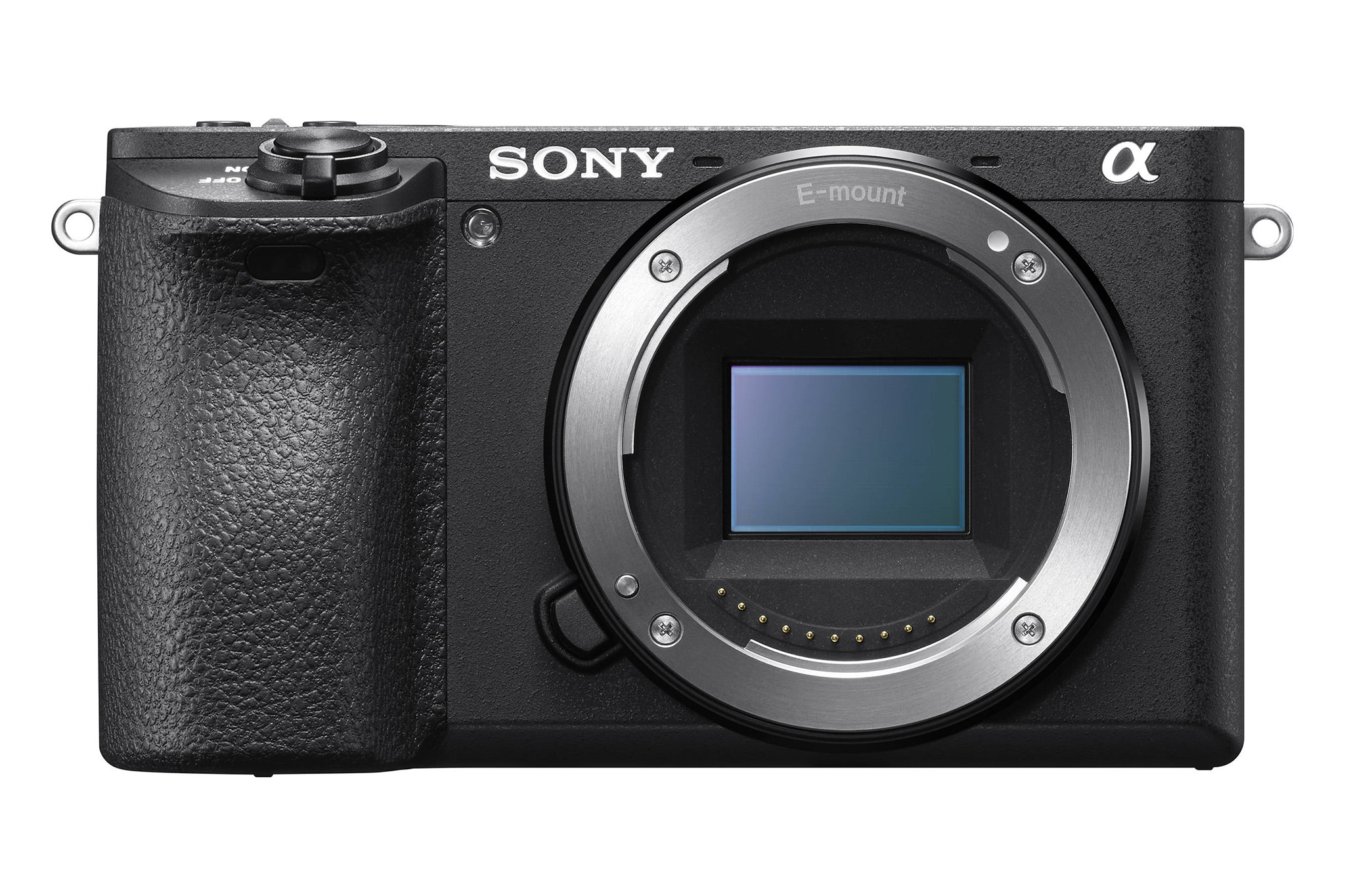
Without a doubt, Sony has been flooding the camera market with camera and lens announcements in the past few years. It has not even been a year since the company announced the Sony A6300 back in February and we already have another iteration of the camera in the form of the Sony A6500. I am not sure what the deal is with skipping iterations, but Sony went from A6000 directly to A6300 (skipping both A6100 and A6200) and it looks like there won’t ever be a Sony A6400 either. So why did Sony announce the A6500 this early? Based on the camera specs, one might think that Sony rushed with the A6300 in the first place, but looking at the price and the list of features, it appears that the A6500 isn’t meant to be a replacement for the A6300, but rather an introduction to a higher-end mirrorless camera. If we had NEX-3, NEX-5 and NEX-7 series cameras before, with a clear difference in features and price, now the higher model number is the indication of a superior camera. At $ 1,400, the A6500 is priced $ 400 higher than the A6300, but what exactly does the camera gain in comparison? Let’s take a look at all the new features.

Sony A6500

First of all, the Sony A6500 has one major feature the A6300 does not – in-body image stabilization (IBIS). This is quite a big difference, since the IBIS system Sony is utilizing on the A6500 is the same 5-axis stabilization used on higher-end mirrorless cameras like the Sony A7R II, which alone might be worth the price difference. Second, although the A6500 has the same 425 focus point phase detection autofocus system, the company claims that the camera has even faster autofocus operation due to use of a faster processor. Third, the camera gains a huge buffer compared to its predecessor, allowing to shoot up to 307 full-size JPEG images or up to 100 RAW + JPEG images – and that’s while shooting at impressive 11 frames per second (such speeds and buffers are usually not offered by DSLRs until you move up to very expensive cameras from Nikon and Canon, which cost upwards of $ 6K).

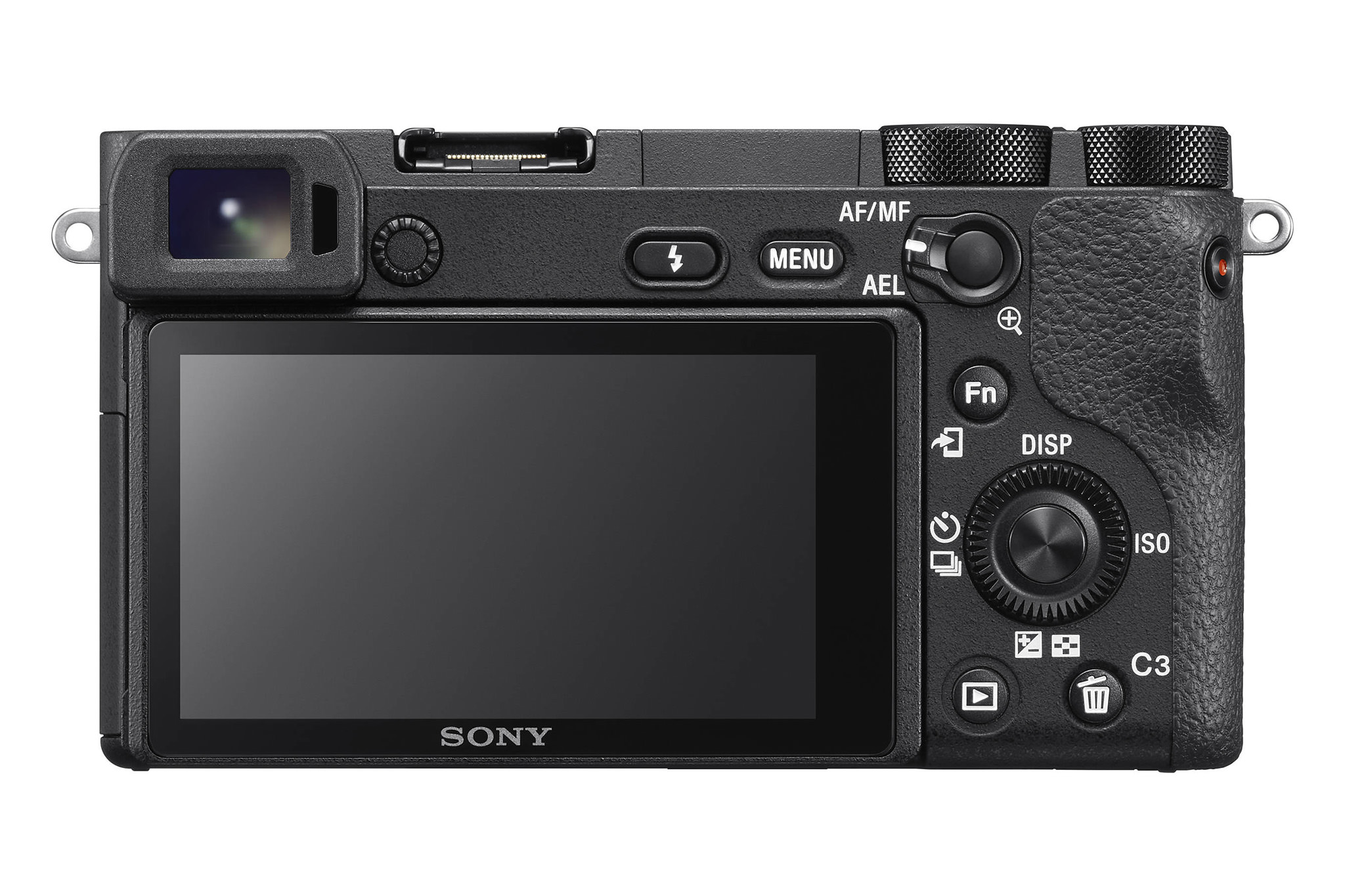
Sony A6500 Back

Fourth, the A6500 now has a touchscreen display, which you can use to focus on a particular area of the frame, similar to what we have seen on other cameras lately. When shooting 4K video, the touchscreen can be used to shift focus by dragging the LCD with a finger, while actively monitoring the scene – an interesting new feature that might be useful for focus adjustments in video without touching the lens. While the video features of the A6500 look as impressive as on the A6300, Sony again excluded a headphone socket, which might be a deal breaker for many videographers out there. This does not make much sense to me, as a headphone jack is a must-have to monitor sound quality while video recording takes place. Lastly, it looks like the A6500 now has a newer menu system, which is supposed to be easier to use and navigate. If a new menu system is on its way, that could be a very good thing, because Sony’s menu system is quite bad when compared to other cameras on the market. Sony’s cluttered menu system continuously gets low praises from the photography community and we have been criticizing Sony for lacking improvements in that area for quite sometime now.

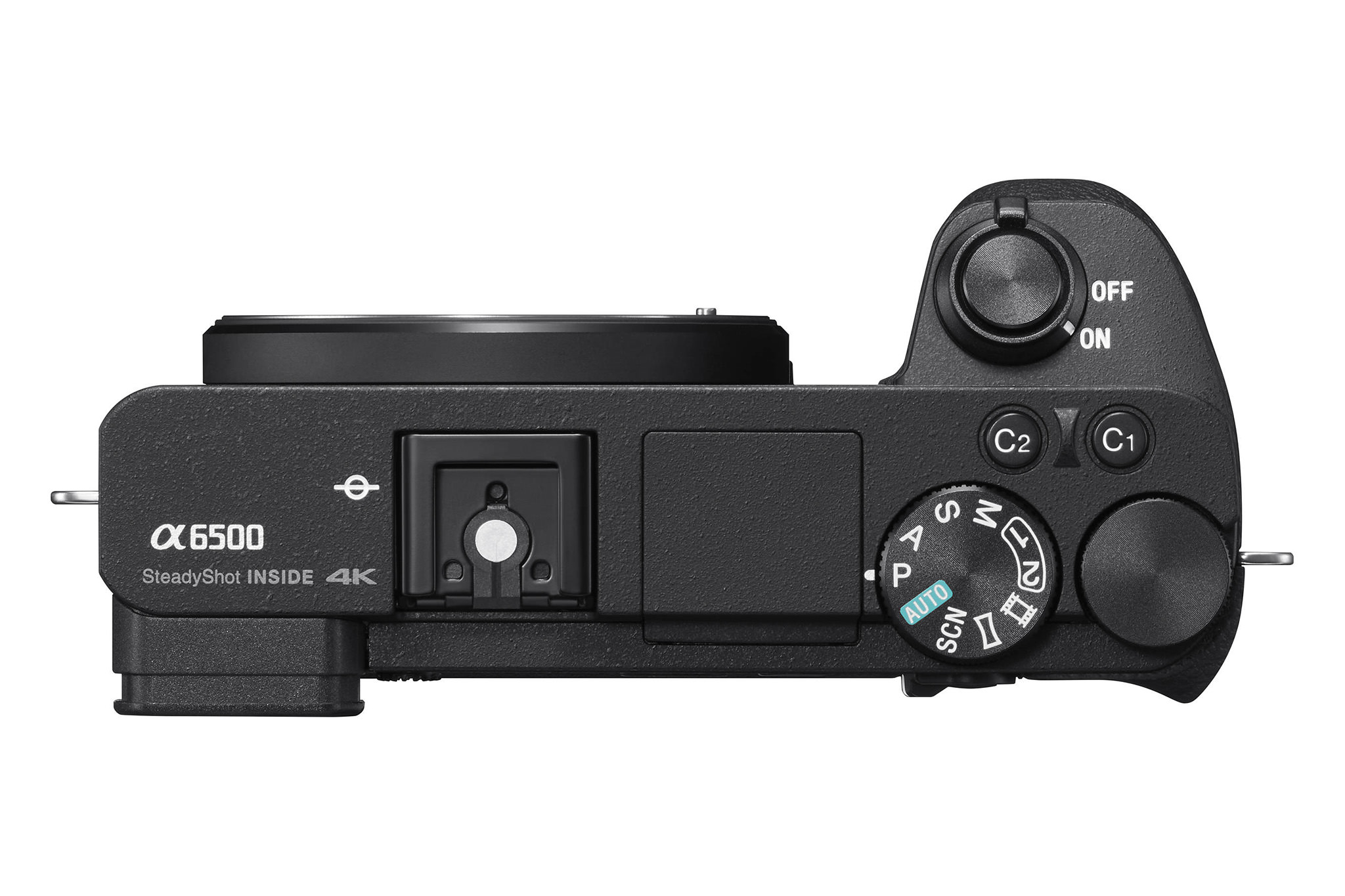
Sony A6500 Top

The Sony A6500 will be available for $ 1,400 MSRP, with the planned release date of December 2016.

Official Press Release

Here is the official press release from Sony:

NEW YORK, Oct. 6, 2016 – Sony Electronics, a worldwide leader in digital imaging and the world’s largest image sensor manufacturer, has today introduced their new flagship APS-C sensor camera, the α6500 (model ILCE-6500).

As the latest addition to Sony’s lineup of award winning mirrorless cameras, the new α6500 shares the same unrivaled 4D FOCUS™ system as the α6300 camera, which can lock focus on a subject in as little as 0.05 seconds, the world’s fastest AF acquisition time. Also shared with the α6300, the new α6500 features 425 phase detection AF points that are densely positioned over nearly the entire image area – the world’s highest number of AF points on any interchangeable lens camera. The new model can shoot images at up to 11 frames per second with continuous autofocus and exposure tracking and up to 8 frames per second in a live-view shooting mode that makes it easy to track fast moving subjects, as it combines all of the benefits of an electronic viewfinder with the immediacy of an optical viewfinder.

The camera can shoot at these high speeds for up to 307 frames thanks to its expanded buffer, which, along with the fast response speeds described above, are all achieved with the support of a new front-end LSI chip that has been added to the camera. This new front-end LSI also serves to enhance both still and video image quality.

Additionally, the new α6500 features Sony’s acclaimed in-camera 5-axis optical image stabilization, making it the first Sony APS-C sensor camera to offer all of the benefits of advanced in-body stabilization, which include a shutter speed advantage of approximately 5 steps. It also offers touchscreen AF capabilities for focus point selection and adjustment.

“We are continuing to push the boundaries of modern innovation in digital imaging, in particular within the mirrorless space,” said Neal Manowitz, Vice President of Digital Imaging at Sony Electronics. “By equipping the α6500 with 5-axis image stabilization and touchscreen AF, we’re offering photographers and videographers more control than ever before and a seemingly endless amount of creative possibilities. As our flagship APS-C camera, it far exceeds the performance threshold of any camera in its class, and many above its class as well.”

Unmatched AF Capability
Sony’s new α6500 camera utilizes the same 4D FOCUS system as the α6300 – a Fast Hybrid AF system that combines high-speed phase detection AF with extremely accurate contrast AF and allows it to capture and lock on to moving subjects in as little as 0.05 seconds. It also features 425 phase detection AF points and High-density Tracking AF Technology, which significantly improves subject detection and tracking performance.

New for the α6500, thanks to faster internal processing capabilities enabled by the front-end LSI, the maximum buffer for high-speed continuous shooting is an impressive 307 frames, greatly increasing the chances to catch that decisive moment.

The camera’s 425 phase detection AF points, focusing tracking and accuracy are also available when using non-native A-mount lenses with Sony’s LA-EA3 mount adaptor. Additionally, it includes silent shooting, Eye AF in AF-C mode, AF in focus magnifier modes, Expand Flexible Spot AF and more.

5-axis Image Stabilization Provides 5 Steps Shutter Speed Advantage
One of the most exciting developments in the new α6500 is the implementation of 5-axis image stabilization for the first time in a Sony APS-C sensor camera. Additionally, through a total revision of the internal design of the camera, this newly developed stabilization system fits entirely within a body that is nearly the same size as the α6300 model. This innovative 5-axis system provides a shutter speed advantage of 5 steps, ensuring the full resolving power of the sensor can be realized, even in challenging lighting.

The shake compensation provided by the system works with a variety of lenses, including E-mount lenses without OSS (Optical SteadyShot) stabilization and A-mount lenses when used with a compatible mount adapter. When an E-mount lens with OSS is mounted, pitch and yaw are compensated in the lens and horizontal, vertical and roll axes are compensated in the camera body, resulting in optimal 5-axis stabilization.

Also, with a simple half press of the shutter button, the effect of the image stabilization can be monitored in the viewfinder or on the LCD screen, allowing framing and focus to be accurately checked and continually monitored. This is available even when a lens is attached that does not have built-in shake compensation.

New Touch Screen Focusing
The new α6500 comes equipped with touch screen functionality, allowing users to lock focus on a subject simply by touching it on the screen. This is a powerful compliment to its advanced AF system and video shooting capabilities.

Additionally, in a first for Sony cameras, the α6500 features touchpad functionality. When utilizing the viewfinder for framing and shooting, the LCD screen can be used as a touch pad. Simply drag a finger across the screen to shift the focus point from one area to another.

Powerful 24.2 MP Exmor CMOS Sensor, BIONZ X® Processor and New Front-End LSI
The new α6500 features an APS-C sized 24.2 MP Exmor CMOS sensor that works together with a BIONZ X image processor and the newly developed front-end LSI to maximize processing power and achieve an impressive sensitivity range of ISO 100-51200.

The image sensor employs a thin wiring layer and large photodiode substrate that maximizes light collection efficiency, plus copper wiring in its structure for outstanding read-out speed. The BIONZ X image processor and newly developed front-end LSI ensure superior image and video quality with low noise even when using higher ISO settings, in particular those at high sensitivity values where other cameras typically struggle. The LSI is also responsible for the expanded buffer depth for continuous shooting.

Professional Video Capabilities
The new α6500 becomes the latest Sony interchangeable lens camera to offer internal 4K movie recording, as it can shoot 4K (3840x2160p) video in the popular Super 35mm format on the full width of the image sensor. When shooting in this format, the camera uses full pixel readout without pixel binning to collect 6K of information – approximately 2.4x (20 MP equivalent) as many pixels as 4K UHD and then oversamples the information to produce high quality 4K footage with exceptional detail and depth.

Additionally, the α6500 will focus exceptionally fast during movie shooting thanks to its Fast Hybrid AF system, offers touch focusing for professionally smooth focus shifts, while also offering adjustable AF transition speed and AF tracking sensitivity. The camera supports the XAVC S codec during video shooting, which records at a high bit rate of up to 100 Mbps during 4K recording and 50 Mbps during Full HD shooting, ensuring maximum detail and clarity in both video formats.

Other professional caliber video features include the ability to record Full HD at 120 fps at up to 100 Mbps, which allows footage to be reviewed and eventually edited into 4x or 5x slow motion video files in Full HD (24p) resolution with AF tracking.

New on the α6500 is the incorporation of a ‘Slow and Quick’ (S&Q) mode that supports both slow motion and quick motion. In this mode, frame rates from 1 fps to 120 fps can be selected in 8 steps for up to 60x quick motion and 5x slow motion recording. Footage shot in this mode can be previewed after shooting without the need for PC-based post processing.

The camera also offers S-Log gamma recording for wide dynamic range shooting – approximately 14-stop latitude in S-Log3 gamma setting – and supports S-Gamut for a wider color space. Both options allow for greater creativity for processing video post-production.

Shooters also now have the ability to select, extract and save still images from movie footage directly on the camera. Approximately 8 MP images and 2 MP images can be pulled from 4K modes and Full HD modes, respectively.

Enhanced Operability and Reliability
The new α6500 has a refined design, maintaining the mobility of the α6000 series while adapting much of the usability of Sony’s acclaimed α7 II series. The new model features the same high contrast, high-resolution 2.4 million dot XGA OLED Tru-Finder as the α6300 that offers exceptional corner-to-corner visibility.

New hardware features on the α6500 include a magnesium alloy body and a high-durability shutter with a tested life span of approximately 200,000 release cycles. It also has several design features that are borrowed from the α7 II series of full-frame cameras, which include a robust lens mount, a recessed grip to improve handling, a larger release button and ten total custom buttons including ‘C1’, ‘C2’ and ‘C3’. It also has an improved operation feel for its mode and control dials and rear face buttons, as well as a softer eyepiece cup for more comfortable usage.

On the software front, there is a new overall user interface, which allows for a much smoother process for searching and adjusting menu settings, as well two new metering modes – Highlight, where exposure metering is focused on the brightest area of the frame, and Entire Screen Avg, which maintains an average metering for the entire image.

The camera is Wi-Fi®, QR and NFC compatible and fully compatible with Sony’s PlayMemories Mobile™ applications available for Android™ and iOS platforms, as well as Sony’s growing range of PlayMemories Camera Apps™. The α6500 also offers location data acquisition via a Bluetooth connection to a compatible mobile device and an updated menu structure to deliver a smoother navigational experience.

Pricing and Availability
The Sony α6500 interchangeable lens camera will ship this November for about $ 1,400 US and $ 1,750 CA. It will be sold at a variety of Sony authorized dealers throughout North America.

There is also a new genuine leather body case (model LCS-EBG) that will ship in November and a new eyepiece cup (model FDA-EP17) that will be launched at a later date.

Pre-Order Information

You can pre-order your copy of the Sony A6500 using the below links from our partners B&H Photo Video and Adorama:


  1. Pre-Order Sony A6500 for $ 1,399 from B&H Photo Video
  2. Pre-Order Sony A6500 for $ 1,399 from Adorama

The post Sony A6500 Announcement appeared first on Photography Life.

Photography Life

Posted in Photograpy How To | Tagged , , | Leave a comment

Weekend Wisdom with John Paul Aguiar

One of the best benefits of the Internet is how small the world has become. The Internet gives us a level of reach that  a few years back only a newspaper or magazine might have had. Every day we have an opportunity to interact with hundreds of people, build new friendships and share experiences in business, or for that matter just life!

Meet John Paul Aguiar. I “met” John Paul on Twitter. I liked a few of the links he was sharing, which led to a few retweets, phone calls and eventually this podcast.  The fun of talking with John Paul was bringing his expertise on blogging and social media into our world of imaging. His life is outside photography, but he’s directly involved in the challenges of running a business.

I’ve written a lot about the potential your blog has to expand your reach and build brand awareness. In this new podcast John Paul and I talk about some of those key components. Check out more of his expertise with a visit to his Twitter page. He’s giving away thirty minutes of coaching support. For many of you this might just be the spark you need to get your blog on track.

Remember, your website is about what you sell, but your blog is about what’s in your heart! Put the two of them together and you’ve got an incredible combination to build your reputation and a stronger business!

SkipCohenUniversity – SCU Blog

Posted in Photograpy How To | Tagged , , , , | Leave a comment

Some Things Just Don’t Need to be Explained

At a time when virtually all of us are tired of the senseless banter back and forth between our two presidential candidates, here’s a voter with a sense of humor.  We were out for a ride with friends in Ohio when I slammed on the brakes to back up and get this shot in a local resident’s front yard.

Who saves these things? Answer: at least one person in Geneva, Ohio!

SkipCohenUniversity – SCU Blog

Posted in Photograpy How To | Tagged , , , , , | Leave a comment