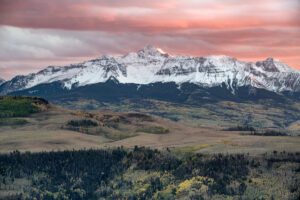
Fall Foliage Photography Tips

Nikon D850 Image Samples (25)

It is no secret that the fall / autumn season attracts many photographers to the most scenic locations of the world, since it presents great photographic opportunities to capture beautiful, vivid colors. This rather short window of opportunity is very unique photographically, because it can transform otherwise boring locations into a stunning display of color. I have been photographing fall colors for many years now and I have been fortunate to acquire some knowledge on what specific tools and photography techniques work best in the field. Having just come back from a fall photography workshop in southwest Colorado, where I had a chance to spend time with some amazing photographers from all over the US, I wanted to share a few tips with our readers on photographing fall foliage. Let’s get started!

[Read More…]

Photography Life

Posted in Photograpy How To | Tagged , , , | Leave a comment

The Importance of Simplicity, Patterns and Details

nova scotia 10

When my wife and I are out and about on a photography tour I like to let my mind wander and keep my eyes ‘fresh’ so I don’t get too locked in on one particular type of image composition. We recently spent a couple of weeks in Nova Scotia doing some field work for an eBook project. Since the emphasis of that endeavour is landscape, seascape and shoreline photography we did focus the majority of our time on those subjects. As a result, visits to Peggy’s Cove, Lunenburg, and many small, seaside communities were on our itinerary. Many of the images captured were fairly complex scenes as could be expected. This article shares a couple of dozen photographs that highlight some of the simplicity, patterns and details in Nova Scotia that we experienced and included in some images.

[Read More…]

Photography Life

Posted in Photograpy How To | Tagged , , , | Leave a comment

Peak Design 20L Everyday Backpack Review

Peak design everyday backpack dual side access

Backpacks are a sore spot for many photographers. Personally, I’ve owned so many different types over the years that I truly can’t remember them all. I know photographers who have entire gear closets filled with bags, and nothing else. The problem here, I think, is that bags look amazing online (or in a store) — seeing them, reading reviews, and even trying it on for a few minutes — but then reality kicks in a few weeks later, and you realize that your new purchase isn’t all that spectacular. That brings me to the company Peak Design. I’m sure you’ve heard of them; they made headlines a couple years ago after fundraising millions of dollars on Kickstarter for their lineup of bags. We haven’t yet reviewed one of their bags on Photography Life, so, when they reached out to send a copy for testing, I decided to see how it measures up. This review specifically covers the 20 liter version of the “Everyday Backpack.” So, does it live up to the hype? Can you finally clean out your closet of bags and turn it into something more productive? The answers are more nuanced than you might think.

[Read More…]

Photography Life

Posted in Photograpy How To | Tagged , , , , | Leave a comment

Forget the rule of thirds: How I fell in love with center compositions

You’ve heard the phrase, “Learn the rules so that you know when to break them”.

Personally, I have found that this sentiment is usually thrown around by artists who are leaders in the field and have honed their craft. They usually have loads of followers and are speaking to new photographers who are just starting out.

They’re talking to people who find the phrase a little confusing.

I know it seemed confusing to me back in the beginning. Technically I understood what it was saying but the phrase didn’t mean anything to me yet. I didn’t get it. I was new and I wanted to learn all the rules. After all, I’m a rule follower by nature and breaking rules doesn’t come easy to me.

Besides, whenever I heard that phrase, it was generally written by a seasoned photographer and accompanied by stunningly gorgeous images. All I would think while looking at their work was, “You might claim these images are breaking rules but all I see is swoon-worthy art that I would give anything to produce”.

Center composition gets a bad wrap. It's seen as amateur. Supposedly, center composition is just not cool for a “real artist” to use. I'm hear to tell you that it's not true.

Center composition gets a bad wrap. It's seen as amateur. Supposedly, center composition is just not cool for a “real artist” to use. I'm hear to tell you that it's not true.

Maybe you’re in the same place that I was. Maybe you are more seasoned and have written those words of advice to beginners before.

No matter where you are in your photography journey, you’ve probably heard that center compositions are supposedly boring, considered a no-no and only something that a complete amateur would do. All the “good” artists prefer using more exciting compositions like the rule-of-thirds, leading lines or golden triangles.

Here’s the thing, I love using the rule-of-thirds. I also love leading lines. I see those pop up in my work all the time. In fact, after I learned all the rules, I shot primarily with the rule-of-thirds (far right was my sweet spot).

Center composition gets a bad wrap. It's seen as amateur. Supposedly, center composition is just not cool for a “real artist” to use. I'm hear to tell you that it's not true.

Sure, those compositions were pleasing to the eye and I was proud of using them. I still am. But I was stuck there. Like, actually stuck. To the point that I couldn’t see any other composition. It was like I became locked in the rules.

Let me back up a bit and give you a little back story. A couple years ago, after my third child was born, I was in a funk. I was tired. I was emotionally drained. And artistically, I felt off.

For the next year, I took a few classes, read articles and hired a mentor. I did all these things trying to pull myself out of the weird space. I enjoyed all the learning but still didn’t feel quite right. Then I decided to finally commit to a Project 365 (something I had tried and failed at several times before). Somewhere in this project, my work started to slowly evolve.

It was a painfully slow process. In fact, at the time it didn’t seem like a process at all. Only now, being on the other side of it and looking back, can I see the big change.

Save

Center composition gets a bad wrap. It's seen as amateur. Supposedly, center composition is just not cool for a “real artist” to use. I'm hear to tell you that it's not true.

Center composition gets a bad wrap. It's seen as amateur. Supposedly, center composition is just not cool for a “real artist” to use. I'm hear to tell you that it's not true.

My compositions, editing, and shooting style has evolved and been honed. My work is feeling more and more like me. Somewhere in this journey, I kinda fell in love with, gasp, center compositions.

Center composition gets a bad wrap. It is seen as something that only amateurs with nothing cameras use. All the tourists use it. Grandma uses it. School portraits use it. Center composition is just not cool for a “real artist” to use.

Here I am. I finally get it. I am far along enough in my journey that I don’t care what anyone else thinks about it. I’m breaking the rules, not because I don’t know them, but because I want to. And there is a huge shift there.

Center composition gets a bad wrap. It's seen as amateur. Supposedly, center composition is just not cool for a “real artist” to use. I'm hear to tell you that it's not true.

Center composition gets a bad wrap. It's seen as amateur. Supposedly, center composition is just not cool for a “real artist” to use. I'm hear to tell you that it's not true.

So, why do I love center composition so much?

I don’t know. I can’t pinpoint it really. Maybe it’s because I love symmetry so much. Maybe it’s because my own three children fit perfectly in the center of the frame. And maybe it’s because a good, dramatic, pulled-way-back center composition just looks amazing. I am not sure really but I love it and I am doing it more and more.

Of course, in my centered images, I am still adding a lot of interest with other elements like texture, emotion, color and movement. My centered images also usually fit into some other shooting rules like filling the frame, or keeping limbs in tact. But they are still centered. And they still have a completely different look and feel than had I shot the same moment in my old favorite, the rule-of-thirds.

In the end, I’m not here to make you love center compositions as much as I do. After all, your art is your art, so by all means, do what you want. This is maybe just a nudge to try it out. Embrace it when it feels like it could fit instead of automatically slapping your wrist out of rule-breaking shame.

Center composition gets a bad wrap. It's seen as amateur. Supposedly, center composition is just not cool for a “real artist” to use. I'm hear to tell you that it's not true.

More than anything, I want to leave you with this: keep pushing yourself, one foot in front of the other.

If you are like I was, in the beginning of your journey and totally confused by the phrase, “learn the rules so you can break them,” don’t fret. You won’t always be in that spot. I promise.

And it’s totally not a bad place to be in. You still live in the world where you are on fire for learning this amazing new craft.

Keep at it. Keep learning. And one day, you will feel yourself slowly pass onto the other side.

One day you will wake up breaking the rules and loving it.

Join the Clickin Moms photography forum

Save

Save

The post Forget the rule of thirds: How I fell in love with center compositions appeared first on Clickin Moms.


Clickin Moms

Posted in Photograpy How To | Tagged , , , , , , | Leave a comment

Before and after: A lifestyle newborn edit in Lightroom

An editing before and after with a video tutorial by Kelly Marleau-before

original photo

An editing before and after with a video tutorial by Kelly Marleau-after

after image

My goal when photographing a newborn session is to make the best possible image in camera.

Then, I enhance what’s already there during the editing process.

My editing program of choice is Adobe Lightroom CC and I edit about 95% of my images there. There are times that I will pull an image into Photoshop for more detailed cloning but for the most part, Lightroom can do exactly what I need it to do.

In the video below, you’ll see how I take a straight out of camera RAW photo of a newborn from basic to polished without using any Lightroom presets.

The video goes into quite a bit of detail which results in the edit taking longer than it normally would if I were simply editing without explaining. Normally, this would be a 5-10 minute edit in my standard workflow.

Related: See more editing tutorials for Lightroom and Photoshop here.

For reference, the final settings are listed below.

  • Exposure: +0.55
  • Contrast: 0
  • Highlights: +17
  • Shadows: -55
  • Whites: +11
  • Blacks: -14
  • Clarity: 0
  • Vibrance: +10
  • Saturation: 0

Tone curve: changes manually made to tone curve by adding 2 points (see the video)

Hue: no adjustments made

Saturation:

  • Red: -7
  • Orange: -5

Luminance:

  • Red: +9
  • Orange: +8

Split Toning: no adjustments made

Sharpening:

  • Amount: 25
  • Radius: 1.0
  • Detail: 25
  • Masking: 80

Lens Correction:

  • Enable profile corrections: checked

Transform: no adjustments made

Camera Calibration:

  • Blue primary hue: +2
  • Blue primary saturation: +10

The radial filter was added around the baby with exposure, highlights, shadows and blacks pulled down and temp increased.

The clone stamp was used, set to heal to remove large wrinkles from the duvet.

In order to help decrease the wrinkles, the graduated filter was added from the bottom and left side with contrast and sharpening pulled down.

Join the Clickin Moms photography forum

Save

The post Before and after: A lifestyle newborn edit in Lightroom appeared first on Clickin Moms.


Clickin Moms

Posted in Photograpy How To | Tagged , , , , , | Leave a comment