Your permission to quit (it’s not what you think)

I’ve been photographing professionally since 1999, and I wish I could tell you that with time it gets easier.

It doesn’t.

In fact, if you find yourself thinking photography is easy or without any challenges, many of us would tell you to start looking for another creative outlet.

Photography isn’t supposed to get easier over time, even as we grow and become better at it. The prize of the next best photograph dangles just ahead of us, out of reach, always. It’s incredibly frustrating, isn’t it? It’s enough to make us want to quit.

On my journey I’ve had a lot of obstacles get in my way, from professors who deemed my career doomed before I even started because I was getting married, to my first jobs at the newspapers where seasoned veterans barely acknowledged me, and when they did it was only to tell me that I would never last. Oh yes, I’ve been beaten down by many external forces while simply trying to start my career.

And then none of these outsiders were ever as hard on me as my own drive to make worthwhile photographs; to combine my skill with my voice and in turn make images that mattered. I got past the negative comments and co-workers (not easy), but I never could reach full satisfaction with my work. Quitting was always this small whisper in my ear, and it often sounded like relief.
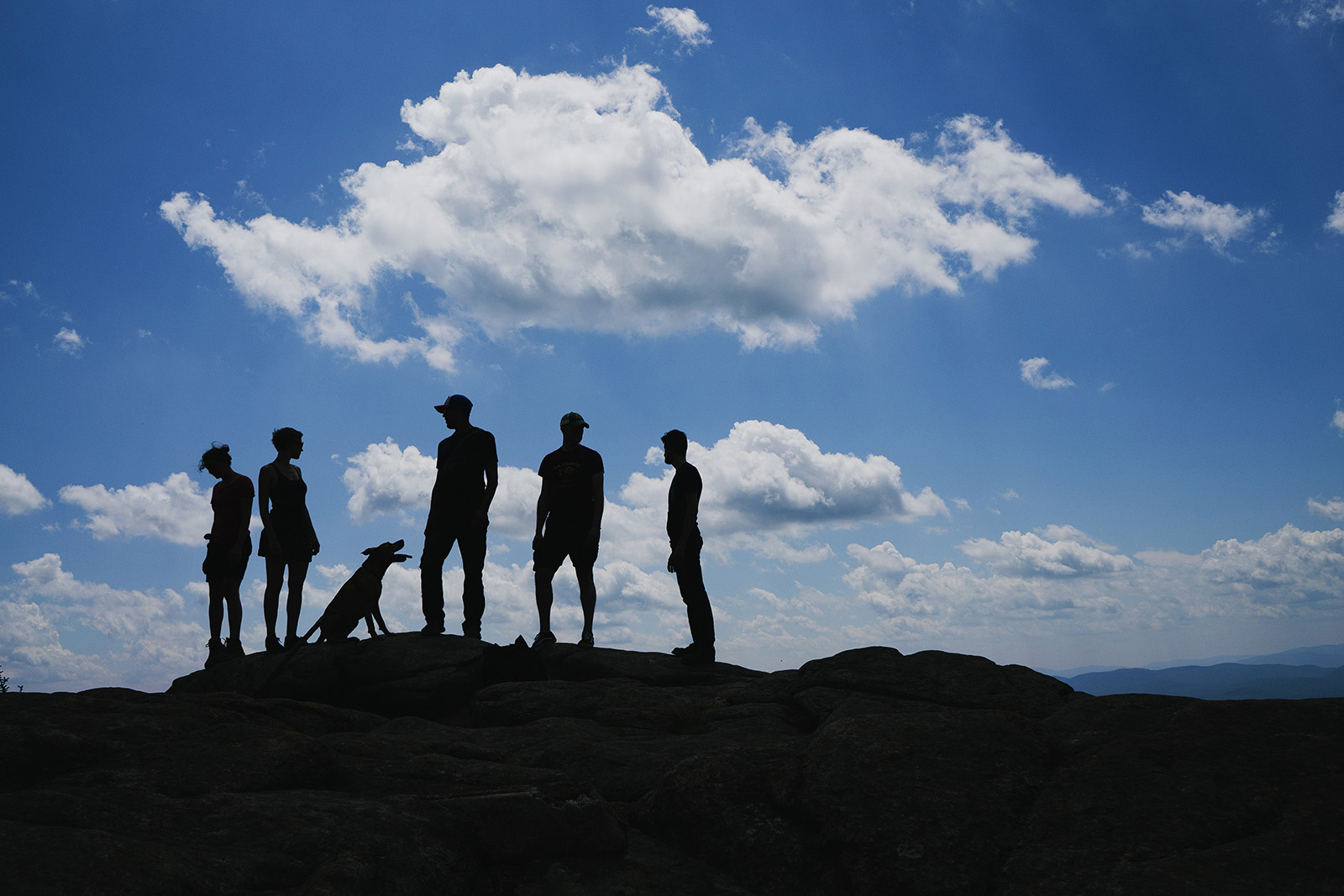
silhoueete photo of people and a dog by Olivia Gatti

So I quit photography for a few years. I left it all behind and remade myself into someone else. And for sometime it was a relief.

But that didn’t last because it wasn’t what was truly best for me. Photography, as hard and challenging and lonely as it can be, also has given me some of my greatest joys and connected me to the world in ways that almost no other activity I know of can. So I joined up again, understanding that if I only participated when life was easy, I wasn’t really living honestly.

None of this makes the fact that photography is still a challenge that beats us down more often than lifts us up. Just this week alone I have shed tears of worry and stress over client work I’m sending out. I have lost sleep over how to manage the start of the school year for my children and the ramp up to another busy fall for my business. And never mind the fact that I’m coming off a summer where my personal photography work underwhelmed me.

So I’m giving myself permission to quit.

Not photography, no, as you saw, I tried to quit it and failed. Instead I am giving myself and anyone else who needs it permission to quit the self-destructive habits that accompany us in the photographic journey, in an effort to regain the joy that makes this all so sweet.

black and white picture of dad hugging daughter by Olivia Gatti

You have permission to quit comparing yourself to others.

In a visual world, and as visual people, we love to look at what is being made around us. But if this poisons our well-being and drive, we have to find healthier ways to look at other people’s work. Understand that what you see everyday (and the magnitude of how much you see), is generally people’s finest work. They have omitted the mistakes and poorly executed ideas. They have chosen to show you the super-human instead of the human, but they are, we all are, human and we can’t possibly be great all the time. Remember that.

You have permission to take a break from social networks.

For all the great connectivity placed in social networks, the constant bombardment of images and messages that seem to conflict with how you feel can only serve to pull us down further. Quietly, slip away for a bit. Limit how much screen time you have and rededicate that time to just making more work for your self. It’s called a cleanse, and it is good.

pic of woman with an I'm Busy hat on a pier by Olivia Gatti

You have permission to quit expecting perfection (or fame or instant recognition).

The overnight success story is always incredible to witness and even to wish for, but they are unicorns. In the grand scheme the most successful photographer has been slugging away at it for years and years, and might walk away from it all in the end having never even been known. Even the brightest rising star is far from perfect, no matter what facade is presented publicly. We all suffer fear, doubt, and insecurities. All of us. Even the industry superstars. No one is perfect and making perfection a goal will only hurt you.

You have permission to quit saying yes.

Isn’t getting offers and opportunities a large part of why we do this work? We get paid and get our work out to larger audiences. But at what price to our overall well-being and that of our family’s? Only you know what is the best balance between work and life and art. Saying yes to everything that comes along certainly can’t be healthy and can push us to the extreme of too much, which feels just as bad as not enough. Listen to your intuition; your gut, and pass on the things that just don’t sit right. You’re guaranteed to last longer that way.

You have permission to quit pretending.

Once upon a time, I found relief in quitting the whole practice of photography, but it was short lived. Now I find relief in quitting the act of pretending to be anyone other than myself.

As I embraced my honest voice and mission in my work, as scary as that can be, I felt lighter and happier, with less stress to please anyone other than myself and the clients who get me and my work for exactly what it is. When we start out, we might try on lots of different voices, and I encourage that. There is a lot to be gained from exploring genres and styles within photography. But never lose sight of the real spark inside that lights up when you touch upon work that makes your soul sing.

That’s the real you, and you can’t quit on that, no matter what you do.
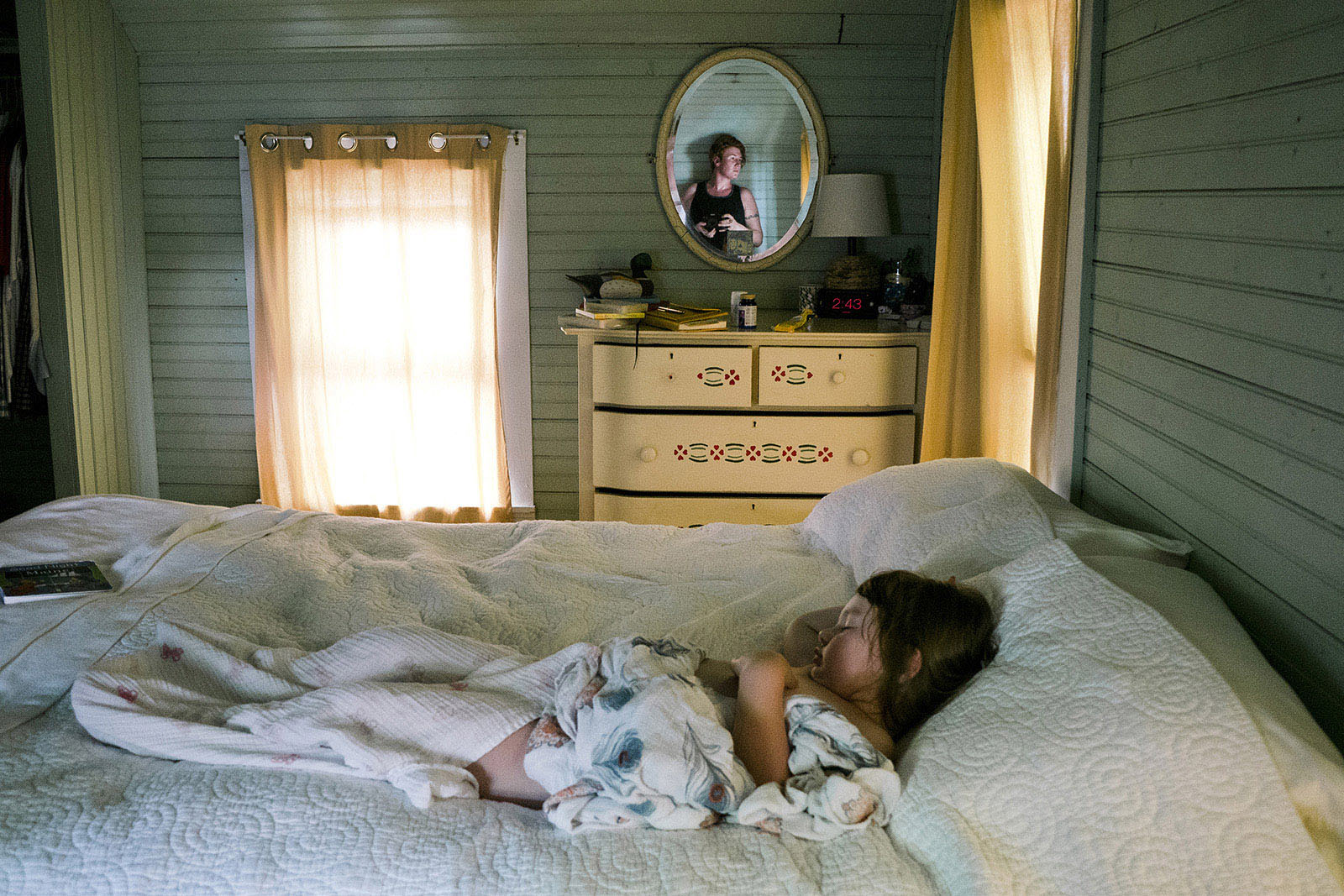
photo of kid sleeping and woman taking a picture by Olivia Gatti

Now who wants to win a 16×20 Acrylic Print with Black Shadow Mount from Color Inc?!

a Rafflecopter giveaway

Photography isn’t supposed to get easier over time, even as we grow and become better at it. The prize of the next best photograph dangles just ahead of us, out of reach, always. It’s incredibly frustrating, isn’t it? It’s enough to make us want to quit.

The post Your permission to quit (it’s not what you think) appeared first on Clickin Moms.


Clickin Moms

Posted in Photograpy How To | Tagged , , , | Leave a comment

What are photography filters and when should you use them?

You’ve probably heard of lens filters used in photography but do you really know what they are and when to use them?

Some photographers use filters frequently in their work while others rarely use them. Filters are indispensable tools for landscape photographers in particular.

So what are filters?

Filters are a piece of glass that covers the front of your lens to manage light in a certain way or add a unique effect to improve your images. The most common filter design is circular in shape and screws directly onto the thread on the front of your lens. This type of filter requires that you have the correct size for the lens you plan to use or an adapter to fit multiple lenses.

There are also square and rectangular filters that are used in a filter holder system mounted on the front of the lens. These types of systems tend to be bigger and more expensive but can be used with various lens sizes. In addition, square and rectangular filters can many times be stacked without creating a vignette.

Let’s go over a few of the more popular filters used by landscape photographers and how they affect your images.

Neutral Density (ND) Filters

ND filters darken your entire lens to reduce the amount of light that enters the camera. This allows you to adjust your settings to use a longer shutter speed and show movement in your frame.

ND filters are particularly helpful in the daytime when it can be impossible to achieve a slow shutter speed in bright lighting conditions. ND filters reduce the light by a particular number of stops so you need to assess the lighting conditions and your exposure goals to determine which ND filter is necessary. In very bright conditions, I use a 10-stop filter to darken the lens and achieve a long exposure.

beach landscape photo by Addie Sheahin

f/22, ISO 250, 30 seconds

Shortly after sunrise or just before sunset, the light can be too bright to achieve a long shutter speed without a filter but dark enough that a 10-stop filter would create too much darkness. In this instance, I use a 6-stop filter to achieve the settings I’m looking for.

sunset Chicago cityscape by Addie Sheahin

f/22, ISO 50, 15 seconds

You can even stack ND filters to block more light such as a 3-stop filter and a 6-stop filter to block the light by 9 stops but if using circular filters, this can create a vignette that will need to be cropped out of the frame for the final image.

Graduated Neutral Density Filters

Graduated neutral density (GND) filters are similar to ND filters except that one half of the filter is clear and typically positioned on the bottom half of your lens over the darker foreground. The other half of the filter gradually transitions from dark to clear and is typically positioned on the top of your frame over the brighter background such as the sky. GND filters are particularly helpful for capturing a scene with a wide dynamic range from highlights to shadows such as sunrise or sunset. The filter allows you to balance the exposure preserving detail in both the highlights and shadows while capturing the scene in a single image. Without a GND filter you would need to take multiple exposures and merge them together in post processing to get a similar result.

landscape photo taken without a graduated neutral density filter by Addie Sheahin

without a GND filter

landscape picture taken with a graduated neutral density filter by Addie Sheahin

with a GND filter

final edit of landscape photo taken with a graduated neutral density filter by Addie Sheahin

Final edit.

Some GND filters have a hard edge for the transition from dark to clear and should be used when the horizon is distinct and flat such as a beach scene. Other GND filters have a soft edge for the transition and should be used for a non-flat horizon such as mountain scenes for instance. I carry a soft edge GND filter in my bag and find that it is adequate for most of my landscape imagery.

Polarizing Filters

Circular polarizing filters work like sunglasses for your lens. When used correctly, they can result in more saturated colors, less reflections, reduced glare and higher contrast.

mountain landscape photograph by Addie Sheahin

Polarizing filters can also reduce haze in your images. To achieve maximum effect, polarizers work best when your lens is pointed 90 degrees from the sun. For this reason, I tend to use my polarizer when shooting during the day and not directly into the sun, which is how I typically shoot during sunrise or sunset.

landscape photo by Gina Yeo

photo by Gina Yeo

There are a few things to remember when using a circular polarizer.

  1. You lose approximately 2 stops of light with a polarizing filter so be sure to meter and expose appropriately.
  2. You choose the amount of polarization effect by turning the front of the filter and looking through the viewfinder. Remember that sometimes less is more!
  3. Polarizers can result in unnatural bands of color variations in the sky when used on ultra-wide lenses.

Now that you know what filters are and when to use them, what kind should you buy?

There are several brands to choose from so purchasing them can be a little overwhelming. My personal favorite is B+W. All of my filters are B+W and screw right onto the front of my lens but Tiffen and Hoya make good quality filters as well so make sure to check them out. If you want to get serious about filters and make more of an investment, look at the Lee filter systems. Most importantly, put a quality glass filter on the front of your very expensive lens to ensure your final images are of the highest quality.

So what are you waiting for? Give filters a try! They are wonderful tools to add to your photography bag that increase your creativity and help you create stunning imagery.

Some photographers use filters frequently in their work while others rarely use them. Filters are indispensable tools for landscape photographers in particular. So what are filters? Let’s go over a few of the more popular filters used by landscape photographers and how they affect your images.

The post What are photography filters and when should you use them? appeared first on Clickin Moms.


Clickin Moms

Posted in Photograpy How To | Tagged , , , | Leave a comment

Multiple Day Bicycle Race In Progress At The Sport Canvas Traditional 1 5/8″ Natural Espresso Wood Grain 28×22 Photo On Canvas

Multiple Day Bicycle Race In Progress At The Sport Canvas Traditional 1 5/8″ Natural Espresso Wood Grain 28×22 Photo On Canvas


Multiple day bicycle race in progress at the Sport” is an art print by Alfred Eisenstaedt from The Life Picture Collection. Get photo prints of “Multiple day bicycle race in progress at the Sport” in a variety of frames, styles, and materials. Photographer Bio Alfred Eisenstaedt (1898-1995), or Eisie to those who knew him, received his first camera as a gift from his uncle at 14, a few years after moving to Berlin from Poland with his family. At 17, he was drafted to the German army. His interest in photography blossomed while recovering from a shrapnel wound. He became a regular at museums, studying light and composition. By 31, he was a full-time photographer. In 1933 he was sent to Italy where he shot the first meeting between Hitler and Mussolini. Two years later, when Hitler came to power, Eisie immigrated to America. Soon after arriving in New York, he was hired along with three other photographers?Margaret Bourke-White, Thomas McAvoy and Peter Stackpole?by Time Inc. founder Henry Luce for a secret start-up venture known as? Project X.” Six months later, Life magazine premiered on November 23, 1936. The first issue sold for 10 cents and featured five pages of Eisie?s pictures. His most famous photo was the kiss in Times Square on V-J day, about which he said, ?I was running along the street grabbing any and every girl in sight. Whether she was a grandmother, stout, thin, old, didn?t make any difference. None of the pictures that were possible pleased me. Then, suddenly in a flash I saw something white being grabbed. I turned and clicked the moment the sailor kissed the nurse. Over his career, Eisie shot a total of nearly 100 covers for Life magazine and some 10,000 prints. The Life Picture Collection From one of the most iconic magazines ever to hit the shelves comes The Life Collection? an archive of some of the most recognizable imagery of the 20th Century. Documenting events in politics, culture, celebrity, the arts and the American experience, these compelling and provocative photographs include the works of some of the greatest photographers capturing some of the greatest moments in history.

Price: $
Sold by Photos.com by Getty Images

Posted in Camera Photography | Tagged , , , , , , , , , , , , | Leave a comment

Ship Prow-like Structures Atop An Uniden Canvas Traditional 1 5/8″ Matte Black 22×28 Photo On Canvas

Ship Prow-like Structures Atop An Uniden Canvas Traditional 1 5/8″ Matte Black 22×28 Photo On Canvas


Ship prow-like structures atop an uniden” is an art print by Alfred Eisenstaedt from The Life Picture Collection. Get photo prints of “Ship prow-like structures atop an uniden” in a variety of frames, styles, and materials. Photographer Bio Alfred Eisenstaedt (1898-1995), or Eisie to those who knew him, received his first camera as a gift from his uncle at 14, a few years after moving to Berlin from Poland with his family. At 17, he was drafted to the German army. His interest in photography blossomed while recovering from a shrapnel wound. He became a regular at museums, studying light and composition. By 31, he was a full-time photographer. In 1933 he was sent to Italy where he shot the first meeting between Hitler and Mussolini. Two years later, when Hitler came to power, Eisie immigrated to America. Soon after arriving in New York, he was hired along with three other photographers?Margaret Bourke-White, Thomas McAvoy and Peter Stackpole?by Time Inc. founder Henry Luce for a secret start-up venture known as? Project X.” Six months later, Life magazine premiered on November 23, 1936. The first issue sold for 10 cents and featured five pages of Eisie?s pictures. His most famous photo was the kiss in Times Square on V-J day, about which he said, ?I was running along the street grabbing any and every girl in sight. Whether she was a grandmother, stout, thin, old, didn?t make any difference. None of the pictures that were possible pleased me. Then, suddenly in a flash I saw something white being grabbed. I turned and clicked the moment the sailor kissed the nurse. Over his career, Eisie shot a total of nearly 100 covers for Life magazine and some 10,000 prints. The Life Picture Collection From one of the most iconic magazines ever to hit the shelves comes The Life Collection? an archive of some of the most recognizable imagery of the 20th Century. Documenting events in politics, culture, celebrity, the arts and the American experience, these compelling and provocative photographs include the works of some of the greatest photographers capturing some of the greatest moments in history.

Price: $
Sold by Photos.com by Getty Images

Posted in Camera Photography | Tagged , , , , , , , , , , | Leave a comment

How Well Do You Know Your Customers? by Scott Bourne

Picture

© Marek

PictureClick to find out more!

Intro by Skip Cohen

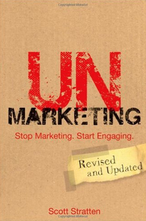
Wandering through the archives, I found this post by good buddy, Scott Bourne. I’ve written a lot over the years about the importance of building relationships. In fact, I’ve often quoted Scott Stratten and talked about his book, UnMarketing. His tag line says it all, “Stop marketing and start engaging!” 

In our email, Internet world so many times we lose the personal touch. We email and text back and forth; deal with clients who want instant fulfillment and over and over again, miss the opportunity to strengthen a relationship.

It’s a short post with a very important point. Marketing today is all about building relationships.  Focus on getting to know your clients, never compromise on quality and exceed expectations. As always, you’ve got to make yourself habit-forming!


by Scott Bourne

If you want to sell photography (or anything else) you should spend more time caring about what your customers care about and less about everything else. 

Your customers don’t care what your Klout score is, which of your lenses is the sharpest or which brand you shoot with. Your customers care about having photographs that make them (and their families) look good. That’s it. That’s all.

The online camera forums are full of discussions about photography but, not the people who buy photography. Want to stand out? Want to get ahead of your peers, including those with nicer gear and more experience than you? Simply start caring about your customers. Put all your focus (pun intended) on them and their needs. This is NOT about you. This IS about them. The sooner you realize that – the sooner you’ll start to thrive as a professional photographer.

Let the nerds in the photo forums duke it out about which lens is sharper. You go out and make your customers happy by paying attention to their needs and making them look their best. You’ll win every time.

SkipCohenUniversity – SCU Blog

Posted in Photograpy How To | Tagged , , , , | Leave a comment