Nikon 70-200mm f/2.8E FL ED VR Announcement

Every seven to ten years, Nikon updates its top-of-the-line, flagship lenses with the most current technology and tries to push the performance envelope of new lenses to their new technical limits. We have been waiting for this update for a long time and Nikon finally delivered the new AF-S Nikkor 70-200mm f/2.8E FL ED VR. As expected, this lens looks absolutely stunning in every way. Nikon completely redesigned the lens from the ground up and delivered a true stunner – the new 70-200mm f/2.8 now features a fluorite element to make it roughly 100 grams lighter (which is a huge achievement for this type of a lens). The lens is now of “E” type with an electronic diaphragm, instead of the traditional mechanical lever to change aperture. Vibration Reduction / Image Stabilization has been reworked and vastly improved over its predecessor, with up to 4 stops of compensation. The lens is now comprised of a total of 22 elements, with all the latest coating technologies, including Nano and fluorine coating applied to lens elements, with lens optimized for incredible sharpness across the frame. And based on improvements towards maximum reproduction ratio, it looks like Nikon took efforts to significantly reduce the focus breathing issue that was present on the VR II version of the lens. All this does not come cheap though – the new Nikon 70-200mm f/2.8E FL ED VR will retail for $ 2,799.95 MSRP, which is $ 400 higher than what its predecessor sold at when it was announced.
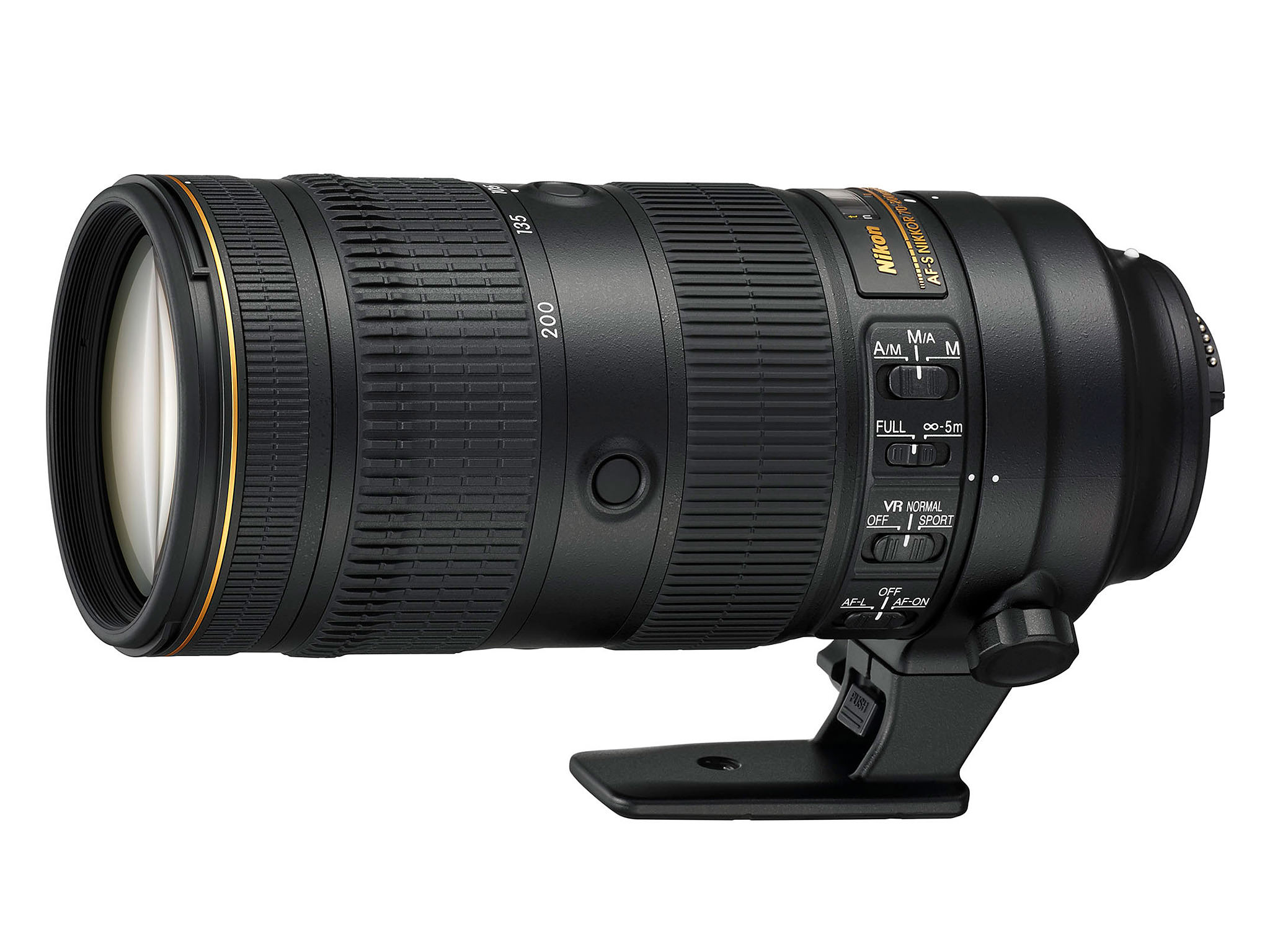
Nikon 70-200mm f/2.8E FL ED VR

Pushing performance even higher is already a challenge for a lens like the 70-200mm f/2.8, which has always been one of Nikon’s reference lenses. And it looks like Nikon did again manage to tweak the sharpness on the new 70-200mm f/2.8E VR compared to its predecessor. Take a look at the below MTF charts of the two at 70mm (Left: Nikon 70-200mm f/2.8E FL VR, Right: Nikon 70-200mm f/2.8G VR II):
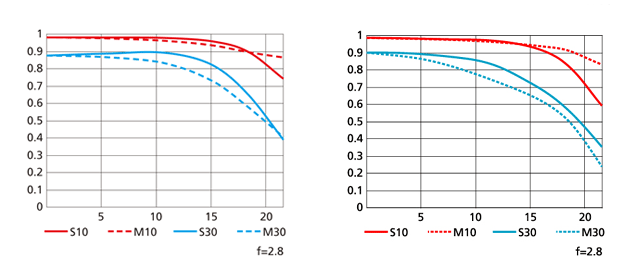
Nikon 70-200mm f/2.8E FL VR vs Nikon 70-200mm f/2.8G VR II MTF Wide

Here, we can see that the new design is optimized towards yielding more even performance on the 70-200mm f/2.8E VR – the lens starts out a hair worse in the center, but look at how much better the lens looks outside the center frame. The lens looks vastly better in comparison to its predecessor there. Even the extreme edges look slightly better in comparison. Contrast is also improved on the new lens, with much more even performance, especially towards the edges of the frame.
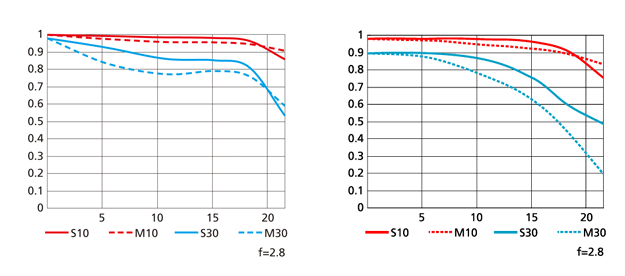
Nikon 70-200mm f/2.8E FL VR vs Nikon 70-200mm f/2.8G VR II MTF Tele

When we look at the telephoto side of things, it appears that Nikon really put a lot of effort into making this lens shine at its longest focal length. At 200mm, the lens is remarkably good, with the sharpness curve approaching those of the exotic super telephoto lenses. Contrast is amazing from the center to the extreme edges of the frame, whereas sharpness is exceptional in the center and the mid-frame, with slightly diminishing performance towards the edges of the frame. And keep in mind – this is all at f/2.8! Imagine what kind of performance one can get out of this lens when stopped down to f/4-f/5.6 range…

I also expect the bokeh of the lens to be spectacular, not just based on the MTF, but also on the fact that the lens does not have a single aspherical lens element. While aspherical lenses significantly reduce spherical aberration, thus vastly improving sharpness, they are the cause of ugly onion-shaped bokeh on many lens designs. The new 70-200mm f/2.8E FL VR is designed to be a versatile lens that is highly desirable by portrait photographers, so Nikon will do its magic to make sure that the lens does not disappoint.

Here is the optical construction of the lens, which shows the single Fluorite lens element in front of the lens:
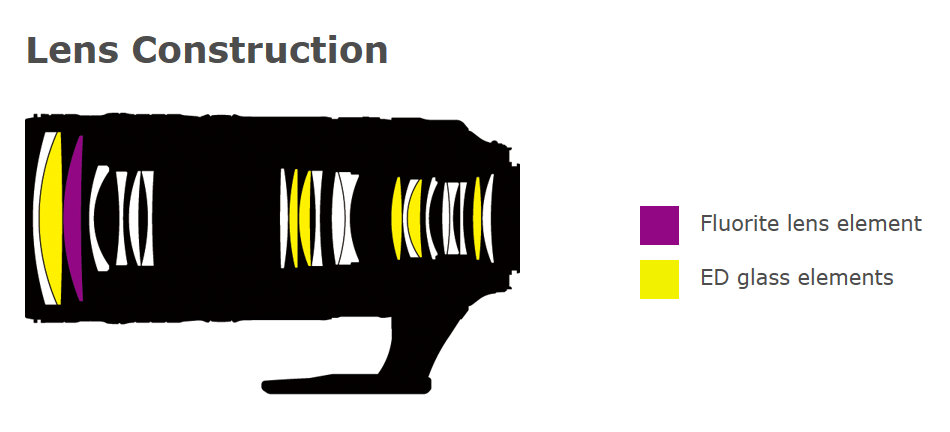
Nikon 70-200mm f/2.8E FL ED VR Lens Construction

Now one potentially disappointing aspect of the lens design is the fact that using the fluorite lens element really did not shave much off the overall weight of the lens, which is something many of us were hoping to see – Nikon managed to only cut the overall weight of the lens by roughly 100 grams. However, one has to understand that such a complex lens with so many lens elements cannot have half of its lens elements comprised of fluorite glass. Typically, the front lens element is the one that gets replaced with a fluorite lens element, which is usually the biggest and the heaviest element on super telephoto lenses. That’s why we have seen significant weight savings on lenses such as the 400mm f/2.8E. On the 70-200mm, however, the front lens element is not what makes up the bulk of the weight of the lens – there are many more lens elements scattered throughout the lens and the lens barrel is made of heavy duty metal. If Nikon were to cut more weight from the lens, it would have to come out of the lens barrel, which would compromise the build quality of the lens. Personally, I would not want to buy a lens that would break in half the first time it is dropped. The 70-200mm f/2.8 is built to be a workhorse lens for busy pros and there cannot be any design compromises.

As with other latest generation lenses, the 70-200mm f/2.8E FL VR sports both Nano coating to reduce ghosting and flare, and fluorine coating to reduce dust and water drops from collecting on the front element.

Based on the fact that the maximum reproduction ratio has been increased almost back to what it used to be, it looks like the new 70-200mm f/2.8E FL VR will not have the same focus breathing problem as its predecessor – we should see far less of this effect, probably fairly close to what the original 70-200mm f/2.8G IF-ED VR used to be. I cannot confirm 100% that the lens will be completely free from focus breathing, but based on what I am seeing, it should be much more tolerable.

What I am not so sure about is the reversal of the focus and zoom rings. This will surely throw a lot of people off who are used to the traditional 70-200mm design and it might take time to get used to the new way to handle the lens. I’ll bet that, with the introduction of the fluorite lens element, the lens is no longer that front heavy, which might work out at the end, but that is something we still need to test and see. I hope it is not a deal breaker, since I would only want to handle the lens where the zoom ring is. Holding the lens by the focus ring might be a recipe for a disaster, since that might screw up focusing.

Overall, the 70-200mm f/2.8E FL VR looks really good, so I am hoping to test it as soon as it becomes available. At $ 2,800 it is not a cheap lens by any means, but let’s not forget that this lens is a money maker for many working professionals out there. If I were a busy wedding photographer, I would not hesitate to invest in such stellar glass.

Pre-Order Information

As usual, you can pre-order your copy of the Nikkor 70-200mm f/2.8E FL VR via our trusted partner B&H Photo Video:

The post Nikon 70-200mm f/2.8E FL ED VR Announcement appeared first on Photography Life.

Photography Life

Posted in Photograpy How To | Tagged , , , | Leave a comment

Five Common Networking Mistakes Made by Photographers

My good buddy Scott Bourne wrote this post for me several years ago on my first blog. I shared it again, exactly three years ago today.  With PPE kicking off this week it’s a great topic and the timing couldn’t be better to share this with you.  Whether you’re headed to PPE, IUSA in January, WPPI in February, ShutterFest in April or any local or state show, networking is a key reason to attend every possible conference.

by Scott Bourne

Building a strong network is critical to your growth and the success of your business. Unfortunately, over and over again I see so many photographers making the same mistakes at every trade show, convention or workshop. Here are five of the most common ones for you to hopefully take note and stay away from.

1. Be prepared. I mean really prepared. Bring business cards (yes I know it’s basic but I admit that once or twice I forgot mine so you might too.) Make sure you’re properly groomed. Bugs in your teeth won’t win you many friends. Dress appropriately.

2. Don’t interrupt. If someone you want to meet  or network with is talking with someone else, you won’t make a very good impression if you bulldog your way to the front of the line. Wait your turn.

3. Don’t talk too much about yourself. Don’t brag. Don’t profile. Don’t strut. Be humble. I know it’s hard to be humble when you’re as great as you are, but try. Listen to what other people think. Let them finish their thoughts. Ask follow up questions to show that you are interested and listening.

4. Don’t be shy. If you want to network, you can’t do it from the back of the room. You have to be willing to put yourself out there. Go for it.

5. Don’t monopolize your new friends’ time. Networking is simple. You introduce yourself. You listen to what your new friend has to say. You exchange cards. You figure out if there’s anything you can do to help your new friend. You make an action plan to follow up with each other and you move on. Everyone at a networking event is looking for a chance to make new contacts. Let them. Take your turn and move along.

Networking can be very valuable. Skip and I have built entire businesses and careers around networking. Get off on the right foot and avoid these mistakes. You’ll be better off for it.

Illustration Credit: © ova – Fotolia.com

SkipCohenUniversity – SCU Blog

Posted in Photograpy How To | Tagged , , , , , | Leave a comment

Wildlife Photography Tips – Telling A Story

It’s been a while, almost 5 months since my last post, so lets see where the typing leads me and if I can still remember how to write an engaging article. Now I do remember a little thing called a “pre-nup” that I have with the readers of PL. It kind of goes like this: “I’ll try and give you some of my thoughts and ideas on how I do things, you might read or not read it all, however you will try and leave anything behind you don’t find useful in this article and move on with your life without attacking me”. Phew! Now we got that over we can start – LOL (Laughing Out Loud), you are welcome to try that once in a while 🙂

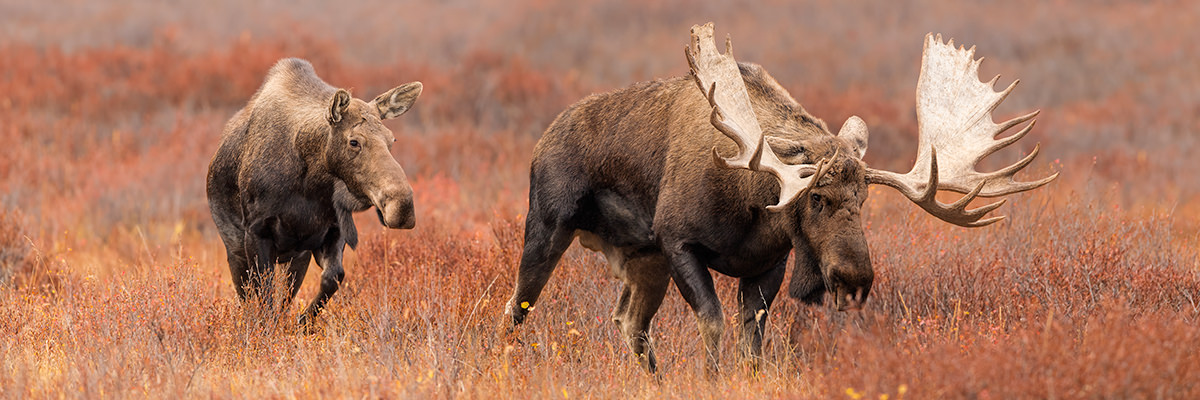
Big Bull Moose and Cow Denali NP Alaska Panoramic

70″ Bull Moose in Tundra with His Love Panoramic – NIKON D5 @ 600mm, ISO 1000, 1/500, f/5.0

What Makes a Good Wildlife Photo?

I don’t know, so don’t ask me – just kidding!

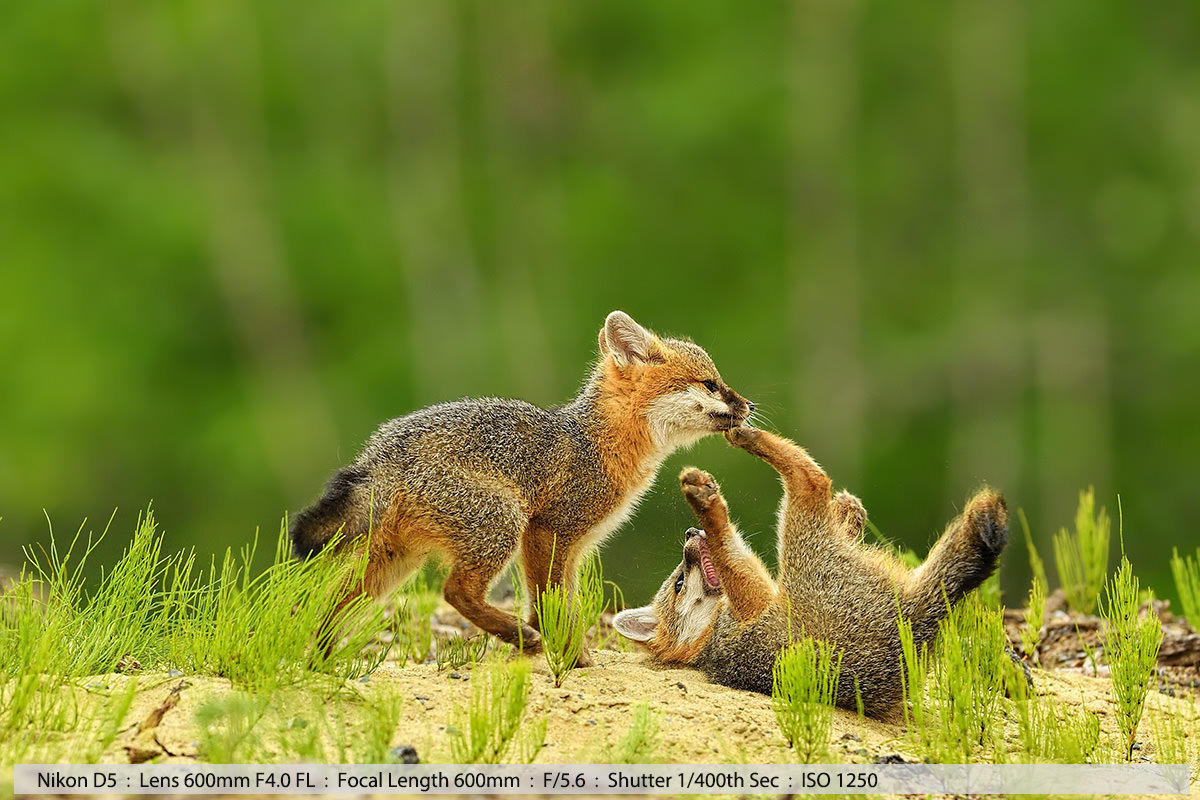
2 Gray Fox Kits Play Fighting in Sand

2 Gray Fox Kits Play Fighting in Sand

I think an extremely important element is some sort of story-telling in the image. What story does your photo convey, or more importantly, what do you want it to convey to people who see it? Let’s digress off-track a little – this whole story-telling concept as it relates to a photo sounds like a great idea, but do all photos really tell a story, or do some photographers just click away with no concept of story telling? I think the answer to this lies in both the viewer of a photo and the taker of the photo; some viewers may never see a story and some may see stories in your photo you never dreamt of. I suppose that’s the beauty of photography – it means all kinds of different things to all sorts of people. I don’t specifically see a story when I take a photo, I see an image or a moment in my mind’s eye and try to capture such a moment or try to frame moments I think can make a connection with people. So maybe for me, the story-telling is the making of a connection between the photograph and the viewer. If I can do that, then I have succeeded.

How does that help you? I don’t think it does, other than, when you take your photos, there are certain photos that really grab you, that pull you, or speak to you. Maybe those are the photos you are most proud of and those are the ones you want to show and sell to people. Hopefully, the story you see in them, is one that can be conveyed and others will see the beauty as you do – that is one of the most difficult tasks as a wildlife photographer I face, especially when there is a photo I might really love to death, but no one wants to buy it – tough love that is – Big time.

Lets pick a few photos apart and see what stories and beauty I might hope to convey to customers who might purchase my photos. Before we do that, I think the holy grail of wildlife photos is interaction photos: mama interacting with a baby, female showing affection to male or vice-versa, or even aggressive photos like some wildlife being threatened. There are many more than this, but the reason I think they are the holy grail, is because I think it’s so easy for the viewer to place a personal moment or thought they had and make it relate to such photos, thus making them more attractive to potential buyers. I have many single subject photos that show none of that, but I still hope to make a connection with the viewer with the content of that photo, and its both of those I want to touch on.

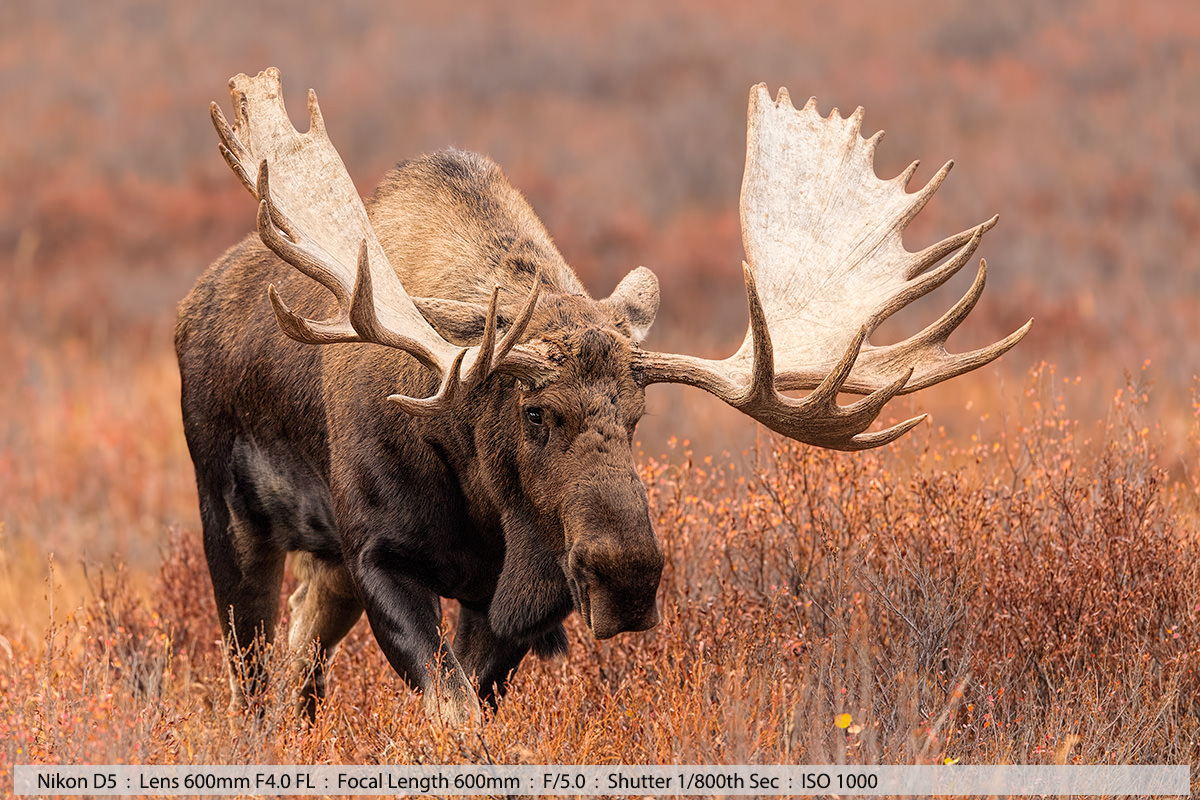
Lets start with a single subject photo I recently took at Denali NP this September:

Big 70 Inch Bull Moose Walking Denali Tundra

Big 70 Inch Bull Moose Walking Denali Tundra

This bull was big, so big (70 inches), that you could see his paddles (antlers) from a long way away. When I first found him, he was half way up a big hill, but his antlers were like a beacon, you couldn’t miss them! You knew he was big and he was going to be a beauty of a bull. How does this relate to story telling? Well, if I want the viewer to see him as I did, I somehow have to convey that size and awe in a photograph; I have to pick a photo that tells his story of size and power. For me, this photo does just that and the elements of the photo that help sell that story are:

  • He is powering forward, almost coming at you, almost intimidating
  • The photo I chose shows his rack in such a way, you can see the size – they reach out, the angle is perfect to show size. Note: some angles make antlers look smaller than they really are.
  • The photo feels close – the size in the frame helps signify the subject, there is eye contact and there is no obstacle between him and me that takes away from that.
  • When I print this photo using our media and methods, he looks like he is going to walk right out of that frame

I feel I managed to convey size and power, maybe even awe and beauty, which were all the things I felt when I saw and photographed him. With that in mind, I think my photo tells or shares his story. I also hinted in the bullet points above about conveying size – don’t undo all your beautiful effort to find such a huge bull moose, only to select a photo that makes him look smaller and thus then tells a completely different story.

The first photo of the fox kits playing has many elements of a self-telling story:

  • The conveyance of action – 1 kit running and 1 rolling
  • The sand particles flying from the foot helps in conveying action
  • Happy, joyful feel of the fox kits and a beautiful environment in which they are playing in
  • This story speaks of youth, happiness, playfulness, fun, fearlessness and carefree moments.
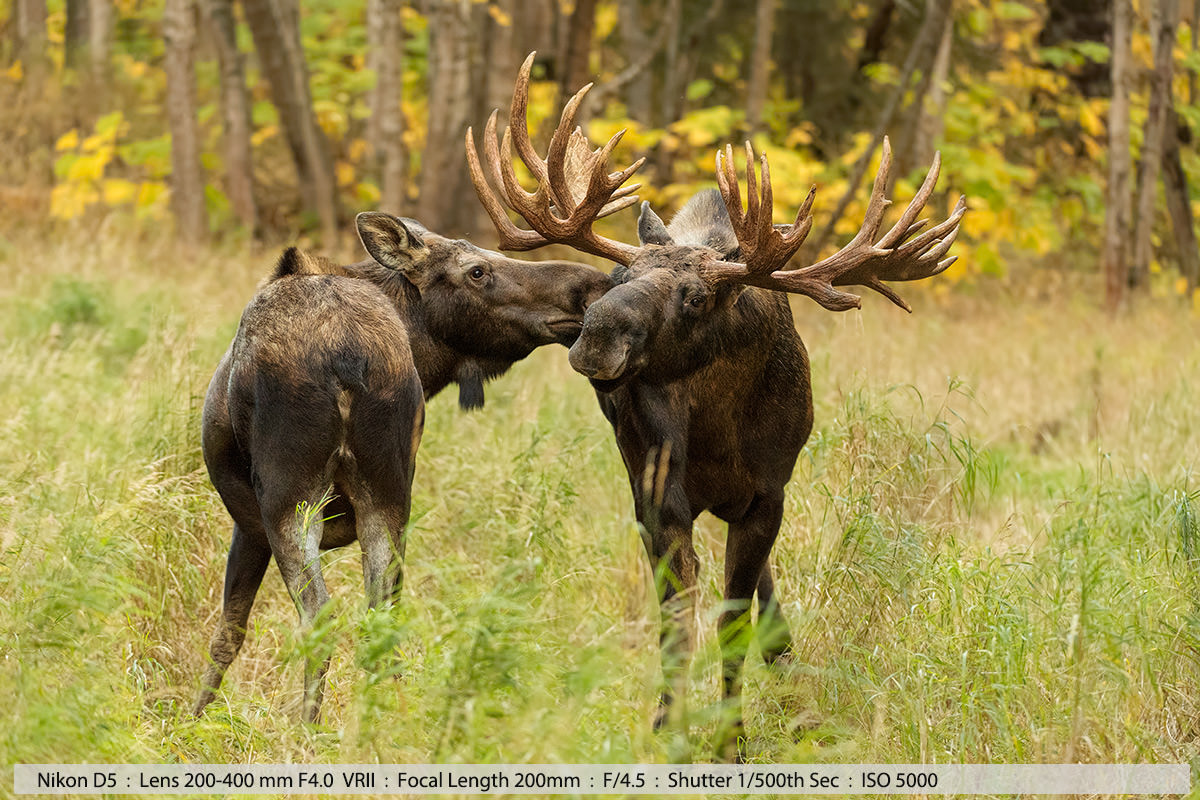
Big 40pt Bull Moose Fight Anchorage Alaska

Big 40pt Bull Moose Fight Anchorage Alaska

This 58 inch bull with 40 points (an impressive moose) fighting an equivalent big bull moose is one type of a holy grail photo for me. This is a rich story-telling photo has many elements that make it both hard to get and visually appealing on its own.

  • Both moose are impressive and their fighting is the story of power and dominance that many people can relate to.
  • Eyes are visible and sharp on both moose, you can see they are focused on each other and your eyes make a connection with theirs
  • An environment that leaves viewers with no doubt that we are in the thick of the woods where moose live
  • Even though the environment is busy, there are no obstacles in front of the moose in critical areas, thus enhancing the scene.

Viewers of your photos don’t necessarily know what you went through to get a photo like this, or maybe even what it takes to get a photo like this. They kind of don’t care in a way, the photo either grabs them, gets their attention or it doesn’t. However if you are in the fair (craft show) booth when you see them interested and you start telling the story of the photo and how you got it, they get it. They want to imagine themselves there, they enjoy the story you are telling them and whether or not it results in a sale doesn’t really matter – for a moment in time, your story and the story of your photo took them there – that’s the power of photography. Now, I know I have some attentive readers out there, who will immediately notice the 120mm focal length. Well, what can I say, it was intense, I was temporarily brave and got in the midst of it. Occasionally, it happens that way. I wasn’t stupid about it: I do understand moose, I even speak moose (moose sounds and calls) and I understand the risks and in this instance I thought I could get the photo with no loss of life or limb 🙂

Sometimes People Who See Your Photos Have No Idea of The Back Story

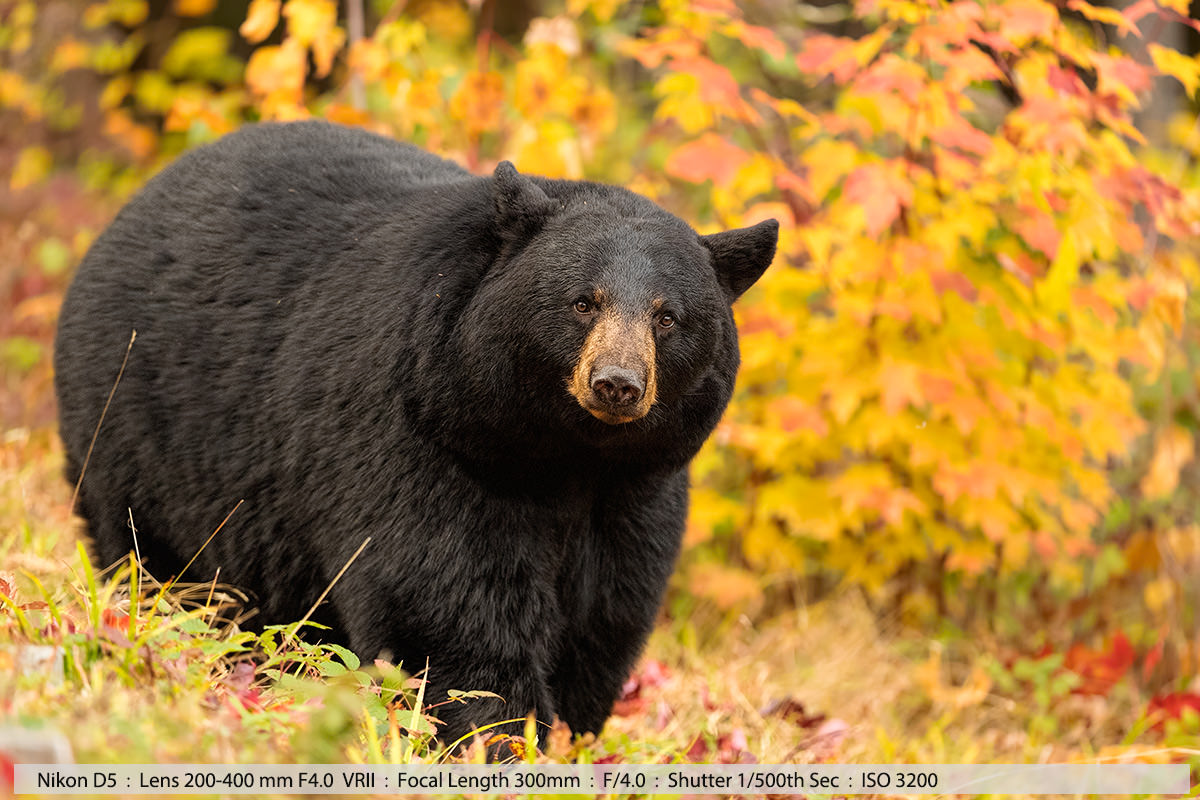
Lets talk about the beautiful bear picture below:

Female Black Bear in Foliage Colors

Female Black Bear in Beautiful Foliage Color Setting

There is plenty of story already built into the photo, but one thing you know as the taker (photographer) of the photo, is the rarity of this setting, say; as it relates to many other photos out there. More explanation is needed here obviously; black bears in beautiful foliage are not so common. If you Google “black bear in foliage”, you only find half a dozen images compared to say Googling “moose fight”. But people have no idea that you have managed to get this kind of photo, they just care whether or not they like the look of it. This is where meeting and talking to people (customers) say at craft fairs is very helpful. You get to tell the story of the photo, you get to suggest Googling it, you even get to tell your whole story of the photo. Trust me, it does make a difference. Now one way to help this whole story is to sell this photo during the foliage season – then the connection is already made for a lot of people. The story-telling elements of this bear photo for me are:

  • The hint of foliage in the background tell the tale of what time of the year it is (fall)
  • The fullness of the bear and a beautiful thick coat, tell of a readiness to go to den / hibernation and add to the notion that it is late in the year
  • The eye contact draws you in and helps make a connection
  • Bears tend to have a great connection with humans; maybe we see a human element in bears
  • The hint of different colored fallen leaves again enhances the story of a bear during fall
  • Of course she is beautiful, which never hurts 🙂

I won’t go into the below moose interaction photo too much, but important story-telling element of this photo is the expression of love between these two moose:

Big Bull Moose and Cow Smooching Anchorage Alaska

Big Bull Moose and Cow Smooching Anchorage Alaska

It makes for an instant connection with people, especially those who love moose. It doesn’t hurt that he is a big 58 inch moose with an approximately 40 point rack, impressive by any standards.

You Too Have A Story

When people start buying your photos, they will start to want to know more about you – who you are, where you come from, why you do it, “wow you took all these photos”, “you must travel a lot?”, they want to know your story. Be prepared to tell that story and be prepared to tell the story of your photos! Not everybody wants to know, but many do and it helps make a connection with your customers and have them coming back many more times.

Loon Dance and 38 hr old baby under wing

Loon Dance and 38 hour old baby under wing

Your story is important. It is an important element of your photography:

  • Who are you, where are you from, how do you do it?
  • What type of equipment do you use and why?
  • What type of quality does your photography represent? (poorly over or under-exposed, blurred and soft, sharp and crisp, full of story and content)
  • Your photographs are a part of you, they in essence are your story. Make sure that you are proud of those images and the story they tell

Babies never hurt in telling a story and making a connection; the loon pic above is one of those. Most people don’t even see the tiny baby under the wing at first, but then you tell the story of the photo and now they can’t un-see it (so to speak).

Don’t let your story be about poor photos with bad exposure and horribly blurred subjects. Set your standard, then evaluate your photos by those standards. Be proud of what you have achieved. This will help you immensely when telling your story and that of your photos. Trust me, many kinds of photos sell at fairs and craft shows – those with bad exposure, soft subject(s), bad light, just plain bad photos – but you don’t want that to be your story, do you?

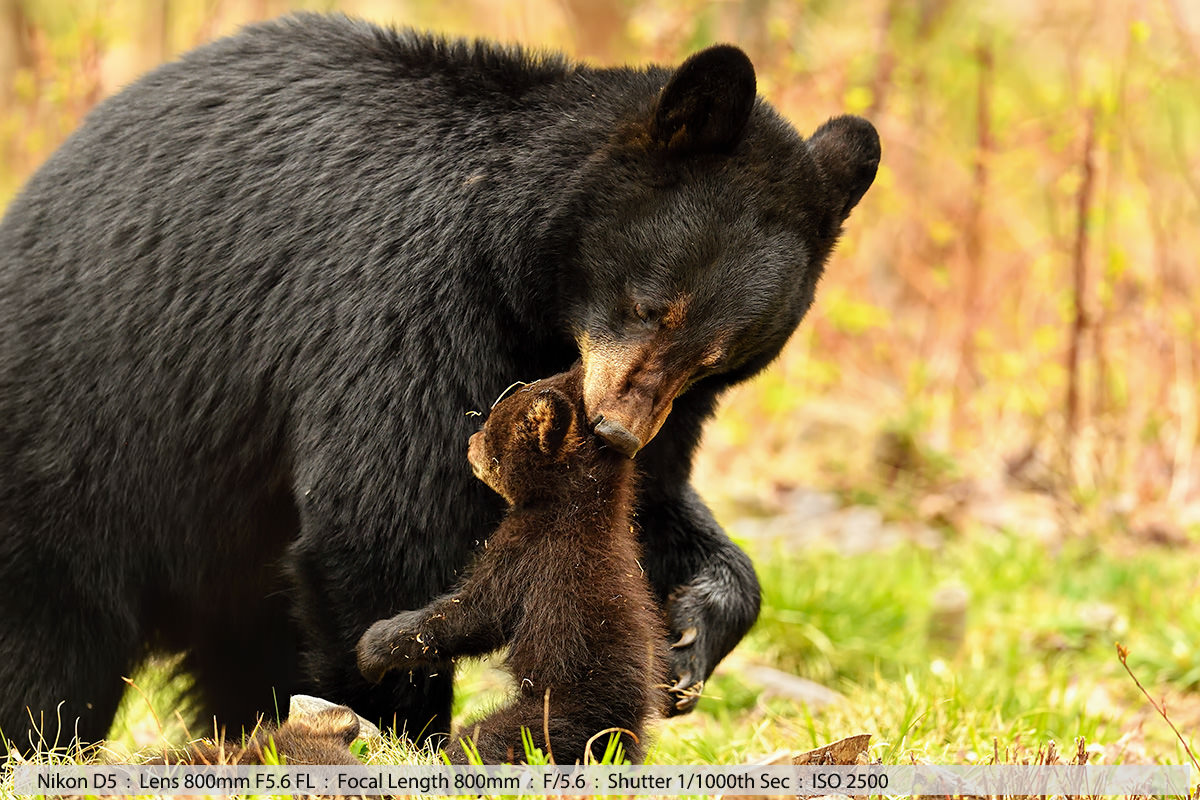
Female Black Bear Picking Up One of Her Two Tiny Cubs

Female Black Bear Picking Up One of Her Two Tiny Cubs

Some photos sell regardless of what I said above – just because of the cuteness factor eg: cubs, babies, wow factor – I even hear many photographers say “who cares about quality, it will sell anyway” – don’t let that be you – please! Always, always care about your story and that of your photos.

Look, the female black bear picking up her tiny (1st week of May cub) is another holy grail story-telling photo for me. It has many, many story-telling elements and emotions in the photo:

  • The gentleness of how she picks up the cub
  • The hint of a second cub (ears) at the bottom of the frame
  • The way her paw is reaching out to support the cub
  • The tiny size of the cubs – the preciousness of the moment
  • The relationship between the mother and the child, so to speak.
Gray Fox Kit Standing on Logs in Lumber Yard at Last Light

Gray Fox Kit Standing on Logs in Lumber Yard at Absolute Last Light

Look, great photos will always sell themselves. Sometimes poor ones do too 🙁 – but try and see your subjects’ stories, try to convey them in your photos, tell them proudly when you show and sell them. Anyone can take a photo, but try to make yours beautiful and meaningful!

I will leave you with this story-telling photo (black bear looking back towards her tiny cub and it looking at her for guidance and comfort). I think this image can have different stories for different people. It can be seen in many ways, depending on personal experience of the viewer. So I will leave it to you to see the story here – please share what you feel about the photo in the comments section below!

Female Black Bear with One of Her Two Cubs in Field

Female Black Bear with One of Her Two Cubs in Field

Hope to see you out there! Remember, get out and get into it – always work to improve your photography. It truly is a wonderful journey.

Regards,
Robert Andersen

The post Wildlife Photography Tips – Telling A Story appeared first on Photography Life.

Photography Life

Posted in Photograpy How To | Tagged , , , , | Leave a comment

Nikon Announces New 70-200mm f/2.8E and Their Widest-Ever Tilt-Shift 19mm f/4E

Nikon has announced two new lenses for FX-format cameras, one being a new version of the 70-200 f/2.8E FL ED VR as well as the brand new, and widest lens of this type Nikon has ever made, the 19mm f.4E tilt-shift lens.

AF-S Nikkor 70-200mm f/2.8E FL ED VR

afs_70_200_2-8e_fl_ed_d5

The next generation design of the lens helps ensure the very best in image quality, speed and low-light performance, while offering balance and handling that Nikon touts as “nothing short of superb.” The new 70-200mm provides up to four stops of Vibration Reduction (VR) image stabilization, an improvement from its predecessor, that helps users to eliminate blur and camera shake even when shooting handheld or in challenging light. During burst shooting, the lens takes advantage of an electromagnetic diaphragm for consistent auto-exposure control. Additionally, a Silent Wave Motor (SWM) enables ultra-fast and quiet AF operation with seamless manual focus override. Discerning photographers will also appreciate assignable function buttons on the lens barrel that offer customization, perfect for engaging pre-set autofocus or other focusing options.

afs_70_200_2-8e_fl_ed_1

Long considered an essential lens in the bag of professional photographers, this updated AF-S NIKKOR 70-200mm f/2.8E FL ED VR sets a new benchmark for fast telephoto zoom lenses, taking image quality and handling to the next level. An indispensable and powerful tool for nearly any photographic scenario, the NIKKOR 70-200mm remains the professional’s choice with a wide f/2.8 constant aperture that is ideal for capturing sports, weddings, stunning portraits and more, even in low-light.

afs_70_200_2-8e_fl_ed_2

A new optical formula consisting of six ED elements, one Fluorite element, a high refractive element and Nano Crystal Coat helps make for a lighter and more versatile lens, while reducing chromatic aberration and helping to all but eliminate distortion, ghosting and flare. The magnesium alloy lens barrel features superior weather-sealing that achieves anti-dust and waterdrop-resistance, while Fluorine coating on both the front and rear glass facilitates easy cleaning.

PC NIKKOR 19mm f/4E ED Tilt-Shift

pc_19_d810

The PC NIKKOR 19mm f/4E ED is a tilt-shift offering that is the widest Nikon has ever made for such a lens, and finally adds to a lineup that architecture photographers have been clamoring for. For the first time with a NIKKOR PC lens, the direction of tilt operation can be made parallel or perpendicular to shift, offering users nearly unprecedented ability to control perspective, focus and depth-of-field, without having to lock and unlock to make adjustments.

pc_19_4e_tilt

pc_19_4e_neutral

Sporting a super-wide 19mm focal length, the lens provides a unique perspective ideal for shooting horizontal or vertical panoramas, or even filmmaking. With this ultra-wide angle in mind, the latest FX-format NIKKOR offering was crafted with three ED and two aspherical elements that help combat distortion and glare, while virtually eliminating chromatic aberration and coma, even at the widest aperture settings. The lens also features core NIKKOR technologies such as Nano Crystal Coat to combat ghosting and flare, an electromagnetic diaphragm for fast auto-exposure control, as well as a Fluorine coat that helps resist dirt, water spots and smudges. Ready for a variety of challenging ultra-wide applications, the PC NIKKOR 19mm f/4E ED is a powerful tool for discerning photographers looking for full creative and perspective control. It joins three other Gold Ring Series PC lenses in Nikon’s line-up; the PC-E NIKKOR 24mm F3.5D ED, PC-E Micro NIKKOR 45mm f/2.8D ED and the PC-E Micro NIKKOR 85mm f/2.8D.

Price and Availability

Both the AF-S NIKKOR 70-200mm f/2.8E FL ED VR and PC NIKKOR 19mm f/4E ED will be available starting in November 2016 for suggested retail prices (SRP) of $ 2,799.95 and $ 3,399.95, respectively.

Resource Magazine

Posted in Photograpy How To | Tagged , , , , , , , , | Leave a comment

Billy Wilder; i.A.L. Diamond Paper Framed Print 1 5/8″ Matte Black 28×22 Photo On Paper

Billy Wilder; i.A.L. Diamond Paper Framed Print 1 5/8″ Matte Black 28×22 Photo On Paper


Billy Wilder; I.A.L. Diamond” is an art print by Gjon Mili from The Life Picture Collection. Get photo prints of “Billy Wilder; I.A.L. Diamond” in a variety of frames, styles, and materials. Photographer Bio Emigrating to the United States from Albania in 1923, Gjon Mili is regarded as the first photographer to use electronic flash and stroboscopic light to create photographs outside of a scientific context. A true pioneer of the artform, Mili’s photographs of dancers, athletes, and pictures or performances have shaped our understanding of how movement too rapid or too complex for the eye to discern is captured in the still image. Mili’s career as a photographer for Life Magazine spanned four decades and saw the publication of thousands of his photographs, taking him around the world; from collaborations with Pablo Picasso, to the incarceration of Adolph Eichmann, to original photos from Broadway plays. The Life Picture Collection From one of the most iconic magazines ever to hit the shelves comes The Life Collection – an archive of some of the most recognizable imagery of the 20th Century. Documenting events in politics, culture, celebrity, the arts and the American experience, these compelling and provocative photographs include the works of some of the greatest photographers capturing some of the greatest moments in history.

Price: $
Sold by Photos.com by Getty Images

Posted in How To Photograph | Tagged , , , , , , , , , , | Leave a comment