
Photographers and Target Marketing

Picture

© Aleksandr Bedrin

by Skip Cohen

I’ve written a few posts over the years about demographics and target marketing. As the year comes to a close and we hit the holiday seasonality, now is the time to pay attention to every aspect of the promotions you might be running now, as well as early next year.

The longer you’ve been active in social media and made purchases on line, the more likely you are to get specific offers from companies who found something to suggest you’re a candidate for their products or services.  When we get a relevant offer, like things from Trip Advisor on restaurants and events going on in the Sarasota/Tampa area, I love it, but when it’s completely irrelevant, it becomes spam. In fact, my spam filter is loaded with irrelevant offers every day.

Plus, most of us discard more email than we open. Often the subject line alone is enough to trash whatever the pitch might be. We discard email left and right, often on our phones, before we even sit down in front of a computer.

The challenge for most of you is thinking through who your target audience is. In most cases you’ve done nothing to identify the demographics of your client. I know you’re not doing massive email blasts to thousands of people, but even a small campaign to your community is important enough to be done right. Even better is staying out of everyone’s spam filter.

Here are five easy points to help you think through the process of target marketing:

  • Your promotions have to be relevant. You’ve got to know your target audience. For example, doing a mailing about a children’s portrait program to people in Sun City, AZ where the average resident is retired is a waste. However, fine-tuning a promotion specifically targeting grandparents and planting the seed for a portrait session with grandchildren might be dead on.
  • Targeted advertising: Advertising your photography business in Guns and Ammo magazine, when 98% of the purchase decisions to hire a professional photographer are made by women is another waste of money. You need to pick communication vehicles relevant to your audience. Remember, women make 98% of the purchase decisions to hire a photographer in the portrait/social categories.  
  • Added Value: Create programs providing added value rather than a discount.  Do you honestly get excited about any discount today that’s 20% or less? We’re so conditioned to discount programs that we automatically assume the retail price was originally too high to begin with. However, added value like an additional album or a extra hour or two of coverage at a wedding or an event can have powerful appeal. Remember how many different products you have to work with, especially from your album company or lab. All it takes is one call to your lab for example, and ask the question, “So, what’s new?”
  • When to promote: Timing is everything!  Look for windows of opportunity where you can make a lot of noise and actually have people hear you.  I’ve referred a lot to Bruce Berg in Oregon and a program he does during the first quarter. What makes it exciting is the studios involved aren’t competing with other events. They’ve got the spotlight all to themselves. It’s all in the first quarter, the slowest time of the year in most markets.
  • More on Timing: If I were a professional photographer specializing in family portraiture I’d be working hard to plant the seed right now on a family sitting at Thanksgiving time when families are typically together. There’s also the opportunity for holiday cards for your clients and the time to get that message out is now. Marathon Press has a “BOGO” program going right now on holiday cards and they also have a complete family marketing program.

Most important of all – start thinking NOW about your promotional calendar for 2017.  Wouldn’t it be nice to not be reactionary all the time, but have a planned out series of activities and promotions? If you start thinking about next year now, you’ll have the time to align yourself with the appropriate partners, advertising and publicity elements you need for success.

There’s no such thing as knowing too much about your target audience. In fact, there’s a great line I’ve used for years, thanks to Ed Foreman, a motivational speaker from Texas which I’ve shared before:

                  “If I can see the world through my client’s eyes, then I can sell my client what my client buys.”

You don’t want to just walk in their shoes, you need to see the world they way they do. You need to understand everything that’s important to them, including the content you share on your blog.  

It might seem early to be thinking about next year, but look how fast 2016 has flown by. Think about what kind of year you’d like 2017 to be, and then take the time to start thinking about the planning process.

And, if you’re stuck and need some ideas or a little help, you know where to find me. Yes I’m serious!

SkipCohenUniversity – SCU Blog

Posted in Photograpy How To | Tagged , , | Leave a comment

Cherishing Those Special Moments

Picture

While this is way off base for a blog typically about the business and marketing side of photography, it’s hardly off base for a Sunday Morning Reflections post. However, it makes a point that would be hard not to share on ANY day of the week.

I manage the blog for the Friendship Centers here in Sarasota and I shared the post below last Thursday. The video is only a minute long, but it left me with hours of wonderful memories. It’s haunted me in a very positive way for the last few days.

There are so many of you who have family members dealing with the challenge of Alzheimer’s. My mother fought the battle for seven years, and was the primary reason we moved to Sarasota five years ago this week. We lost Mom two years ago, but I still cherish those those special moments when Alzheimer’s took a break and we got her back, sometimes only for a few minutes.

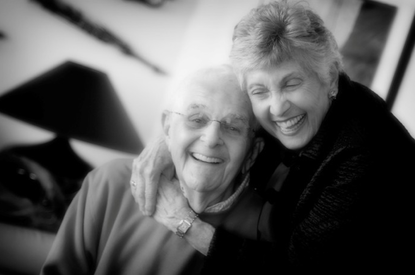
I miss her a lot, but when I look back, even when the tears start to flow, there’s still a small smile on my face. This is one of  my favorite pictures of my folks, taken just before Alzheimer’s took hold. Both her and my Dad are never far from my thoughts. I can often feel her presence around me. She wanders in and out of my dreams, like a walk-on part from a Hollywood movie.

My mother and I were never that close from my teen years through early adulthood. Moving to Florida, it was the first time since high school that I was living just a few miles away. As a result, we saw Mom several times a week. As Alzheimer’s stole more and more from us, with Sheila’s help I learned to preserve those bright spots.

So, here’s my point on this wonderful Sunday morning – life is simply too short and if you’re dealing with Alzheimer’s too painful as well. You’ve got to look for those special moments and embrace the hell out of them. I remember my Dad once saying about this last chapter with Mom, “We’ve been together over sixty years and I’m going to squeeze the juice out of every good moment that comes along!”

Wishing all of you a wonderful Sunday and a day filled with family, friends and those special loved ones who have helped define your life and who you are. Go for an eleven-second hug with at least one person today and, if you’re fighting the Alzheimer’s battle, remember you’re not alone. Find those special moments and simply squeeze every “drop of juice” you can get!


Picture

by Skip Cohen

Wandering through YouTube this morning I typed in “Alzheimer’s” and discovered this little gem. It truly defines the words “heart-melting”.

My mother fought the battle with Alzheimer’s for seven years, and in fact, it’s because of Mom, my Dad and I started going to the Care Giver Support Group every Thursday. That’s where the relationship with the Friendship Centers started.

We learned a lot in those sessions. Most important of all was being reminded we weren’t alone with our frustrations and sadness. But in spite of all the sadness there were some very special moments over the years. It’s those moments of sharing love with Mom that Sheila and I define today as priceless memories.

This video reminded of something we learned, that I still hang on to, learning to cherish those special moments when Alzheimer’s took a break and Mom came shining through. We used to call it “the sun peeking through the clouds.”  And, just like the sun, how long we felt its warmth was always changing.

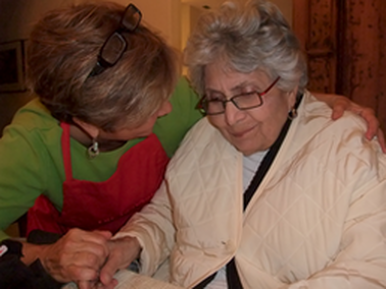
The picture to the right is Sheila with Mom on her birthday in 2013. The “sun came shining through” in a moment where Mom was worried about time simply passing too quickly as she looked at her birthday card.

​Sheila had a unique relationship with my mother, because she never argued with whatever Mom said. If Mom commented on how green the sky was, Sheila just rolled with it and told her it matched her beautiful eyes. (They were brown by the way!) They’d both laugh and Mom would squeeze her hand. As a result of Sheila simply being a friend, Mom lit up every time Sheila came into the room.

Every battle with Alzheimer’s is different for every family. I have no lofty advice, except to say, join a support group and learn to cherish those special moments of love, which just like this video become heart-melting.

More information on the Caregiver Resource Center is just a click away.


SkipCohenUniversity – SCU Blog

Posted in Photograpy How To | Tagged , , , | Leave a comment

How to Deal with Online Image Theft

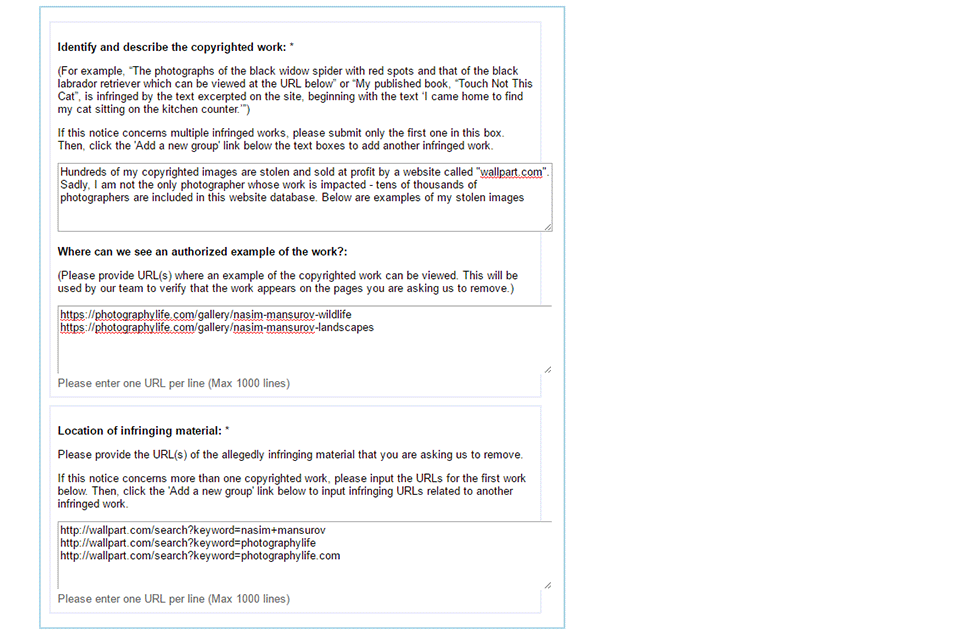
If I were to tell you that there is a website out there that steals photos you post on the Internet and sells them without your permission, how would you react? I bet you would not be happy. Earlier this week, our very own Thomas Stirr reached out to me, asking what I would do with a website called “WallPart.com” that sells posters of my photographs. At first, I didn’t think it would be bad, since my photos get taken without permission all the time and they often end up being on some unknown sites (mostly outside of the USA). But this one did tick me off a bit more than usual, since not only did it contain a boatload of my images sold at a ridiculous price of $ 5.59 for a 6×4 print, but it also contained images of pretty much every photographer I typed into the search field. And based on the Alexa rank of the website, the site has been growing at an incredibly fast rate, with close to 60% of hits coming from search engines. That’s pretty alarming, given that the majority of people ending up on the website are coming from the USA. So if you have been posting your work online, it is either already on this website, or fairly soon it will end up there. So what should you and I do about these thieves?

Wallpart.com - Nasim Mansurov Posters

Typing my name in the search field yields roughly 200 images that I have posted on Photography Life

As I have said, this is not the first time I have encountered theft of my work. Image theft happens all the time on the Internet and unfortunately, many people out there make an assumption that if an image is posted online, it must be OK to use without permission. I remember a recent case that happened to my wife Lola – her photographs of food were stolen by a few restaurants, who used her photos on their websites, on their menus and on their walls. She was contacted by her friend, who visited one of such restaurants and saw a very familiar image that she immediately recognized. After Lola contacted the restaurant and asked to remove her images, she received a very angry email in return, which instead of apologizing to Lola had a few attacks including cuss words. She was completely shocked to read that email. Litigation was not an option without incurring heavy costs, since the restaurant was located in a different country. In another case, a restaurant owner responded by saying that Lola should be honored for the restaurant to choose her photographs instead of many others they could “feature”. As for me, I could tell you many more stories like this that happened to me over the years. Some involve blatant image theft as above and others even had the guts to fully copy the content of this website, translate them to other languages and republish without permission.

While taking action for some people might not be necessary, for others it can translate to loss of business. For example, I personally gave the sensor cleaning product we sell right here at PL “sensor gel stick” and yet after a few years of selling the product, someone registered a domain called “sensorgelstick.com” to sell the product via Amazon to generate money through affiliate links. Although I have warned people not to buy the fake copy from Amazon (it is shipped from a company in China), people continue to do so, with some ending up with their AA filters getting ripped out of their expensive Nikon D5 cameras. This obviously caused quite a bit of loss of business and reputation to me and the company I represent, and despite my efforts to close the website down or reach out to Amazon, I have not had much success in resolving the issues with such third party resellers and abusers. However, there have been cases where I have been successful in getting my work taken off certain websites, sometimes through friendly email exchanges with the individuals or companies, and other times through DMCA takedown requests (more on the process below).

How to Deal With Image Theft

While litigation often seems like a good idea to deal with online theft, it is often a real pain to go through, especially for those who aren’t already familiar with the process. Finding and hiring a lawyer isn’t cheap and paying someone for something that might not yield anything at the end can be quite frustrating. Some people end up losing a lot of time and money, only to discover that the company they sued either went out of business, or can only pay for the photograph that was misused, without taking care of attorney fees.

Option One: Contact the Company / Individual / Webmaster First

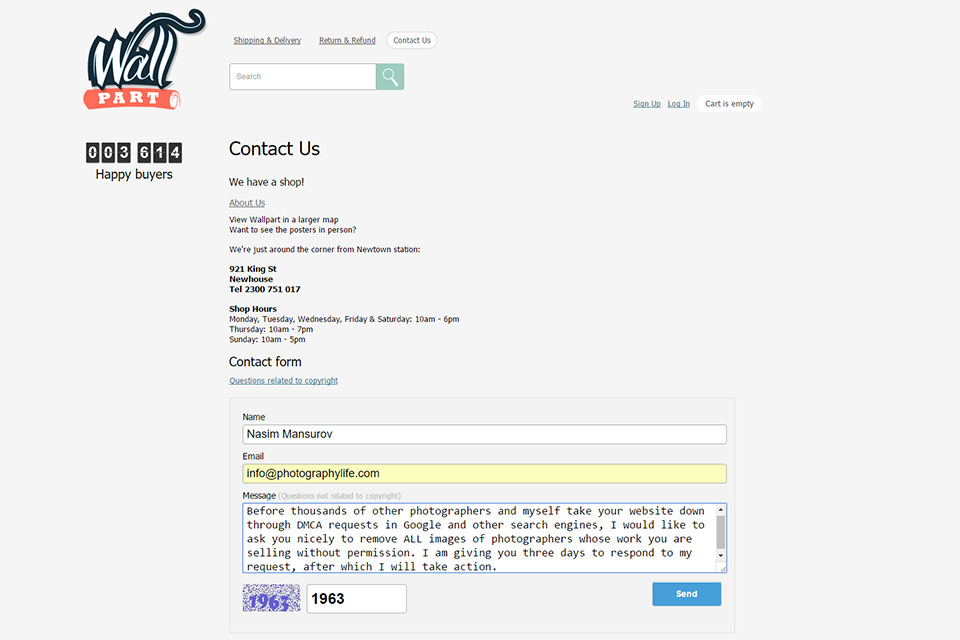
Sometimes, instead of dealing with litigation directly, it is better to involve the website owners and then search engines to deal with theft. A website that stole your image(s) will typically have some sort of contact information that you can use to reach out. In the case of WallPart.com, the website does have a “Contact Us” page from which you can supposedly reach out to the website owners. First, I am going to reach out to the website owner and ask them nicely to remove not only my images, but all other images that were taken without permission:

Wallpart.com Contact

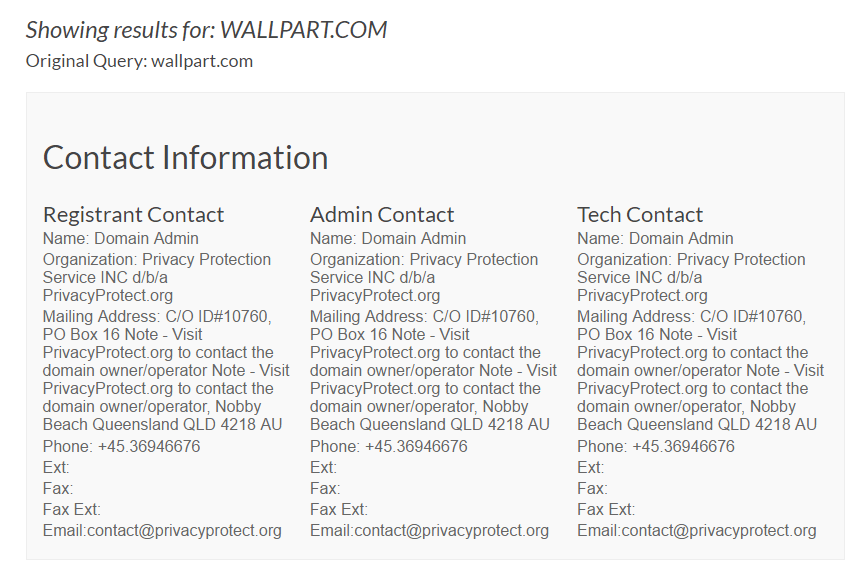
My recommendation would be to first wait for a response. However, in the case of WallPart.com, the immediate response I got after typing the above was “wallpart.com is currently unable to handle this request, HTTP ERROR 500”. So the contact form does not work, which leaves me with another option – to look up the contact info from the domain whois database. So whenever you cannot find any contact info, looking up the owner of the domain can be a good alternative. Let’s take a look at what we get:

Wallpart.com Domain Whois

Clearly, this website does not want anyone contacting them. I am not going to contact the website through “PrivacyProtect.org” or their email contact@privacyprotect.org. So this leaves me with the last option, which is to create a DMCA takedown request. If such a request is approved by the search engine, the website in question might get severely penalized by the search engine and possibly even removed from the search engine completely, which will seriously hurt the company and hopefully teach them a lesson. This is especially bad for websites that rely on search engine traffic.

Option Two: Use DMCA Takedown Request

The way DMCA takedown requests work, is you initiate a request through a search engine, which in this case I am going to use Google. If you visit this page at Google, you will see quite a bit of information regarding legal removal requests. Once you go through all the information, you will eventually end up on this page, which is specifically created for such takedown requests.

What you do from here, is fill out all the information and submit it. Then you wait for Google to take action. Within a few weeks, you should have a decision from Google on your request. Here is part of the form that I filled out:

DMCA Takedown Request

If your images are featured on a website like above, make sure that you fill out the form properly and provide all the requested information for Google and other search engines to be able to help you out. Bing, Yahoo and other search engines do have similar forms, so make sure to fill those out as well!

WARNING: Do not use the DMCA link on the website wallpart.com, as it is used by the website owner for phishing / spam reasons! Do not buy anything from the website either, because your credit card data will be collected. It turns out that the website was created primarily for this purpose. When you want to take a website down, always use the DMCA takedown links through the search engines directly – never use any other forms elsewhere!


Option Three: Litigation

If the two steps above fail and you got nowhere, perhaps it might be time to consider litigation. There are very rare cases where you actually want to pursue litigation as the first option. For example, if a large company stole your image and used it in a large advertising campaign, I would not contact the company or deal with DMCA takedown requests at all – I would immediately hire a good lawyer. If it is a large company with a lot of funds, you will get paid for damage and most likely recover all of your litigation costs. However, if you are dealing with a shady individual or a small company, you are almost always better off pursuing options #1 and #2.

In the case of WallPart.com, I will use option #2, since option #1 already failed. We will see what Google says after a few weeks…

If you are going to take similar action, please report your success or failure on the discussion form below – I would love to find out how well such DMCA notices work. I have both succeeded and failed to take sites off search engines in the past, so I can only report partial success. Hopefully with a group effort, we can take such sites down and teach them all a big lesson!

The post How to Deal with Online Image Theft appeared first on Photography Life.

Photography Life

Posted in Photograpy How To | Tagged , , , | Leave a comment

How to Use Wide Angle Lenses

Wide-angle lenses are incredibly popular for landscape photographers, but they can be very tricky to use. The main problem is that these lenses are so different from the way we normally see the world, which makes it easy to use them incorrectly. Still, wide-angle lenses are one of the most important tools that you have at your disposal, and — used well — they can lead to spectacular photos. This article covers everything you need to know to make the most of your wide-angle lens.

1) Exaggerating Perspective

If you’ve never used a wide-angle lens before, the first thing you’ll notice is their exaggerated perspective on the world.

You already know that you can increase the size of nearby objects if you move closer to them. Wide-angle lenses, though, are so wide that they let you get incredibly close to your subject and still fit it all in your photo.

As we have covered before, the actual perspective of your photos doesn’t actually depend upon your lens — it only depends upon your distance to a subject. However, wide-angle lenses appear to change your perspective more than other lenses, since they let you get much closer than normal to the things that you’re photographing.

This exaggerated perspective is a double-edged sword. On one hand, it means that the foreground of your photo will be incredibly large and detailed. Personally, I love photographing sand dunes, and wide-angle lenses are perfect for showing the crazy lines all around me. A lot of people also love using wide-angle lenses to photograph waves that have washed ashore, or any other interesting foreground objects.

Spencer-Cox Death Valley

NIKON D800E + 20mm f/1.8 @ 20mm, ISO 100, 1/100, f/16.0

There is a problem with the apparent exaggeration in perspective from a wide-angle lens. Although nearby objects appear huge and detailed, everything in the distance shrinks tremendously. If you’re photographing mountains, for example, they may end up looking tiny and insignificant if you use a wide-angle lens.

This is the main problem that people run into when they use a wide-angle lens for landscape photography. Yes, wide-angle lenses increase the size of your foreground, but this comes at the expense of your background. I almost never use a wide-angle lens to photograph mountains, unless I am incredibly close to them, because they simply appear insignificant in the photo.

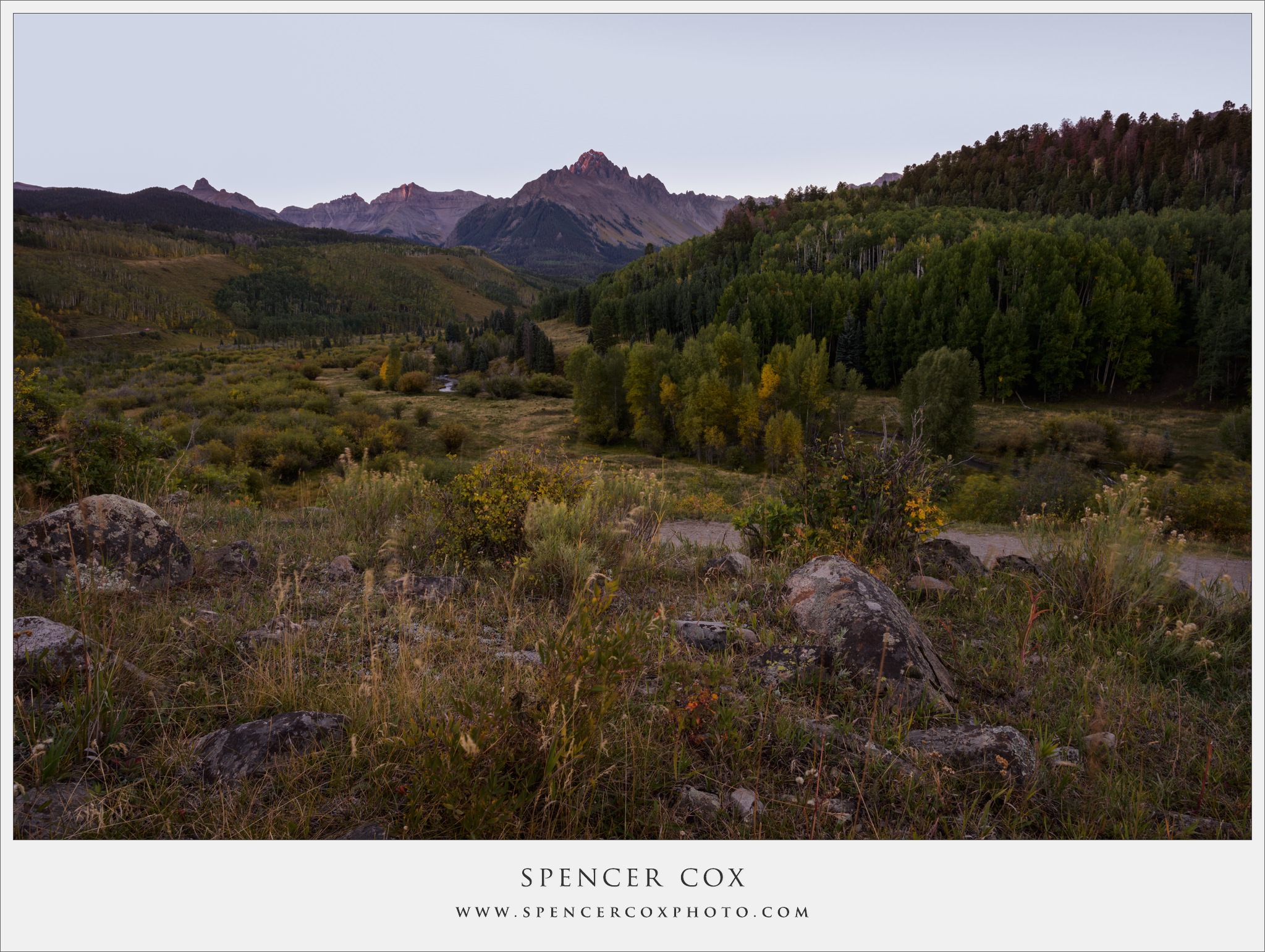
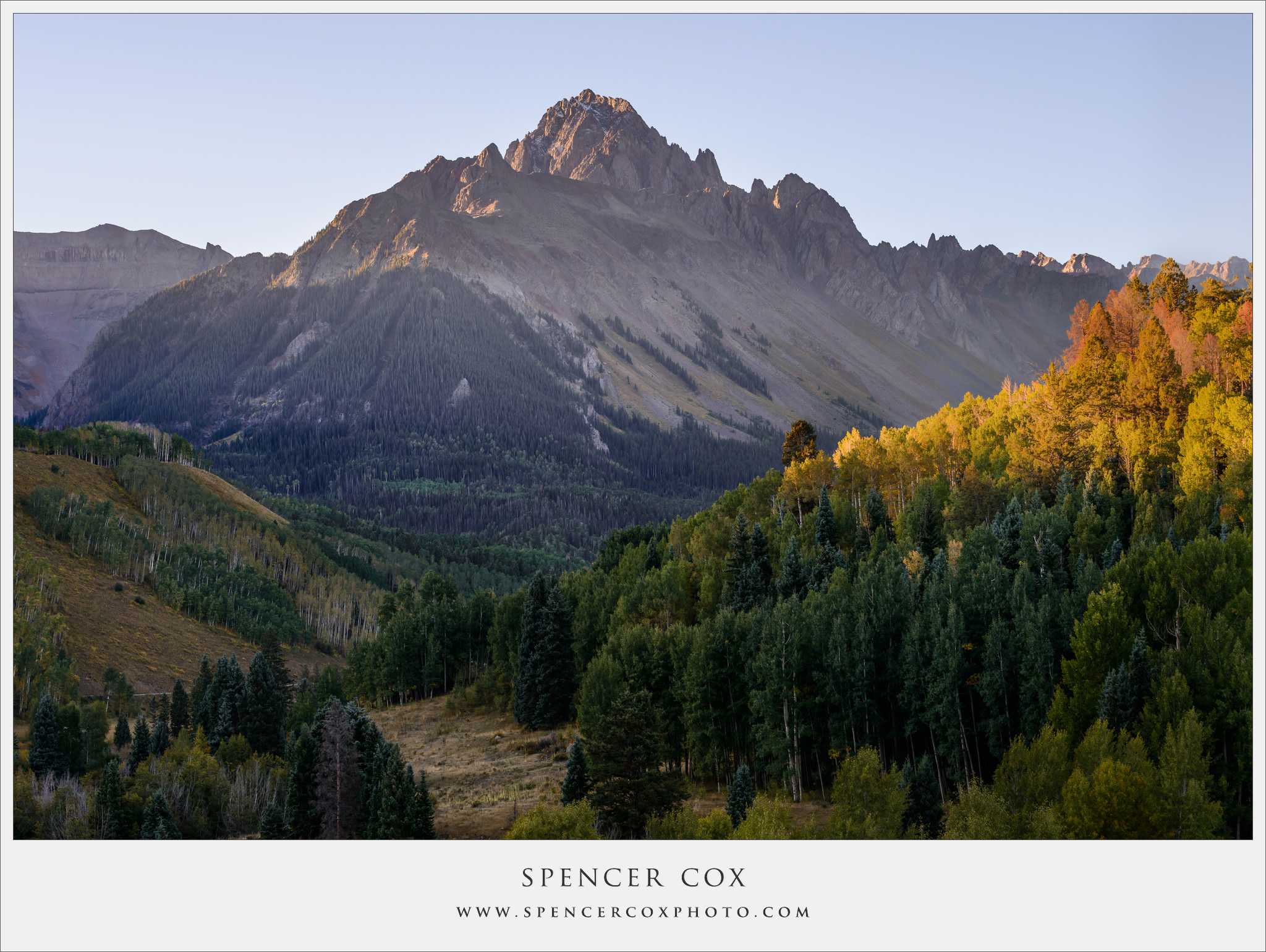
Take a look at the comparison below. The first photo was taken with a 20mm lens, and the distant mountain appears almost completely insignificant. The second photo was taken with a 70mm lens, which is much more successful.

20mm photo:

Spencer-Cox Wide angle lens

NIKON D800E + 20mm f/1.8 @ 20mm, ISO 100, 3/1, f/16.0

Here’s the final photo, taken at 70mm:

Spencer-Cox Colorado

NIKON D800E + 70-200mm f/4 @ 70mm, ISO 100, 1/25, f/11.0

This brings up another point: you need to have an interesting foreground if it’s going to be exaggerated so much. Clearly, the foreground in the first photo is very boring. It’s mostly just a clump of grasses and a few rocks, and it certainly isn’t important enough to take up half the photo.

Still, despite these problems, wide-angle lenses are great for a lot of landscape photography. If you have a good foreground, they can make your photo feel three-dimensional, as if your viewer can walk into a scene. This isn’t usually true for telephoto lenses, which tend to be best for photographing distant landscapes.

2) A Sweeping View

A lot of people will say that you shouldn’t use a wide-angle lens as a way to “fit everything in” a photo. I respectfully disagree.

Sometimes, if you have an incredible scene that sweeps across the landscape, the only way to capture it all is to use a wide-angle lens (or stitch a panorama from a telephoto lens). Obviously, you still need to watch out for your foreground and background, but that is always the case.

I find that this is particularly true when there are interesting clouds overhead. If you want to show all the crazy clouds in a landscape — along with the landscape itself — a wide-angle lens is your best bet.

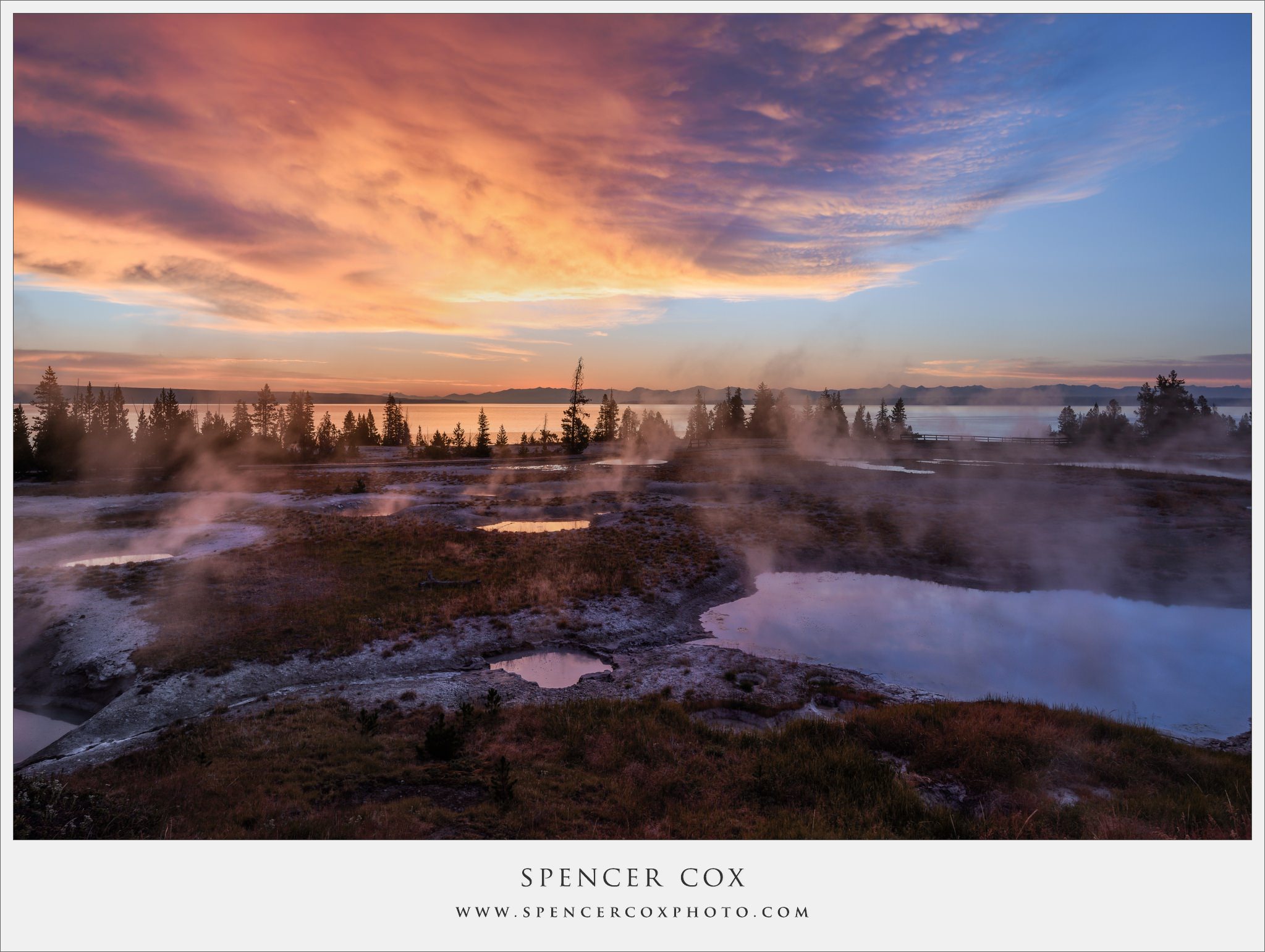
When I was in Yellowstone one morning, the entire sky turned incredible colors. It was essentially a rainbow overhead, and I knew that I wanted to get as much of it as possible in my photo. So, naturally, I used a wide-angle lens.

Spencer-Cox Thermal Sunrise

NIKON D800E + 20mm f/1.8 @ 20mm, ISO 100, 2/5, f/11.0

Since I was standing on a hill, this photo hardly even has a foreground. But, exaggerating the foreground wasn’t my purpose with this photo! Instead, I wanted to show the sweeping view of the scene — I wanted to fit everything in the photo.

Of course, I see where people are coming from when they warn against using a wide-angle lens like this. A lot of beginners arrive at a beautiful landscape, then use the widest lens they have simply to capture as much of it as possible. Then, they arrive home with a lot of empty nothingness in their images and wonder what went wrong.

When you’re using a wide angle lens, the hardest part about composition is making sure that there is something interesting in every part of the photo. In many landscapes, your widest lens will fill most of the frame with grass and an empty sky. A photo like this probably won’t be very powerful.

Here’s a good rule of thumb: the only time that you should use a wide-angle lens to fit everything in is when there are so many incredible things that every part of the photo does have something interesting. That was the case when I visited Yellowstone, but it is rarer than you may think.

3) Negative Space

Another way to use wide-angle lenses is to create a photo that has a lot of negative space.

What is negative space? In photography, negative space is the part of a photo that doesn’t attract much attention. If your photo has a small tree surrounded by a blank canvas of snow, it is said to have a lot of negative space.

Wide-angle lenses do a good job of introducing negative space to your photo — often when this isn’t your goal. If you want to show the beauty of a distant mountain, you probably don’t want 3/4 of the photo to be filled with empty sky that no one looks at.

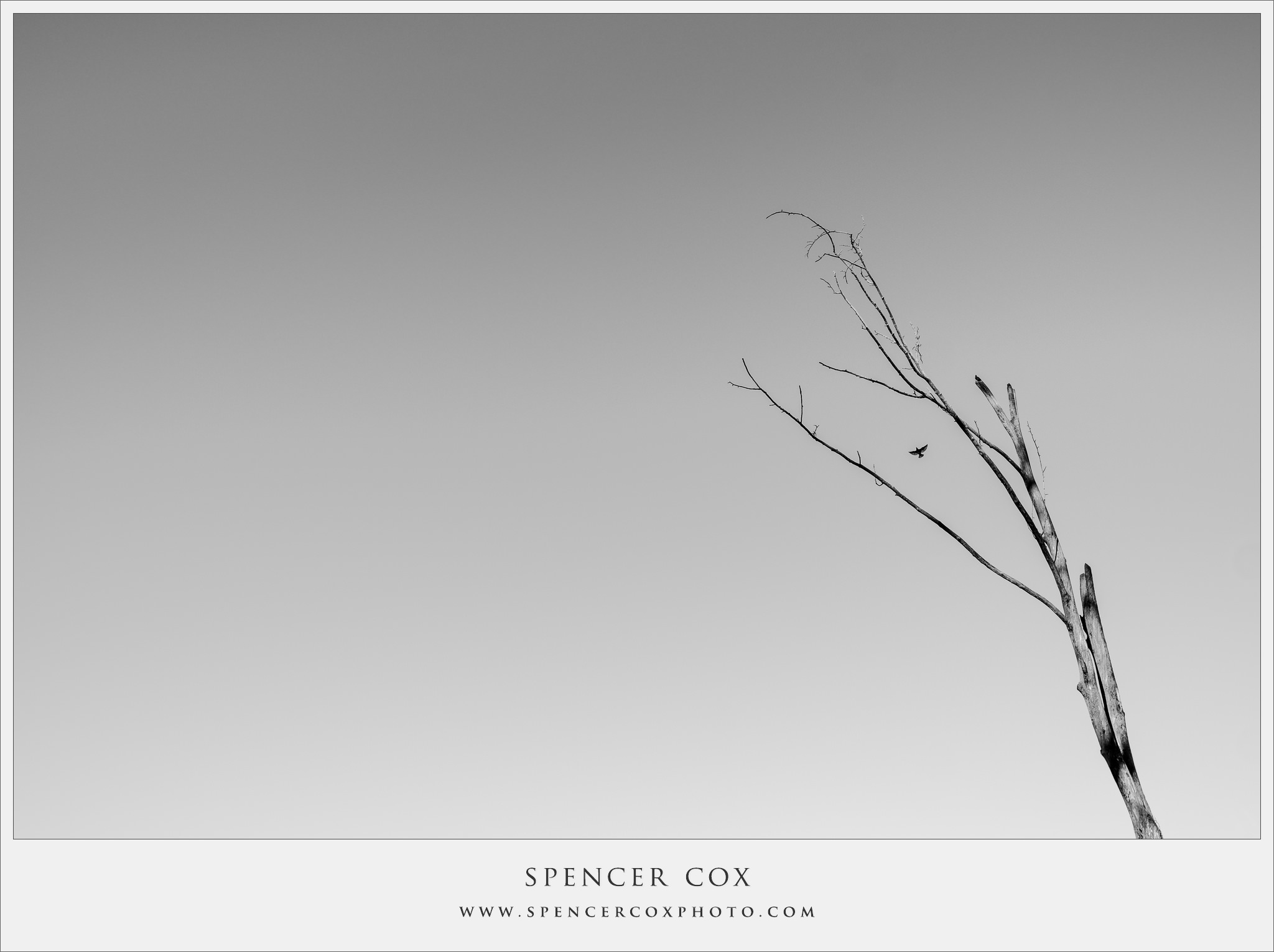
However, for some photos, negative space is an incredibly powerful tool. It makes your subject stand out, surrounded by a field of emptiness. At the same time, negative space carries an air of loneliness to a photo. If you are trying to show the smallness of your subject in the world, negative space is a great way to do so. In the photo below, that’s exactly what I was trying to do:

Spencer-Cox Negative Space

NIKON D7000 + 24mm f/1.4 @ 24mm, ISO 100, 1/640, f/4.0

Of course, for landscape photography, this isn’t often your goal. Too much negative space can make a photo feel empty, which only works if you are specifically going for that kind of effect.

In fact, a lot of times, negative space is the main problem with a photo from wide-angle lenses. If you are trying to show the sweeping beauty of a scene, it can be a problem if the photo seems desolate and empty.

As always, it depends upon the specific photo that you are taking. Maybe you want to show the emptiness of a desert scene, in which case negative space is exactly what you want. But, if you are trying to show the beauty and drama of a distant scene, negative space takes viewers away from the action.

4) Conclusion

Wide-angle lenses are some of the most popular tools for landscape photography, and with good reason. Because they let you get so close to your subject, you can exaggerate the size of a beautiful foreground and create a photo that feels three-dimensional. Plus, if you’re photographing a sweeping viewpoint filled with beautiful subjects, a wide-angle lens can be the best way to capture it all.

Wide-angle lenses aren’t exactly easy to use. They tend to add a lot of negative space to your compositions, which isn’t always desirable. At the same time, they shrink the size of your background relative to the rest of the image, diminishing its importance. Because wide-angle lenses are so different from our normal perspective on the world, a lot of photographers end up using theirs incorrectly.

If you can work around these problems, though, wide-angle lenses will become a crucial part of your arsenal. I use mine more than any other lens for landscape photography, and I’ve always been happy with the photos that it helps me take. Plus, the more you use your wide-angle lens, the better you’ll get at it. There is a reason why these lenses have gained such strong reputations in the world of landscape photography — they let you capture the world in a very interesting way.

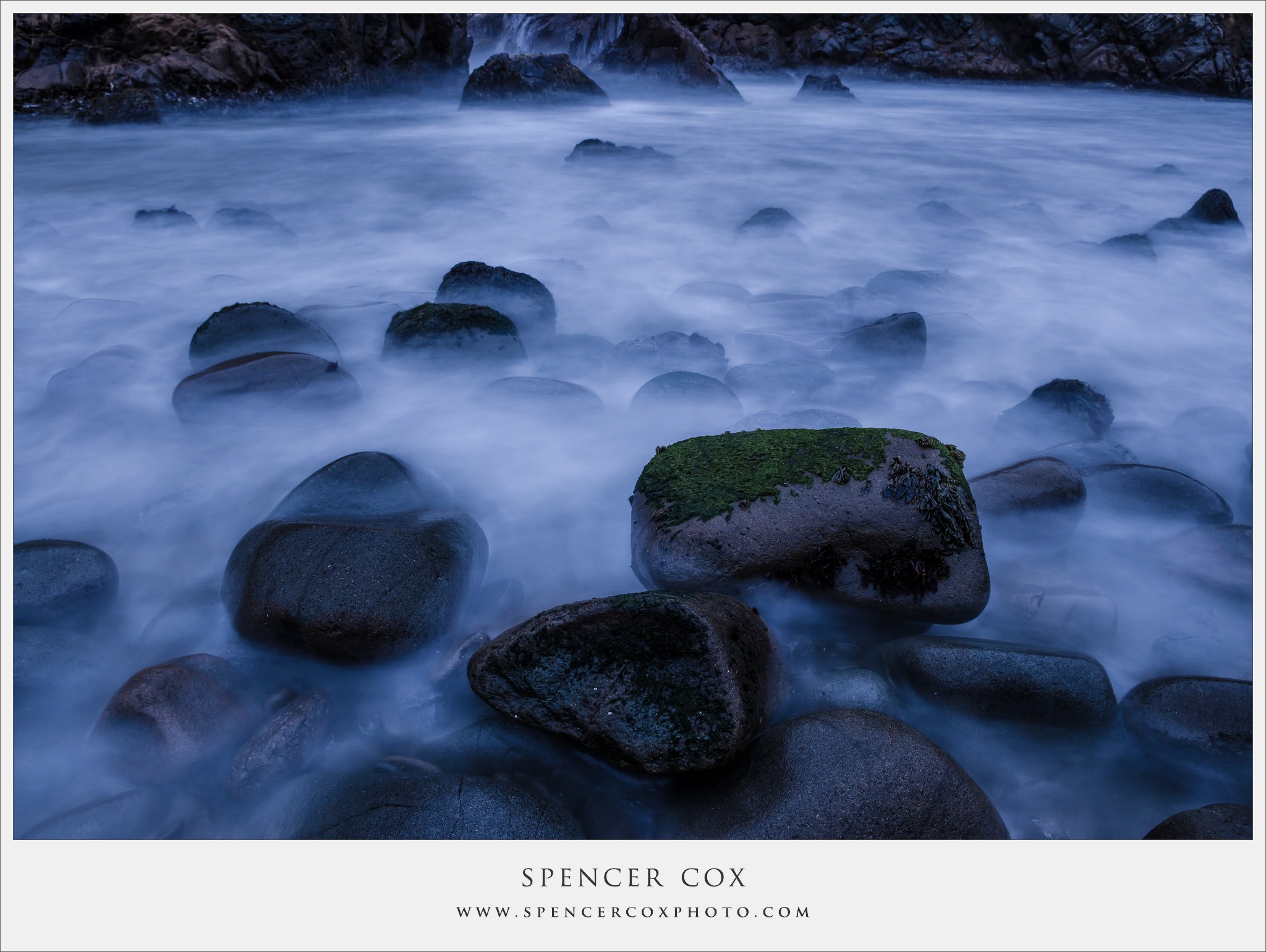
Spencer-Cox Big Sur

NIKON D7000 + 17-55mm f/2.8 @ 17mm, ISO 160, 30/1, f/8.0

The post How to Use Wide Angle Lenses appeared first on Photography Life.

Photography Life

Posted in Photograpy How To | Tagged , , | Leave a comment

Lee Remick Canvas Gallery Wrap 21×30 Photo On Canvas

Lee Remick Canvas Gallery Wrap 21×30 Photo On Canvas


Lee Remick” is an art print by Gjon Mili from The Life Picture Collection. Get photo prints of “Lee Remick” in a variety of frames, styles, and materials. Photographer Bio Emigrating to the United States from Albania in 1923, Gjon Mili is regarded as the first photographer to use electronic flash and stroboscopic light to create photographs outside of a scientific context. A true pioneer of the artform, Mili’s photographs of dancers, athletes, and pictures or performances have shaped our understanding of how movement too rapid or too complex for the eye to discern is captured in the still image. Mili’s career as a photographer for Life Magazine spanned four decades and saw the publication of thousands of his photographs, taking him around the world; from collaborations with Pablo Picasso, to the incarceration of Adolph Eichmann, to original photos from Broadway plays. The Life Picture Collection From one of the most iconic magazines ever to hit the shelves comes The Life Collection – an archive of some of the most recognizable imagery of the 20th Century. Documenting events in politics, culture, celebrity, the arts and the American experience, these compelling and provocative photographs include the works of some of the greatest photographers capturing some of the greatest moments in history.

Price: $
Sold by Photos.com by Getty Images

Posted in How To Photograph | Tagged , , , , , | Leave a comment