How to Critique Your Photos Accurately

In general, photographers are very good at deciding how much they like someone else’s photo. It isn’t hard — your first reaction to a shot is either positive or negative, and it typically doesn’t change much after that. Things get more complicated, though, when you’re talking about your own work. For me, at least, I find it tough to judge the quality of some photos I’ve taken. Sure, I know when a photo is awful, but what about the other shots? This article covers some tips for looking at your work with a better critical eye.

1) Separating the Event from the Photo

Do you ever find yourself at an incredible location for sunset, camera in hand, after an incredibly difficult hike? Or, maybe you’re photographing a basketball game, and you captured the exact moment that the ball left a player’s hand to score the winning point.

In both of these cases, the situation surrounding the photo is incredibly powerful. In the first example, you feel like you have accomplished something — it took a lot of effort, but you made it to an incredible landscape in time for the best light. In the second example, you managed to capture the defining moment of a basketball game, timing the shot exactly right.

Unfortunately, neither of these cases actually means that you got a good photo.

Maybe, in the first example, your composition simply doesn’t do the scene justice. That’s certainly happened to me; even at a beautiful landscape under the right light, I don’t always come back with a good shot. Or, in the basketball case, there may be other distracting things happening in the photo that take away from the moment you captured.

In situations like these — where the experience of taking the photo is strong — it is very difficult to judge your images objectively. Perhaps you did capture everything that you wanted. But, sometimes, that won’t be true.

Quite often, I take a photo that requires a lot of effort to capture, and then I immediately think of it as my new best shot! That happened with the photo below. To get here, I spent a full day hiking up a mountain, then climbing on a glacier. The whole hike was beautiful and memorable, as well as exhausting — the perfect recipe for a photo that is difficult to judge accurately.
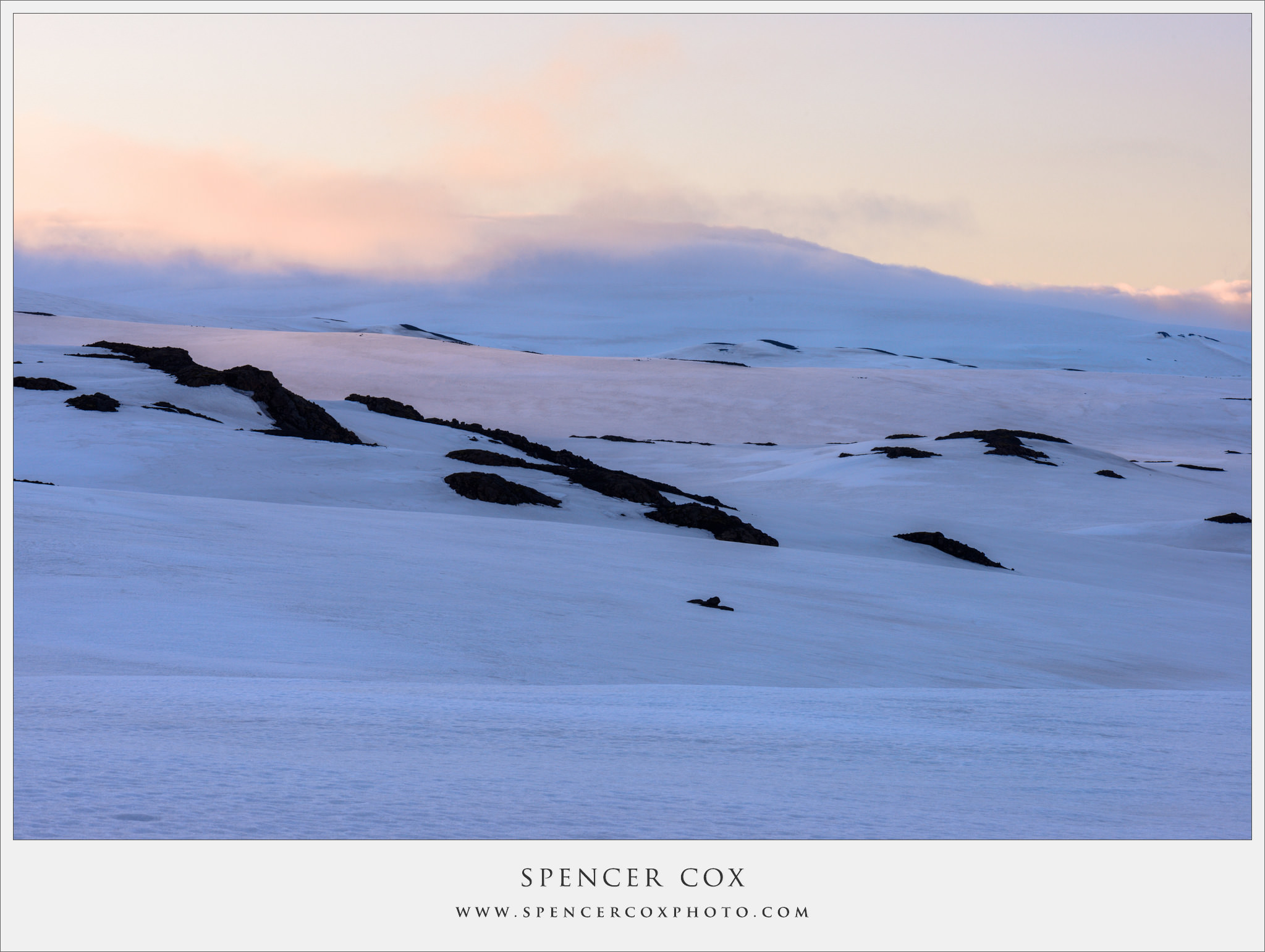
Iceland Glacier Photo

NIKON D800E + 105mm f/2.8 @ 105mm, ISO 100, 1/5, f/16.0

I don’t think this is necessarily a bad photo, and that’s the point. It isn’t awful, and it took a ton of effort to capture. That combination — hard to take, and not immediately worth deleting — made it very difficult for me to judge it accurately.

In hindsight, I can look back and tell that there are some problems with this photo. There isn’t a clear subject, for one, and the foreground is empty. These issues should have been obvious at first, but my memory of taking the shot was so strong that I overlooked them. (Obviously, this is all subjective — you may hate the photo or love it, and that’s fine. This is just my own perspective on the shot, which will be different from yours.)

A month or two later, of course, it became easier to critique this photo accurately. A lot of times, that’s how it happens — you need to wait a little while before you can see things with an unbiased eye. That’s also why I try to wait at least two weeks before posting a new photo on my website or on Facebook.

Sometimes, of course, the opposite is true: your opinion of a photo actually improves over time. Generally, this will happen when one of your quick snapshot photos turns out surprisingly well. Since you don’t have a clear memory of taking that photo, it may be a while before you can judge it accurately (a good reason to revisit your archives).

Again, the best way to solve problems like this is just to wait a bit. Over time, your memory of taking the photo won’t be as strong, and you’ll be better at judging a photo based on its internal qualities. I know of some photographers who, for this exact reason, actually refuse to look at their photos until a month after they’ve returned from a trip. Although I don’t have that much self-control, I certainly understand why they do it.

2) Dealing with Ambiguous Photos

Even if you wait a while, it still isn’t always possible to judge your photos accurately. This is especially true when a photo straddles the line between “decent” and “worth displaying.” One day, you may decide that the photo merits a spot on your website — the next, you might decide that it doesn’t quite make the cut.

Photos like this are always very difficult to judge, and there’s no easy way to tell how good they really are. Still, you have a few ways to try.

To start, as mentioned above, you can give yourself a better perspective if you wait a few weeks before critiquing the shot. If you’ve already waited, though, consider showing your photo to other people — your social media followers, or, ideally, a photographer whose work you respect.

If you decide to put an ambiguously-good photo on your Facebook page, see how many interactions it gets compared to your normal posts. More? Less? The same? This isn’t the best gauge for the actual quality of a photo, but it helps you judge how other people like it. If one of my photos gets half as many interactions as usual, it’s easy to tell that people don’t think it is as good as usual.

For a more accurate critique, though, it’s better to show your work to professional photographers. This could be online or in person, but the goal is to see how another photographer sees the photo. That said, you have to make sure that you talk to someone  who isn’t afraid to tell you when you’ve taken a bad shot — although it can hurt at first, it ultimately helps to be as accurate as possible.

Another tip, one of my favorites, helps after you’ve been editing and looking at a particular photo for a long time. When an image is strongly ingrained in your head, flip the photo horizontally. You can see a mirrored version of the shot, and it tricks your brain into seeing the photo as if it is completely new. (Only do this for photos that you have looked at for a long time — otherwise, the effect doesn’t work.) I covered this tip in more detail in an earlier article.
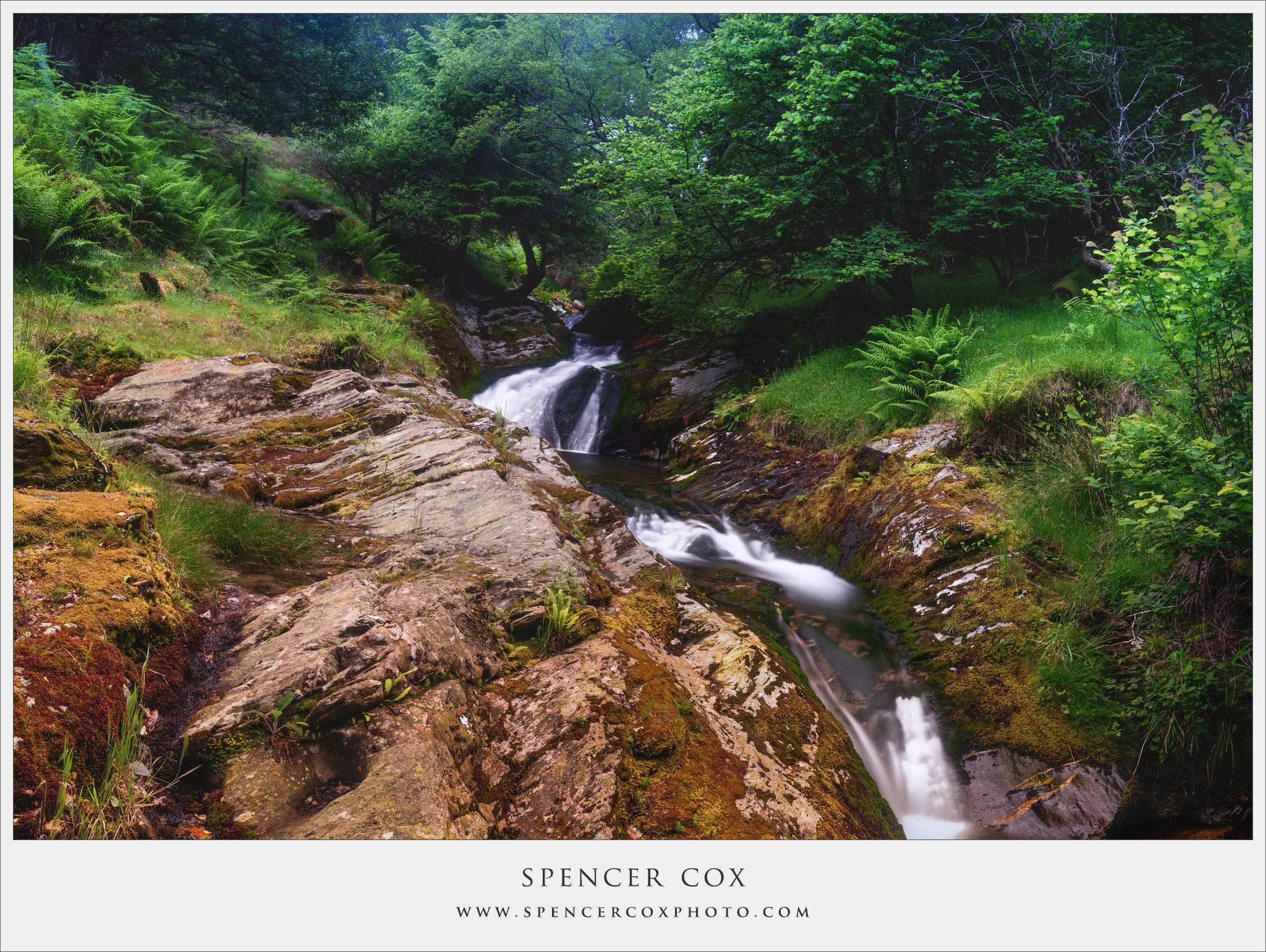
Ireland Waterfall Landscape Photo

NIKON D800E + 35mm f/1.8 @ 35mm, ISO 100, 30/1, f/16.0
Is this photo worth displaying on my website? It took me a long time to decide that it is, but I’m still conflicted. If you check my site a year from now, it may not be up any more — or, it may have an even more prominent spot.

3) Conclusion

The best way to critique your photos is simply to look at them as objectively as possible. You should have extremely stringent standards — you don’t want to show anyone a bad photo that you took, unless you work for a photography website and are doing it to illustrate a point 🙂

Most of your photos will be pretty easy to critique, and you’ll generally have a good idea of a photo’s quality after you’ve taken it. However, there will be cases that are more difficult to judge. Typically, this happens because you have a strong emotional response or memory of a particular photo, making it tough to see the image for its actual quality.

When this happens, the best option is to try waiting a while. The longer you wait, the easier it is to separate your memories from the photo itself. If that still doesn’t work, try showing your image to other photographers or flipping it horizontally in post-processing.

Although it’s not easy to critique some photos, it’s always worth the effort. You shouldn’t show your audience mediocre photos, but you also want to display a good shot when you get one. Hopefully, these tips can help you make the final decision.

The post How to Critique Your Photos Accurately appeared first on Photography Life.

Photography Life

Posted in Photograpy How To | Tagged , , | Leave a comment

Sunday Morning Reflections – The Value of Photographs

Picture

It’s another typical Sunday morning. Molly the Wonder Dog is asleep at my feet, but there was no hesitation as I sat down at the computer. I woke up knowing exactly what I wanted to write. 

A year ago, actually tomorrow on Halloween, my Dad celebrated his 93rd birthday. We all had dinner together and then wandered out behind his building to watch the sunset. I remember giving him a hug goodnight as we left him and his caregiver, Joan, by the water.  There was this look on his face and sparkle of satisfaction in his eyes. It was almost as if he was doing an inventory of his life.  He had this smug little smile as if he knew something the rest of us didn’t. Dad was back in the hospital the next day and would pass away a week and a half later. 

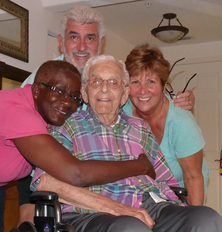
So, here’s where I’m going this morning – I mostly shot “neuro-chromes” on that birthday, with the one exception to the right. It’s a selfie of all of us together before heading out to watch the sunset. However, I have a collection of images from so many different times over the years.

Which finally gets me to my point – there’s so much, as professional photographers, so many of you take for granted. You provide the world with the ability to create tangible memories and go beyond neuro-chromes. Your work keeps us alive because you can’t appreciate where you are in life without remembering where you’ve been.

I guess this morning’s post is a combination of a beating and a “thanks!” The beating goes to those of you who take shortcuts and don’t give clients the very best of your abilities. Stop being part of the “that’s good enough” crowd and remember the power and importance of the magic you bring to so many lives. Stop thinking the bottom line of your business is more important than the potential value you create every time you click the shutter. And, remember, if you’re in a rut and not happy with your work – then fix your skill set. You can’t create images that tug at people’s heartstrings if your own heart isn’t in them!

The “thanks” side of this post goes to every one of you who share the pride of being part of this amazing industry and never slow down. You hang in there waiting for the decisive moment and that twinkle, smile, tear or expression that makes you the best at preserving and protecting memories. You’re the ones who never stop learning and push the edge of the creative envelope every day. You know and understand the responsibility you have to every client with each new frame of somebody’s life you capture.

The image above is all thanks to one of my special buddies, Bob Coates, who two years ago captured a shot of Dad and me for an ad the Friendship Centers were putting together here in Sarasota. Bob and his wife Holly came to Sarasota on Vacation for a few weeks each year, and at some point, like great friends often do, they became family. Bob caught exactly what the Friendship Centers wanted for an upcoming ad, which was a testimonial by me, talking about how much Dad and I appreciated their support through the Senior Centers, the Caregiver Support Group, etc.

So, there you have it – a Sunday morning where I want to remind you of how important you are in so many lives, mine included. If you don’t wake up every morning thankful of the career path you’re on as a photographer, then step back and take some time off.  No career field, with the exception of modern medicine, has given the world what you do when that camera is in your hands!

My relationship with my folks is alive and well, even if they’re no longer a phone call away. It’s all thanks to the photographs I have that keep the memories and stories so much alive. I miss them a lot, but looking back at the life they gave me, there are far more smiles than tears.

Wishing you all an outstanding Sunday and one filled with remarkable memories, whether captured on a chip, film or neuro-chrome. Stay on point with at least one eleven-second hug with somebody special in your life and remember the value of what you give the world with every click of the shutter.

Happy Sunday everybody!


SkipCohenUniversity – SCU Blog

Posted in Photograpy How To | Tagged , , , , | Leave a comment

Happy Halloween – 2012

Picture

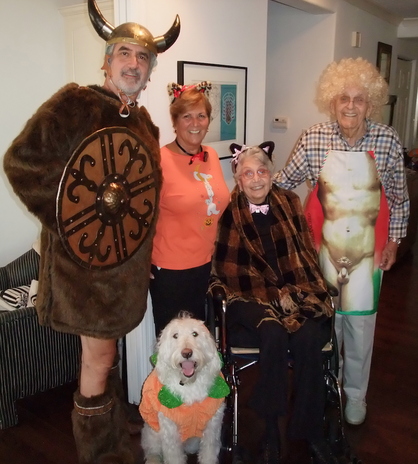
It’s Halloween and my Dad would have been 94 today. I shared the sentimentality of the day in a Sunday Morning Reflections post yesterday, but this is Halloween and it’s hard to get serious with memories like this one.

The year is 2012 and they did a Halloween dinner dance in my Mom and Dad’s building. We got the entire family into the act. Dad, as Michelangelo’s David was the hit of the night. All it took was a wig, an apron and Dad’s sense of humor. In the end we won the award for best costumed family! Even Molly the Wonder Dog got into the act as a pumpkin!

And, Mom’s Alzheimer’s took a little break that night. That smile on her face couldn’t have been more genuine. She never stopped laughing!

So, on this October 31, I’m wishing you Happy Halloween and a day of nothing but great memories as you look back on the “trick or treats” of the past!


SkipCohenUniversity – SCU Blog

Posted in Photograpy How To | Tagged , , | Leave a comment

So, You Think You’re Ready to Chase the Sponsorship Rainbow

Picture

© alexugalek

by Skip Cohen

Some time over the next few months, especially as we get into the first quarter trade show season, you’re going to start thinking about sponsorship. You’ve heard a number of speakers over the years, who were sponsored by a manufacturer or vendor in the photography space and you’re asking yourself, “Why not me?”  Or, you’ll just wake up one morning, and for whatever reason decide your work is so good some of the companies out there should sponsor you.  Sound familiar?

Chasing the sponsorship rainbow can be a daunting task, mostly because there really is no rainbow!  The manufacturers, labs and service providers in our industry are buried in requests for sponsorship. The economy and competition present the obvious challenges and virtually everybody is cutting back on expenses. That puts you in line for support along with hundreds of other photographers and projects.  What are you going to do to make yourself stand out?

Let’s see if we can develop a starter list of things for you to think about before you go “fishing”:

1. What do you have to offer? In my previous life at Hasselblad I used to get requests from photographers who thought they should be sponsored just because they were creating great images with our cameras.  NOT!   Companies are interested in what you bring to the party in helping them sell their products and increase awareness for their brand. I learned a valuable way to look at sponsorship from Beth Meyer when she was at Kodak years ago.  With every sponsorship request she had one key question, “How is this sponsorship going to help me sell more Kodak products?”

Being a great photographer is only a qualifier. Being a requested speaker, being active in social media, having a blog, writing for one of the magazines or having a story about your work in a magazine are all key things a company will be looking at if they’re considering sponsorship. If you’re not a household word, then the issue becomes your potential. You might be a young gun and have potential for influence with newer photographers or you might have developed a unique application for the company’s products.

2. How are you using the products or services you want to represent? Companies today have thousands of photographers to choose from if they’re looking for somebody who uses their products/services in exactly the way they were intended. It’s your job to find unique applications or events that will give a company greater exposure. Often, you’ve got to be the one to plant the seed of an idea.

3. Long term versus short term? There are all kinds of sponsorships to consider.  Long term means just that – you’re looking to represent the company with some level of support or compensation for a year or more.  A company with a fully supported mentor team is at the top of the list for long term relationships.  At the short term extreme would be a photographer who was only looking to borrow a particular product for a single application. Another example would be a charity event you’re about to photograph and looking for a lab to pick up the cost of prints in exchange for some level of exposure.  The list goes on and on and often it’s great to start with a very short term project, prove yourself and as you build the relationship, work on something more long term.

Obviously everybody would love long term sponsorship, but you have to walk before you can run and until you’ve made yourself unique and a virtual legend, most companies have limited funding for extensive support. It’s also important to define “extensive support”.   The max is staying independent as a photographer, but being paid by a company on a regular basis to represent their products.  These are pretty rare today, but would mean being paid on a monthly retainer or for every program you taught using or promoting a company’s products/services.

4. How are you willing to be paid? Are you looking for cash reimbursement of your expenses and speaking fee or are you willing to take support in trade? Being sponsored by a lab, for example, will often give a photographer access to all the great services they offer. The same would go for an album company, who would be willing to supply a photographer with product for his/her clients. Obviously at the sponsor level a barter for product/services trumps cash payments.

5. How’s your reputation?  Some of you are going to laugh about this, but I’ve seen some of the most obnoxious people on the planet furious because a company didn’t think they were good enough to be sponsored. Even more absurd is the fact that they protested too hard, aggravated everybody in the company and wound up taking years to recover. Nobody is interested in taking on your emotional baggage when it comes to handling rejection.

​Play it cool if you get turned down. Take the time to thank whoever you were working with for their time and consideration. The more professional you handle a rejection the more likely you’re going to stay in focus for future projects.

If you’re really stuck and don’t know if you’re ready to be sponsored, then it probably means you’re not ready. Sponsors are looking for exposure, confidence, quality along with your reputation, integrity and obviously skill set. Sponsorship is all about relationship building – so, don’t rush it, but work to get to know the people you hope to work with, their goals and products.

Even though I said there really isn’t a sponsorship rainbow, it’s still a great metaphor. A lot of great rainbows come just after incredible storms. Chasing sponsorship takes patience and sometimes you have to learn to wait out the “bad weather”!

SkipCohenUniversity – SCU Blog

Posted in Photograpy How To | Tagged , , , , , | Leave a comment

Marriage Italian Style Canvas Floater Frame 3/4″ Matte Black 20×29 Photo On Canvas

Marriage Italian Style Canvas Floater Frame 3/4″ Matte Black 20×29 Photo On Canvas


Marriage Italian Style” is an art print by Alfred Eisenstaedt from The Life Picture Collection. Get photo prints of “Marriage Italian Style” in a variety of frames, styles, and materials. Photographer Bio Alfred Eisenstaedt (1898-1995), or Eisie to those who knew him, received his first camera as a gift from his uncle at 14, a few years after moving to Berlin from Poland with his family. At 17, he was drafted to the German army. His interest in photography blossomed while recovering from a shrapnel wound. He became a regular at museums, studying light and composition. By 31, he was a full-time photographer. In 1933 he was sent to Italy where he shot the first meeting between Hitler and Mussolini. Two years later, when Hitler came to power, Eisie immigrated to America. Soon after arriving in New York, he was hired along with three other photographers-Margaret Bourke-White, Thomas McAvoy and Peter Stackpole-by Time Inc. founder Henry Luce for a secret start-up venture known as “Project X.” Six months later, Life magazine premiered on November 23, 1936. The first issue sold for 10 cents and featured five pages of Eisie’s pictures. His most famous photo was the kiss in Times Square on V-J day, about which he said, “I was running along the street grabbing any and every girl in sight. Whether she was a grandmother, stout, thin, old, didn’t make any difference. None of the pictures that were possible pleased me. Then, suddenly in a flash I saw something white being grabbed. I turned and clicked the moment the sailor kissed the nurse.” Over his career, Eisie shot a total of nearly 100 covers for Life magazine and some 10,000 prints. The Life Picture Collection From one of the most iconic magazines ever to hit the shelves comes The Life Collection – an archive of some of the most recognizable imagery of the 20th Century. Documenting events in politics, culture, celebrity, the arts and the American experience, these compelling and provocative photographs include the works of some of the greatest photographers capturing some of the greatest moments in history.

Price: $
Sold by Photos.com by Getty Images

Posted in Camera Photography | Tagged , , , , , , , , , | Leave a comment