Understanding Depth of Field – A Beginner’s Guide

Depth of field (DoF) is one of the most important concepts in photography. Understanding what DoF is, and knowing what factors affect it, are things all photographers should master. Many photographers know that you can control DoF by adjusting aperture. But did you know that DoF is influenced by other factors too? In this article, I want to explain in simple terms what depth of field is and talk about the ways you can control it.

1) What is Depth of Field?

Depth of field is the distance between the closest and farthest objects in a photo that appears acceptably sharp. Now your camera can only focus sharply at one point. But the transition from sharp to unsharp is gradual, and the term ‘acceptably sharp’ is a loose one! Without getting too technical, how you will be viewing the image, and at what size you will be looking at it are factors which contribute to how acceptably sharp an image is. It also depends on how good your vision is! Scientifically, it is based on something called the circle of confusion. This involves more physics than I’m going to get into here! Spencer talks about it in his article “Hyperfocal Distance Explained.” So check that out for more of the technical details if you are so inclined.

In these two sketches, I have tried to illustrate what is meant by a narrow and large DoF. In a photograph with a narrow DoF, only a small slice of the image is in focus. Conversely, with a large DoF, much more of the scene is sharp.
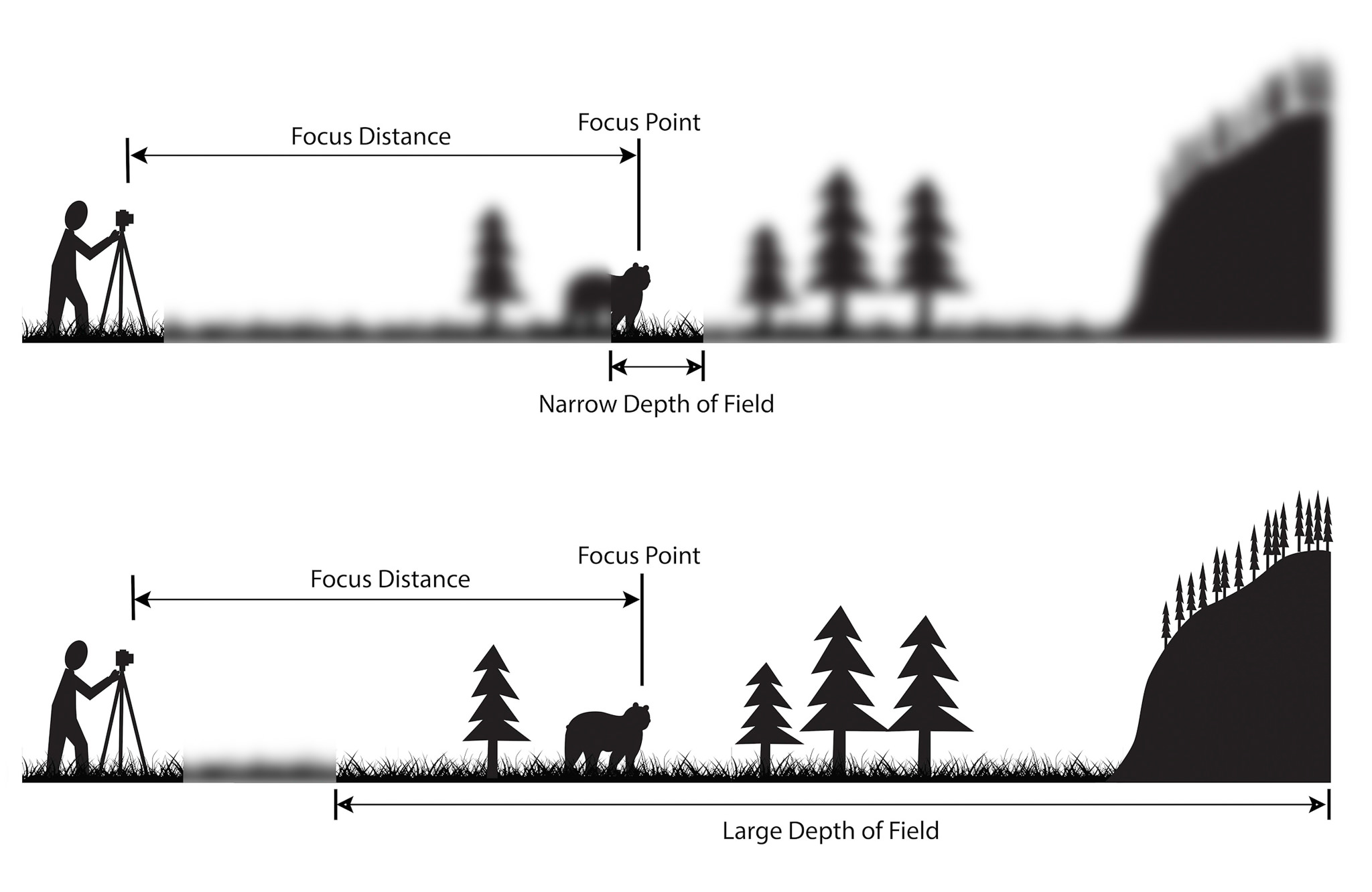
DoF sketch

Before I dive into the things that affect depth of field, I wanted to show you the setup I used to take the sample images in this article. Hopefully, this will give you a bit more insight into the photos and a better feel for the distances between the objects I was shooting. To change the camera-subject distance, I moved my tripod closer/farther away from the props. All of the test images were shot with the same camera, a Nikon D500.
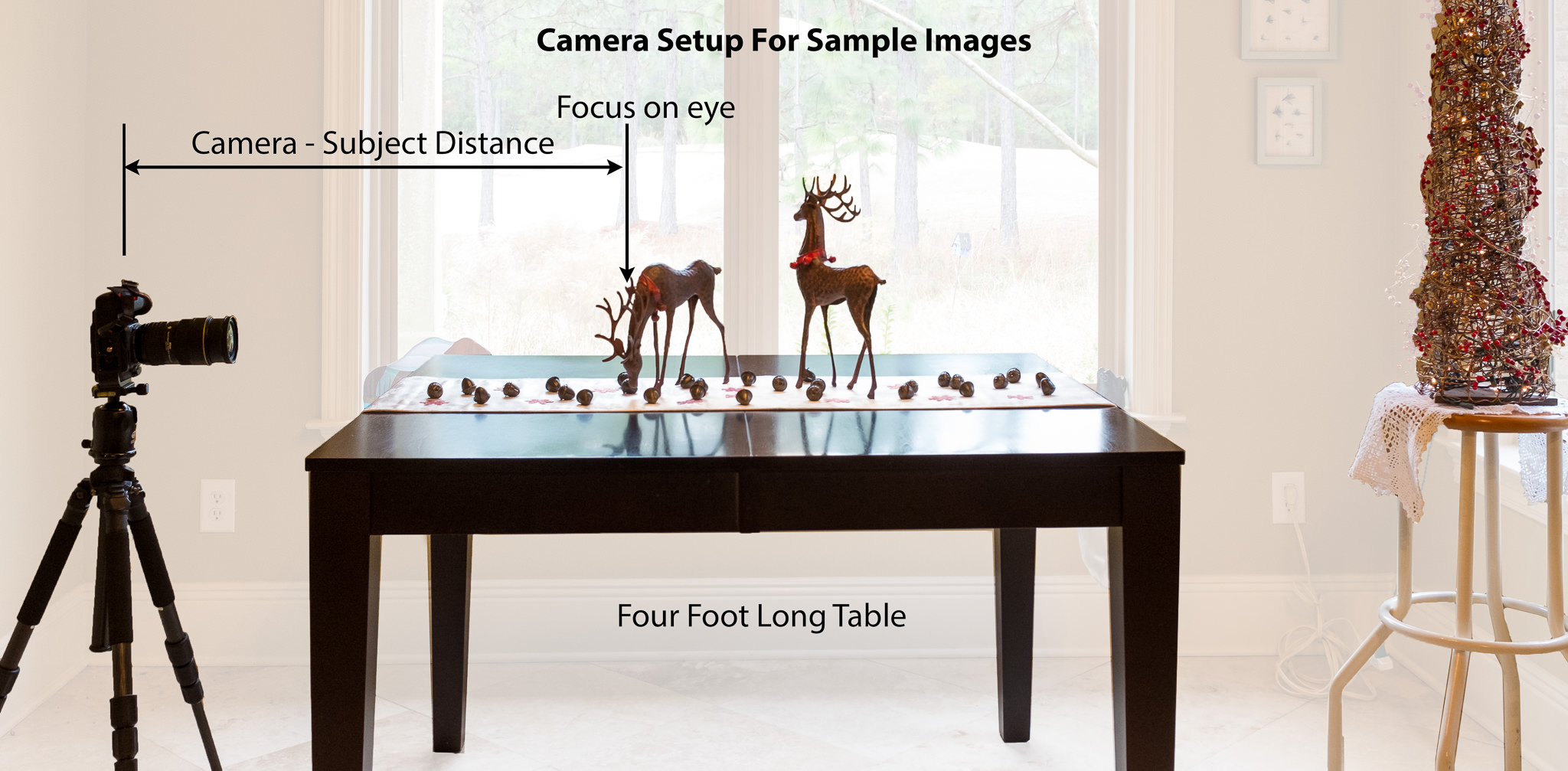
Setup

2) Aperture

Aperture is the opening in your lens that lets light pass through to the sensor. Think of it as a pupil for your lens. It dilates to let more light in, and contracts to restrict light when it is bright. Aperture is probably the first thing most photographers think of when they want to adjust the depth of field.
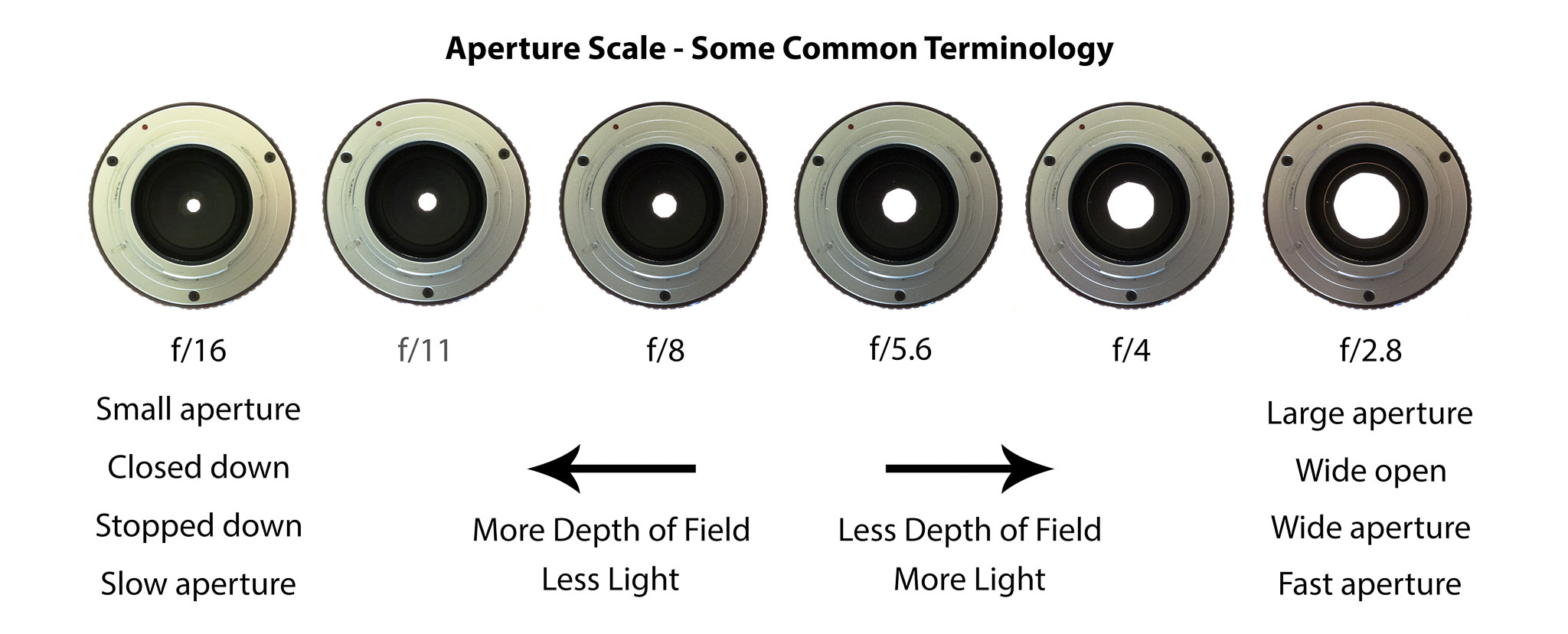
Aperture Terminology

Large apertures, which correlate to small f-stop numbers, produce a very shallow depth of field. On the other hand, small apertures, or large f-stop numbers, produce images with a large depth of field.
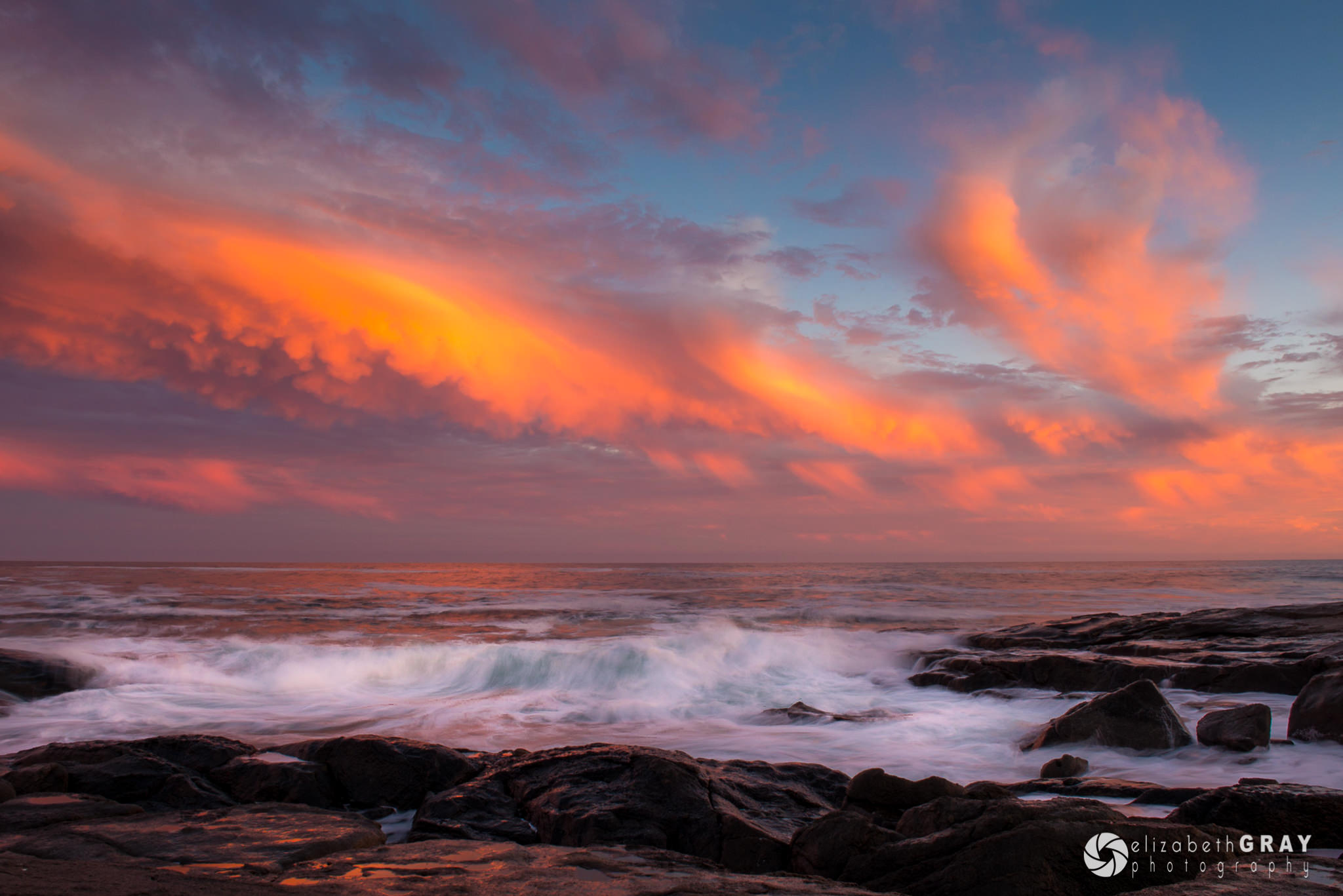
Sunset Cape Neddick, Maine

Captured with a NIKON D800 and 24-70mm f/2.8 lens @ 24mm, ISO 200, 8/10s, f/22.0
This image has a large DoF. I focused on the rocks about 5m ahead of me. The foreground rocks and the distant clouds are all in focus.
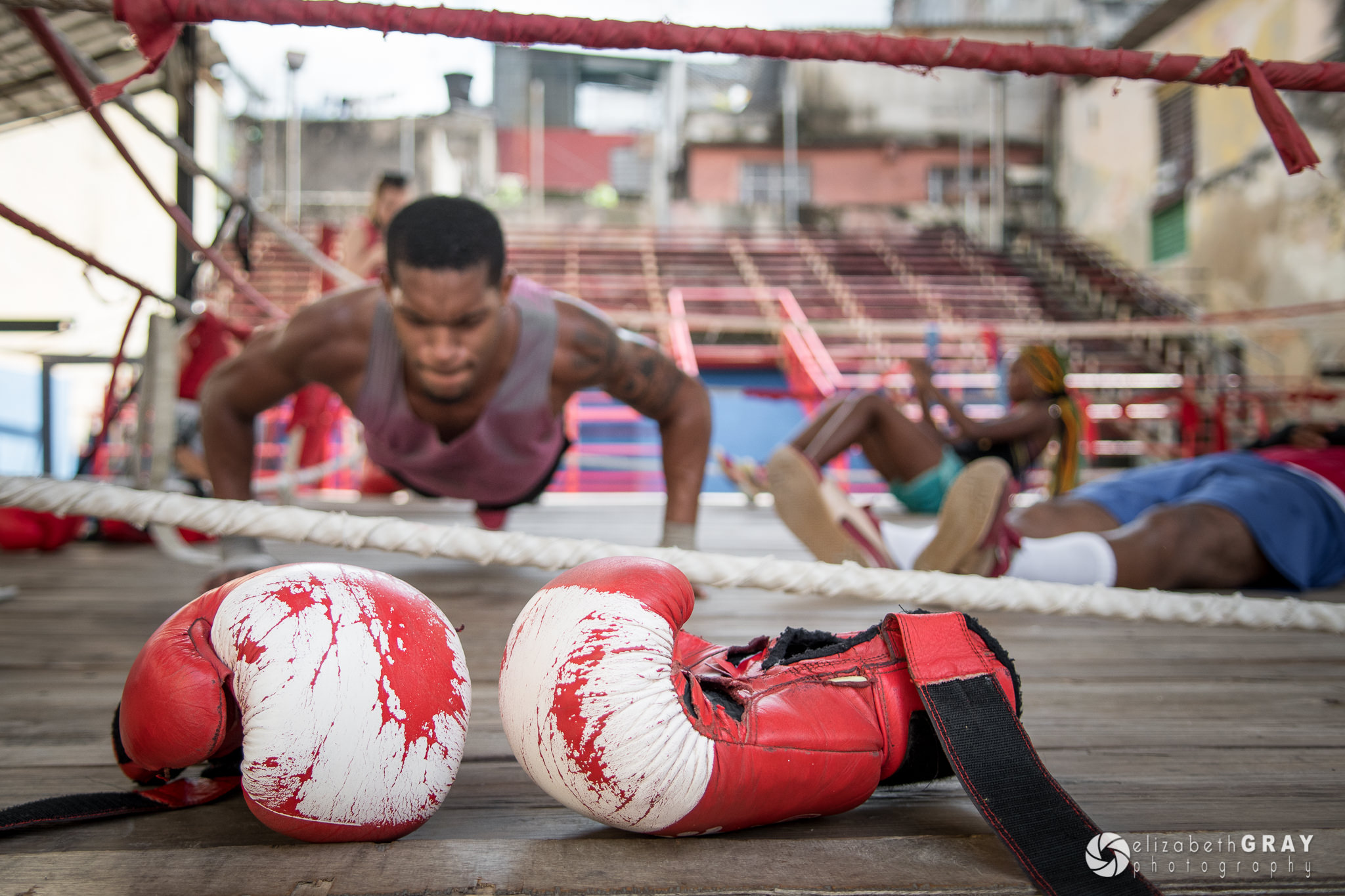
Shallow DoF

Captured with a NIKON D500 and 17-55mm f/2.8 lens @ 22mm, ISO 200, 1/1600s, f/2.8
This image has shallow DoF. Here I focused on the boxing gloves. They are sharp, but the background is blurred.

3) Camera-Subject Distance

Another important factor affecting depth of field is the distance between the camera and the subject. The shorter that distance, the smaller the depth of field. Have you ever tried to take a close-up shot of a flower or insect, but can’t get the entire subject in focus, even with a small aperture? This is because the closer you are to your subject, the shallower the DoF.

Look at these two sets of images. The camera-subject distance in the first group of pictures is 1.5m. After each shot I stopped down the aperture. The second set has a focus distance of just under a half a meter. Notice two things. In each set of pictures, as the aperture narrows, the DoF increases. In addition, for each pair of photos shot at the same aperture, there is more depth of field when the camera-subject distance is greater.
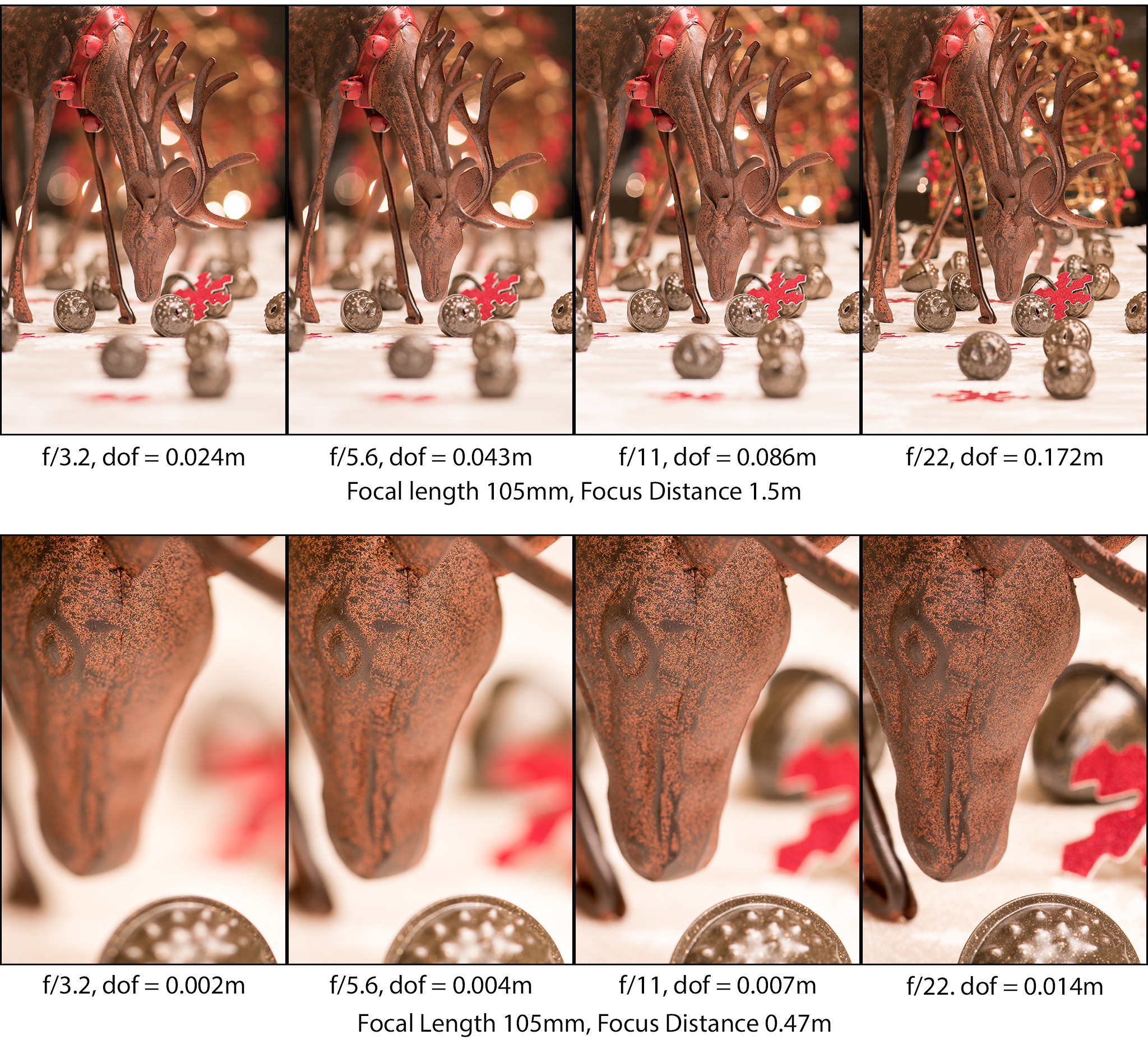
Focus Distance Comparison

Just a quick note. A variety of depth of field calculators are available online. You can also download DoF apps to your phone. All the DoF values mentioned in this article were calculated using the application Simple DoF Calculator for my iPhone. If you are interested in the actual formulas for calculating depth of field, you can find them here.

4) Focal Length of the Lens

Wide-angle lenses (short focal lengths) have a deeper depth of field than telephoto lenses (long focal lengths). Well, not exactly! It isn’t quite as cut and dry as that. If you take an image and do not change the camera-subject distance, this is true. You can see this illustrated in these two sets of images below. The top set is shot at a focal length of 70mm. The bottom set at 105mm. Both sets were taken at a distance of 2m from the subject. Notice how for each pair of images shot at the same aperture, the DoF is larger for the narrower focal length lens.
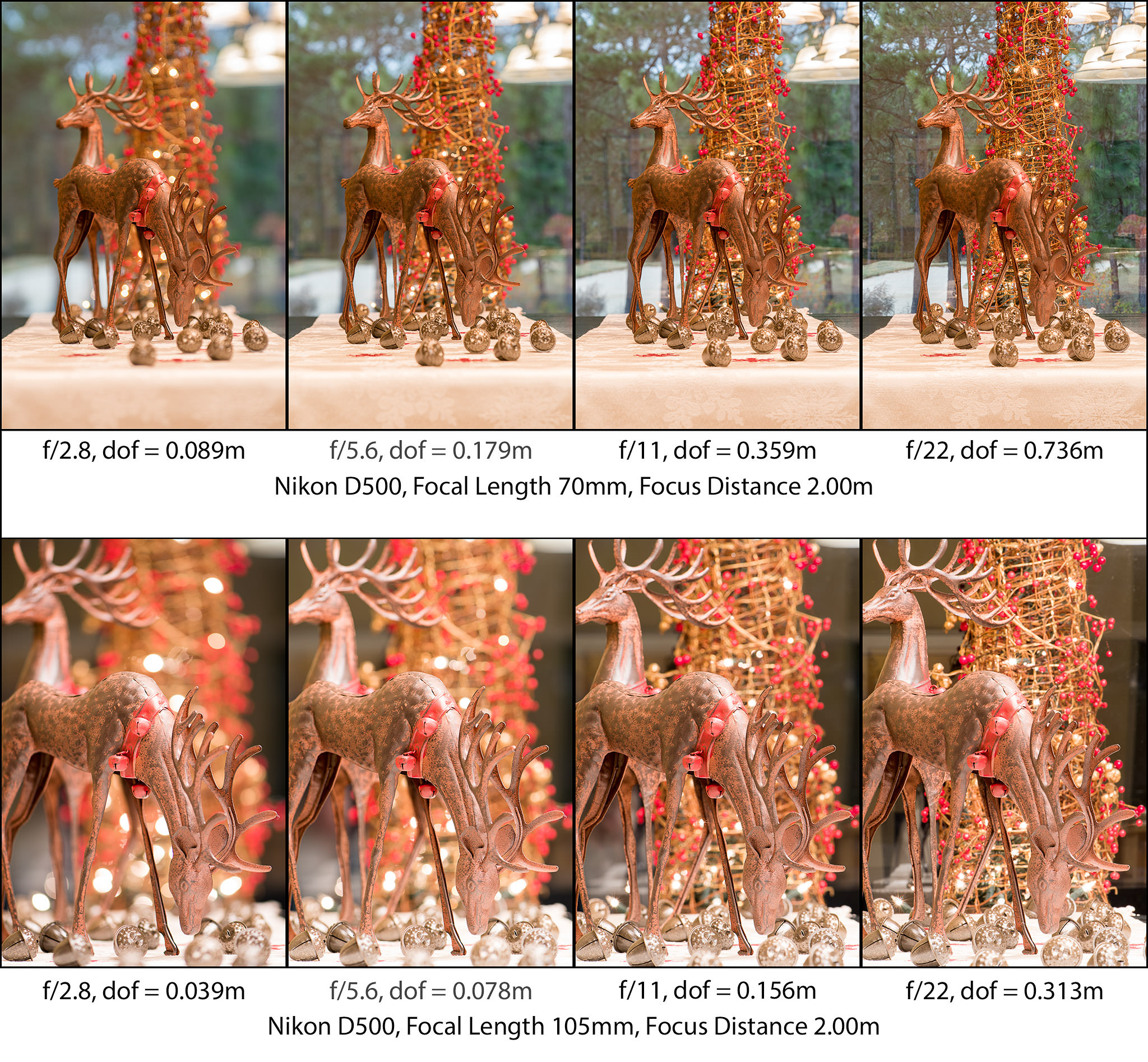
Focal Length Comparison

However, it isn’t fair to compare these two sets of images. The field of view in each collection is very different. The top group of images has taken in much more of the surroundings, and the reindeer are much smaller in the frame.

To make the comparison fair, I took two more shots. The first was taken at a focal length of 35mm and approximately 0.6m away from my focus point (still the eye of the nearest reindeer). For the second image, I moved the camera back, so it was 1.2m away from the subject. Then I zoomed into 70mm and framed the shot so that the head of the deer was approximately the same size and location as in the first shot. It turns out the DoF in both these images is the same. You can see this looking at the acorn in front of the deer’s nose and the snowflake and acorn just behind the nose. In both images, they are equally sharp.
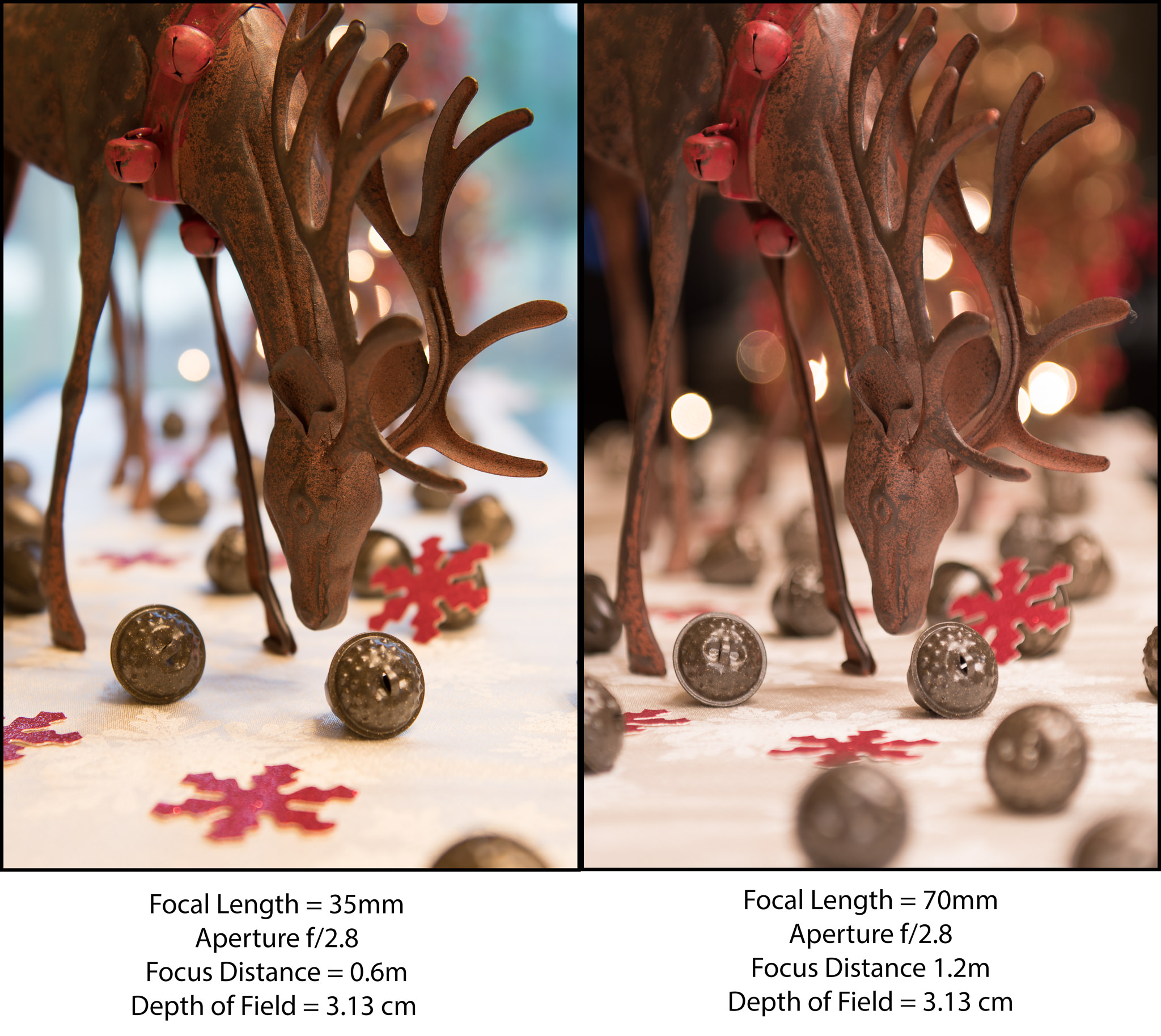
Focal Length Adjusted

So why do the two shots look different? Well, two reasons. The first has nothing to do with depth of field. I’m afraid that while I was composing and shooting, the sun went down! So, you must ignore the fact that the background is darker in the second photo. I do apologize for this! Apart from that, the difference lies in the fact that the longer focal length has a narrow angle of view. Thus, a smaller portion of the background fills the frame. The apparent magnification of the background gives the sense that the blur is larger in the photo shot with the longer lens. My article “What is Lens Compression and How to Use It In Your Photos” talks about this in more detail.

So focal length does not actually influence DoF if you adjust the camera-subject distance so that the magnification of your subject is the same.

5) Sensor Size

Sensor size also affects depth of field. The article “Sensor Size, Perspective and Depth of Field” goes into quite a bit of detail on this topic. So for more of an explanation follow the link.

In a nutshell, cameras with smaller sensors have larger depths of field. However, you have to be careful how you make the comparison. You must look at cameras with lenses that have the same effective focal length so that the fields of view are the same. If you shoot at the same camera-subject distance, with the same apertures, you will find that the larger sensors have a shallower DoF. That is why many professional portrait photographers like to use full frame cameras. Here is an example. A full frame camera with a 120mm lens, an APS-C camera with an 80mm lens, and a Micro 4/3 camera with a 60mm lens (all the same field of view) are each set to an aperture of f/9 and a camera-subject distance of 5.0m. This table summarizes how the DoF will look in each image.

Camera Crop Factor Physical Focal Length Effective Focal Length* Aperture DoF
*Effective Focal Length = Physical Focal Length x Crop Factor
Full Frame 1.0 120mm 120mm f/9 0.92m
APS-C 1.5 80mm 120mm f/9 1.42m
Micro 4/3 2.0 60mm 120mm f/9 1.91m

A common question though is can you take similar images, with the same DoF’s, using cameras with different sensor sizes? The answer is yes. However, you must divide the apertures by the crop factor in order to get the same depth of field. Using the same cameras and lenses in the above example, but setting an aperture of f/18 on the full frame camera, f/12** on the APS-C sized sensor and f/9 on the Micro 4/3 camera, you will end up with images that not only take in the same field of view but have approximately the same DoF.

Camera Crop Factor Physical Focal Length Effective Focal Length* Effective Aperture* DoF
*Effective Aperture = Aperture x Crop Factor
** although f/12 would be the mathematically correct equivalent aperture, you would have to select either f/11 or f/13 on your camera.
Full Frame 1.0 120mm 120mm f/18 1.89m
APS-C 1.5 80mm 120mm f/12** ~1.91m
Micro 4/3 2.0 60mm 120mm f/9 1.91m

6) Determining Depth of Field

Many DSLR’s have a depth of field preview button. If you press this button while you look through the viewfinder, the camera will stop down the lens, and you will see how the actual image will look. However, at small apertures, the viewfinder will get very dark, and it will be hard to see the preview!

Live view can also be used on some camera models to preview how the DoF will look. Check your instruction manual to see if your DSLR can do this.

Mirrorless shooters potentially have an advantage over DSLR shooters because what they see through the digital viewfinder, or on the LCD is how the photo will typically look.

7) Conclusion

In my opinion, it is not worth getting hung up over how many inches the DoF is in a picture. That would completely take away from the enjoyment of photography. It is much more important to know when you need a small DoF and how to create it. And the same is true when you need a large DoF. The beauty of digital is that you can take a shot, and then review it on the LCD. Quickly reviewing your image is much easier than pulling out your phone and calculating DoF! If you don’t get the result you are looking for, change your camera-subject distance or the lens aperture to get the desired effect.

To achieve a shallower DoF you can either move closer to your subject or open up your aperture. For greater DoF, move away from your subject or close down your aperture. You can also use a longer focal length to achieve a ‘perceived’ shallower depth of field.

Understanding what factors affect the depth of field in a photograph will give you the artistic freedom to make the images you want to create. You will learn the most from practicing. Take time to experiment with your camera; get to know it better. Try different focal length lenses, change apertures, move your feet to change your perspective. Analyze your photographs so you know how your gear performs. Then when it comes time to take pictures that really count, you will be ready.

The post Understanding Depth of Field – A Beginner’s Guide appeared first on Photography Life.

Photography Life

Posted in Photograpy How To | Tagged , , , , | Leave a comment

Children Photograph What Life is Really Like in Refugee Camps

There are currently over 79,000 people living in the Zaatari refugee camp, just north of Jordan. Out of this population, about 58 percent are children, according to the World Health Organization. Many of them have lost family members and people close to them since the start of the Syrian civil war in the spring of 2011. This has caused families to flee to nearby refugee camps, such as Zaatari, and, among other hardships, forced children to drop out of school.

Brendan Bannon, a photojournalist from Buffalo, NY, traveled to this camp to teach photography after he acquired a grant from the UN. In the span of four months, he taught four workshops, from fall 2014 to spring 2015. In total he had 48 students, ranging from ages 10 to 20, and would generally teach about 12 students at a time. “You’re dealing with kids who’ve been through an inordinate amount of suffering yet the hunger to learn is still there,” Bannon said.

photos-refugee-syria-fatima-2.jpg

“My family will play and have fun. We will go further. Even if thousands are too lazy to help the refugees we will make it through these critical days. A brighter future awaits.” By Fatima, Zaatari Camp, Jordan.

When working with these children, the real challenge for Bannon wasn’t whether they would be open to learning; it was providing a safe and supportive environment and the opportunity to feel comfortable experimenting, honing their creativity, and sharing their discoveries with the group.

“There were kids in my class that carried around bullet casings and torn sheets of paper with 63 names written on them,” Bannon said. “Those were the names of the people they knew personally that had died in the war.”

When Bannon first started the workshop, which took place in a steaming hot metal caravan, it took the children some time to warm up to him. He had placed a kilo of date palms on the table during their first session and said, “For the next couple of weeks this room is going to be our home together and you’re going to come to class every day, you’ll sit down, and you’re welcome to what’s here.” The first day only a few dates were taken. By the second day each student took about one or two dates. Finally, by the third day, the container was empty. Bannon, who was happy to see they had helped themselves to the fruit, held up the container and said, “You guys are finally home,” which was followed by applause from his students.

photos-refugee-syria-upsalla-1

“The moment of rain and light. A smile full of the sad dark night. The flying drops of water bring me home to Homs. Communities, alleys, houses and air full of laughter.” By Badiah, Mafraq Governorate, Jordan.

Once the students became more open to the workshop, they were given cameras, specifically Fujifilm X-T1s, which were theirs to keep for the duration of the workshop. This amplified their eagerness to learn and explore. They were also encouraged to support and mentor each other, despite their age differences.

“In some cases you might have a 12-year-old kid working with a 16-year-old—the younger kid is writing down the answers [to an interview questionnaire] while the older kid is providing text to supplement the photograph,” Bannon said. “Older students would mentor younger students and help them define ways to talk about their pictures.”

While the workshops focused a lot on photography, the students also learned how to bring context to their photographs through writing. Once their photographs were printed, they would glue their favorites into their personal journals and write about them to provide background and meaning. Before reaching this step, however, the children had to complete an entire process of learning and completing assignments by shooting on their own.

photos-refugee-syria-maha-1

“I hate fire. Why? Because in the camp our neighbor’s tent burned. Other tents burned after that.” By Maha, Zaatari Camp, Jordan.

A typical day in one of Bannon’s workshops would begin around 8:30 a.m., where he would meet with the children and spend six hours together with breaks for lunch and snacks. The students’ photographs, which they took the night before, were projected onto a screen for the whole class to observe. They would then tell their individual stories behind the images, followed by a discussion with their peers. Finally, the class would select the shots that they believed should be developed into four-by-six prints.

But Bannon wasn’t the only one supervising the children during the workshop, as he had help from two course assistants and a few translators.

photos-refugee-syria-moh-naem.jpg

“I tried to show the still and precision so I kept trying to take a photo of a ball mid air heading towards the goal. So I tried the first time and a second time but failed and caught the ball returning. The third time I tried to preempt the boy and it succeeded in great way. Apart from that, you can also tell the time from the long shadows. The red background behind goalkeeper is just wonderful because it is red and sun rays reflecting against it giving beautiful effect.” By Moh Naem, Zaatari Camp, Jordan.

Mohammad Khalf, 27, who served as one of Bannon’s course assistants for two workshops, had been living in Zaatari since March 2013, a year after his brother was killed in Damascus. “Mohammad was super astute and really interested and engaged,” Bannon said. “He was ready to continue teaching and made a good teacher of himself very early in the process, and helped out a lot throughout the workshop.”

Before Khalf came to the camp, he had photographed sporting events in Syria using a camera phone or a friend’s Nikon, and as a football player, he was drawn to sports photography.

After training with Bannon, he later began teaching his own photography classes in the camp. He now works as a center coordinator teaching photography to 16 young students. Khalf focuses on techniques such as light sensitivity, shutter speed, and aperture, while some of his own sports photography has been featured on The New York Times’ website. “[Bannon] was able to change my life for the better,” he said.

“This is my sad father. Me, my father and all my family live in this tent. My Father is very tired, tired from trying to support us a and teach us how to read and write. Thank you. But we are his children we have to take care of him as much as possible. My father suffered a lot to bring us here to this country.” By Badiah, Mafraq Governorate, Jordan.

Though Khalf says his life has improved since he found photography, it’s not to say he hasn’t run into a few struggles, such as limited access to professional equipment, spotty internet in the camp, and a lack of computers for editing and retouching. “I dream one day to have a good camera in order to transfer the suffering of the Syrian people,” Khalf said.

In Bannon’s workshops, he focused on teaching the elements of the art form he thought would be most useful to his students, such as the aesthetics of the image, expression, problem solving, interpersonal skills, and the imaginative possibilities of photography. He didn’t bog the kids down with the technical aspects because he didn’t want to lose any of them, especially if he didn’t manage to explain it well.

“Beyond clicking the shutter it takes a lot of courage to walk out into a sometimes hostile or challenging environment, and approach people who are not used to being photographed, and certainly not used to being photographed in the squalor of a refugee camp,” Bannon said.

photos-refugee-syria-UNHCR-2

By Haneen, via UNHCR

After giving the children the assignments, one of the things that surprised Bannon most was how seriously they responded to his challenges. For example, one of the assignments, the one that ran in the The New York Times with Khalf’s photos, was to photograph sports within the camp. While some of them photographed traditional sports, others cleverly made up sports, such as young people in the camp climbing fences.

“Almost every picture that comes through is a revelation to me,” Bannon said. “There are specific photographers and specific photographs that shook me fundamentally when I saw them, and continue to astonish me a year and a half later.”

photos-refugee-syria-raghda-1

“She doesn’t know how and will not have the chance to live her childhood. It was taken away from her by the war and destruction of Syria. A child’s vision in Zaatari Camp is different from the vision of other children in the world. The child in camp looks at the very far horizon so that he could find a way out of this situation and carry on with her life – like the other children. Play, joy, happiness, friendship, childhood.” By Raghda, Zaatari Camp, Jordan.

One of those photographers is Hani al Moulia, who now lives in Regina, Saskatchewan in Canada. Al Moulia, who left Syria at 19 years old in 2012, is now studying ESL at the University of Regina. He moved to Regina in June 2015 with his family in order to return to how his life was before the war.

As a student Bannon taught in a Lebanon refugee camp, al Moulia went on to present his photos at the 2015 Canadian Journalists for Free Expression gala in Toronto. His images were displayed alongside the work of established photographers who have won World Press Photo awards. “I was so proud of myself to be standing beside Brandon and talking about my work,” al Moulia said. “My first experience talking about my pictures as photographer was an unforgettable experience.”

photos-refugee-syria-maha-2.jpg

“I dreamt that the children of my country would forget their tears and wipe everything bad and to have the best future.” By Maha, Zaatari Camp, Jordan.

All of the leading broadcasters and journalists in Canada attend this particular gala. These are people who have experience covering stories about life in refugee camps, and al Moulia was able to enlighten them with his work and story, and had everyone reaching for their handkerchiefs.

“When you can surprise people who’ve been there and seen and told these stories themselves, you’ve done the maximum of what photographs and writing can do,” Bannon said. “I really believe that the work these kids offer has the potential to humanize—and that is really the biggest service photography can do, especially for people who are so often dehumanized.”

“When I got there I noticed that a massive amount of journalists had gone through Zaatari in the two years of the civil war, but I didn’t see any stories from the people living there themselves.”

One of the things Bannon promises the kids in his workshops is that if they trust him with their vision and voice, he will make sure their work is seen. Besides what’s been featured in The New York Times and the Toronto exhibit, their work has also been showcased at photo festivals in Sweden and the City Honors School in Buffalo, NY last spring. This event gave junior and high school students the opportunity to work with the pictures and text the refugee children created, exposing them to the struggles faced by children just like them.

Bannon plans to return to the Syrian refugee camps in 2017 to teach more workshops. His organization, The Most Important Picture, is also offering a downloadable annotation of the refugee kids’ photos to be used by teachers for school-based exhibitions and lessons.

photos-refugee-syria-fatima-3.jpg

“Farah is a child who was abandoned by joy at the peak of her childhood. Shyness visited her because of handicap.” By Fatima, Zaatari Camp, Jordan.

Bannon wasn’t the only one who ran workshops in these camps in recent years. Laura Doggett, a media artist and educator, also taught workshops in the Zaatari refugee camp in 2014, where she instructed groups solely made up of girls. She also went on to continue her work in the city of Irbid a year later.

Her work in the camps began after she received the Felsman Fellowship from Duke University, where she studied documentary arts and graduated in 2013. This specific fellowship allowed a documentary and public policy graduate to go together to teach in a region where vulnerable children live. The donor of this fellowship sent them to Zaatari because she wanted to know more about Syrian girls and their access to education, which is extremely limited.

“When I got there I noticed that a massive amount of journalists had gone through Zaatari in the two years of the civil war, but I didn’t see any stories from the people living there themselves,” Doggett said. “They didn’t have the tools to tell their own stories—a lot of the stories were really pretty tragic, pretty black and white.”

photos-refugee-syria-khaldiya-7

By Khaldiya

Initially, it took Doggett a couple months to get paired with the children for the workshop in Zaatari due to “bureaucratic stuff,” she said. Once she was in the camp, though, she had three months left of her fellowship and 17 girls to teach. She was granted only one hour, twice a week with these girls. In that time, Doggett focused on building her students’ creative thinking skills and doing movement and metaphorical exercises with them to help them become more exploratory.

“I would have them get out and climb up on stuff and get under stuff, teaching them about point-of-view. Really, we were just trying to get them to be adventurous so when they’re not in the workshop—which is when they’d be doing all of their production—they would feel comfortable experimenting with different things,” Doggett said. “It was about building the group to where they had the space to share things and try things that were wild…”

photos-refugee-syria-suzanne.jpg

By Suzanne

The group of girls Doggett taught in Irbid, however, participated in a six-week workshop on documentary video. They were considerably shyer than the girls in Zaatari, who were all friends prior to their workshop. Most of the girls in Irbid had moved to the city from Daraa, a rural and more traditional area in Syria. Several of them left school before the war began; it’s common for girls to cease education in eighth grade to help their mothers take care of the family and get ready for marriage.

“[The girls in Irbid] had just been staying home, taking care of their siblings and not really leaving the apartment,” Doggett said. “When they came in they were so nervous, so the movement exercises were really helpful to get them loosened up and laughing.”

photos-refugee-syria-khaldiya-4

By Khaldiya

For both workshops, Doggett didn’t explicitly give the girls assignments because she wanted them to see exactly how they were drawn to photograph and film. From there, she saw their visual language develop, as they showed up to class with full memory cards. Doggett says each girl had her own style and she would point out their individual skills and stylistic techniques to encourage them to follow their inner voice and creative instincts.

“Khaldiya, one of the girls in the camp, had this certain way she moved with the camera. She would bring us somewhere and kind of turn us around corners and lead us through folds and reveal something,” Doggett said.

For each class Doggett would also single out a particular girl as the “Artist of the Day,” which featured that student’s work and gave the group a chance to discuss what they liked about her photos or videos.

photos-refugee-syria-rehab.jpg

By Rehab

At the end of the workshop in Zaatari, Doggett had a photo exhibit and video screening of the girls’ work where they invited their families and friends. In Irbid, they did a similar video screening at the center where the workshops were held. Later on, the girls from Zaatari had their work shown at an exhibition in a public park with a gallery space in Amman, although it took a few months to set this up. At first the girls weren’t allowed out of the refugee camp, but after a few months of consulting with Jordan Intelligence, they were granted day passes to visit the exhibit.

“We made a really fun day for them and the girls were super nervous,” Doggett said. “When the doors opened they were all clustered in a little hive in the corner, opposite to where their work was. I was like ‘OK you guys don’t have to talk to anybody, but just move your eyes over to the other corner where people are looking at your work.’”

“People say all the time, ‘The girls in Syria must have it so much worse than the girls you’re working with in New York…”

After a while, the girls began introducing themselves and talking about their work to strangers. One of Doggett’s favorite moments was when she heard Rehab, a girl she describes as “excruciatingly shy,” begin talking to a stranger about the photos she took of her grandfather. The young girl explained how she wanted to take a photo of her grandfather up close and that he enjoyed being photographed.

Some of the girls from the workshops, such as Khaldiya, have had their films shown in festivals such as Sundance, Cannes, and other places the girls are not allowed to go. Doggett is still in the process of trying to figure out a way to grant them access to these events. Since she hasn’t managed to get Visas for them, she continues to do the next best thing: sending them photos and videos of the screenings. Over the years, she has grown close with the girls, and regularly stays in touch through WhatsApp.

photos-refugee-syria-asma-1.jpg

By Asma

Doggett’s latest endeavor is running photo and video workshops for young girls at the Next Generation Center in the Bronx through the Lewis Hine Documentary Fellows Program. At the moment, Doggett is creating a film with a girl named Etta, who is currently transitioning herself out of foster care.

“People say all the time, ‘The girls in Syria must have it so much worse than the girls you’re working with in New York,’ but not really. They just have a different set of problems.’ To have a parent abandon you, the issues that arise out of that are so intense and a matter of trust,” Doggett said. While several of the girls she worked with in Syria have lost family members in the war, she adds that most, if not all, are with a loving family unit of some sort.

photos-refugee-syria-khaldiya-6.jpg

By Khaldiya

“People used to ask me, ‘What are they like?’ Well, those alien beings you’re talking about are really typical teenage girls,” said Doggett. “They like having fun, they giggle when boys go by, they talk about them, and they’re super curious about the world. They’re human beings. There are so many similarities. Teenage girls are teenage girls wherever you go.”

See more images captured during these workshops below.

My mother is the light that I see in my eyes. My precious mom, she is my life, my soul and the air that I breathe. I love you my kind and tender mom.” By Badiah, Mafraq Governorate, Jordan.

photos-refugee-syria-upsalla-4.jpg

“I feel the pain of my father every day. He was shot during the war. My father can’t sleep. The metal in his leg hurts a lot. I help him get up and cover him when he is cold. I see my father resting peacefully and remember my uncle who died from war.” By Badiah, Mafraq Governorate, Jordan.

photos-refugee-syria-upsalla-6.jpg

“This is my tender father, so sensitive that when he hears my sisters voices on the phone from Syria he starts to cry. He holds so much weight on his shoulders. He wants to see my sisters who stayed in Syria with their husbands and children. This is the first time I have seen his tears. I don’t like to see him sad. He used to laugh and make jokes but no he only thinks of my sisters. How they eat, how they drink, how they sit, how they sleep through the night, are they happy? Do they miss him or not, Will he see them or die in exile first? This is my father, always filled with sadness. I wish him a long life and the chance to see my sisters, the ones I love and the ones he misses a lot.” By Badiah, Mafraq Governorate, Jordan.

photos-refugee-syria-fatima-1.jpg

“My suitcase became the box of my grief. I can’t tell my secrets unless I’m inside of it.” By Fatima, Zaatari Camp, Jordan.

photos-refugee-syria-qasem-1.jpg

A map of the Zaatari Camp showing the organization, the aid, the roads and the people.

By Mohammad Khalf, Zaatari Camp, Jordan.

photos-refugee-syria-eskander.jpg

“This donkey works in transporting goods to live.” By Eskander, Zaatari Camp, Jordan.

“I would go this fast upon my return to my home country Syria.” By Eskander, Zaatari Camp, Jordan.

________

This article was originally published in “The Humanity Issue” of Resource Magazine. Visit our online shop, Barnes & Noble or your local photo studio to pick up a copy. 


Resource Magazine

Posted in Photograpy How To | Tagged , , , , , , | Leave a comment

From Dusk Till Dawn – IRIX and NiSi

The title of this article closely resembles a Tarantino movie (and I originally wrote this close to Halloween weekend), but this is another story. It is a story that speaks of lenses, filters and the people behind them. And it describes the difficulties of doing a review when time and the weather aren’t cooperating with you. What you will read is not like a classic review of the new IRIX 15mm f/2.4, but something slightly different. It may deviate from a “normal” technical review, but I think you’ll still get a really good idea of what I think about the lens.

At the end of October I spent a few days in New York for the PhotoPlus Expo. This was my first visit to New York since 2008 and, I must admit, I was definitely missing this city a little bit. The PhotoPlus Expo was a fantastic excuse to go back, enjoy the streets of Manhattan, meet new acquaintances and make new friendships… in addition to getting immersed in the world of photography and being part of a great show focused on the American photography market for nearly four consecutive days. Unfortunately, this year I had to give up Photokina — I had to be happy with just New York and the PhotoPlus Expo!

As soon as I arrived, my first stop was the booth of IRIX, a new company producing wide-angle lenses headquartered in Switzerland (lenses are made in Korea). I had heard a lot of talk about this brand and earlier this year, so I tried to get in touch with them as I was eager to try their 15mm lens. I sent an email, but no one seems to have noticed.

I do not give up easily, so I decided to introduce myself and ask to try the lens during PhotoPlus. I met a nice guy named Marcin and left a business card, but they told me they still did not have a distributor in the US and couldn’t lend me one of the lenses. Too bad… I would have really liked to test it, even for only a short time — from dusk till dawn, to have at least two opportunities for typical landscape photo shoots. I left the IRIX booth and continued my exploration (with a pinch of sadness in my heart).

After a few minutes, while I was talking a representative at another booth, I felt a tap on my shoulder. I turned around and I found myself in front of one of the IRIX guys, who said, “We have a lens for you, please stop by our both later today.”

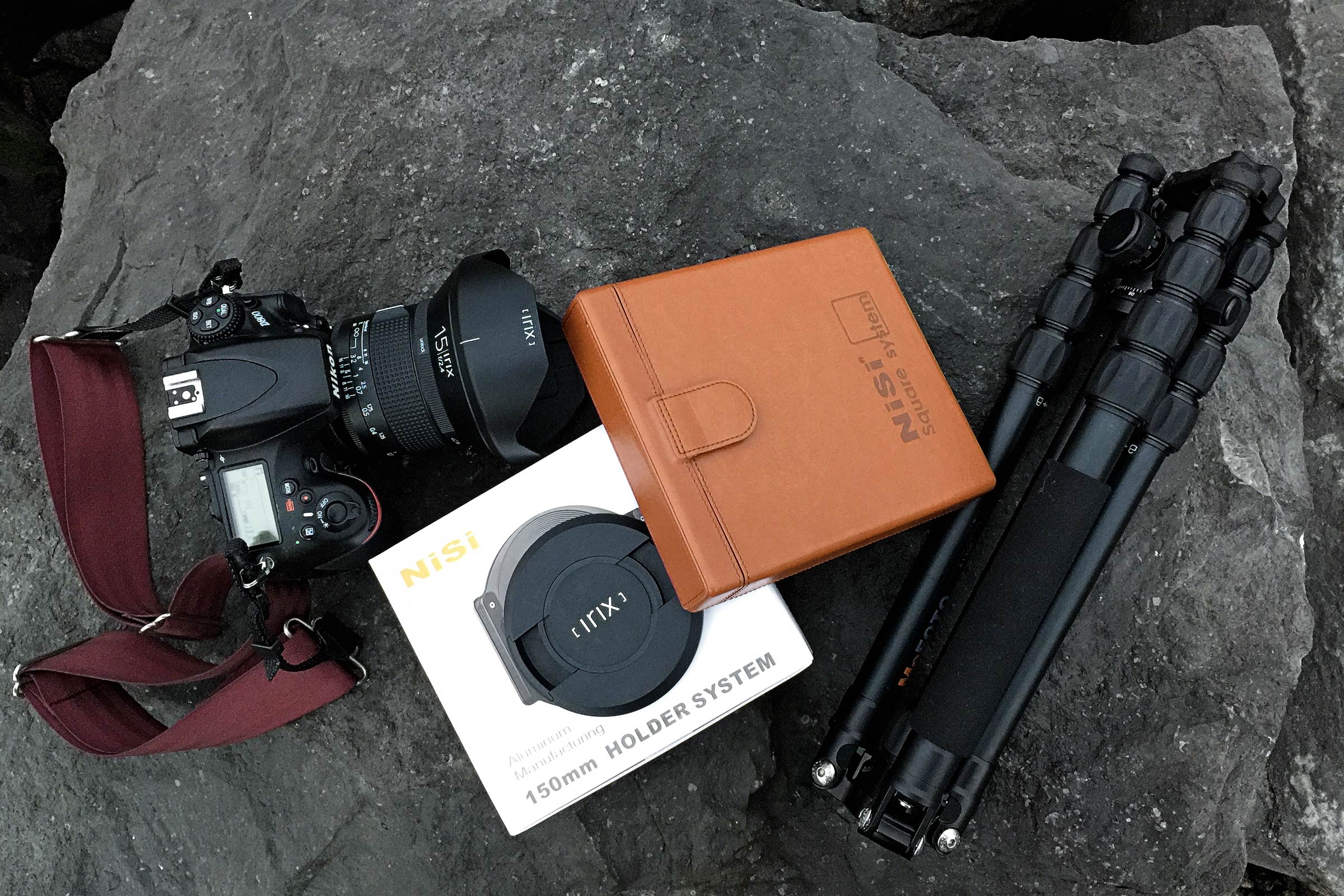
Awesome! I could finally try it out in the field! But all of a sudden I had another problem to solve — the diameter of the front lens element of the IRIX 15mm f/2.4 is 95mm, which is pretty darned big. My NiSi V5 filter kit covers the diameter of 82mm, at most. I would need a 150mm kit, or even a 180mm one, to cover such a large field of view without vignetting!

161020-IRIX_NiSi_Dal_Tramonto_all_Alba-IMG_1383Ps

1) Using Filters with the IRIX 15mm f/2.4

Here in the US I’ve noticed something: marketing people are so much better than in Italy! Most of all, they are a lot more helpful and better at listening to customer needs. The amazing thing is that even companies not actually based in the USA, when they land in the country, assume this same behavior, almost magically! Therefore it is much easier to gain access to information, and there is a great willingness to help — much more than what I have experienced in Italy! (Nevertheless, there are also cases where the opposite is true). Anyhow, I learned to ask and, I’ve found in general, the answer is yes, and the yes is usually very enthusiastic!

I didn’t have the filters for the lens. What should I try to get out of the impasse? Why not ask for help at the NiSi booth? At the NiSi booth, I met Daisy and Tony, who were super helpful. They were happy to lend me either one 150mm or one 180mm kit to do my tests. The problem was the filter holder, as they told me they didn’t have screw adapters as big as 95mm in diameter with them. They did not think it would have been necessary to use them, since there are not that many lenses with a 95mm front element! What could I do, then?

The IRIX 15mm f/2.4, unlike many lenses in its category, features a removable tulip lens hood. Personally, I consider this feature of great convenience, and this very specific characteristic gave me a chance to make a McGyver-like hack to attach to the lens the filters I needed. With a little bit of gaffer tape, it looked like I could attach them directly to the lens.

Even though it might not have been the most technically advanced solution in the world, it would have worked. However, it likely would have been a very unstable solution. They asked me to come back when I had the lens in my hands to see if they could help me figure something else out.

2) Build Quality Impressions

In the late afternoon, I went back to the IRIX booth to get the 15mm f/2.4. Hubert told me that I could have until the next morning to play with the “Firefly” version of the lens with Nikon bayonet mount.

The IRIX lenses are currently available with Canon and Nikon mounts. (I’ve been told that Pentax will be soon supported as well, while for Sony you can use one of the n-thousand adapters on the market!) Although the optical design and optical performance are completely identical, IRIX lenses are distributed in two different packaging “flavors”: Firefly and Blackstone.

The Firefly version has a plastic barrel (aluminum construction internally), and the focus ring is made of anti-slip grooved rubber, while the Blackstone version has a magnesium alloy barrel, and the focus ring is knurled metal — also, all the markings and engravings on the barrel are covered with UV sensitive varnish (for “night vision”). Despite the Firefly version coming supplied with a soft bag, they gave me the typical hard lens pouch standard for the Blackstone model, which is absolutely more cool!

Holding the lens gave me an idea of sturdiness, and the build quality looks great. Despite the generous size of front glass element, the lens is quite voluminous but not gigantic, and still appears manageable. Mounted on my DSLR, it feels well balanced. The only cheap, unstable detail is the rear lens cap, which appears very precarious and does not stay with a tight fit to the lens.

The focus ring is nice and smooth, which allows optimal control and precise focus accuracy. Between the focus ring and lens hood, there’s a thin ring. If rotated, it allows you to lock the focus mechanism in a precise position, preventing any further rotation. This is a very nice feature, and it’s useful when you might be tinkering with the filters and holder, and you want to make sure the focus will remain exactly where you set it earlier.

On the barrel there are engraved marks for the hyperfocal distance at f/8, f/11 and f/16: for landscape photography you usually do not need any other reference and they are definitely very useful in the field!

Part of the gear sold by IRIX are also filters, both circular screw-on and square. At the PhotoPlus Expo they did not bring any square filters and of course no filter holder either, but I received the circular ND1000 filter as part of the “kit” for my tests when I left their booth.

If the ND alone could solve the challenge of the long exposure, it did not solve the issue caused by the difference in brightness between sky and foreground. The beautiful day that I enjoyed in the morning, was then shifting to a cloudy and eventually misty and dreary afternoon. I foresaw a sunset without sun, but I still preferred to check to see if NiSi could help me any further. I had no idea at that point if I would be more lucky with the dawn the next day!

161021-IRIX_15mm_Review-0165-DSC_5128

3) Using Filters (Part Two)

At the NiSi booth we tried all possible solutions, but none seemed to work properly: the 95mm adapter was the key… and it was unfortunately missing!

Tony, one of the NiSi engineers, told me, “I’m an engineer, I find solutions, and I fix things!”

What a fantastic attitude! And… well, he did it!

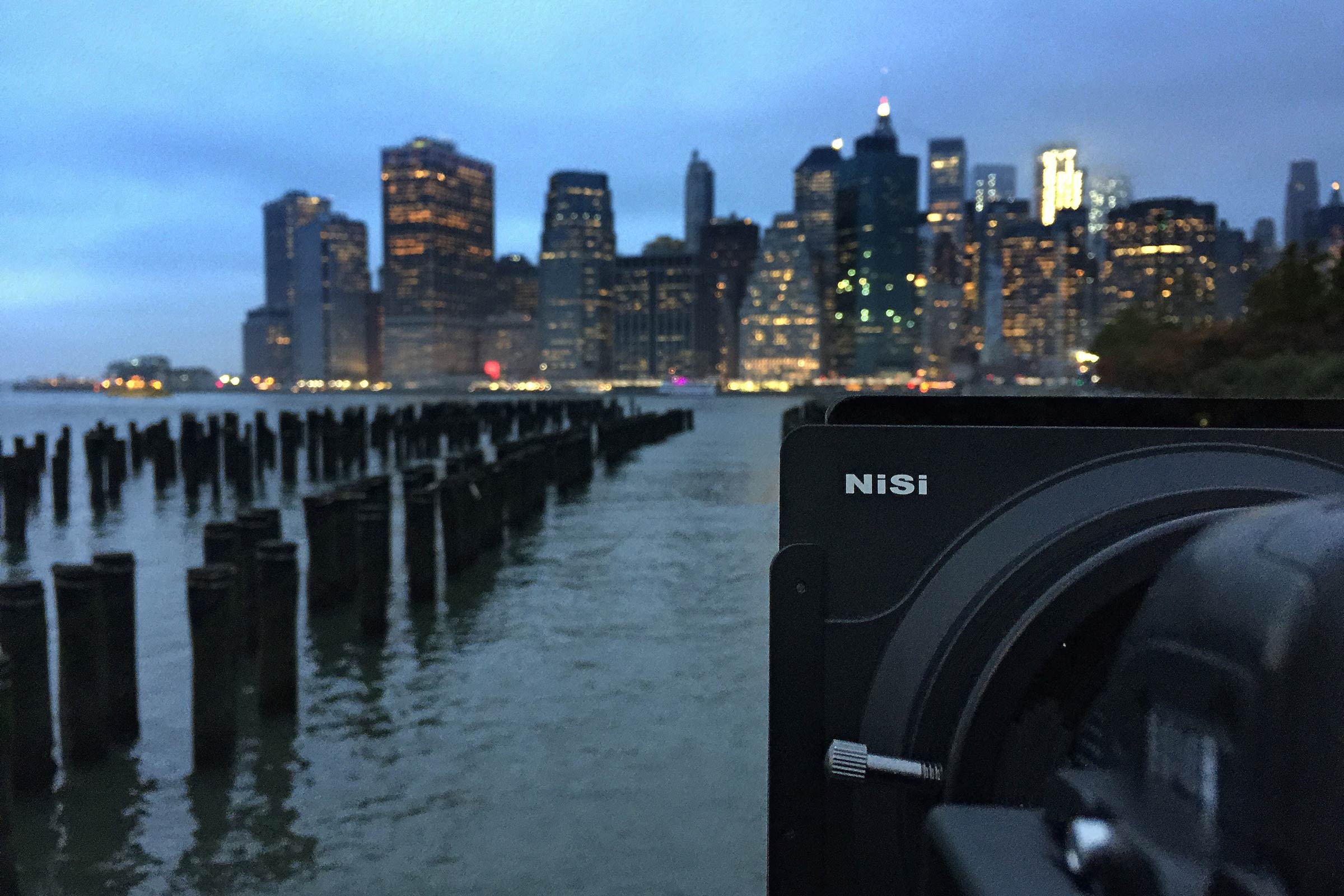
He began to remove a NiSi holder for 150mm filters made for the Tamron 15-30mm, but he realized that it was not perfect for what he had pictured in his mind, so dismantled another one suited to Tokina AT-X 16-28mm f/2.8 Pro and began to tinker with adhesive neoprene. In about half an hour, Tony had created a holder for 150mm square filters suitable for the IRIX 15mm f/2.4 lens. Eventually Daisy took a picture of Tony and me together to commemorate this masterpiece of “instant engineering.” It was definitely a sort of extreme-McGyver session, but the result was much better than what I could have done with gaffer tape and far beyond what I imagined could have been created! Stable, easy to remove, transportable, easy to handle and, above all, it allowed me to rotate the GND filter in the exact position I needed.

At that point I had all the gear and the time needed (well, more or less) to test the lens: from dusk till dawn! I had to hurry up.

4) Capturing the Photos

The sunset was approaching quickly, and, since it seemed it could start raining any second, I could not waste time! Usually I love to carefully plan before taking any landscape picture, but in this case I had no time at all. I took the subway heading to a classic shot: the skyline of Manhattan from Brooklyn Bridge Park. During my subway ride, with a $ 470 IRIX lens and about $ 500 worth of NiSi gear packed on my back, I thought:

“These two companies are awesome! I just asked them to try out their gear and, in a blink of an eye, I was granted the opportunity to do this… without them asking for anything in return! Companies like these have very, very amazing people behind them!”

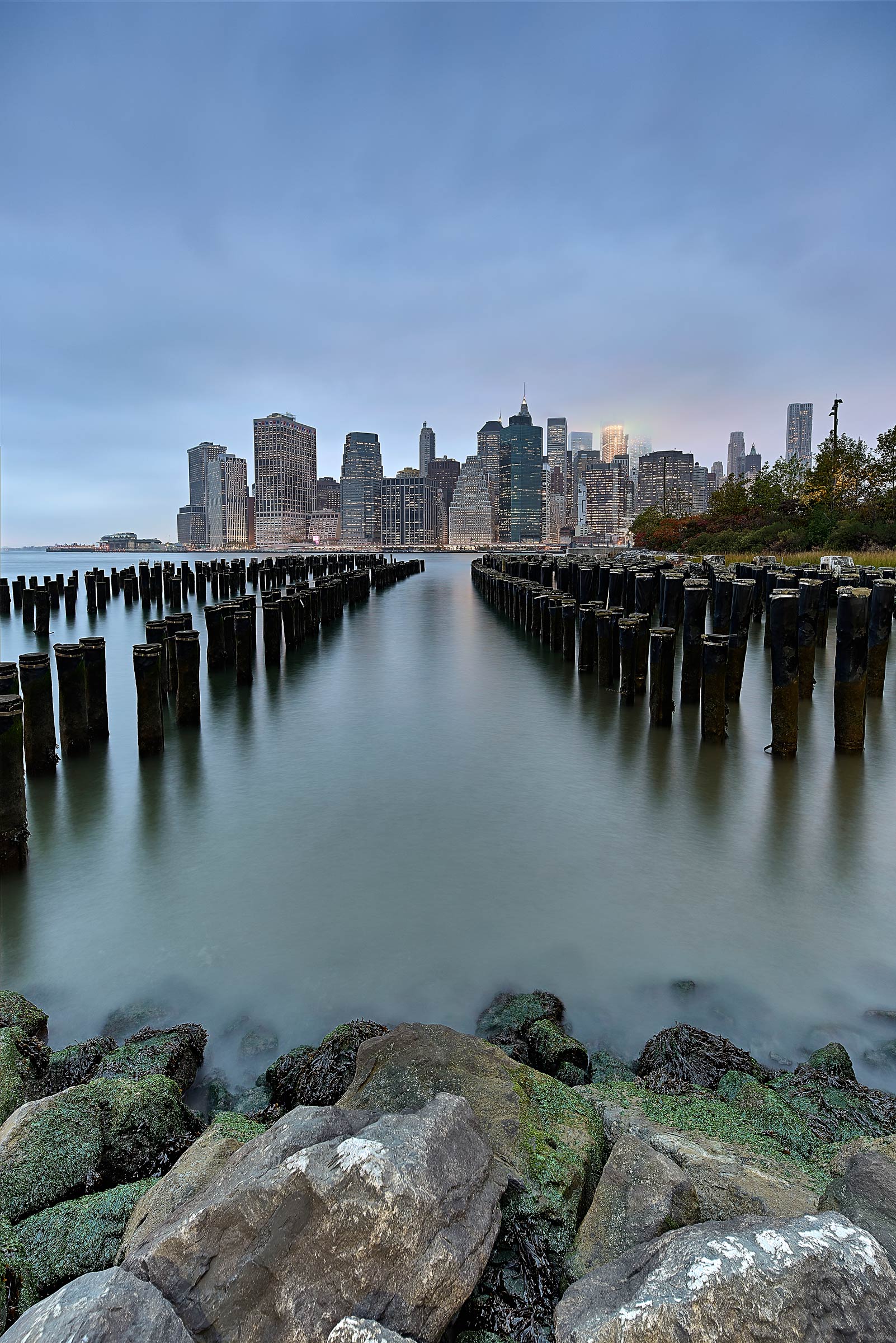
As soon I arrived in Brooklyn, the weather was pretty horrible: flat dull light, and even the clouds in the sky looked very uninteresting. On top of that, I didn’t have the precious polarizer filter… I felt slightly sad about this. The results were not super interesting, even if I went for a long exposure with silky water, but at least I had the opportunity to do some tests.

For one, the marks for the hyperfocal distance revealed themselves to not to be very precise. They usually aren’t, I know — this is also the case with the high priced Zeiss lenses, but I’m spoiled by having the luck to have my 20mm where they are very precise. The manual focusing was quick and easy. My special “Tony Edition” filter holder made it impossible to use the focus lock feature, as the area on the lens was blocked. But there was virtually no need for this at all because the focus ring stays in place very firmly.

One thing I like on this lens is the low distortion. Of course, there is distortion because we are talking about a very wide-angle lens for a full frame 35mm camera, but looking at the skyline in front of me I could see the straightness of lines without obvious distortion. Even the horizon is pleasantly horizontal. In the end, I decided to take a vertical panorama, which eliminated the pier to my left and other distracting elements included in the wide 110° field of view of the lens.

161020-Brooklyn_Bridge_Park-0099-DSC_5062C1-Edit-Web

I’m not used dealing with 150mm square filters and they are really big. Since they are made of glass (at least NiSi filters are!), if they fall, they break. It’s a nice ”price“ to pay for having exceptional optical quality, but I had to be very careful.

To carry them in my backpack, Daisy gave me a NiSi hard case: it is definitely convenient and it safely protects the filters from the bumps in everyday life and small accidental falls. Its latching mechanism did not satisfy me, though. I think it could definitely be improved: too easy to be opened accidentally, putting the contents of the case at risk.

161020-IRIX_NiSi_Dal_Tramonto_all_Alba-IMG_1384Ps

In the field and while showing the pictures to Nasim during our dinner together that night, I was not particularly “dazzled” by the resolving power of the IRIX lens when looking at the jpeg files on the DSLR display. But when I checked again during the editing process, everything looked sharp and clearly in focus.

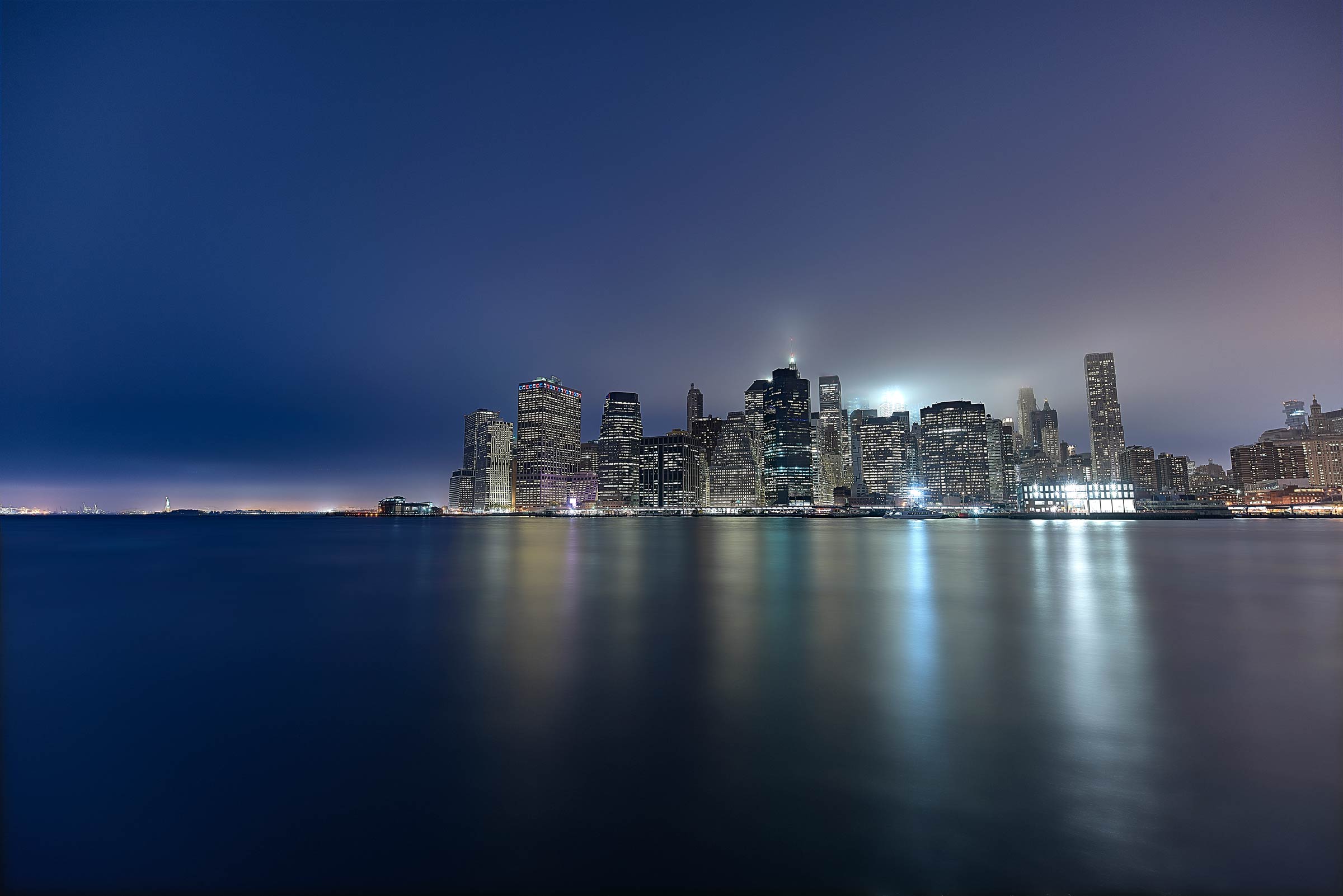
When the light was almost all gone (with all those clouds eating up a lot of the golden hour), I decided to take one last shot from the promenade that was within walking distance from where I was. It was the perfect test to see how the IRIX 15mm f/2.4 would render the lights.

In the end it really fit my taste. It created the sort of classic “star” effect, but there was no trace of flare, strange reflections or particular aberrations whatsoever.

161020-Manhattan_Skyline-0116-DSC_5079C1-Edit-Web

By then, it was late. The sunset (what sunset? Clouds and haze made it impossible to see the sun setting!) was gone and it was time to meet Nasim and John for dinner at what turned out to be an amazing Turkish restaurant (but that’s another story!). After that, I needed to get ready for shooting at dawn the next day. The weather forecast did not look very promising, but at least no rain was expected: a very shy sun until early afternoon. Therefore the dawn should give me more chances for other tests.

5) The Next Morning

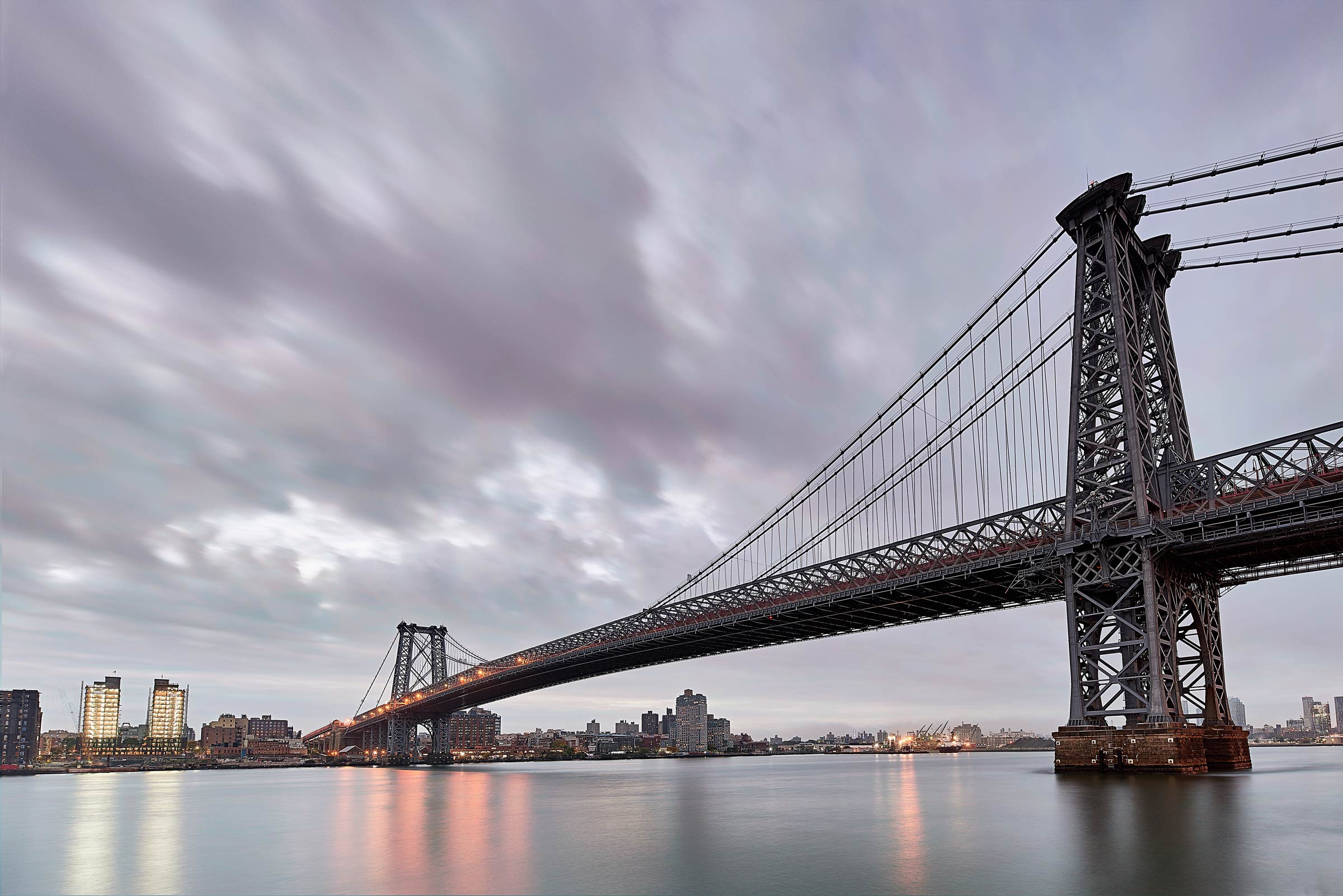
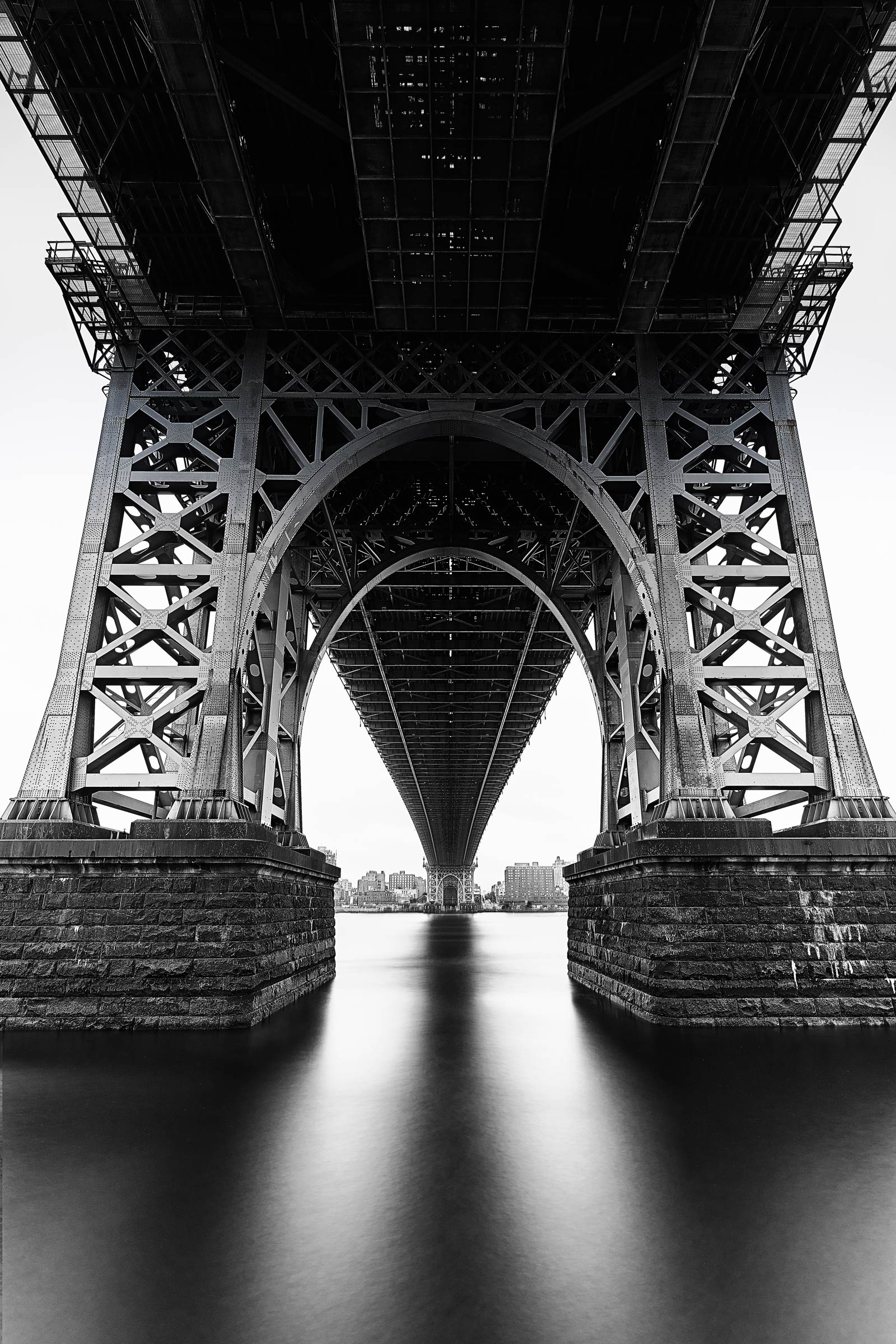
The location I picked was the Williamsburg Bridge (every time I look at NY pictures I only see photos of the Brooklyn Bridge and the Manhattan Bridge, right?). Before bed, I had the chance to check the shots on the bigger display of my MacBook Pro 15” and the resolving power of the IRIX lens, which did not seem to be optimal looking at Jpegs, looked really tack sharp. Definitely spot on! With a little touch of “clarity” and “structure” in Capture One it is much better than my usual Nikon lens. I definitely had much more disappointing experiences (thinking about resolving power) when I rented a Zeiss Distagon T * 18mm f/3.5 ZF and it tested on my Nikon D800.

The next morning, I decided not to use any public transportation and walk to my destination. It was still dark and the sky was streaked with clouds. My walk was very quiet, and in about half an hour I was there. I had to hurry — the morning was approaching, and the IRIX 15mm f/2.4 was waiting for its morning chance to surprise.

Under the Williamsburg Bridge, there were people running and walking their dogs. New York never sleeps! That side of the promenade facing the river cannot be reached by public transportation or by any car — only maybe by bicycle. I do not mind walking and it looked like the weather forecast was pretty accurate that morning: it was overcast, but at least it was not raining!

161021-Williamsburg_Bridge-0140-DSC_5103C1-Edit-Web

I then decided to try a more central and symmetrical perspective. I said to myself: “Let’s see how this lens behaves with lines! The clouds are looking more threatening. I’m not that sure any more the rain will come this afternoon — maybe much sooner?”

Under the bridge, there was a lot of noise. The metro trains as they pass they make a great clatter. The sun has already risen, but no one sees it because there was a huge blanket of cloud. I decided to burn the background and just focus my attention on shapes. I was sure it could turn out to be a beautiful black and white during the retouching phase.

Looking at the sky, the difference in EVs between highlights and shadows under the bridge was far too big. Once again, the NiSi GND filter came to rescue me reducing 3 EVs of light (soft grad). With a myriad of details, rivets, bolts and grates from one end to the other, this shot offered itself as a great benchmarking opportunity to appreciate just how good the resolving power of the lens is.

161021-Williamsburg_Bridge-0151-DSC_5114C1-Edit-Web

A few drops started to fall, but I thought under the bridge I would have shelter! The IRIX 15mm f/2.4 is weather sealed in virtually all key points. (The only weak point of the Firefly is close to the ring of focus lock, while the Blackstone is perfectly sealed.) At that time, I did not take that much notice of the very light rain beginning to fall… well, little did I know what was about to come!

6) A Flare Problem?

After these shots, I started to gather everything back into the backpack, but before leaving that spot I took a couple of shots with my phone, already thinking about the review you are now reading. More drops started to fall, and I grew worried. I discovered at my expense that it also rains under the bridge!

I could not request a Lyft, an Uber or a taxi because reaching the first road open to traffic would require at least five minutes of quick walking. In this downpour, I felt that I could have drowned in the pools on the sidewalk, so five minutes was a long time! I moved under a walkway where the rain was less intense and while I was waiting I started texting with my friend Francesco Gola: what perfect timing! I sent him the video you can see above, and his answer was: “Wow, nice weather!”

I would have probably added… yep, nice *HORRIBLE* weather! We started texting about the IRIX 15mm f/2.4, and he asked me about a possible circular flare issue he had read about. He told me, “There are reports of a pronounced problem when the sun or a light source is placed exactly at the center of the shot.”

I didn’t know anything about this problem, and of course I had no way to test it in those weather conditions, but I started to think about how to recreate that test case. Meanwhile he sent me a photo he found on the web: sun in the center of the frame behind the branches of a tree and a beautiful (so to speak) circular flare on the extreme edge of the frame.

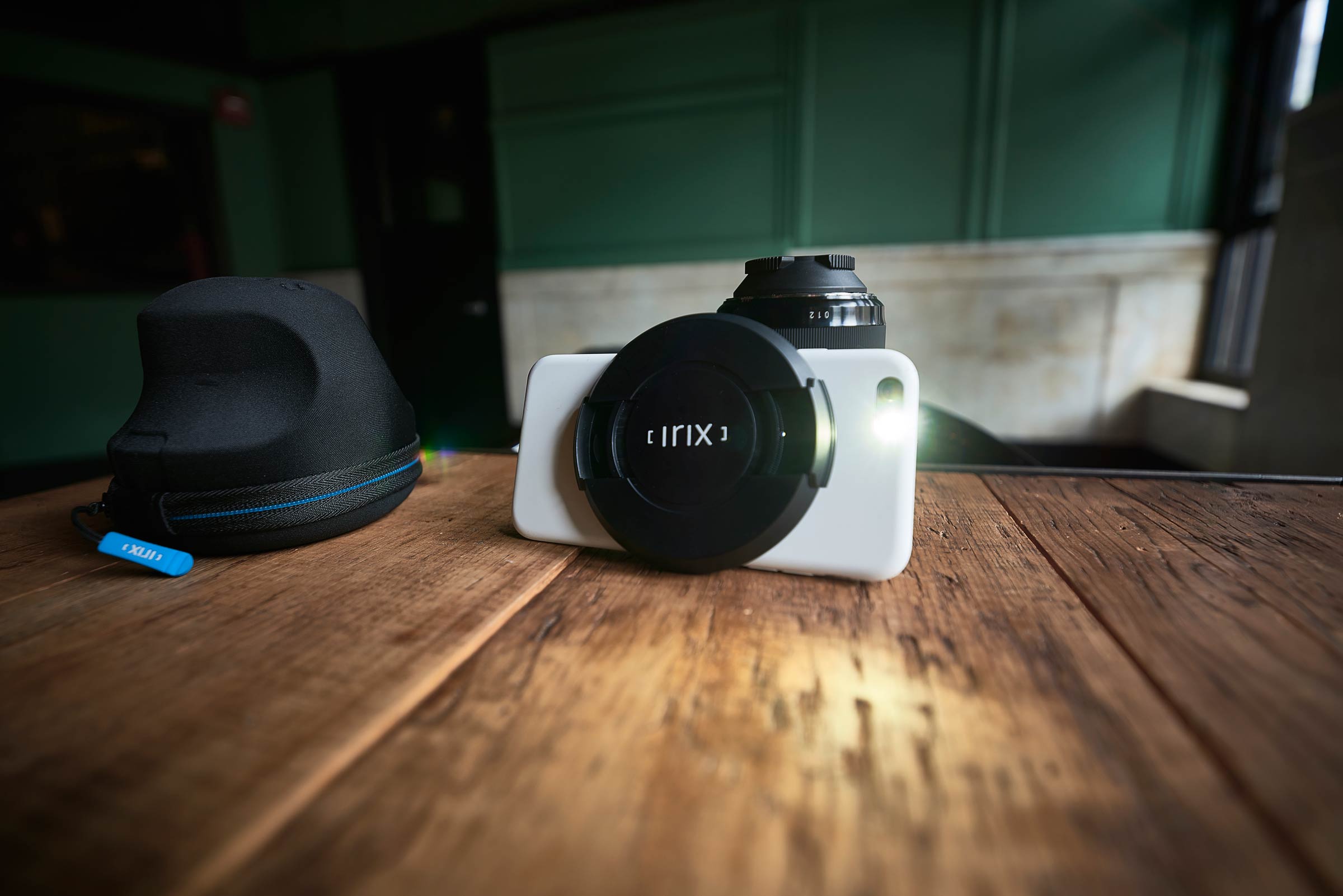
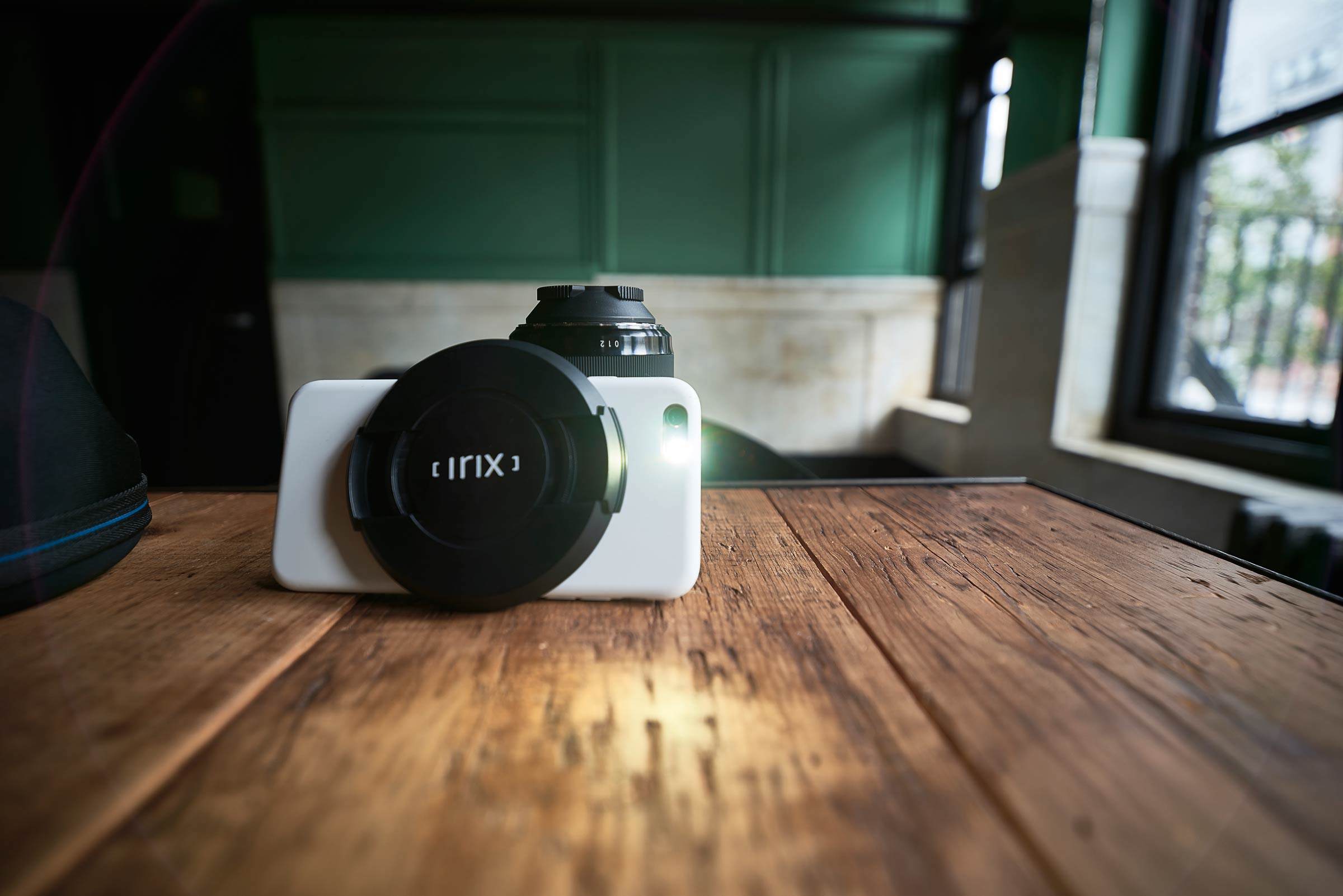
After I found a way to rescue myself from the rain, I went back to dry myself off and change clothes. I used my iPhone with its LED light as my tool of choice to challenge the IRIX lens to verify the flare problem.

161021-IRIX_15mm_Lens_Flare-0169-DSC_5132-Web

The problem of the circular flare was there, crystal clear, as you can see in the picture above.

Surely it is less pronounced than with the sun, but the sun was not available for me, and I had to settle for a simple LED light! From my point of view, it’s not so bad, as it is a behavior occurring only in edgy conditions. Doing some more tests, I found out it is sufficient to vary the angle of incidence of light very slightly and the problem goes away while maintaining the light source in the scene and very close to the center. Sometimes there might be a slight (much more controllable!) lateral flare like what you see to the right of the lens case near the blue hinge in the image below:

161021-IRIX_15mm_Lens_Flare-0170-DSC_5133-Web

Back at Photo Plus, I specifically asked Hubert (from the IRIX crew) if they had problems with lens flare. I avoided saying that I experienced it, as I wanted to understand what would their propensity for honesty be in talking about real world behavior of their lens. Hubert was totally open and sincere in admitting that on a sunny day and in edgy conditions at the center of the shot there may be some flare. He also added that it is a physical problem that other manufacturers of the most famous and well-known brands are facing in their own products. It is something occurring only on ultra wide-angle lenses (and now I’m also curious to see how it will behave their upcoming 11mm lens!).

7) Conclusion

I think, for being a wide-angle lens costing a rather small amount of money (something like $ 470 for the Firefly version and $ 700 for the Blackstone), it performed pretty exceptionally.

Excellent optical definition stated to resolve up to 50+ megapixels (the d800 has “only” 36… but on a Canon 5Dsr it should have no trouble). I saw a couple of shots taken with a Sony A7rII (42 megapixel without anti-aliasing filter) and they were definitely tack sharp!

The 10 EVs ND filter made by IRIX performed well and proved to be at the same level of NiSi quality (both for build quality and absence of any color cast) which, in my opinion, is now the highest available on the market.

I was really sorry to have to return both the lens and 150mm filter kit. Unfortunately, neither IRIX, nor NiSi offer equipment for free! Between the Firefly and the Blackstone, I’d probably prefer to buy the Blackstone, but I think they are both worthy of a place in my gear bag.

All in all, I think the best part of this whole experience was working with the people. Hubert and the other guys of the IRIX crew were open, honest (even speaking openly of the quirks of their products) and super helpful. The Staff at the NiSi Filters booth did their best (in fact, they performed magic!) to give me a holder and ND/GND filters that enabled me to write this post. I don’t know if they would do it for everyone, but, in any case, I owe a big thank you to Tony and Daisy for allowing me to work in a way that was so much better than expected!

As always in my articles for the specs I’ll redirect you straight to the source on the IRIX Lens website. You can probably find prices slightly lower than those I reported if you buy through Amazon. The same might happen for the NiSi Filter kits.

If you have questions and curiosity about this lens, please do not keep them to yourself! Share them below in the comments and, if I can, I will be happy to answer based on my experience.

I hope you enjoyed the unusual review (sorry Nasim, I know it’s not as technical as you like it to be!) and see you out there hanging off some cliffs taking amazing pictures!

Simone Conti

The post From Dusk Till Dawn – IRIX and NiSi appeared first on Photography Life.

Photography Life

Posted in Photograpy How To | Tagged , , , , , | Leave a comment

How to photograph your winter life even when it’s cold out

Winter has it’s challenges, especially when you are a photographer.

It means shorter days and lack of light, and for some much, colder temps.

It can be hard to stay motivated when it’s dark by the time many of us leave work, and even harder to get outside and shoot when it’s below freezing. We all experience winter in one way or another. Whether you live in a warmer climate and find the shorter days challenging to pick up your camera daily, or live in a colder climate that not only experiences shorter days, but inclement weather as well.

Here are some ways to stay motivated, no matter the light or weather.

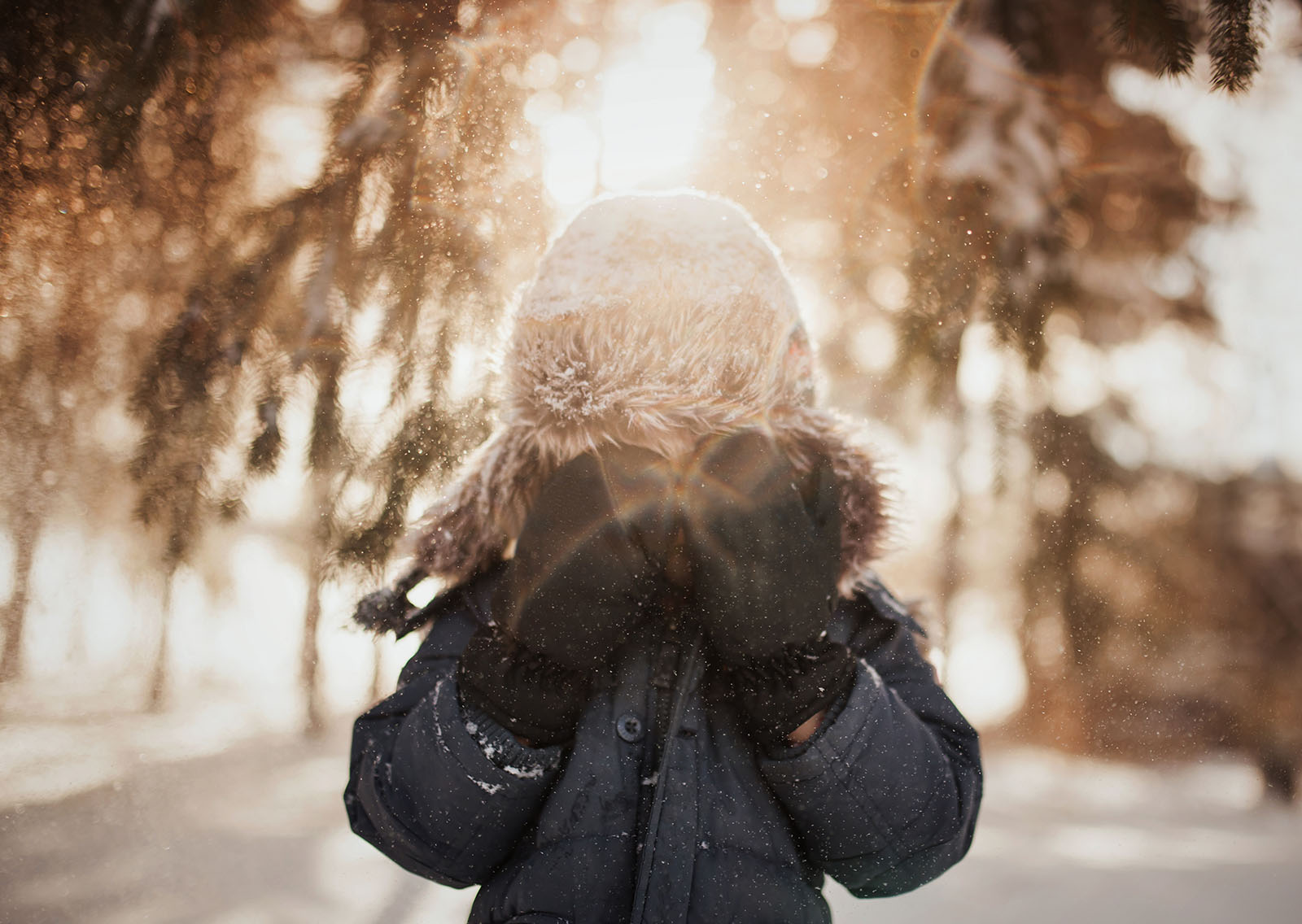
backlit picture of boy eating snow of a branch by Meg Loeks

I’ve lived in Michigan my entire life, and while our winters may not be as harsh as some, we still have days where schools close because of the cold and blizzards can bring white out conditions. Our harsh winters are something I have grown accustomed to, and have grown to embrace and enjoy. Sure, I might not LOVE the -20 degrees with windchill, but there is magic in snow… especially that first snowfall.

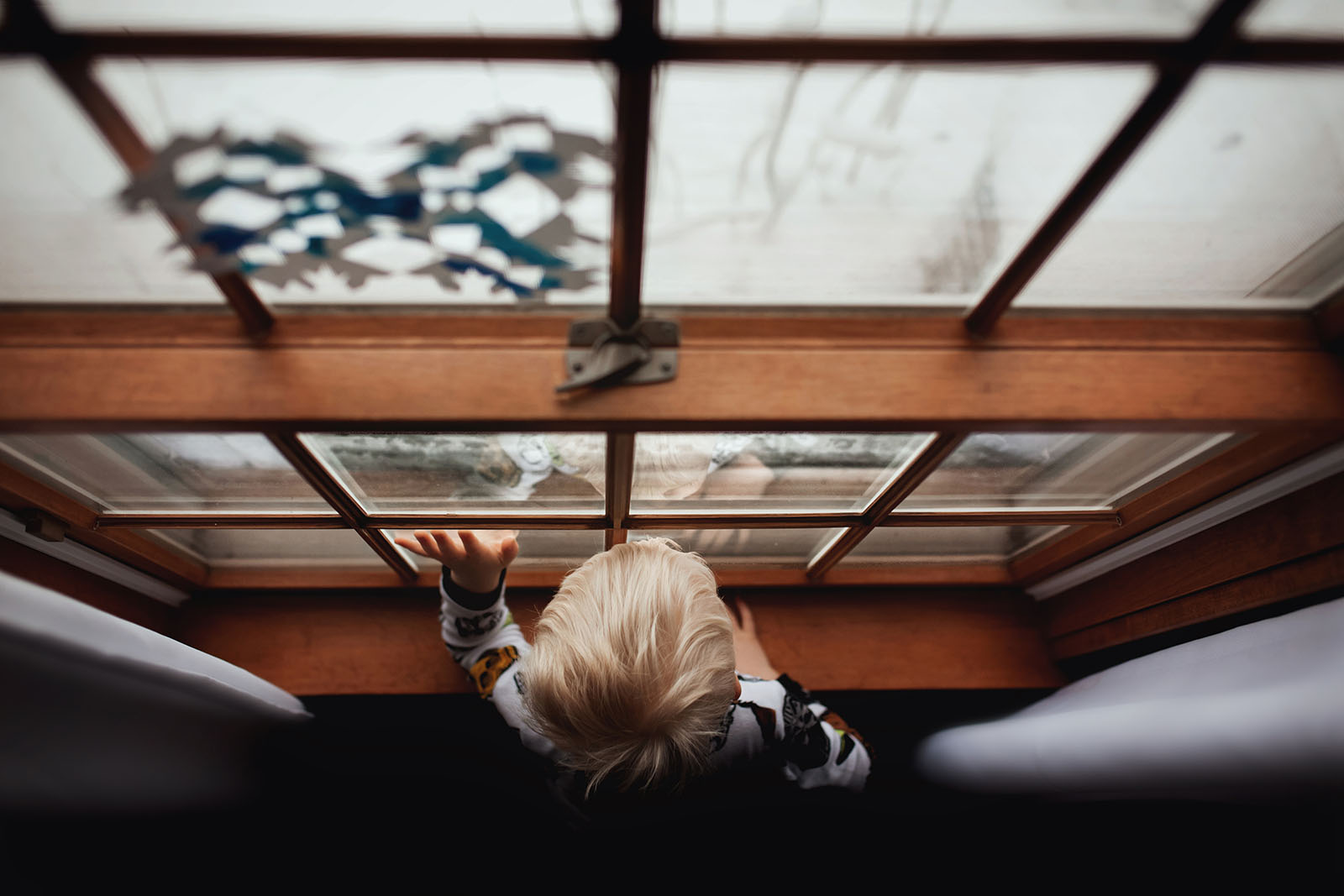
pic of boy looking out a window by Meg Loeks

If you have ever experienced snow as a child, you know what I’m talking about. I think somewhere along the way as we get older, we slowly lose that sense of wonder. As a child those heavy snowfalls often meant a possible snow day, but as an adult it often means something entirely different. Many of us have to figure out childcare for the day before having to trudge through the snow and bad traffic to head to work. I think these responsibilities that fall on us as adults change the way we see things, but it doesn’t have to be that way.

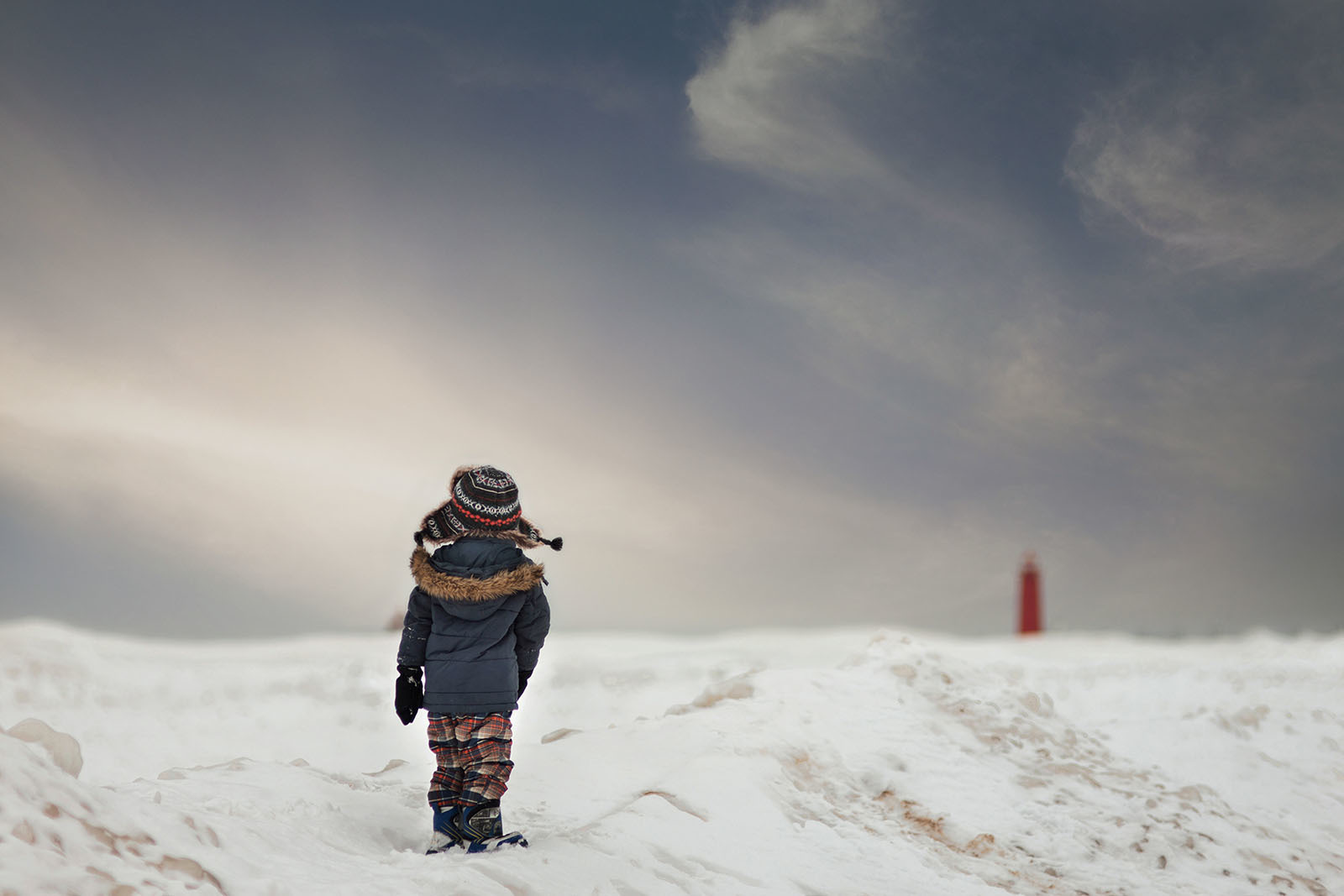
photo of boy walking on the snow by Meg Loeks

There is magic in snow: the way it softly falls, the way it piles itself on pine trees bending their branches to the ground, the way our children eagerly put on their layers and layers of clothing to dive into the freshly fallen piles and build snowmen, forts and have snowball fights. Let’s not forget that sound either… that sound when you are out in the woods while the snow is falling and everything is quiet except for the soft patter of snow hitting the trees and ground.

Why do so many of us find it challenging to to pick up our camera when there is all that magic going on outside our home?

backlit pic of boy by the water covered in snow by Meg Loeks

It’s cold! I think one of the hardest things is getting motivated to undertake the process of getting ready and taking that first step outside. It’s similar to waking up first thing in the morning to head to the gym. The hardest part is getting out of bed and getting ready, but once you are at the gym you don’t regret it. So what do I recommend?
picture of boys standing in a frosted field by Meg Loeks

Give yourself lots of time to get ready!

Just like in the summer, I prefer to shoot during golden hour in the winter outside. However, unlike summer, it can easily take 30 minutes to warmly dress all three of my young boys and myself (picture the mom from A Christmas Story getting her boys ready for school… that’s what I look like). Therefore, it’s important to allow yourself lots of time to get ready.

Check the temperature and dress for the weather. We wear multiple layers to make sure we are comfortable… whether we are spending 15 minutes outside or two hours. It’s a simple thing, but it makes a big difference.

two boys watching a parade in the snow by Meg Loeks

Care for your gear

Be prepared for your camera to freeze up on you, especially when it’s well below freezing. I’ve found my camera starts to freeze when the temps are close to the single digits. I’ll often try to press the shutter and nothing will happen. It can be frustrating especially when trying to capture a fleeting moment.

Just remember to be patient, and carry a camera bag with you to store your camera in when you are not using it. This will help keep it warmer. Also, make sure to bring extra batteries with you. Colder temps will often drain your batteries faster. The cheap hand warmers that are air activated can help keep your hands, camera, and gear warm if spending extended time in the cold.

photo of boy in a red coat sitting on a sled by Meg Loeks

Not only is it a good idea to keep your camera in your camera bag if you are not using it outside, but if it’s snowing it’s a good idea to also have a cover for your camera to protect it from getting wet. I purchased my DSLR rain cover from Amazon for $ 15 and it’s come in handy for any sort of inclimate weather.

photograph of brothers walking down a road by Meg Loeks

Underexpose in the snow

Photographing subjects in snow scenes can bring different challenges. I often intentionally underexpose in camera. The intent is to make sure I’m not blowing any of my highlights. It’s easy to do that with lots of white snow in the frame since light reflects off white. Therefore, I make sure to have my blinkies turned on in camera (this feature tells you when your highlights are blown by flashing black on your LCD screen), and then when editing I will often raise exposure solely on my subject if needed.

photo of toddler sitting in the snow by Meg Loeks

backlit photo of boy looking up in the winter by Meg Loeks

Make the snow stand out

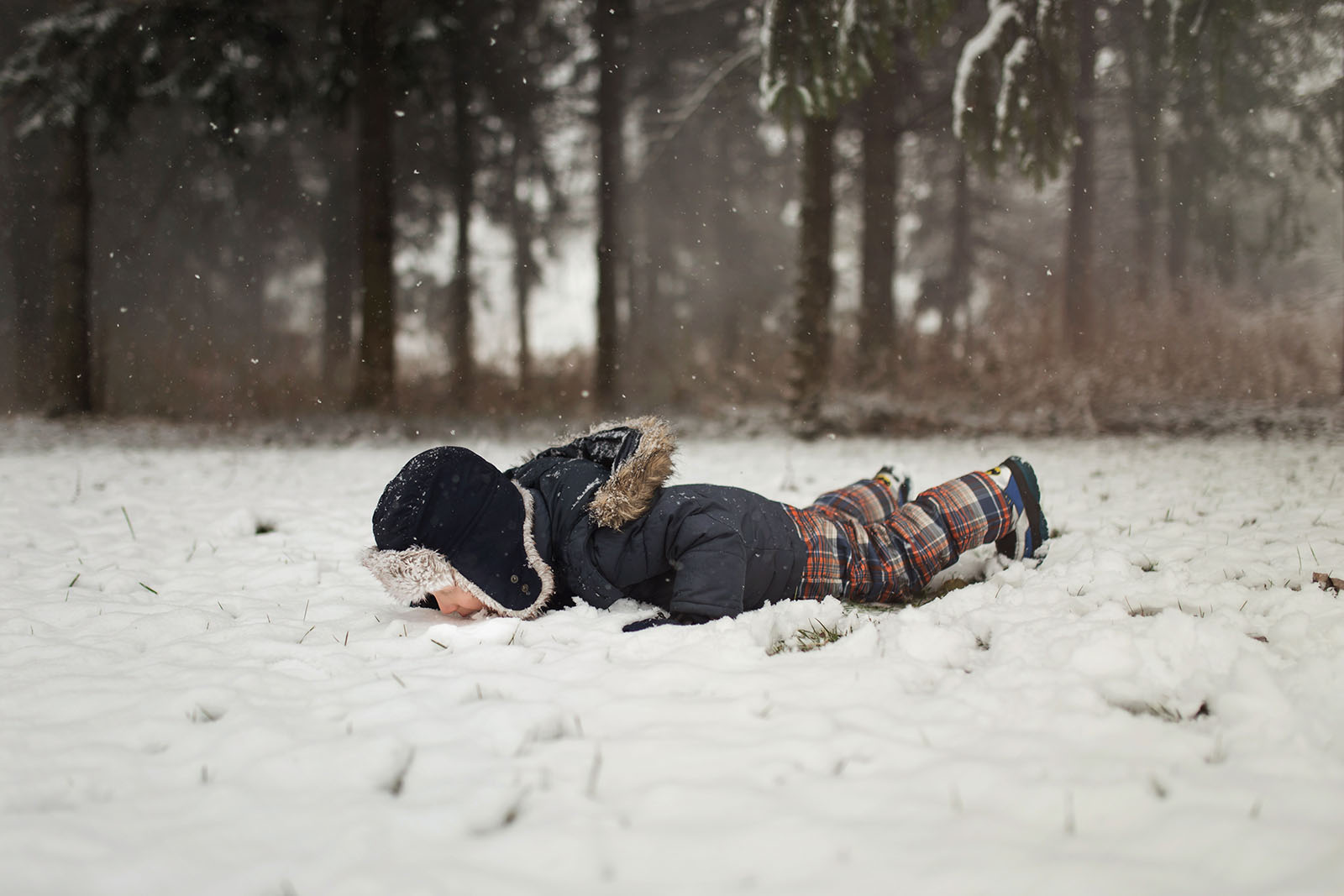
If you happen to be out with your camera when it’s snowing, one way to make falling snow pop is by finding a dark background to place your subject in front of. The dark background will make the freshly falling snow pop and easier to see. I often love to find woods or pine trees for my subject to be in front of if it is snowing.

photo of boy tasting falling snow by Meg Loeks

photo of boy laying down and eating the snow by Meg Loeks

Clickin Moms photography forum

Stay motivated when the days are shorter

One of the challenges with winter that we all face is the shorter days and lack of natural light. I’ve found that many of us (including myself) find it challenging to stay inspired during the winter, but in many ways, there is no better time for personal growth than the winter. If your family is like mine, summer is a busy time. It’s often packed with trips and schedules are always hectic.

However, in the winter things slow down for my family. That’s when I have found it’s a great time to push myself creatively and take online photography workshops or read a great photography book. The shorter days allow for more time to study, learn and be inspired.

backlit pic of snow falling on boy by Meg Loeks

Push yourself creatively

Winter is a perfect time to also push yourself creatively. It’s a time when I like to experiment with things like artificial light, freelensing, getting in the frame with my children and self portraiture.

I recently purchased an Ice Light and have been using it when I feel I’m not getting enough natural light on my subject… which happens a lot in the winter. I often place the light in a window closest to my subject to add contrast. Sometimes the natural light is practically nonexistent and the only light illuminating my subject is from my Ice Light.

Don’t be afraid to bump up your ISO when working with low light situations. You are going to have less noise in your image if it’s properly exposed with a high ISO than if it’s underexposed and you have to bring up exposure in post.

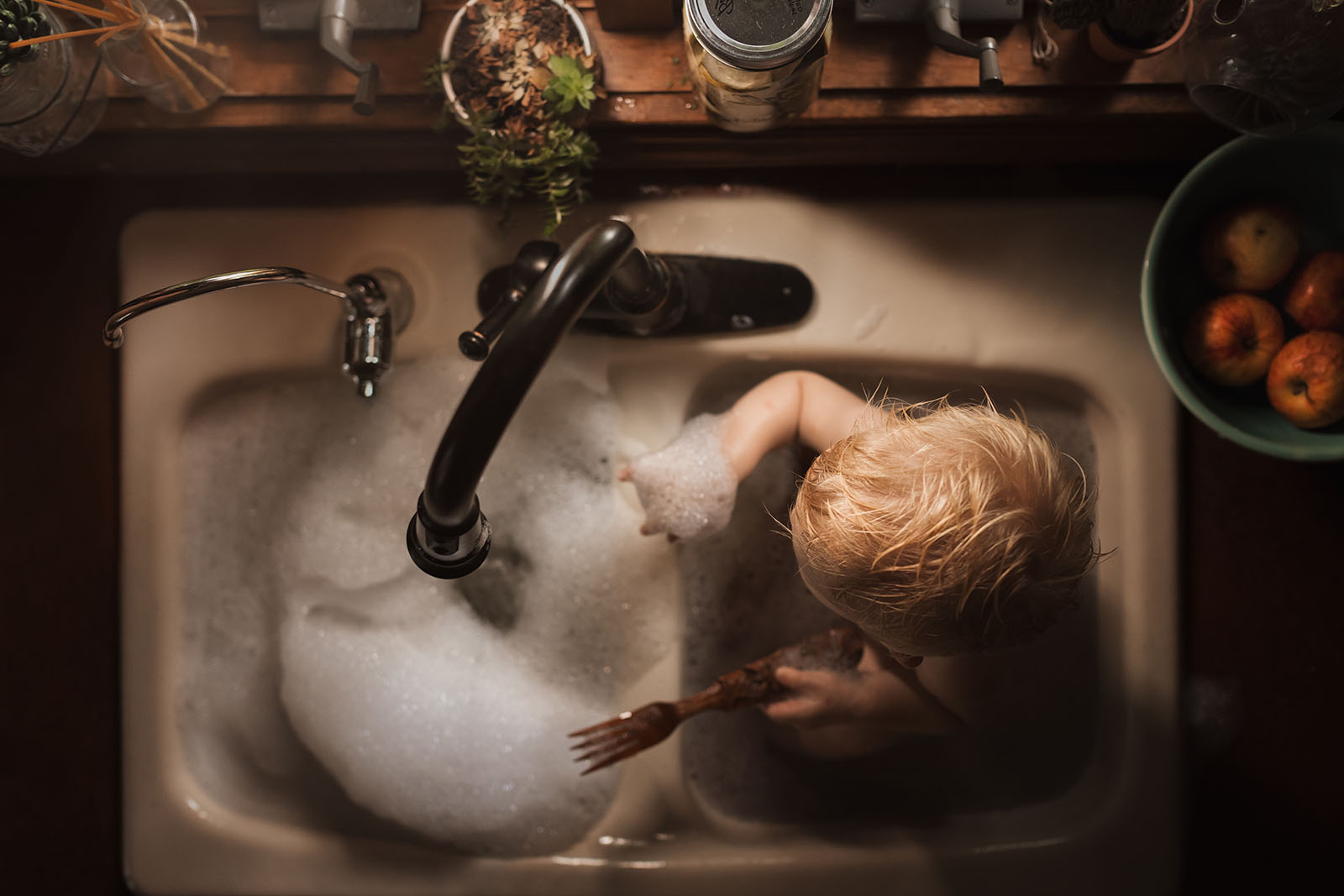
picture of boy taking a sink bath by Meg Loeks

Ice Light

freelensed picture of boy sitting by Meg Loeks

Freelensed

self portrait of mom with baby by Meg Loeks

Getting in the frame

Explore your home

Not all of us are fans of snow and sometimes the weather can be too extreme for us to get out, so we end up getting stuck inside. There have been times where I felt like I was going crazy photographing the same thing over and over because my family was stuck inside from bad weather.

Winter is the perfect time to explore your home. Carry your camera with you throughout the day and capture your everyday routine. For example: making breakfast for your children, pretty light falling on a pile of dirty dishes, getting your children dressed for school, and so on. Study the light in your home throughout the day. Watch how the light falls and changes in each room from dawn till dusk. You might be surprised to find new and beautiful areas to shoot in.

cup of hot chocolate by Meg Loeks

There is no better time to grow in your photography journey than the winter. Take advantage of the slower schedules and push yourself creatively. Set an attainable goal for yourself. Get outside and explore.

We all experience winter in one way or another. With shorter days and colder temps, here are some ways to stay motivated, no matter the light or weather.

The post How to photograph your winter life even when it’s cold out appeared first on Clickin Moms.


Clickin Moms

Posted in Photograpy How To | Tagged , , , , , | Leave a comment

5 Incredible Holiday Gifts For Photographers and Filmmakers

The holidays are right around the corner, so we’ve put together a selection of gifts for photographers and filmmakers. This article was curated with one principle in mind: to recommend equipment and accessories that any image-maker would be delighted to receive, from strobe lighting to travel tripods. Here are 5 incredible holiday gifts that would impress any photographer or filmmaker, whether hobbyist or professional, and in no particular order.

5. Gitzo Mountaineer Tripod

gifts-for-photographers-filmmakers

The Gitzo tripod line has been a long-time favorite of Resource, and even won our annual year-end “Best Of” awards for 2015. This particular model, comprised of a Mountaineer Tripod and Center Ball Head, is especially excellent for anyone who likes to shoot on the go, such as travelers, street photographers, or landscape fanatics. It’s slim, sleek and simple design makes it appealing to the eye, while its carbon fiber material makes it a lightweight yet durable backbone of a photographer’s kit.

4. Manfrotto 3N1 Pro Light Backpack

gifts-for-photographers-filmmakers

It’s hard to think any modern photographer wouldn’t clamor over the versatility of this bag. With three carry options—backpack, sling bag, and cross-backpack—the 3N1 is designed to carry a DJI Phantom, Canon XC100, or other camera bodies with plenty of room for additional lenses. This makes it ideal for the video shooter, as side pockets make it easy to quickly swap out gear, and interchangeable dividers are used to fit the needs of nearly any equipment selection. It also comes complete with a rain protector, while the bag’s outer fabric features a water-repellant treatment that makes it perfect for trekking through a blizzard.

3. Bowens XMS500

gifts-for-photographers-filmmakers

It’s more than just the sexy form factor that draws us to this new Bowens studio strobe. Internally, this particular model packs 500 watts of power, perfect for humble studio setups and professional portraiture. These units are fully digital, which ensures the accuracy of flash power and color temperatures, while making it intuitive for the beginner to operate—and beloved by professionals who are tired of getting bogged down on gear during a shoot. We highly recommend this strobe for those first exploring the world of lighting, as it’s great for simple one-light setups, yet will be a powerful staple of more complex techniques as one progresses. Additionally, the Bowens Lumiair Octobank is an excellent, multi-purpose softbox and a great accessory for fashion, portrait or lifestyle photographers.

2. Manfrotto XPRO Monopod+ Tripod & Video Head

gifts-for-photographers-filmmakers

This monopod is a videographer’s dream. The XPRO video monopod is equipped with Manfrotto’s FLUIDTECH system, enabling incredibly smooth pans, tilts, and swivels for nearly any perspective. It’s constructed from Adapto Technopolymer and Aluminium, making it lightweight and easy to carry, and comes complete with the Manfrotto 200PL plate, the most widespread photographic plate on the market. Also, with a maximum height of almost 80 inches, it’s excellent for videographers who leverage the height of their monopod to reach above crowds, while its retractable feet make it extremely portable for travel adventures.

1. Lastolite Tri Flip kit

gifts-for-photographers-filmmakers

Often, it’s best to keep it simple, and if you’ve made it this far, you may still be undecided on your holiday gifts. But think no more. If you’re shopping for a photographer or filmmaker, you can never go wrong with a good ol’ reflector kit. This particular kit, known as “the tri flip,” offers an 8-in-1 solution, so image-makers can be ready for nearly any lighting scenario without the need to carry additional bulk. Armed with a 2-stop diffuser and seven colors, this reflector array is foldable for maximum portability, as it collapses to one-third of its size. Not to mention, it includes a lifetime rim guarantee, in which Manfrotto will repair it free of charge if the rim breaks or comes apart. If you’re shopping for a photographer or filmmaker, under no circumstance could you go wrong with this one.


manfrotto-imagine-more-logo-red-1


This article was sponsored by Manfrotto Distribution

Resource Magazine

Posted in Photograpy How To | Tagged , , , , | Leave a comment