Instagram Travel Fraud Inspires Hysterical Social Media Backlash

Louktarn Ticha once was a pretty famous Thai air hostess for Emirates. Not that long ago, she had over 150,000 followers on Instagram, and they all watched her posting the most enviable travel shots. Until she was busted for Photoshopping.

Even though her photo editing skills weren’t the best, it wasn’t until December of last year that people started noticing the falsifications. One of Ticha’s followers discovered how one of her images, supposedly taken in Canada, actually was taken by Tiina Törmänen – with whom Resource Travel recently did an interview – in Lapland, Finland.

It didn’t take long for Ticha to start removing some of her photos. After a while, she even took down her Instagram account @ticha_ek. But not before inspiring dozens of fellow Instagrammers to follow her lead. Using the hashtag #ticha_ek, a lot of people suddenly seem to be going to their dream destination.

And it’s hilarious.

????????????????? ?????????????????????? ??????????????????????????????? #???????????????????? #????????????? #ticha_ek

A photo posted by G a j a n d • ? ? ? ? ? ???? (@shabbyz) on


[original story and images via Coconuts Bangkok, ispiration via PetaPixel and Bored Panda]

Resource Magazine

Posted in Photograpy How To | Tagged , , , , , , , | Leave a comment

Forget Sound Bars: Sony’s New OLED TV Emits Audio from the Screen Itself

Not satisfied with having to go to the sound bar, Sony just announced a television that will use the surface of the screen as speaker. Called “acoustic surface technology,” Sony’s BRAVIA OLED A1E Series TV might be the first home television that won’t require a sound system to fully enjoy.

The XBR-A1E BRAVIA OLED series offers a totally new entertainment experience with a combination of the superior picture quality of OLED powered by Sony’s 4K HDR Processor X1 Extreme, the world’s first Acoustic Surface™ sound system, and its unique, cutting-edge stand-less form factor. Thanks to OLED’s over 8 million self-illuminating pixels, the A1E series brings a significantly enriched visual experience with unprecedented black levels, rich and lifelike color, dynamic contrast, blur-less image and a wide viewing angle. The 4K HDR Processor X1 Extreme precisely controls the tremendous number of pixels and extends the capability of OLED to deliver an exquisite 4K HDR picture.

Guys, that’s wild. Sony says that the entire screen resonates with sound emanating directly from the screen itself. They claim that it produces sound wide enough to be enjoyed from the side, as well as any OLED television can be viewed from those angles (which is pretty good actually).

The Acoustic Surface technology lends to cutting-edge design of the A1E series by doing away with conventional speakers usually located around the TV. The result is a unique stand-less form factor with no distraction from the picture.

The acoustic surface is easily the run-away feature, but the television packs more than that:

A1E Series (77″, 65″, and 55″ Class model) 4K HDR OLED TV

  • Features OLED display technology. 8 million self-illuminating pixels brings a significantly enriched visual experience with unprecedented black levels, authentic color, blur-less image and a wide viewing angle.
  • Features Acoustic Surface technology: the entire screen resonates with great sound emanating directly from the screen itself. This allows a perfect unification of picture and sound that conventional TVs cannot deliver.
  • 4K HDR Processor X1 Extreme provides the ultimate 4K HDR viewing experience by incorporating three picture-enhancing technologies: object-based HDR remaster, Super Bit Mapping™ 4K HDR and dual database processing.
  • Features vibrant, expanded color with TRILUMINOS™ Display, further enhanced for color accuracy.
  • Uses 4K X-Reality™ PRO to produce stunning detail with Sony’s unique algorithm of reality creation database for any content, such as TV broadcasting, DVD, Blu-ray Disc, Internet video and digital photos.
  • The cutting-edge design: The Acoustic Surface technology lends to cutting-edge design of the A1E series by doing away with conventional speakers usually located around the TV. The result is a unique stand-less form factor with no distraction from the picture
  • Android TV lets you explore a world of movies, music, photos, games, search, apps and more, including PlayStation™ Vue and Ultra services. Voice Search to find content, ask questions and control your TV. With Chrome Cast built-in, you can easily send content from your smartphone or tablet to the TV. With access to Google Play™, you can enjoy what they like to do on a smartphone or tablet, from their TV. With Google Home compatibility, voice-control the TV via the Google Home device for a smarter connected home.
  • HDR compatible to receive and process the new video standard signal with higher brightness, higher contrast and more vibrant colors via Internet video services, HDMI and USB port. Supports Dolby Vision HDR format.

Don’t expect this to come cheap though, as Sony flagship televisions have never come at a particularly accessible price. Gizmodo reports that their previous flagships have started around $ 6000.

I always have hated how sound bars looked. Hell, mine doesn’t even properly fit on my media stand. This is a massive improvement and advancement in televisions, probably the most exciting since we all went flatscreen and ditched the tubes years ago.

Resource Magazine

Posted in Photograpy How To | Tagged , , , , , , , , , | Leave a comment

This Portable Dock Adds Those Ports You’re Missing on Your New MacBook Pro

Yes, the number of complaints about dongles and docks with regard to the new MacBook Pro is sky high right now. It’s all the rage to talk about how much you hate the dongle, and if that’s the case for you personally, OWC has your back.

As you can see, the OWC DEC adds an SD card slot, ethernet port, and three USB Type A (USB-3) ports total. Additionally, it acts as flash storage, adding 4 TB of space to your laptop. It’s disappointing that it doesn’t have at least one Thunderbolt 2 port, since that’s something Mac users undoubtably have a ton of, but what this offers is pretty spiffy for those who miss the ports on their older MacBook Pros.

Though this will likely be mainly used as a desktop piece, it is “portable.” It just makes the MacBook a lot heavier, and with the thickness of about the 2012 MacBook.

The downside here, in addition to that girth and weight, might be price, which OWC hasn’t officially announced but is likely to be expensive. Like, maybe a quarter the cost of the MacBook Pro. Which isn’t nice.

[Via Gizmodo]

Resource Magazine

Posted in Photograpy How To | Tagged , , , , , , , , | Leave a comment

Commuter On The New York Haven Line Running To Catch Birchwood 36×24 Photo Birchwood

Commuter On The New York Haven Line Running To Catch Birchwood 36×24 Photo Birchwood


Commuter on the New York New Haven line running to catch” is an art print by Alfred Eisenstaedt from The Life Picture Collection. Get photo prints of “Commuter on the New York New Haven line running to catch” in a variety of frames, styles, and materials. Photographer Bio Alfred Eisenstaedt (1898-1995), or Eisie to those who knew him, received his first camera as a gift from his uncle at 14, a few years after moving to Berlin from Poland with his family. At 17, he was drafted to the German army. His interest in photography blossomed while recovering from a shrapnel wound. He became a regular at museums, studying light and composition. By 31, he was a full-time photographer. In 1933 he was sent to Italy where he shot the first meeting between Hitler and Mussolini. Two years later, when Hitler came to power, Eisie immigrated to America. Soon after arriving in New York, he was hired along with three other photographers-Margaret Bourke-White, Thomas McAvoy and Peter Stackpole-by Time Inc. founder Henry Luce for a secret start-up venture known as “Project X.” Six months later, Life magazine premiered on November 23, 1936. The first issue sold for 10 cents and featured five pages of Eisie’s pictures. His most famous photo was the kiss in Times Square on V-J day, about which he said, “I was running along the street grabbing any and every girl in sight. Whether she was a grandmother, stout, thin, old, didn’t make any difference. None of the pictures that were possible pleased me. Then, suddenly in a flash I saw something white being grabbed. I turned and clicked the moment the sailor kissed the nurse.” Over his career, Eisie shot a total of nearly 100 covers for Life magazine and some 10,000 prints. The Life Picture Collection From one of the most iconic magazines ever to hit the shelves comes The Life Collection – an archive of some of the most recognizable imagery of the 20th Century. Documenting events in politics, culture, celebrity, the arts and the American experience, these compelling and provocative photographs include the works of some of the greatest photographers capturing some of the greatest moments in history.

Price: $
Sold by Photos.com by Getty Images

Posted in Camera Photography | Tagged , , , , , , , , | Leave a comment

See How the Golden Ratio Plays a Huge Role in National Geographic’s Best Photos from 2016

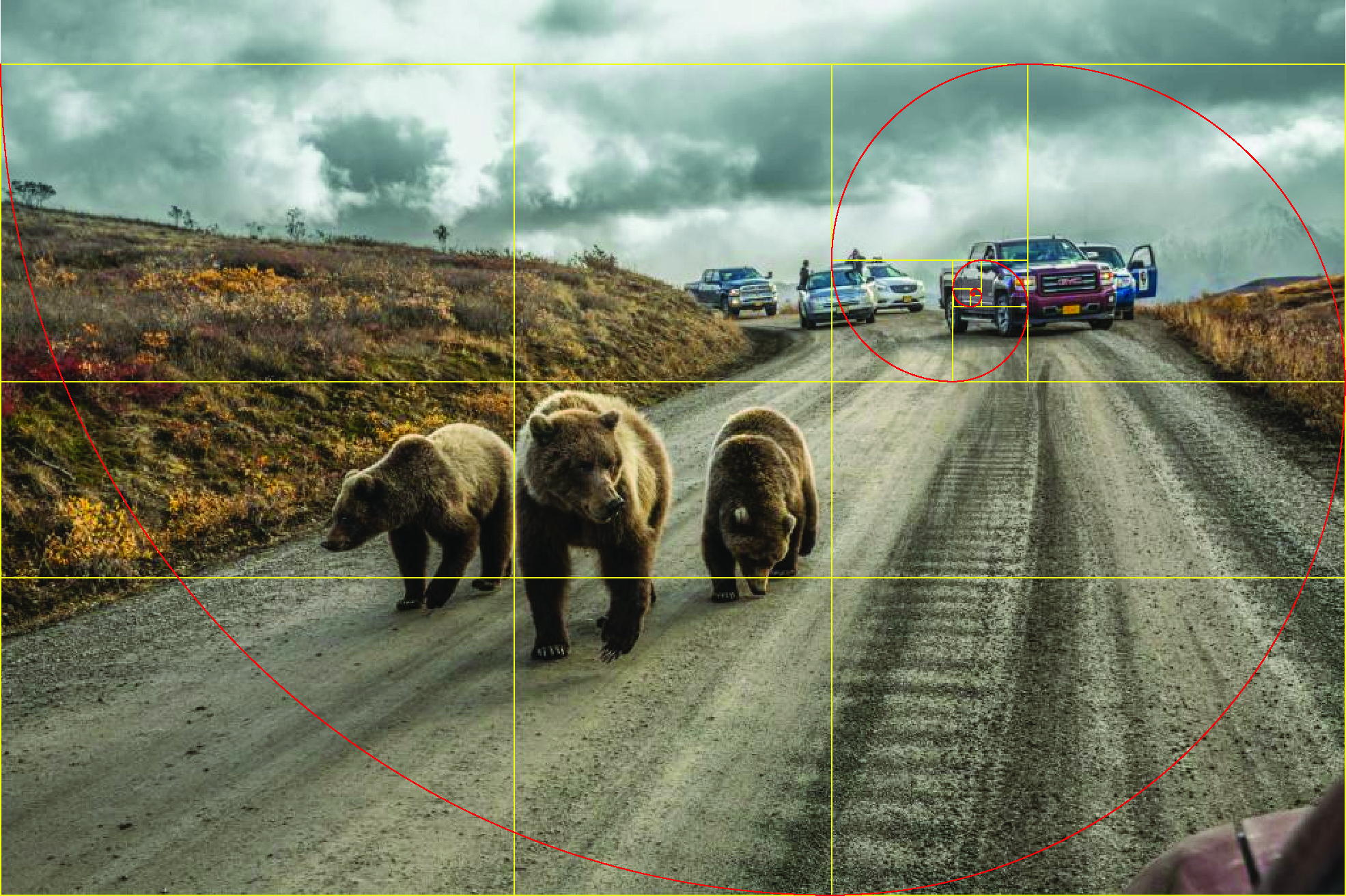
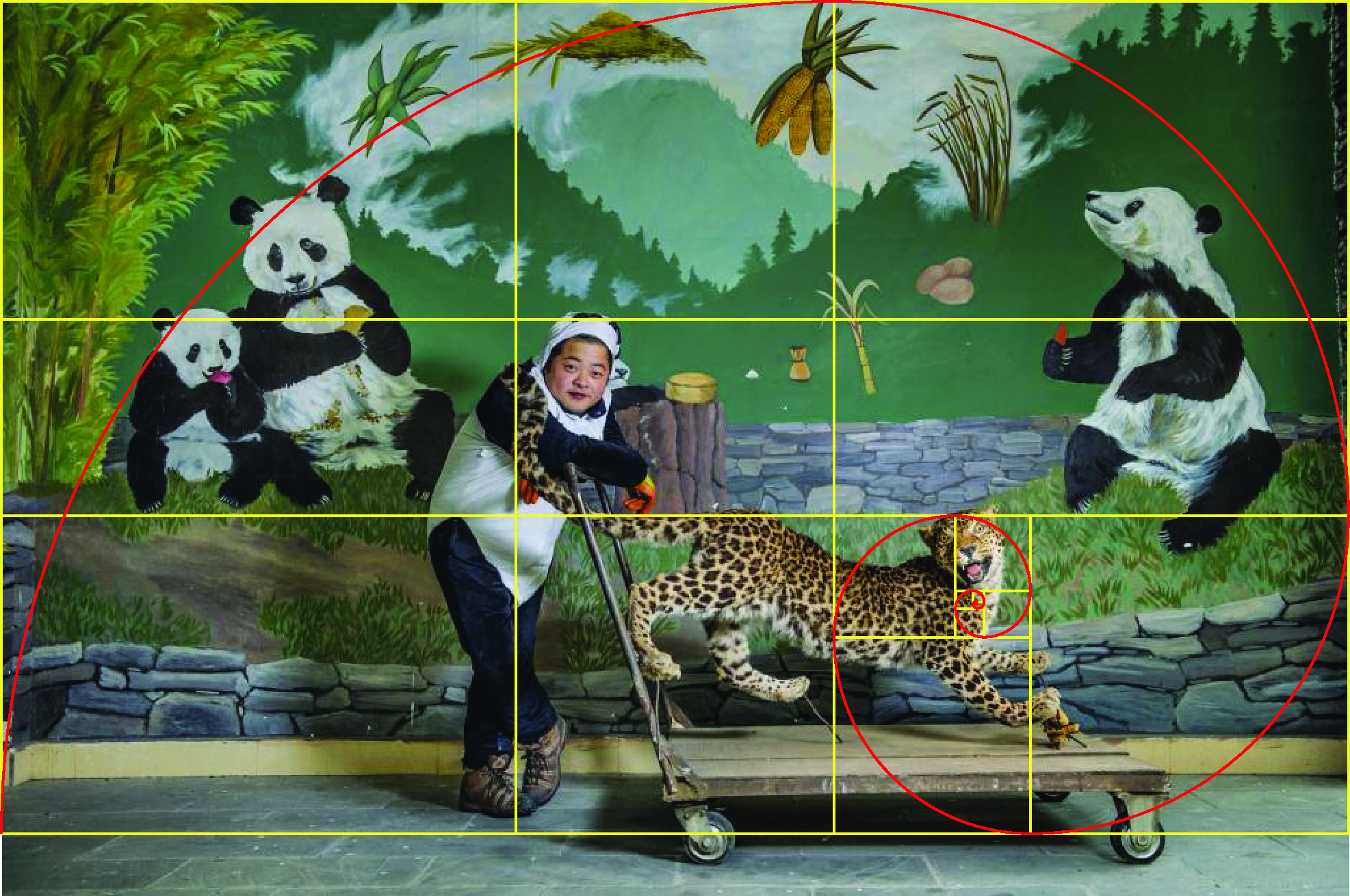
It’s not often that we get contributions from readers that contain top-tier analysis of modern photography, but Dr. Elliot McGucken proved to be the exception to the rule. He sent us his analysis of the golden ratio in use in images from National Geographic’s best photos from 2016, and it’s pretty shocking how nearly every image puts the ratio to use.


“Not long ago, I came across a wonderful book titled The New Art of Photographing Nature: An Updated Guide to Composing Stunning Images of Animals, Nature, and Landscapes, featuring the epic photography of world-renowned National Geographic nature photographer Art Wolfe,” he told us. 

On page 38 of Art’s book, he read:

Art composes many of his images instinctively close to the ideal ratio the Greeks called the golden mean.  It was considered the perfect spatial proportion for sculpture and architecture and works out mathematically close to a ratio of 8:5

“In fact,” Dr. McGucken goes on, “the ratio of consecutive Fibonacci numbers, such as 8:5 or 13:8 or 21:13 approaches the irrational golden ratio 1.618… as the sequence augments. As the golden ratio informs the optimum mechanism for growth in nature, the Fibonacci numbers are often found in nature, as well as within our very own bodies, which of course are elements of nature and thus subject to nature’s ‘rules of composition.’”

But why? Why does the golden ratio exalt beauty? While conducting research for his book The Golden Ratio Principle, he came up with a theory:

Dr. E’s Golden Ratio Principle: The golden ratio exalts beauty because the number is a characteristic of the mathematically and physically most efficient manners of growth and distribution, on both evolutionary and purely physical levels.

The golden ratio ensures that the proportions and structure of that which came before provide the proportions and structure of that which comes after. Robust, ordered growth is naturally associated with health and beauty, and thus we evolved to perceive the golden ratio harmonies as inherently beautiful, as we saw and felt their presence in all vital growth and life—in the salient features and proportions of humans and nature alike, from the distribution of our facial features and bones to the arrangements of petals, leaves, and sunflowers seeds.

As ratios between Fibonacci Numbers offer the closest whole-number approximations to the golden ratio, and as seeds, cells, leaves, bones, and other physical entities appear in whole numbers, the Fibonacci Numbers oft appear in nature’s elements as “growth’s numbers.” From the dawn of time, humanity sought to salute their gods in art and temples exalting the same proportion by which all their vital sustenance and they themselves had been created—the golden ratio.

“As a master National Geographic photographer such as Art Wolf makes use of the golden ratio (as did great artists including Michelangelo, Vermeer, Rembrandt, da Vinci, Raphael, Picasso, Monet, and Ansel Adams), we should not be surprised to find the golden ratio in many of National Geographic’s ‘Best Photographs of 2016,‘” Dr. McGucken told us. 

As proof, Dr. McGucken overlaid the golden ratio on many of those images from the Best Photographs of 2016. Whether the artists were planning the composition on purpose, subconsciously, or by accident, it might explain why they are seen as so good to just about anyone who lays eyes on them.


Excited by the idea of Golden Ratio in photographs? Dr. McGucken has written a book on the subject and also has a Facebook page dedicated to the topic.

Head over to National Geographic’s Best Photos of 2016 and see if you can spot any more Golden Ratio images. Those featured above aren’t even all the ones Dr. McGucken sent to us… so we know there are more to discover!

Resource Magazine

Posted in Photograpy How To | Tagged , , , , , , , , , , | Leave a comment