Canon EOS RP Announcement – $1300 including EF Adapter!

Canon EOS RP Body Only

Thanks to Canon, another shot has just been fired in the full-frame mirrorless battle. Today, the company announced its entry-level EOS R series camera, the Canon EOS RP, for an incredible price of $ 1300. That price includes an EF adapter as well as an extension grip. The camera also sells with Canon’s EF 24-105mm f/3.5-5.6 for $ 1700, or with the RF 24-105mm f/4 for $ 2200. Here’s what you need to know.

Photography Life

Posted in Photograpy How To | Tagged , , , , | Leave a comment

Capture the love: Simple ways to show connection in your photographs

We as photographers all strive to make people feel. We work to tell our stories through the stories of others. 

Connecting your photograph to the viewer is very important in order to make your audience feel something when they look at your artwork. It’s easy to feel overwhelmed when you’re trying to capture love and connection. Even though it’s usually abundant in our everyday lives, it feels like capturing the pot of gold at the end of the rainbow. 

I am here to help! With a bit of knowledge, patience, and practice, you’ll be on your way to creating stronger connections in no time.

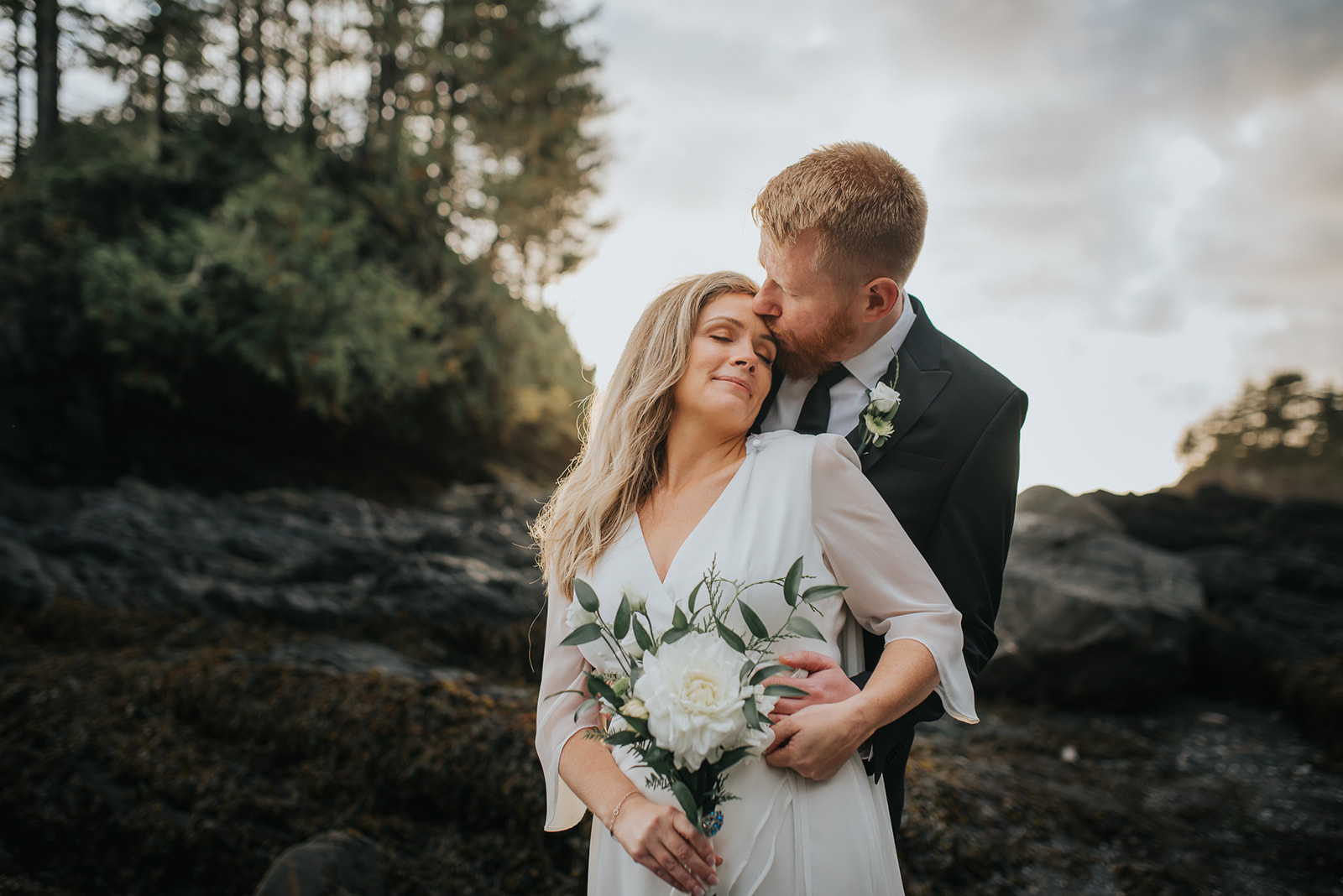
groom-kissing-brides-forehead

Creating connection through posing

You can easily create these connections when you’re posing subjects. It just takes a little knowledge of how body language translates in photographs.

When I’m working with couples I have one key rule. Keep your hands all over each other! Most couples don’t mind ;).

But this rule is important for illustrating love and connection. Nothing ruins a beautiful location, dreamy light, or passionate kiss than a stray straight arm. This creates a leading line that breaks the connection and leads a viewer out of the moment.

Join Clickin Moms today

Keep an eye out for circles and triangles in their body positioning. These shapes can be found in the way their hands, heads, lines of sight, and bodies are connecting. Even more, these shapes create clear vision paths for your viewer that translate to personal connection.

So have your subjects hold hands, hug each other, touch each other’s hair… whatever fits the situation and their personalities.

groom-smiling-waiting-to-see-bride-ebony-logins

Capturing connection in unposed moments

Documentary situations can be a bit more challenging when wanting to capture specific emotions. However, you can plan for and capture connection effectively when photographing in a documentary style.

I recommend shooting through a moment as it unfolds. This will help you capture a fleeting connection that may have been missed had you only taken one shot.

To help emphasize the connection before it happens, try to plan for as much as possible. Position yourself in such a way that your subjects are framed. This will help to show your audience that your subjects and their connection are the most important elements in the frame.

What to look for when capturing connection

When your subjects are connecting with each other, they can do so in a few different ways. They can be interacting with their eyes, creating a connection with their bodies, or they can be connected through an activity or object.

man-hugging-woman-connection-love-ebony-logins

Eye contact

Eye contact connects the subjects by an invisible line called an implied line of sight. Even if their heads aren’t touching, a circle of connection can still be completed as they stare into each other’s souls.

Touch

Body connections are typically more natural. It could be a child sitting in their mother’s lap, or siblings sitting side by side. These connections can be strengthened by ensuring your subjects have circles and triangles and leading lines between them with their eyes and hands. Even siblings each using a hand to hold a book can complete this connection as they both interact with the same object.

Direct gazes

Having your subject looking straight at the camera or facing the camera is another way to create connection in your photographs. Except this time, the connection is between the subject and the viewer.

A direct gaze can feel disarming, intense, or uncomfortable. Whatever emotion it evokes, this is just another way that you can create connection and make your audience feel.

Faceless moments

Faceless moments can also create a sense that the viewer is part of the image. The anonymity of a faceless moment allows the viewers to envision themselves in the scene.

Try shooting from behind your subjects or create a silhouette for faceless images. Body language will be key here as without facial expressions, you will be dependent upon it to convey love and connection.

bride-groom-embracing-connection-love-ebony-logins

Consider perspective

Be sure to carefully choose the angle from which you shoot when capturing connection. Changing your perspective will change the story. Perspective allows the viewer to see the moment through the eyes of the photographer.

This is something to keep in mind as you move around a scene. For example, shooting from above a subject can create a parental feel to an image. Shooting from the same level brings the viewer into the scene at the level of your subject. Shooting from below your subjects can make them feel larger than life.

When choosing your perspective, choose an angle that lends itself to the emotion you see in the moment and that you want your audience to feel as they look at your photos.

girl-fixing-wedding-dress-train-ebony-logins

A case study in connection

In a documentary image like the one above, there are several subjects. A bride, reading a letter from her husband-to-be. A bridesmaid checking the back of her dress for imperfections. The bride’s daughter, fixing the train of her dress.

The main character is the daughter, who is in focus and centered in the frame. Her fixation on the bride’s dress and her matching bridesmaids dress connects her to the moment she shares with her fellow bridesmaid. Both are focused on the bride.

The framing of the main character creates a circle between all three characters. While the bride’s actions are not exactly connected to the subjects in the frame, they do something even stronger. By reading the letter, we are now connected to a subject who is not even in the frame. Our minds get to wander on this thought a bit, which does, in a sense, lead us out of the frame.

man-and-woman-touching-noses-ebony-logins

YOU must lead the way to connection

There is one thing that is most important when learning to capture emotive connections – stay confident! Don’t be afraid to take your time with posing and guiding moments. There’s nothing wrong with spending a few minutes creating the right mood and taking only a couple of photographs of the moment.

Photographers who run frantically around a scene with high nerves will always make a moment feel less natural and uncomfortable. It portrays a lack of confidence and professionalism.

Practice moving from one moment to the next with ease and a quiet confidence. Emulate the mood that you want to portray. Try starting with a small repertoire of poses that you know well. When you have mastered 2-3 poses, work on adding one more at a time. Slowly building your workflow will allow you to have a firm grasp on what you know and build on it over time.

I love using transition poses that make it easy for my subjects to move from one pose to the next. If you move subjects from sitting to standing and back to sitting, this sequence will feel unnatural.

Keep all of the sitting poses together and find ways to create different moods or connections. Then, try transitioning them to a standing pose and add variety there, too.

bride-and-groom-dancing-ebony-logins

A simple flow that I love to use is this. Have the couple face each other and capture a few shots. Then have them dance together. After the dance, have one hug the other from behind. You may even be able to get them to dance themselves into that hugging connection! This simple flow feels easy and fun for the couple and I am easily able to get several shots with minimal effort.

No matter what your level of expertise is with connections, making your sessions fun, lighthearted, and easy will allow you to capture the most genuine emotions. And that is exactly what any couple would want to see in their photos.

Clickin Moms online photography forum information


The post Capture the love: Simple ways to show connection in your photographs appeared first on Clickin Moms blog: Helping you take better pictures one day at a time.


Clickin Moms blog: Helping you take better pictures one day at a time

Posted in Photograpy How To | Tagged , , , , , , | Leave a comment

Nikon Z 24-70mm f/2.8 S Announcement

Nikon Z 24-70mm f2.8 S

Today Nikon unveiled its first professional-grade lens for the Z mount, the Nikon Z 24-70mm f/2.8 S, for $ 2299. After the release of 35mm f/1.8 S, 50mm f/1.8 S and two f/4 zoom lenses, Nikon decided to add an f/2.8 lens to its arsenal of Z-series lenses to appeal professional photographers. While some might wonder why Nikon needs two 24-70mm lenses so early in the game with many other gaps in the Z lens line, Nikon wants to assure its fan base that the new mirrorless system is going to target both enthusiasts and professional photographers. For that reason, Nikon will be releasing the Z 70-200mm f/2.8 S along with the Z 58mm f/0.95 Noct later this year. All these lenses (especially the Noct) will be “showcase” lenses to demonstrate the true potential of the Z mirrorles system.

Photography Life

Posted in Photograpy How To | Tagged , , , | Leave a comment

How to Photograph Lightning

Double Lightning

Photographing a lightning is a dangerous hobby. Not everyone understands that a lightning storm is highly unpredictable, and a strike could occur any time, anywhere. At the same time, taking a picture of a lightning can be very rewarding, especially if the pattern is unique or the picture is taken at an extraordinary location. The tips below will show you how to photograph a lightning storm and take your pictures to the next level.

Photography Life

Posted in Photograpy How To | Tagged , | Leave a comment

How Good is the New Adobe Enhance Details Tool?

Lightroom Enhance Details Enhanced

Today Adobe announced a bunch of important updates to its ecosystem, with Lightroom Classic CC, Lightroom CC and mobile versions of apps receiving some new features. For example, the desktop version of Lightroom CC finally received the ability to stitch HDRs, panoramas, and HDR panoramas, while Lightroom Classic CC now has better tethering support for Nikon cameras (you can read about these changes in Adobe’s announcement post). However, the most exciting new feature any Creative Cloud subscriber can now access is called “Enhance Details”, which uses machine learning and computational photography to enhance the level of detail in images. This feature is accessible through Adobe Camera RAW, Lightroom Classic CC and Lightroom CC for both Mac and PC platforms. What’s so exciting about it? Well, it brings new levels of detail to images we have never seen before and these details can be applied to all existing RAW images. In fact, as I went through this feature in Lightroom, I discovered that this feature not only enhances sharpness in images, but also adds details that have never been there before in the first place. This essentially makes “Enhance Details” a very powerful tool. Let’s take a look at a few sample images to see exactly what happens.

Photography Life

Posted in Photograpy How To | Tagged , , , , | Leave a comment