How to Paint Pictures

There really is no easy answer to the question, How do I Paint a Picture? The simple answer is just dive in and practice. The less simple answer is buy your supplies, learn a few painting techniques, and practice some more. 

People say, oh anyone can paint. I believe that this is a true statement, but are they painting and achieving the results that they are striving for? When I first started painting I was not achieving the results I wanted in painting pictures. I then purchased some better quality paints and brushes, some step by step tutorials and within a short time I was painting pictures that I was pleased with. Follow the steps below and you should find it easier to learn how to paint beautiful pictures and paintings.
 
1. Buy your paint, brushes and canvas or paper. Whichever medium that you choose to paint with, weather it is acrylics, oil, or watercolor, do yourself a favor and buy good quality supplies. The way that I teach and practice art is to always use good brushes. If you are practicing a technique it is ok to use cheap paint, but in the real painting, use better quality paint. As far as other supplies, use things that you have around the house, such as old plastic bowls, ziplock bags and paper plates, etc.

2. If you are fortunate enough to have a space dedicated for painting keep all your supplies right there. This way you can paint whenever the spirit moves you. This is more important than you may think. If you do not have enough space, then purchase a large study bin or even a sturdy cardboard box and make that your portable studio that you can unload on the kitchen table in an instant. 

3. Consider the light in the space that you plan on working. Good light makes all the difference. If you are painting with oil paint and it is not water miscible then you absolutely need to consider the ventilation in the area because you will be exposed to some pretty strong odors.

4. If money is a concern then I recommend starting with watercolor or acrylics. They both are odorless and clean up with water. They are also less expensive. 
 
Now that you have your supplies and your dedicated space, start painting. If you are real creative, you can come up with your own ideas. But for the rest of us inspiration is not so easily come by. For those of you that fall into that category I suggest purchasing a step by step tutorial and start by following the example of someone that is dedicated to teaching art techniques.

Julie Shoemaker is an avid painter and hobbyist who regularly gives paintings as gifts to family and friends. To read more articles like the one here, and to see more free art tips, tricks and techniques and free step by step lessons Learn Painting Techniques or visit http://www.IamPainting.org

Posted in How To Take Good Pictures | Tagged , | Leave a comment

On the Road: Milky Way and Sunrise Photography

After almost a week of filming, we just packed up and left Grand Teton National Park. We were very lucky to capture some great light, and we had a few clear nights to take good Milky Way photos as well. We’re now heading to Yellowstone for some photos — hopefully avoiding the crazy tourists — and then going north to film some videos throughout Montana.

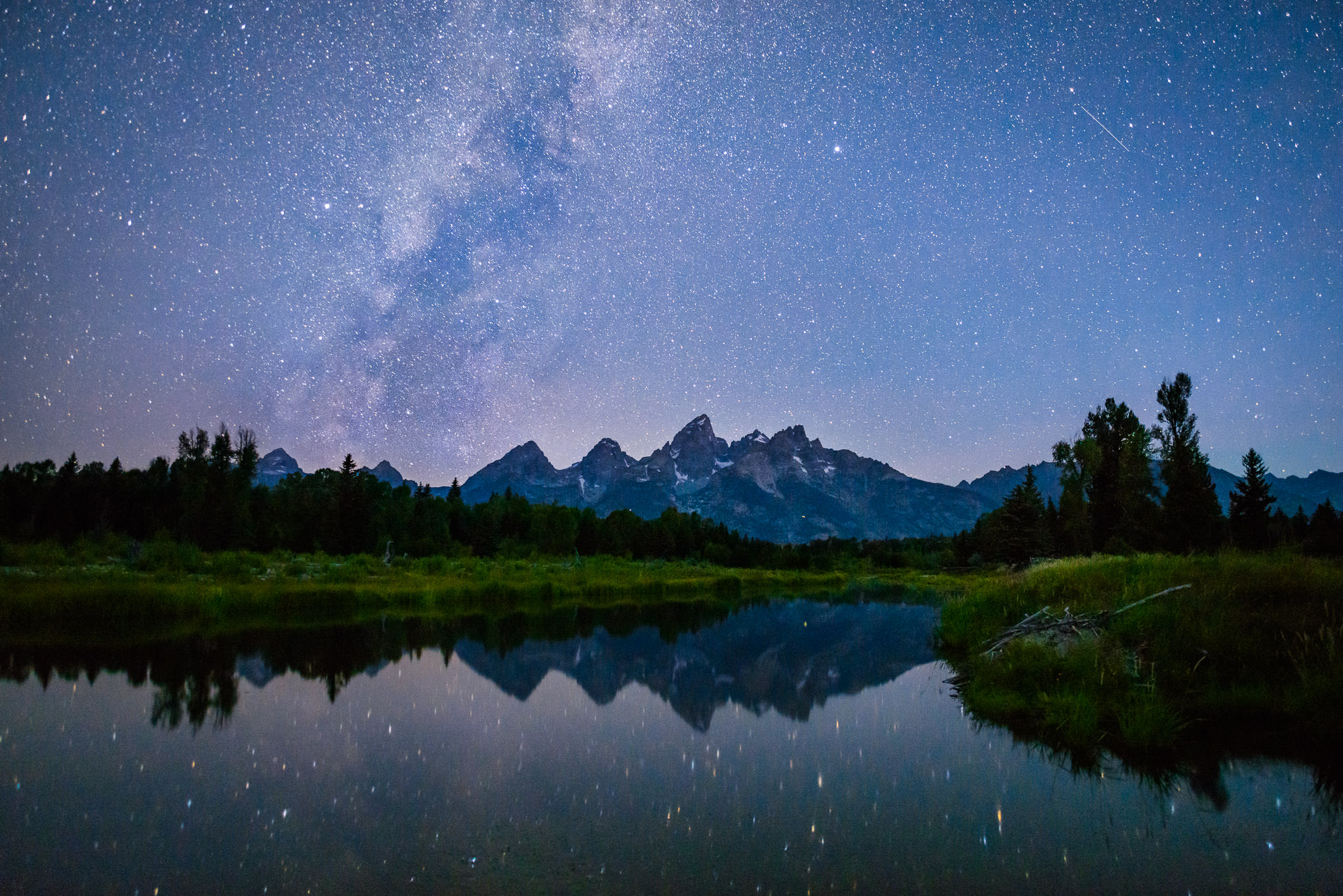
In the past couple of days, we’ve filmed two more case study videos: Nighttime Photography and Advanced Composition. Yesterday morning, we woke up at 3AM to photograph the stars over the Grand Teton range. Based on an app that we use, we knew ahead of time exactly where the Milky Way would be, but it was still such an incredible sight to see in person. The night was completely cloudless and calm, and the reflection of the Tetons in the water turned out perfectly. Our video covered the making of this photo in-depth, and our tutorial will include the full-resolution 36 megapixel RAW for you to follow along with our post-processing.

The Tetons at Night

NIKON D800E + 20mm f/1.8 @ 20mm, ISO 3200, 20/1, f/2.2

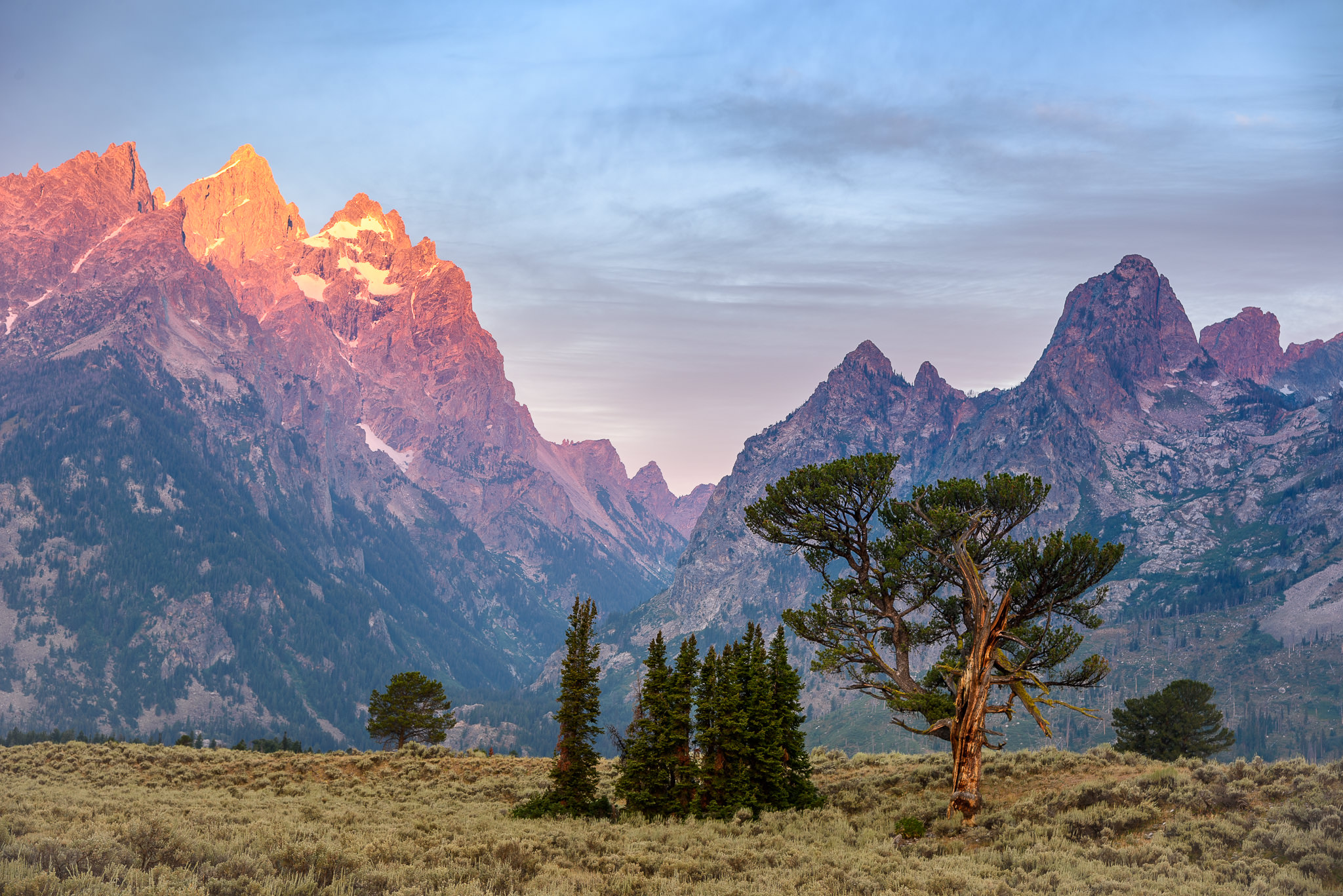
This morning, we also woke up early — 5AM rather than 3AM — to film Advanced Composition at sunrise. Thank you to Beth and Kurt at the Teton County Library for all the help with locations! We went to the library to meet them, and they were such wonderful people — we love meeting up with Photography Life readers. Because of their recommendation, we decided to film sunrise at the Patriarch Tree with the Tetons in the background. The light was great for photography, and both the mountains and the tree caught some gorgeous colors.

Patriarch Tree Grand Teton NP

NIKON D810 + 24-120mm f/4 @ 78mm, ISO 64, 6/10, f/8.0

The Grand Tetons aren’t all about landscapes, though, even though that’s the video that we are filming. One of the coolest things we’ve seen so far was a weasel who had managed to catch and run with a squirrel in its mouth. It was moving very quickly, but I managed to get a couple shots before it dashed out of sight. Not something you see every day!

Weasel

NIKON D800E + 70-200mm f/4 @ 200mm, ISO 1100, 1/400, f/4.0

As we move farther north, we won’t have as much access to cell coverage, so our updates may have to take a break. Although we aren’t filming in Yellowstone, we’re hoping to take some nice photos and catch up on a few articles. We’ve scheduled a few posts for the coming days, so stay tuned! If you would like to submit a guest post for the coming few weeks, check out our original article about the process. More updates will follow as soon as possible.

The post On the Road: Milky Way and Sunrise Photography appeared first on Photography Life.

Photography Life

Posted in Photograpy How To | Tagged , , , | Leave a comment

Guest Post Month

While part of the Photography Life team is on the road filming our next video course on landscape photography, we thought it would be a good idea to start a guest post month dedicated to posting content from our readers. Last year’s guest post month was amazing and we got so many great articles, which were both very educational and inspirational. Well, it is again time to give the chance for our readers to speak out and show off their work! Because many of our readers are as passionate as we are in sharing their knowledge, they often share articles with us in the form of Guest Posts, the best of which we often feature on the site. We would like to invite our dear readers again in participating in a knowledge sharing contest, in which we will reward every writer when their article is posted on the site. If your article is published, we will reward you with a $ 50 gift card from B&H, Adorama, Amazon or any other store of your choice as a token of appreciation, or if you prefer to be paid instead, we will transfer the sum to your PayPal account. This way, you are rewarded for your contribution even if you do not win the ultimate prize, which speaking of, is going to be amazing this time around! The person who submits the best guest post will be rewarded with the Fuji X-T10 mirrorless camera kit (see our detailed review of the Fuji X-T10), or the equivalent sum towards the purchase of any camera or lens valued at $ 900, in addition to a full year of SmugMug membership (see our review of SmugMug). We will not limit your contributions, so you could submit as many articles as you would like and get paid for the work. Sounds exciting? Then read on!
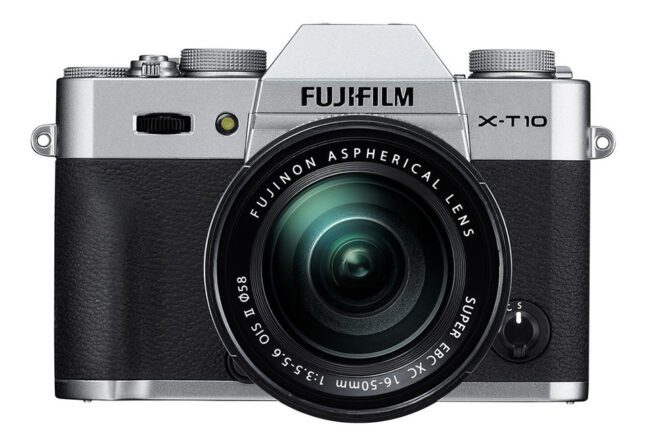
Fuji X-T10 Kit

Below you will find submission rules and our guide on the type of content we are looking for.

What to Write About

If you don’t know where to start, please take a look at the guest posts that we have previously featured on the site. Basically, we are looking for any kind of content, as long as it is photography related. You could write “how to” articles, guides, tutorials, essays, reviews of camera gear, interviews, your travel adventures – you name it. Everything counts, as long as it is educational, or interesting to read / engaging. Our first priority is obviously sharing knowledge, so we prefer that you submit articles that educate others. But if you have something else up your sleeve that will truly resonate with our readers and engage them in discussions, you can submit it too. We won’t grade your work on its type, but rather on other factors highlighted below.

Winner Selection

So how will winners be selected? The criteria for selection will vary by content, but here is a list of items that we will surely look at:

  1. Content Quality and Length: while length is not particularly important, the quality of content is key.
  2. Quality of Images / Illustrations: if you write a piece, showing off your work in its glory is important – it establishes credibility.
  3. Reader Interaction: a strong article usually creates discussions between other readers, so their engagement and participation will also count.
  4. Social Media: every article will be promoted to our Facebook fan page, Twitter and Google+. The more likes, retweets and shares, the better.
  5. Other Criteria: we will also look at other criteria like your sense of humor, writing skills, etc. as part of evaluation.

By the end of the month, it should be pretty clear who the winner is based on the above, but if we have a hard time picking a winner, we will engage our team at PL for making the decision.

Contest and Content Submission Rules

It is important to also establish contest and content submission rules, as they are very important.

Contest rules:

  • The contest is open to participants from all countries, not just USA. Some countries might have import restrictions, value-added taxes, high shipping costs and other fees. The winner will be responsible for all those fees, including shipping. If we cannot send the camera for some reason (perhaps due to high shipping costs or import restrictions), we will have to change the prize for cash value / gift card.
  • Participants must be at least 16 years old to participate.
  • To claim cash prize (whether for the articles or the camera), participant must have a verified PayPal account. For sums amounting to over $ 200 USD, we will be able to send a check to a postal address (only for US and Canada residents).
  • Image copyright will be retained by the author. PL agrees to never publish any of the submitted content or images, except in other content and material (whether free or paid) published or referenced on the site.
  • All contest rules are subject to change any time by the contest organizer.

Content submission rules:

  • Photographs / Illustrations: All images must be extracted at 1200 pixel long resolution or higher (2048 pixels preferable). Maximum image width should be 2048 pixels on the long edge. Images should be extracted at 80% JPEG quality minimum, sRGB color space. All images must be copyright of the person submitting the article, or properly licensed (license proof must be submitted with the article). It goes without saying that images taken from other people or “borrowed” from other websites will be rejected. If it is an educational article and you don’t need to use images, then an illustration will also work. A minimum of one image must be provided.
  • Text Originality / Plagiarism: All content must be original and must be written by the author. We have zero tolerance for plagiarism and if we find any traces of it, your article will never be published, no matter how good it is. You will also be permanently banned from participating in this and other similar contests in the future. Use of references and quotes are OK, as long as the source is provided.
  • As always, we want to feature artists and help promote their work. Please don’t forget to include your short bio, along with a link to your website/portfolio. We will add that information on the bottom of the article.

Submitting Content

Submitting content is very easy. Put all images, along with the text version of the document (preferably in Word or plain text format) in a single ZIP file, then upload it through our Submit Content page.

We are looking forward to seeing amazing content from our dear readers!

The post Guest Post Month appeared first on Photography Life.

Photography Life
Posted in Photograpy How To | Tagged , , | Leave a comment

Learn How to Develop a Photographic Memory

Yes the good news is we can all improve our memory and in fact unlock our very own Photographic Memory simply buy doing some targeted exercises.

We were born with a photographic memory. We were born to learn by seeing, and feeling and smelling
touching, sensing etc..

You know what they say…USE IT or LOOSE IT !

Have you ever heard anyone say they feel ‘brain dead’, simply because they are not doing anything that stimulates the muscles of their brain to actually work out.

The brain is a muscle and in order for muscles to stay fit and toned they do need some exercise. And just they same way we exercise our bodies to stay fit toned and healthy, we need to do this with our brain in order to keep our memory, retain information and be able to retrieve information readily.

So what can you expect if you learn if you learn to Develop A Photographic Memory ?

Reduce Stress at will and greatly enhance relaxation skills
Go Way Beyond Speed Reading And ‘Photograph’ Books At Over 25,000+ Words Per Minute (That’s Over 100 Times The Average Reading Speed) …
Store Every Single Word In Your Long Term Memory, ‘For LIFE’, So You Simply Cannot Forget It…
Dramatically Reduce Stress And Become Much More Effective, Organised And Efficient At The Same Time!”
Razor sharp memory skills
Discover new methods of lateral thinking
Develop Creative problem solving

…and much much more

Here’s a Tip when Learning to Develop A Photographic Memory

Association – the brain loves association. So next time you really want to remember something, use association.

Lets go back a step and try something that may help the association game.

Go into a quiet place in your house/home. Start looking around at stuff you have in the wardrobe on the shelves walls etc…. Find one thing that “brings back a memory” really try hard (you may not have to) to remember everything that you can about that memory, smell, touch, sound, feel… exercise the memory.

Next time you want to remember something attach some kind of feeling to it, this will help you remember it when you need to recall it again. Once you use association the brain neatly stores it in the filing cabinet (memory) where it can easily be retrieved when called upon.

Posted in How To Photograph | Tagged , , , | Leave a comment

Norman Norell [misc.];mr. John [misc.] Paper Framed Print 1 5/8″ Natural Espresso Wood Grain 22×26 Photo On

Norman Norell [misc.];mr. John [misc.] Paper Framed Print 1 5/8″ Natural Espresso Wood Grain 22×26 Photo On


Norman Norell [Misc.];Mr. John [Misc.]” is an art print by Gjon Mili from The Life Picture Collection. Get photo prints of “Norman Norell [Misc.];Mr. John [Misc.]” in a variety of frames, styles, and materials. Photographer Bio Emigrating to the United States from Albania in 1923, Gjon Mili is regarded as the first photographer to use electronic flash and stroboscopic light to create photographs outside of a scientific context. A true pioneer of the artform, Mili’s photographs of dancers, athletes, and pictures or performances have shaped our understanding of how movement too rapid or too complex for the eye to discern is captured in the still image. Mili’s career as a photographer for Life Magazine spanned four decades and saw the publication of thousands of his photographs, taking him around the world; from collaborations with Pablo Picasso, to the incarceration of Adolph Eichmann, to original photos from Broadway plays. The Life Picture Collection From one of the most iconic magazines ever to hit the shelves comes The Life Collection – an archive of some of the most recognizable imagery of the 20th Century. Documenting events in politics, culture, celebrity, the arts and the American experience, these compelling and provocative photographs include the works of some of the greatest photographers capturing some of the greatest moments in history.

Price: $
Sold by Photos.com by Getty Images

Posted in How To Photograph | Tagged , , , , , , , , , , , , , | Leave a comment