Canon 5D Mark IV Announcement

Today Canon officially unveiled its update to the popular Canon 5D line, with the much anticipated EOS 5D Mark IV. The new Canon 5D Mark IV comes with a 30.4 MP CMOS sensor (native ISO range of 100-32,000) with on-sensor Dual Pixel AF that allows for phase-detection AF when shooting video and continuous focusing when shooting stills in live view mode. The camera got a few upgrades for shooting video – it now can shoot 4K video (1.64x crop) at up to 30 fps (Motion JPEG format), 1080p at up to 60 fps and 720p at up to 120 fps. One of the biggest improvements is in the AF system: the 5D Mark IV gains the same 61-point AF system as the 1D X Mark II, with 41 cross points, larger AF coverage and better sensitivity (up to -3 EV in low light and -4 EV in live view). Although Canon utilized the current DIGIC 6+ Image Processor, it is still able to yield 7 fps continuous shooting speed, which is quite impressive, considering the resolution of the camera.
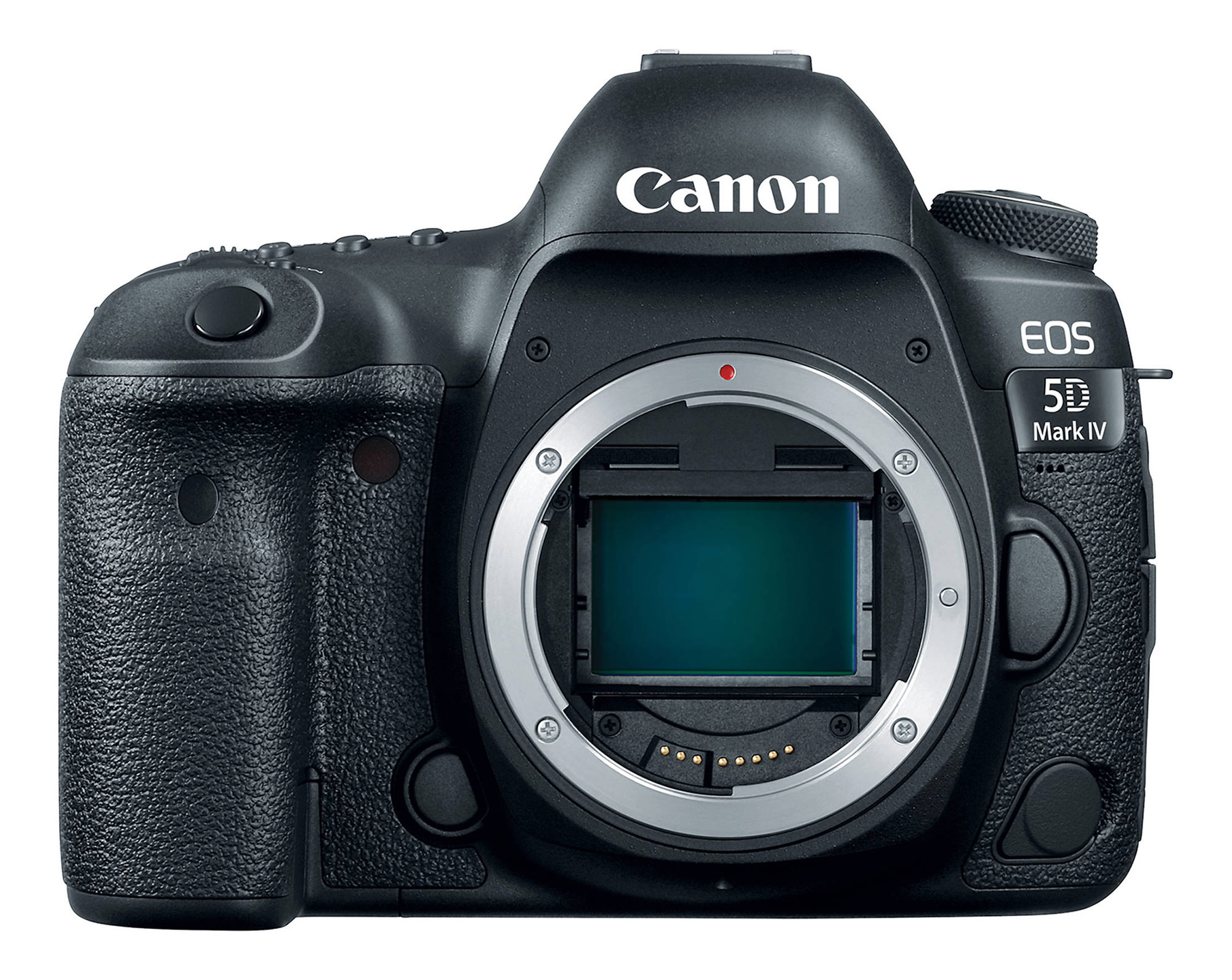
Canon 5D Mark IV

In terms of image quality and specifically dynamic range (which has been quite disappointing on its predecessor), we should expect big improvements in that area, as Canon clearly put much more emphasis on improving dynamic range (DR) this time around. It is hard to say whether Canon will be able to match Sony’s latest generation sensors in noise and DR performance, but as long as it is close enough, it might already be worth the upgrade for many Canon shooters out there. In addition, the 5D Mark IV will feature a large 3.2″ touchscreen LCD, similar to what we have seen on the top-of-the-line Nikon D5. Unfortunately, the screen is not of a tilting type, which is a rather major drawback for any digital camera nowadays. Canon bundled the 5D Mark IV with both WiFi and GPS, which is a smart choice, as those are also two highly desired features. Manufacturers should not expect photographers to carry a separate GPS unit for location tracking or to use those expensive hotshoe GPS units with dangling cables (Nikon, please take note!), when a GPS chip can be easily included. Lastly, Canon improved the weather sealing features of the camera, making the 5D Mark IV even more desirable and suitable than the 5D Mark III for extreme shooting environments.
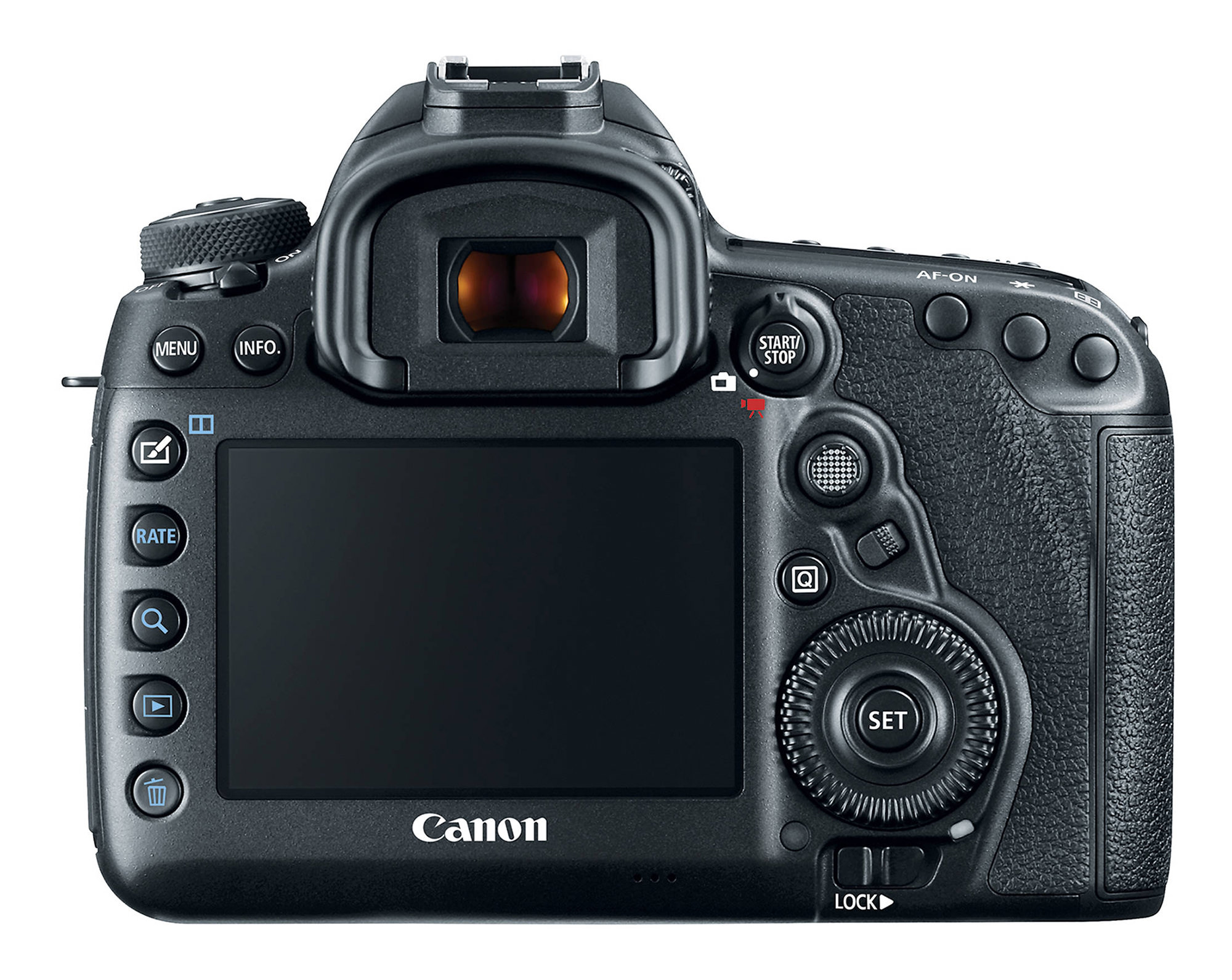
Canon 5D Mark IV Back

Overall, based on the provided specifications and features, the camera looks very solid. At $ 3,499 for the body-only version and $ 4,399 with the 24-70mm f/4L IS USM, it is not cheap by any means, but those who have been patiently waiting to upgrade their Canon DSLRs might want to move up to the 5D Mark IV, especially if it delivers improved noise, dynamic range and AF performance.

Canon 5D Mark IV Top

In addition to the 5D Mark IV, Canon has also announced two lens updates, the EF 16-35mm f/2.8L III USM and the EF 24-105mm f/4L IS II USM.

Official Canon Announcement

Here is the official Canon announcement on the 5D Mark IV:

Developed for Professional Wedding, Portrait, and Nature/Wildlife Photographers as well as Filmmakers, the EOS 5D Mark IV Delivers Excellent Image Quality and 4K Video Recording

MELVILLE, N.Y., August 25, 2016 – Canon U.S.A., Inc., a leader in digital imaging solutions, is proud to announce the EOS 5D Mark IV DSLR camera, the next generation of the popular and versatile 5D series of Canon professional DSLR cameras. Building on this legendary legacy, the EOS 5D Mark IV propels the series forward with a fusion of features and enhancements targeted to please even the most discerning creative eyes. The camera’s 30.4 megapixel 35mm Full Frame Canon CMOS sensor offers stunning image quality while the DIGIC 6+ Image Processor delivers 4K 30P video and up to and seven frames per second (fps) continuous shooting. To make video shooting even easier, the camera also features Canon’s propriety Dual Pixel CMOS AF, even when shooting 4K to help ensure sharp focus and subject tracking.

In addition, Canon is also introducing two new L-series EF lenses – the Canon EF 16-35mm f/2.8L III USM Ultra-Wide Zoom Lens and EF 24-105mm f/4L IS II USM Standard Zoom Lens– offering fantastic edge-to-edge sharpness across the imaging plane, as well as improved durability and performance.

“Canon’s EOS 5D series of DSLR cameras has a history of being at the forefront of still and video innovation. And today, we add to this family of cameras the EOS 5D Mark IV – the first in our 5D series to offer 4K video and built-in Wi-Fi and NFC connectivity,” said Yuichi Ishizuka, president and COO, Canon U.S.A., Inc. “In developing this new DSLR camera, we listened to the requests of current EOS users to create for them a modern, versatile camera designed to help them create and share beautiful still and video imagery.”

“Outdoor photographers will really appreciate the new EOS 5D Mark IV, as it offers more resolution, better detail in the shadows, and improved speeds in autofocus and frame rate,” reported acclaimed nature photographer and Canon Explorer of Light George Lepp. “With the fabulous resolution of 4K video and the ability to make beautiful prints from a frame of that video as an added bonus, this camera sets a new mid-range standard for nature photography.”

EOS 5D Mark IV DSLR Camera Specifications:

  • New 30.4 Megapixel full-frame CMOS sensor for versatile shooting in nearly any light, with ISO range 100–32,000; expandable up to 50–102,400.
  • 4K Motion JPEG video (DCI cinema-type 4096 x 2160) at 30p or 24p; in-camera still frame grab of 4K 8.8-Megapixel images; multiple video options include Full HD up to 60p, and HD up to 120p.
  • Superb Dual Pixel CMOS AF for responsive and smooth AF during video or Live View shooting; LCD monitor has full touch-screen interface, including selection of AF area.
  • Excellent performance — up to 7.0 fps continuous shooting speed with high performance DIGIC 6+ Image Processor for improved speed and excellent image quality.
  • 61 AF points with expanded vertical coverage with 41 cross-points, and AF possible at all 61 AF points with many lens + extender combinations effective at f/8.
  • 150,000-pixel RGB+IR metering sensor helps provide precise exposure metering, helps detect flickering lights and allows for enhanced scene recognition and face detection capabilities.
  • Dual Pixel RAW, in-camera Digital Lens Optimizer during JPEG shooting and Diffraction Correction technologies.
  • Built-in Wi-Fi and NFC connectivity provide easy sharing to compatible smart devices, select social media sites and the Canon Connect Station CS100 device.
  • Built-in GPS provides geotag information including auto time syncing with Universal Time Code (UTC) via satellites.

“I have owned every camera in the 5D line, so the new EOS 5D Mark IV feels like an old friend in my hands, only better” exclaimed renowned wedding photographer and Canon Explorer of Light Clay Blackmore. “It has everything a professional photographer needs to create outstanding, quality images every time. Between its ability with still images and video capture, it is the complete package and—in my opinion—the best wedding camera on the planet.”

“When working with macro beauty photography, I need fast and precise autofocus. With each breath of the subject I need to be able to check the exact placement of focus, whether on the tips of the eyelashes, the pupils or other detail of her face. The EOS 5D Mark IV gave me exactly the speed and precision required to capture the detail and stunning color that is a signature of my beauty work,” remarked celebrated fashion and beauty photographer and Canon Explorer of Light Lindsay Adler. “I’m always looking for ways to create visuals that help me stand out from the competition. Cinemagraphs, also known as ‘living images,’ allow me to combine still frames and video to create captivating images. Because of the EOS 5D Mark IV’s 4K and slow motion capabilities, I now have the ability to create high quality and visually compelling cinemagraphs without having to invest in an expensive cinema camera!”

The Next Generation of EOS 5D Cameras
In addition to the new Full Frame sensor, the new EOS 5D Mark IV includes a 61-point High-Density Reticular AF II system, similar to the one found in the flagship EOS-1D X Mark II, with all AF points selectable by the user (and up to 41 cross-type points depending on the lens in use). The AF system, improved over previous Canon 5D series models, includes expanded coverage across the frame that supports AF at maximum apertures up to f/8 with all 61 points for high-precision autofocus even when using EF super-telephoto lenses with an EF extender. Standard ISO range for the EOS 5D Mark IV is ISO 100-32,000 and is expandable to 50-102,400.

The EOS 5D Mark IV also introduces a new 150,000 pixel RGB+IR metering sensor with enhanced precision and performance compared to its predecessor, improving upon facial recognition and tracking as well as nature and sports scenes with fast-moving action. AF sensitivity in low light is EV-3 and EV-4 when in Live View mode. The EOS Scene Detection System can detect and compensate for flickering light sources that are often used in gymnasiums and swimming pools. When enabled, this anti-flicker system automatically adjusts shutter release timing to help reduce disparities in exposure and color especially during continuous burst shooting.

Following the groundbreaking video recording capabilities introduced in the EOS 5D Mark II and EOS 5D Mark III, the EOS 5D Mark IV takes the next leap forward offering DCI 4K video recording. Adding to the versatility of capturing 4K video, is Canon’s Dual Pixel CMOS AF. This proven autofocus system allows for continuous focus tracking of subjects, and can be customized by the user for optimal performance. Dual Pixel CMOS AF technology not only enhances 4K video recording, but also helps create crisp focus for 4K Frame Grab extraction of 8.8 megapixel still JPEG images, all done in camera.

Mobile Connectivity
For the first time in an EOS 5D series DSLR camera, the EOS 5D Mark IV features built-in Wi-Fi and Near-Field Communication (NFC) providing for the easy transfer of images and MP4 movies to compatible mobile devices, as well remote shooting when using the Canon Camera Connect App2. The EOS 5D Mark IV also includes a built-in GPS receiver with compass for precise geo-tagged information of latitude, longitude, and elevation. This is especially valuable to wildlife photographers and photojournalists who need to track their locations, as well as providing sports and wedding photographers the ability to sync a multiple-camera setup with extreme accuracy and precision. The camera’s built-in GPS can also be used to sync the camera’s time to the atomic clock, an invaluable feature when multiple photographers are covering the same event.

Pricing and Availability
The Canon EOS 5D Mark IV DSLR is currently scheduled to be available in early September 2016 for an estimated retail price of $ 3,499.00 for the body only. It will also be sold as part of body-and-lens kits with the EF24-70mm f/4L lens ($ 4,399.00, scheduled to be available early September) and the EF24-105mm f/4L IS II USM lens ($ 4599.00, scheduled to be available late October).

For an exclusive, hands-on preview, the camera will be available at the customer support centers shown below. Visitors can experience the camera firsthand while Canon technical experts demonstrate new product features, answer questions, and spotlight the benefits of Canon products and service.

Pre-Order Options

As usual, you can pre-order your copy of the Canon 5D Mark IV and the newly announced lenses from our partners B&H Photo Video and Adorama:

  1. Pre-Order Canon 5D Mark IV Body Only from B&H Photo Video / Adorama
  2. Pre-Order Canon 5D Mark IV BG-E20 Battery Grip for $ 349 from B&H Photo Video / Adorama
  3. Pre-Order Canon 5D Mark IV with 24-70mm f/4L USM for $ 4,399 from B&H Photo Video / Adorama
  4. Pre-Order Canon 5D Mark IV with 24-105mm f/4L IS II USM for $ 4,599 from B&H Photo Video / Adorama
  5. Pre-Order Canon 16-35mm f/2.8L III USM for $ 2,199 from B&H Photo Video / Adorama
  6. Pre-Order Canon 24-105mm f/4L IS II USM for $ 1,099 from B&H Photo Video / Adorama

The post Canon 5D Mark IV Announcement appeared first on Photography Life.

Photography Life

Posted in Photograpy How To | Tagged , , | Leave a comment

What Is Dual-Pixel RAW in the Canon 5D Mark IV?

Canon’s newest 5D Mark IV camera has a lot of exciting specifications — the fast frame rate and 4K video capabilities, for example — but there is more to this camera than what first meets the eye. One new feature buried in Canon’s promotional material is a technology called Dual Pixel RAW. This isn’t something that we have seen before, but it seems like it could be one of the most interesting features of this new camera. So, what is Dual-Pixel RAW?

1) What Dual Pixel RAW Isn’t

Before we get to what Dual Pixel RAW is, let’s talk about what it isn’t. First, although they have similar names, the Canon 5D Mark IV’s Dual Pixel RAW is not the same as its Dual Pixel Autofocus. Instead, Dual Pixel Autofocus is a way for the camera to use phase-detect autofocus in the camera’s live view, making for better autofocus in video and better live-view focus on moving subjects. This is a useful feature, but not the same as Dual Pixel RAW.

Dual Pixel RAW also, unfortunately, is not a way to improve the resolution of a photograph. Some cameras, like the Pentax K-1, use pixel-shift technology to make images appear significantly sharper. Although we don’t have all the details on Canon’s Dual Pixel RAW yet, it definitely does not work by moving the camera’s physical sensor (which means it also cannot be used for sensor-based image stabilization). Instead, it uses the left and right halves of a single pixel to create a photo, as discussed later.

2) What Is Dual Pixel RAW?

At the moment, we only know what Canon has said, and they haven’t said very much. Let’s start by looking at the quotes in their promotional material:

“The EOS 5D Mark IV’s Dual Pixel CMOS AF system enables capture of Dual Pixel Raw (DPRAW) files. Images shot as DPRAWs have onditional adjustment possibilities when processed with Canon’s Digital Photo Professional image processing software, which enables pixel-level adjustment and refinement for still photographs and includes Image Micro-adjustment to help maximize sharpness in detail areas, Bokeh Shift for more pleasing soft focus areas and Ghosting Reduction to help reduce aberrations and flare.“

There’s also this gem:

“When lens diaphragm setting is fully open, adjustment volume and compensation effect are emphasized. Sufficient adjustment volume and compensation effect may not be achieved, depending on lens in use and shooting conditions. Adjustment volume and compensation effect vary depending on camera position (landscape or portrait).”

Reading through these — several times — you can get some sort of an idea how Dual Pixel RAW works. As I see it, there are three main ways to use this feature:

  1. You can shift the focus of a photograph after it has been taken. This isn’t nearly to the degree of light-field cameras like Lytro, but it will allow you to shift the focus a few millimeters in one direction or another. I see a lot of portrait photographers appreciating this feature — shifting the focus of a crucial photo from your subject’s eyelashes to their eyes.
  2. You can change the appearance of a photograph’s out-of-focus regions, both in the foreground and the background. They don’t provide many more details than this, so I’m speculating, but my guess is that you can shift the out-of-focus regions from left to right, creating more pleasant bokeh. I’ll update this as more information is available.
  3. You can reduce the flare and ghosting from a bright light source in your frame. I see the reason why this feature could work (explained in the next section), but I’m still waiting to see it before I’m fully convinced. As a landscape photographer, this feature seems almost too good to be true, especially if it completely eliminates flare, or comes close. We’ll need to wait and see how well it works, but I wouldn’t hold out hope for more than a slight reduction in flare.

As the name implies, these adjustments are done to the RAW file that you capture. This is essential, and I am glad that Canon didn’t make this a JPEG-only feature.

3) How does Dual Pixel RAW Work?

Canon’s Dual Pixel RAW works by taking two photos, both 30.4 megapixels in size, using the left and right halves of a single pixel. Because the two halves see things a bit differently, Canon lets you filter information from them separately. For example, the two halves of each pixel will have slightly different amounts of flare, since flare sometimes hits one side of a pixel more strongly than the other. The same principle is used to shift a photo’s focus and bokeh appearance.

This is similar to the way that Lytro’s cameras worked, but to a much lesser degree. By capturing light from two different perspectives, Canon gives just the slightest hint of what a light-field camera can capture — but it does so without sacrificing the high 30.4 megapixel count.

4) Caveats for using Dual Pixel RAW

Based on the information that Canon has released, there seem to be a few drawbacks/caveats related to using the Dual Pixel RAW feature. I’ll go through them individually:

Post-Processing

All of these adjustments have to be made in post-processing. There is no way to eliminate ghosting or flare with this feature while you are actually taking pictures, for example. At this point, too, the only software that allows for these corrections is Canon’s own Digital Photo Professional software. Hopefully, companies like Adobe will add the ability to adjust these files as time goes by, although I tend to think it is unlikely (Update: Adobe has said that they are “working on” making this feature compatable with their software — a very welcome addition!).

Does it always work?

Their own material seems to say that Dual Pixel RAW doesn’t always work perfectly. If you use certain lenses (presumably depending upon focal length), you might see more or less of an effect. Or, interestingly, your choice of camera orientation — landscape or portrait — also changes the effectiveness of Dual Pixel RAW. We haven’t seen anyone test these claims yet, so I don’t know if these are just covering-all-our-bases marketing statements, or if they are things that you’ll actually notice yourself.

Aperture settings

It seems that Dual Pixel RAW works best at wide aperture settings (“When lens diaphragm setting is fully open, adjustment volume and compensation effect are emphasized”). This would make sense, simply because the slight adjustments possible would be harder to see with a small aperture, where depth of field is much larger.

One Adjustment Per Photo

You can only do one adjustment to a photo, not all three at once. So, if you need to adjust focus and reduce flare, you have to pick one of the two. This shouldn’t be a huge problem, but it is worth keeping in mind.

File Size Concerns

Unfortunately, file size almost doubles when you use the Dual Pixel RAW feature, from 37 MB to 67 MB, which is an obvious concern. If you’re shooting a wedding, for example, it might be nice to have these features at your disposal — but not worth doubling the total file size of the entire wedding

Frame Rate Effects

As far as I can find, Canon doesn’t mention anything about a reduction in frame rate with the Dual Pixel RAW feature. There certainly may be a reduction in frame rate — it wouldn’t surprise me — but I haven’t heard anything about it yet. Stay tuned.

5) Video Demonstration

Imaging Resource released a video demonstration for the focus shifting adjustments. It seems pretty interesting, so I recommend watching for yourself:

The focus shifting feature seems pretty solid — not for large adjustments, but certainly for some photos. Because this adjustment is relatively small, it seems like the earlier quote from Canon (“When lens diaphragm setting is fully open, adjustment volume and compensation effect are emphasized”) was referring to a simple effect: you’ll notice this more if you shoot at a wide aperture.

The video doesn’t give much insight into the other two features, flare reduction and bokeh shift. Hopefully we will see video demonstrations of these effects in the coming days and weeks.

6) Conclusion

No one has the 5D Mark IV on hand to test this feature yet, but it certainly seems promising. As a landscape photographer, my hope is that the flare reduction feature actually works well enough to use — if it does, that could justify the almost-doubled file size for a given image. Although there are ways to reduce a photo’s flare already, they take more post-production effort than I tend to enjoy, and they also require taking two photos.

For portrait photographers, the focus shift feature clearly appears very useful. And, although they haven’t given us many details on the bokeh shift feature, I assume that it also works fairly well. Even a small adjustment to the out-of-focus regions of an image can effect a photo’s composition significantly, and it’s always good to have options. I also see these two features as potentially very useful for macro or wildlife photography. The only problem — and why I think that many people will not use this feature — is that the Dual Pixel RAW files take up roughly twice as much space as standard photos. For high-volume shooters, that simply won’t work.

That’s all we know for now. I’ll update this article once we test the Dual Pixel RAW feature in the field.

The post What Is Dual-Pixel RAW in the Canon 5D Mark IV? appeared first on Photography Life.

Photography Life

Posted in Photograpy How To | Tagged , , | Leave a comment

Visitors Enjoy The Wildlife At Farne Islands Aluminum Mounted 27×18 Photo On Aluminum

Visitors Enjoy The Wildlife At Farne Islands Aluminum Mounted 27×18 Photo On Aluminum


a Puffin standing on a cliff on Inner Farne, England. Photographer Bio Dan Kitwood began his photography career with South West News Service, a prestigious regional agency based in Bristol. After three years of interesting and eclectic assignments he was offered a staff position at Getty Images, and joined the team with five other UK news photographers. He?s based in London and covers news and features across the UK and around the world. His work has taken him to Dubai, South Africa, Nigeria, Benin, Tunisia and The Vatican, and his images have appeared in publications around the world, including the New York Times, National Geographic, Geo, Stern, Time, The Guardian and Newsweek. Dan?s recent awards include Photo Essay winner at the UK Picture Editors Awards in 2011 the UK Picture Editors Awards News Photographer of the Year in 2012. Getty Images News Coverage of the biggest news events at home and around the world? whenever and wherever they happen. Every photograph tells a unique and remarkable story of an important moment in time that both informs and inspires us. It?s photojournalism at its best, and what makes it so good is the Getty Images staff photographers around the globe who are dedicated to documenting the important national and international issues we wouldn?t otherwise see. If it?s newsworthy, they?re there. Many are World Press Photo winners, some are Pulitzer Prize nominees and all of them are our eyes on the world.

Price: $
Sold by Photos.com by Getty Images

Posted in Wildlife Photography | Tagged , , , , , , , , | Leave a comment

Tamron 150-600mm Di VC USD G2 Announcement

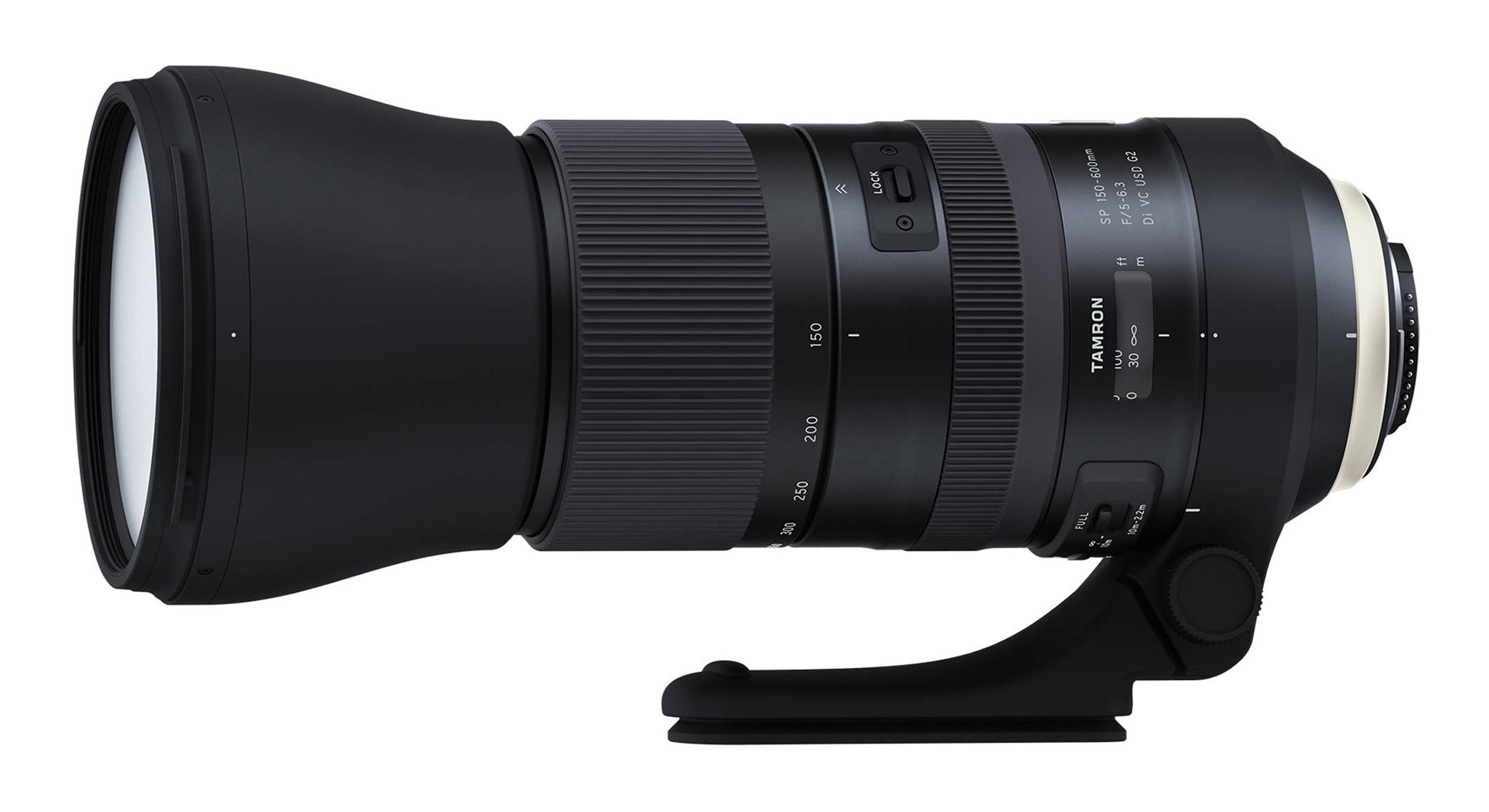
Many Photography Life readers already know how much our team likes the Tamron 150-600mm f/5-6.3 lens – we have written a few articles on how amazing the lens is for reach and our detailed review of the Tamron 150-600mm attracted a lot of people, with over 200 comments in the review. Today, Tamron announced a big update to this lens in the form of SP 150-600mm F5-6.3 Di VC USD G2. This second generation (G2) lens went through a number of changes, including improved image stabilization, faster AF speed and a few other mechanical and design tweaks. The biggest changes, however, are in the updated optical formula and weather sealing – the G2 now features better optical design with improved overall sharpness and a fluorine coated front element, while the lens barrel has been reworked in order to reduce both dust and moisture from entering the lens (which is one of the biggest issues of the previous design). Lastly, the new 150-600mm now joins the list of lenses compatible with Tamron’s TAP-in console, for future firmware upgrades and customization. The lens will retail for $ 1,399 and it is scheduled to start shipping at the end of this month. In addition to this lens, Tamron has also announced two new 1.4x and 2.0x teleconverters, both of which will be compatible with the lens.

Tamron 150-600mm Di VC USD G2

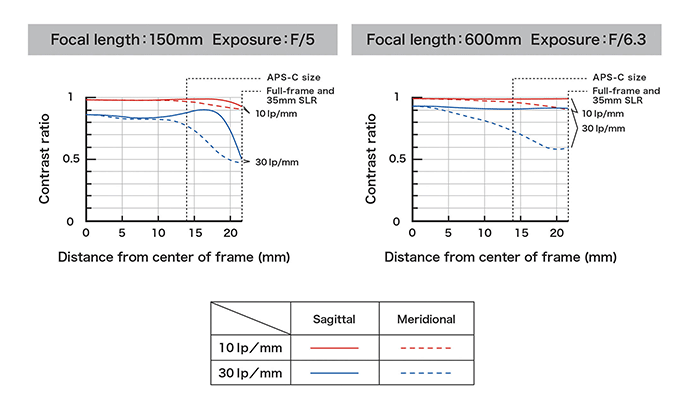
With the previous generation lens costing $ 1069, the new one is obviously noticeably more expensive, with a $ 330 price increase. However, the new lens looks drastically better compared to its predecessor, so the price increase might be well justified. Let’s take a quick look at the optical changes that Tamron is promising in this G2 optical design:

Tamron 150-600mm G2 MTF Chart

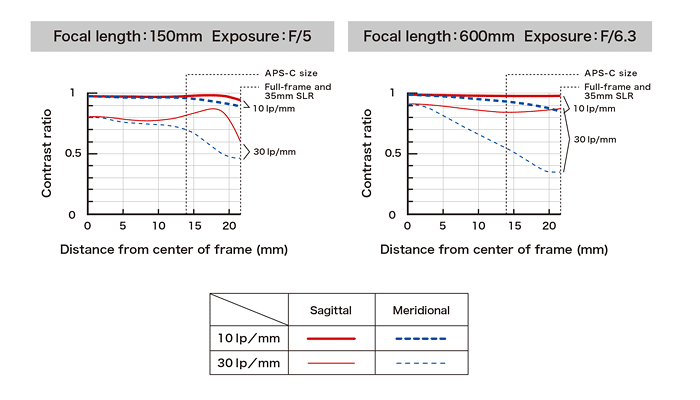
And here is how it compares to the previous generation 150-600mm:

Tamron 150-600mm MTF Chart

While contrast levels are supposed to be practically the same, pay attention to the second thinner line, which is what indicates the resolving power of this lens – the first MTF chart clearly shows increased level of sharpness, particularly in the center of the frame. This is true for both 150mm and 600mm focal lengths, which is very promising, considering that the lens is going to be mostly used at the longest end of the zoom range. Because of these improvements, Tamron is now claiming that the lens couples well with their new teleconverters. While I personally would stay away from using teleconverters with a slow f/5-6.3 lens, the 1.4x combo might provide fairly usable results in bright light conditions. Obviously, we will be testing the lens rigorously with both teleconverters to see how practical the combinations could be in outdoor shooting environments.

When it comes to design and exterior changes, there are quite a few of those in place. First of all, you have probably already noticed that the lens looks quite a bit different compared to its predecessor – the exterior design of the lens resembles the new generation Tamron lenses with a gray line close to the lens mount. Second, the lens now features a “flex zoom lock” feature, which allows the focal length of the lens to be easily locked when shooting in the field, so that it does not creep when pointing up or down, which is pretty neat:

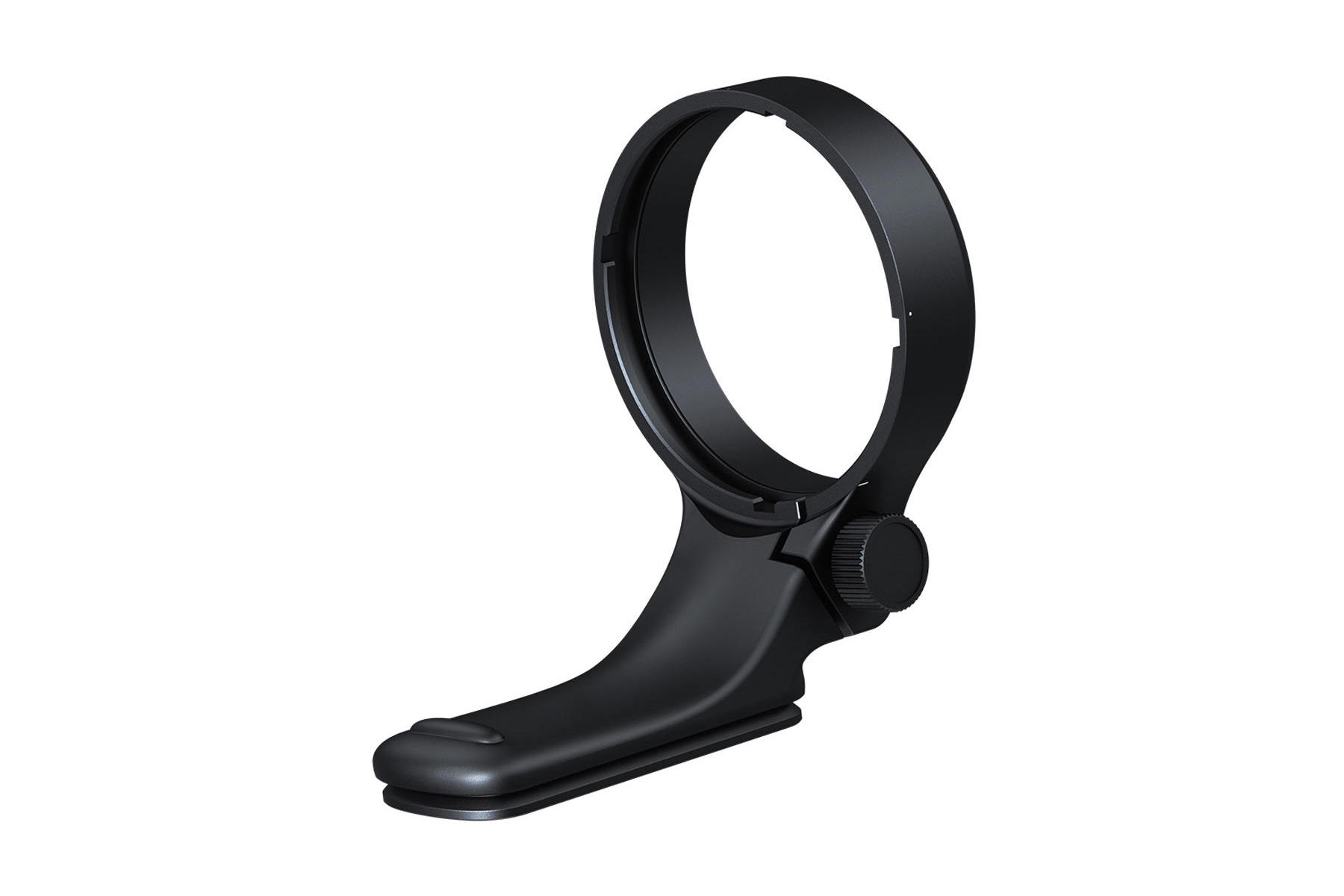
Third, the switches on the side of the lens now look sleeker, giving a fresher look to the lens. Last, but not least, is the tripod foot. Check it out:

Tamron 150-600mm G2 Arca Swiss Foot

FINALLY! When I saw the above image, that’s what I shouted in excitement. How many manufacturers and generations of lenses did we have to wait for until we saw a lens announcement with a proper Arca-Swiss compatible foot?! Every super telephoto lens owner knows that their purchase does not stop with the lens – to make the lens usable with most gimbal and ballhead tripod heads, one has to get an Arca-Swiss tripod foot replacement, which is an unnecessary burden and additional cost. Why can’t manufacturers do the same for every lens? Sigma previously announced an Arca-Swiss compatible tripod foot for the 150-600mm Sport, but it is a separate accessory that must be purchased for $ 250, which makes it no different than purchasing from a third party vendor like RRS and Kirk. Thanks to Tamron, it looks like the company will be featuring Arca-Swiss tripod feet on all of its heavy telephoto lenses in the future, which is something to be excited about. I personally do not like attaching Arca-Swiss plates on the bottom of lens collars, because it is usually a single mount point and it makes the tripod collar bulkier than it should be. For this reason, including a proper lens collar with the lens for me already represents a $ 250 of additional value. Once you add in all the above-mentioned extras, the pricing on the updated Tamron 150-600mm G2 looks pretty reasonable. If I owned the Tamron 150-600mm, I would certainly want to upgrade to this new lens…

Official Press Release

Here is the official press release from Tamron:

INTRODUCING THE PINNACLE OF ULTRA-TELEPHOTO ZOOMS WITH ADVANCED FEATURES,
ENHANCED PERFORMANCE, AND IMPROVED ERGONOMICS

September 1, 2016, Commack, New York: Tamron, a leading manufacturer of optics for diverse applications, announces the launch of the SP 150-600mm F/5-6.3 Di VC USD G2 (Model A022). This second generation “G2” lens builds upon the success of the SP 150-600mm F/5-6.3 Di VC USD (Model A011), which launched in December 2013 and continues to successfully meet photographers’ needs in the ultra-telephoto category. The new G2 version was developed to provide superior optical performance with today’s high resolution DSLRs and to add improvements to several features including speed and accuracy of AF and VC (Vibration Compensation). Also, several new features have been added: FLEX ZOOM LOCK mechanism, Fluorine Coating and optional teleconverters. The new lens delivers outstanding performance and a luxurious, upscale appearance, including a metal lens barrel. Delivery of the new lens in Canon and Nikon mounts will start on September 23 in the Japanese market and soon thereafter in the U.S. market (Sony A-mount to be delivered at a later date) at a price of $ 1399.

PRODUCT HIGHLIGHTS

  1. Optical design refreshed to achieve even higher performance: Three LD (Low Dispersion) lens elements completely eliminate axial and transverse chromatic aberrations. The design also features an upgraded optical construction (21 elements in 13 groups) and leverages improvements in manufacturing technology. As a result, the lens delivers high resolution, improved sharpness and overall better performance.
  2. Tamron’s sophisticated eBAND Coating for eliminating ghosting and flare: eBAND (Extended Bandwidth & Angular-Dependency) Coating is a nano-structured layer deployed on the lens element surface. In addition to regular anti-reflection coatings, eBAND Coating offers higher light transmission and significant improvement in anti-reflection characteristics, especially against angulated incident rays. Combined with BBAR (Broad-Band Anti-Reflection) coatings, flare and ghosting are reduced to imperceptible levels.
  3. MOD reduced to provide optimum tele-macro photography: Tamron’s advanced manufacturing technology has made it possible to reduce the MOD (Minimum Object Distance) to 86.6 in (2.2m), compared to 106.3 in (2.7m) for Model A011, and has allowed for the wonders of tele-macro photography with its 1:3.9 Maximum Magnification Ratio.
  4. AF speed is faster and much more responsive with moving subjects: The Model A022 is equipped with a USD (Ultrasonic Silent Drive) ring-type motor that delivers excellent responsiveness and control. AF speed is significantly improved from the current model, and it enables accurate high-speed focus even when capturing moving subjects. When shooting with AF, the Full-time Manual Focus override allows you to instantly make fine-focusing adjustments manually, without having to switch between modes.
  5. VC performance is now 4.5 stops and offers three modes optimized for different situations: The VC (Vibration Compensation) effectiveness is equivalent to 4.5 stops, based on image stabilization performance levels established by CIPA (Camera & Imaging Products Association) when using VC MODE 3. Model A022 now has three types of VC modes, and it is possible to choose the optimum VC mode according to the situation for taking a photograph, such as when panning.
    • VC MODE 1 is the standard mode that strikes a great balance between the stability of the viewfinder image and the stabilization effects.
    • VC MODE 2 is exclusively used for panning.
    • VC MODE 3 prioritizes the stabilization of the captured images and forgoes the stabilization of the viewfinder image.

    A new VC Mode can be programmed with the optional TAMRON TAP-in ConsoleTM. You can overwrite VC Mode 1 with a new VC Mode that allows stabilization to be engaged constantly for videography purposes. In this mode, the LCD screen is used.

  6. New FLEX ZOOM LOCK mechanism enables locking of the zoom ring at any position: The FLEX ZOOM LOCK mechanism quickly locks or unlocks the zoom at any position simply by sliding the zoom ring. Photographers can shoot from any angle without the zoom extending unintentionally. Additionally, the lens features the conventional Zoom Lock switch to prevent unwanted barrel extension during transportation.
  7. Fluorine Coating and Moisture-Resistant Construction for a more user-friendly lens: The front surface of the lens element is coated with a protective fluorine compound that is water- and oil-repellent. The lens surface is easier to wipe clean and is less vulnerable to the damaging effects of dirt, dust, moisture and fingerprints. For greater protection when shooting outdoors, leak-proof seals throughout the lens barrel help protect your equipment.
  8. Electromagnetic diaphragm system now used for Nikon-mount lenses: An electromagnetic diaphragm system, which has been a standard feature for Canon-mount lenses, is now employed in Nikon-mount lenses(1). More precise diaphragm and aperture control is possible because the diaphragm blades are driven and controlled by a motor through electronic pulse signals.
  9. Lightweight and easy-to-hold tripod mount is compatible with an Arca-Swiss style quick release plate: A new textured grip and Arca-Swiss style tripod interface enhances both speed and utility. And because the tripod mount is made of lightweight magnesium, it is much easier to carry.
  10. Compatible with TAMRON TAP-in ConsoleTM, an optional accessory product: The optional TAP-in Console provides a USB connection to your personal computer, enabling you to easily update your lens’s firmware as well as customize features including fine adjustments to the AF and VC.
  11. Teleconverters exclusively for the Tamron lens now developed: Two exclusive teleconverters(2), which perfectly match the optics of the new SP 150-600mm G2 (Model A022), offer 1.4x and 2x magnification, and provide a maximum zoom range up to 1200mm. These new teleconverters extend focal length of the master lens, making it possible to take pictures in farther ultra-telephoto ranges.
  12. (1) Available only with cameras compatible with the electromagnetic diaphragm (D3100, D3200, D3300, D5000, D5100, D5200, D5300, D5500, D7000, D7100, D7200, D300, D300s, D600, D610, D700, D750, D800, D800E, D810, D810A, D3x, D3s, D4, D4s, Df, D500, D5). (As of September 1; Tamron)
    (2) Additional information will be available on Tamron’s website at a later date.

  13. Based on the rigorous quality standards worthy of the SP series, this new lens is manufactured with thorough attention to details: For the SP series products in particular, Tamron has established rigorous design and quality standards. These standards apply to the optical design, mechanical design and the cosmetic appearance, as well as to such wide-ranging areas as the product’s robustness and improvements in various individual functions. Tamron thoroughly reviews of all of the design and manufacturing processes in order to offer products to customers with ever-higher precision and quality levels.

    For the SP 150-600mm G2 (Model A022), the optical design was refreshed, mechanical parts were improved and a new exterior design was adopted. To maximize the optical performance intrinsic to this product, Tamron improved the accuracy of component parts and increased the precision of the overall zooming mechanism.

Design Concept
The new design adopted for the four SP series lenses already on the market is essentially the fusion of engineering and style, the pursuit of functional beauty and craftsmanship achieved by giving meticulous attention to minute details. Using metal as the exterior material creates a high-grade design based on the concept that emphasizes “Human Touch” characteristics, and significantly improves user-friendliness. The SP models feature a novel design for the switches, easy-to-read characters, an enlarged window over the distance scale and the adoption of organic forms easy for the photographer’s fingers to hold onto.

This design philosophy – the pursuit of functional beauty with a “Human Touch” – is applied even to the most minute details of the new SP 150-600mm G2 (Model A022) ultra-telephoto zoom. By using metal for the exterior material and adding new functions such as the FLEX ZOOM LOCK mechanism, the Model A022 achieves a size and weight that makes comfortable handheld shooting possible, with a slim and stylish appearance design to top it all off.

Pre-Order Options

You can pre-order your copy of the Tamron 150-600mm G2, along with the two new teleconverters from our trusted partner, B&H Photo Video:

  1. Pre-Order Tamron 150-600mm G2 and Teleconverters from B&H Photo Video

Looks like Tamron scored another home run with the updated SP 150-600mm G2. Our team at PL is looking forward to testing the new lens – we will be reviewing the lens later this year once it becomes available.

The post Tamron 150-600mm Di VC USD G2 Announcement appeared first on Photography Life.

Photography Life

Posted in Photograpy How To | Tagged , , | Leave a comment

Donna Mills Portrait Session Acrylic w/ U-Channel & 3M Sticker 18×24 Photo On Acrylic

Donna Mills Portrait Session Acrylic w/ U-Channel & 3M Sticker 18×24 Photo On Acrylic


Donna Mills Portrait Session” is an art print by Harry Langdon from the Archive Photos collection. Get photo prints of “Donna Mills Portrait Session” in a variety of frames, styles, and materials. Photographer Bio As a young kid Harry would visit his father, silent screen star Harry Langdon Senior, on the sound stages? watching intently as the crew built sets and prepared the cameras. Theatre and movies were in his blood, so his over 40-year (and counting) career as a highly sought-after portrait photographer to the stars comes as no surprise. But it’s his unique ability to keep his work fresh year after year that keeps him among the top commercial and glamour photographers in the world.

Price: $
Sold by Photos.com by Getty Images

Posted in Camera Settings | Tagged , , , , , , , , | Leave a comment