Sailboat Off Martha’s Vineyard Canvas Gallery Wrap 18×27 Photo On Canvas

Sailboat Off Martha’s Vineyard Canvas Gallery Wrap 18×27 Photo On Canvas


Sailboat Off Martha’s Vineyard” is an art print by Alfred Eisenstaedt from The Life Picture Collection. Get photo prints of “Sailboat Off Martha’s Vineyard” in a variety of frames, styles, and materials. Photographer Bio Alfred Eisenstaedt (1898-1995), or Eisie to those who knew him, received his first camera as a gift from his uncle at 14, a few years after moving to Berlin from Poland with his family. At 17, he was drafted to the German army. His interest in photography blossomed while recovering from a shrapnel wound. He became a regular at museums, studying light and composition. By 31, he was a full-time photographer. In 1933 he was sent to Italy where he shot the first meeting between Hitler and Mussolini. Two years later, when Hitler came to power, Eisie immigrated to America. Soon after arriving in New York, he was hired along with three other photographers-Margaret Bourke-White, Thomas McAvoy and Peter Stackpole-by Time Inc. founder Henry Luce for a secret start-up venture known as “Project X.” Six months later, Life magazine premiered on November 23, 1936. The first issue sold for 10 cents and featured five pages of Eisie’s pictures. His most famous photo was the kiss in Times Square on V-J day, about which he said, “I was running along the street grabbing any and every girl in sight. Whether she was a grandmother, stout, thin, old, didn’t make any difference. None of the pictures that were possible pleased me. Then, suddenly in a flash I saw something white being grabbed. I turned and clicked the moment the sailor kissed the nurse.” Over his career, Eisie shot a total of nearly 100 covers for Life magazine and some 10,000 prints. The Life Picture Collection From one of the most iconic magazines ever to hit the shelves comes The Life Collection – an archive of some of the most recognizable imagery of the 20th Century. Documenting events in politics, culture, celebrity, the arts and the American experience, these compelling and provocative photographs include the works of some of the greatest photographers capturing some of the greatest moments in history.

Price: $
Sold by Photos.com by Getty Images

Posted in Camera Photography | Tagged , , , , , , , | Leave a comment

Platypod Pro and Max Review – A Tripod Alternative

I have been looking for a small portable alternative to carting my tripod around with me for quite some time now. There have been many occasions when I’ve been out photographing and could have used the support that a tripod provides, but could not be bothered to lug my tripod with me. I have tried using a variety of small tabletop tripods. None of them were strong enough to support a DSLR and heavy lens. Beanbags are cumbersome to carry around as well. This past summer I stumbled upon a Kickstarter campaign for Platypod Pro Max, and I was intrigued. Could this possibly be the answer to my search?

So What is a Platypod?

Platypod Pro Max ($ 99.00 from B&H or Adorama) and its little brother Platypod Pro ($ 49.95 from B&H and Adorama) are a great way to provide stability to your camera. But most importantly, they are extremely compact and easy to throw in a camera bag. Unlike typical tripods, the Platypods consist of a small metal base that you attach a ball head to, instead of legs. They are made from lightweight aircraft quality aluminum.
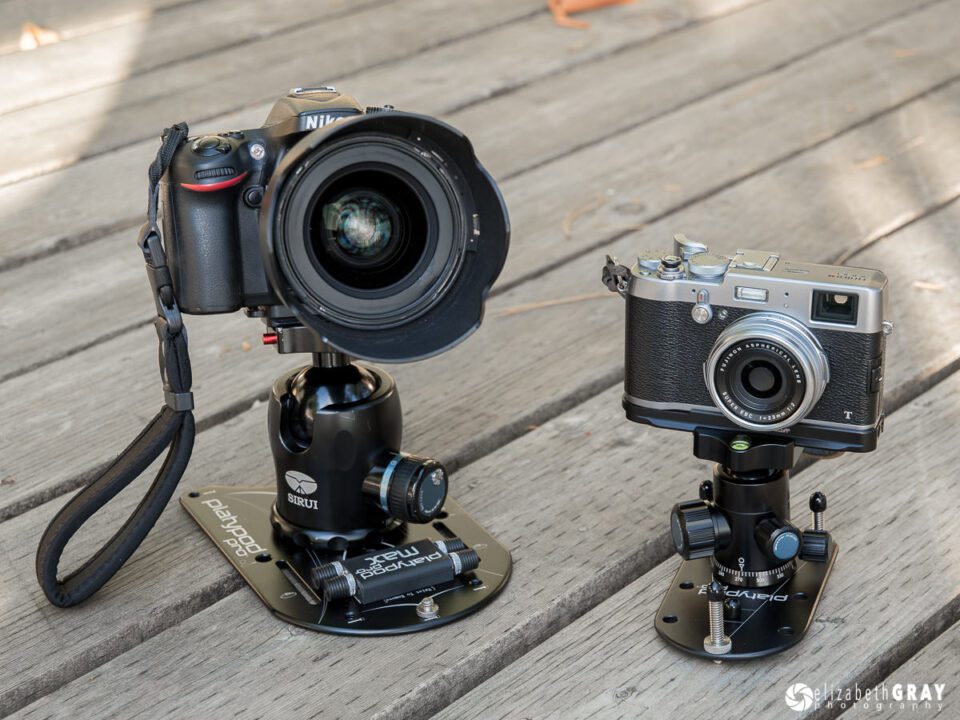
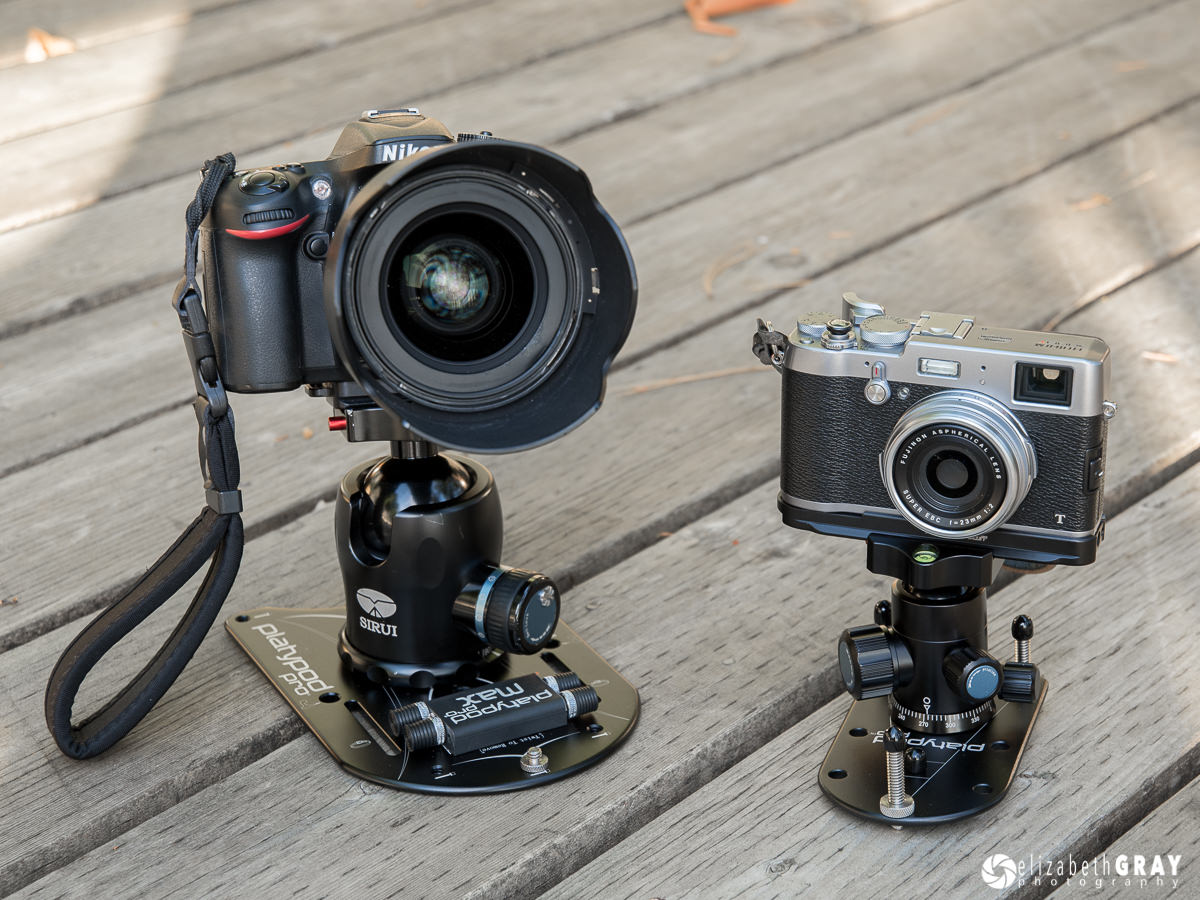
Platypod-1

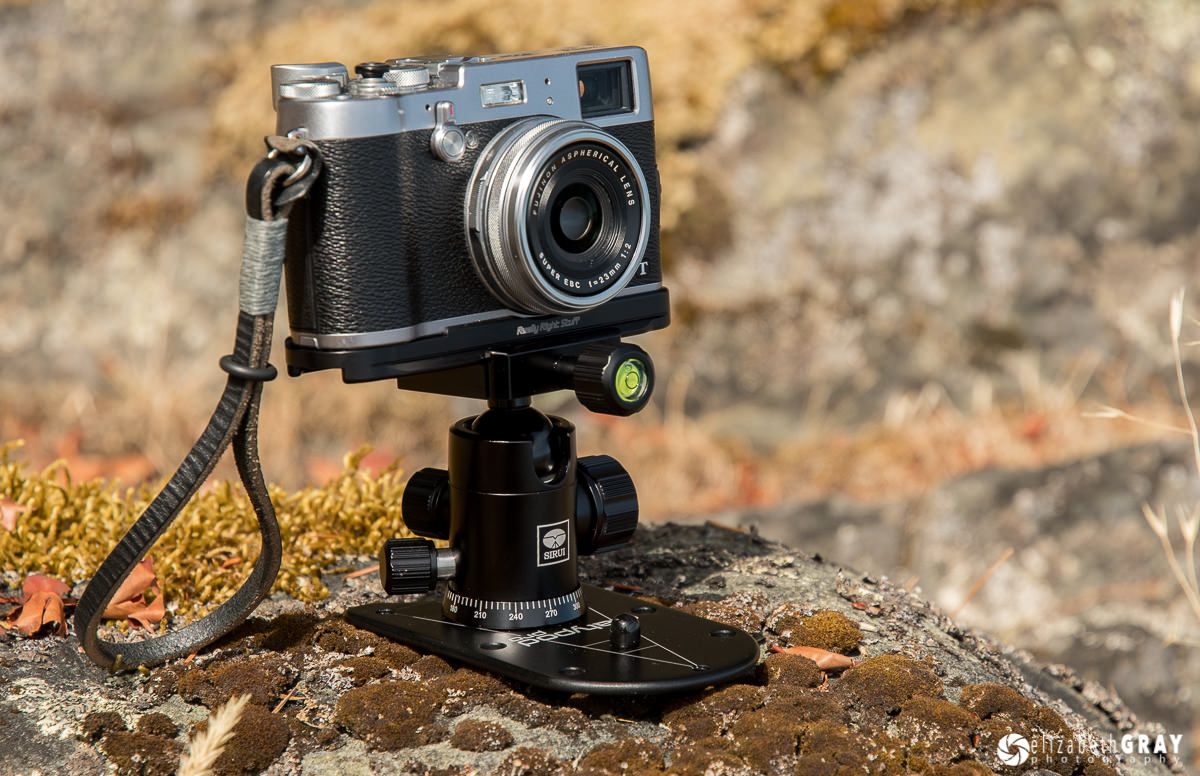
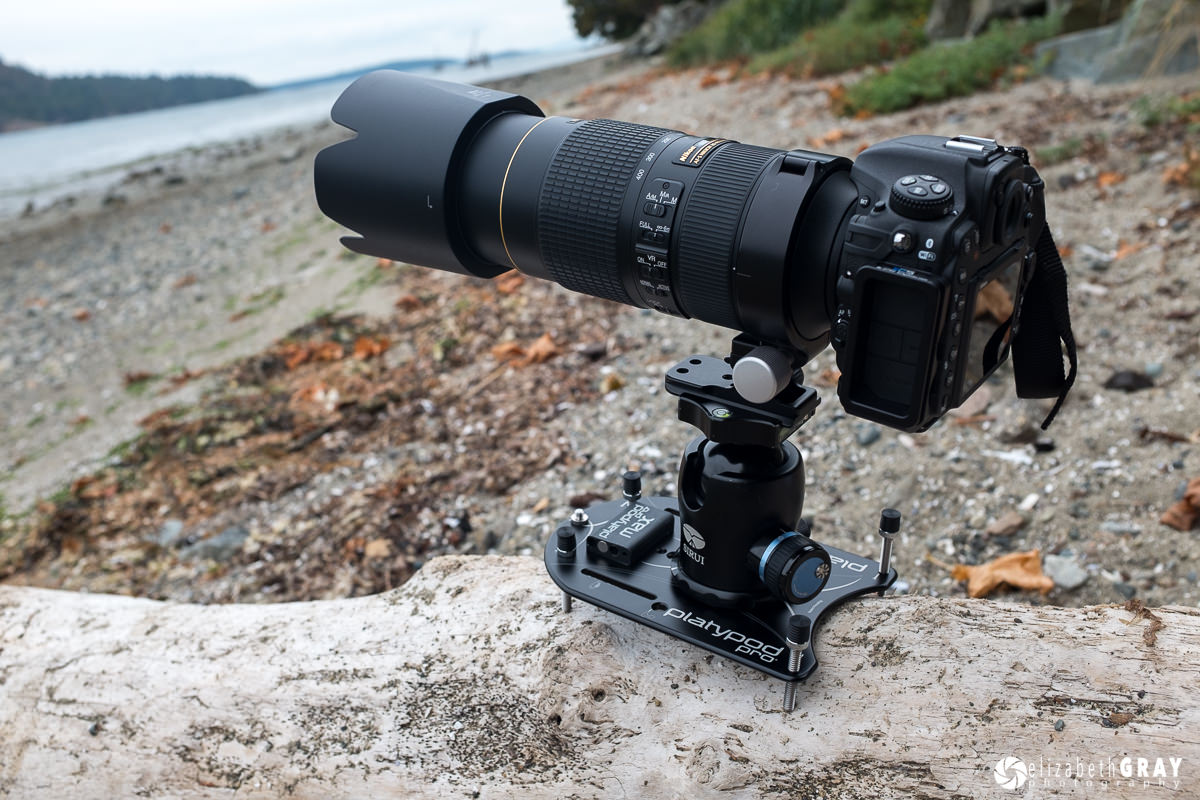
Platypod Pro Max with a Nikon D500 attached and Platypod Pro with a Fuji X100T
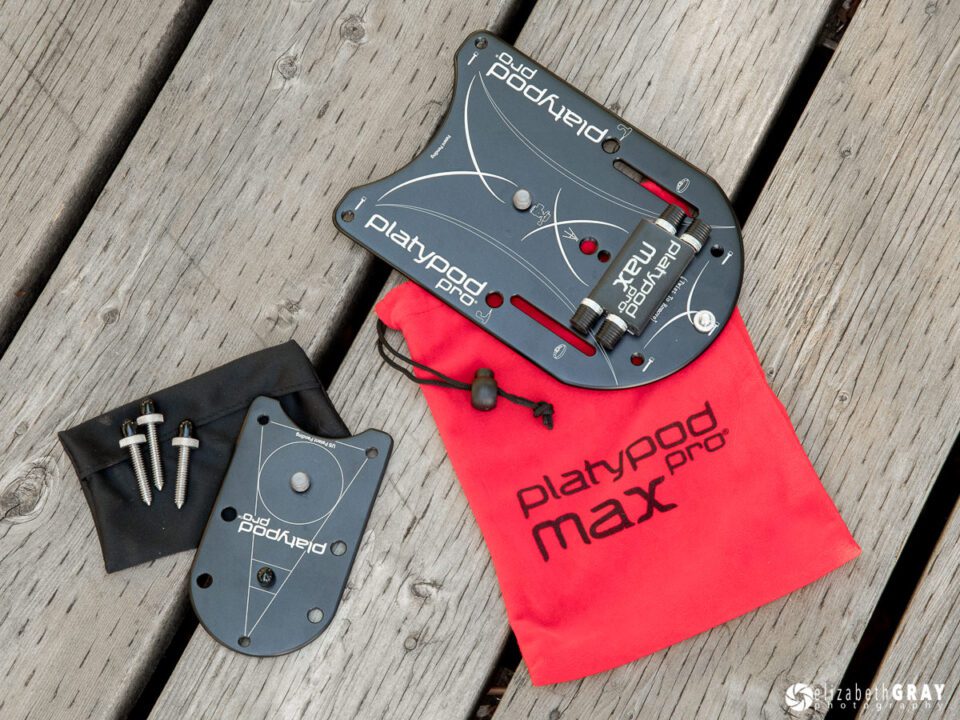
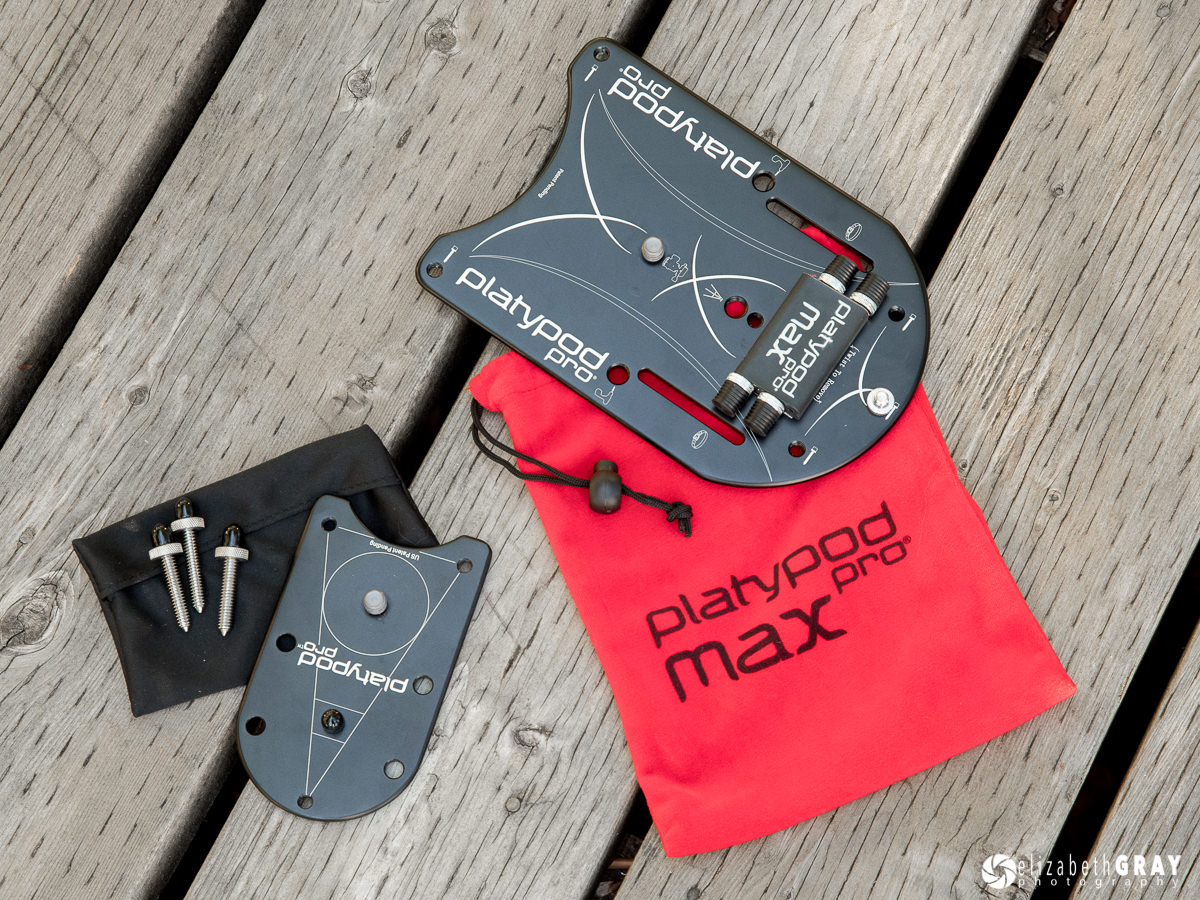
Platypod-2

Max and his little brother, Pro

So before I go any further, I want to let you know that I purchased both Platypod Pro Max (Max from now on) and Platypod Pro (Pro) with my own money during their Kickstarter campaign. Platypod did not provide me with any kind of compensation for this review. So with my disclaimer out of the way, let’s take a closer look at Platypod Pro and Max.

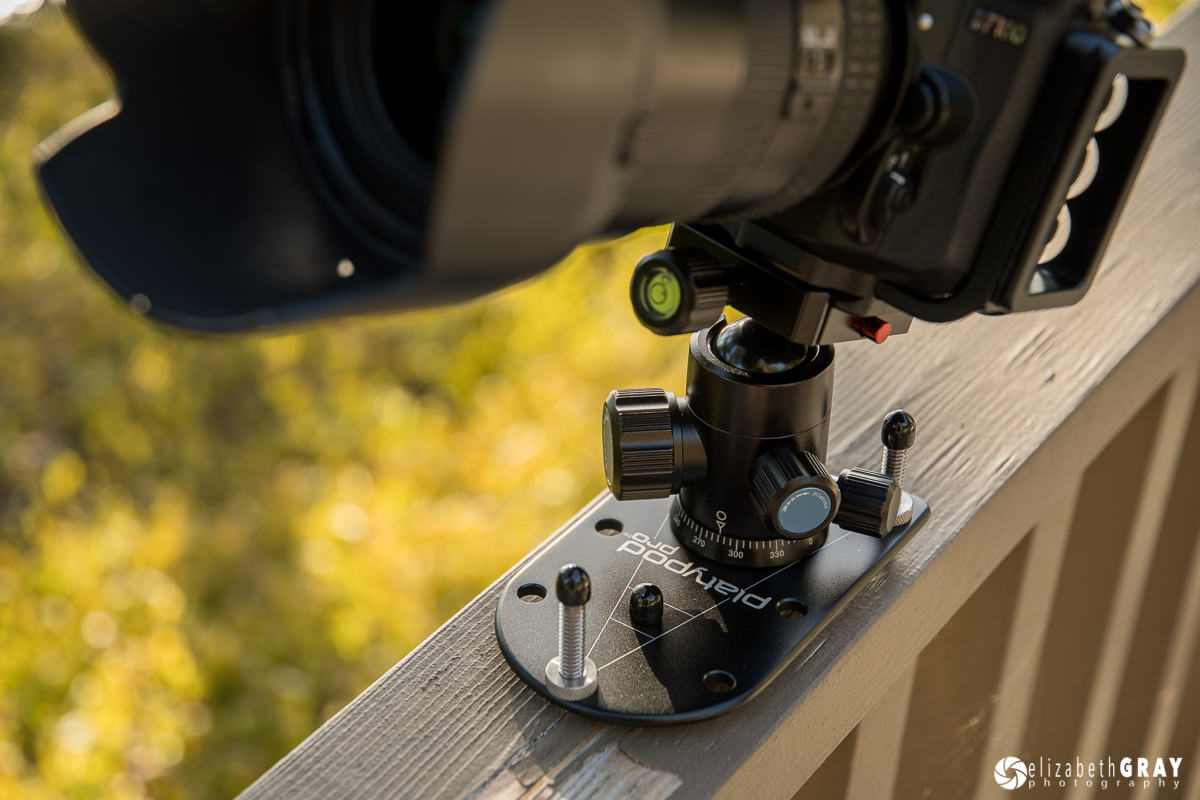
The Pro is the smaller model and works well with mirrorless cameras and DSLRs with small to medium sized lenses. It measures 3×5”, is 4mm thick, and weighs just 3 ounces. Platypod Pro can be used with ball heads smaller than 4”. I used a Sirui G-10KX and I could easily access all the knobs on the head. However, if you have a ball head with knobs or screws close to its base, you may find that they interfere with the ¼”-20 bolt near the front of the plate. This bolt can be used to attach speed lights or other accessories to the Pro.
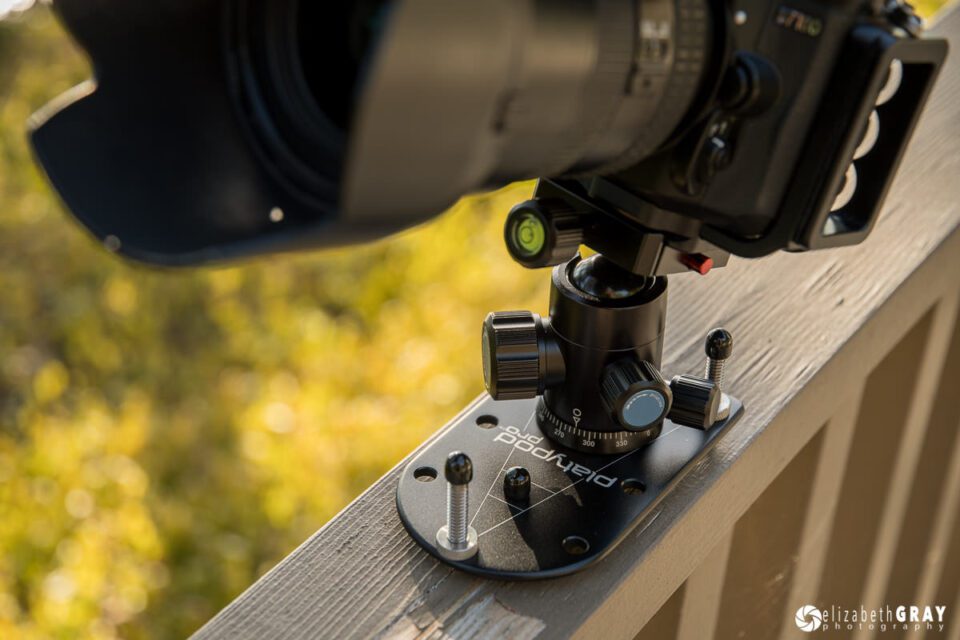
Platypod-3

Platypod Pro with Sirui G-10KX ball head
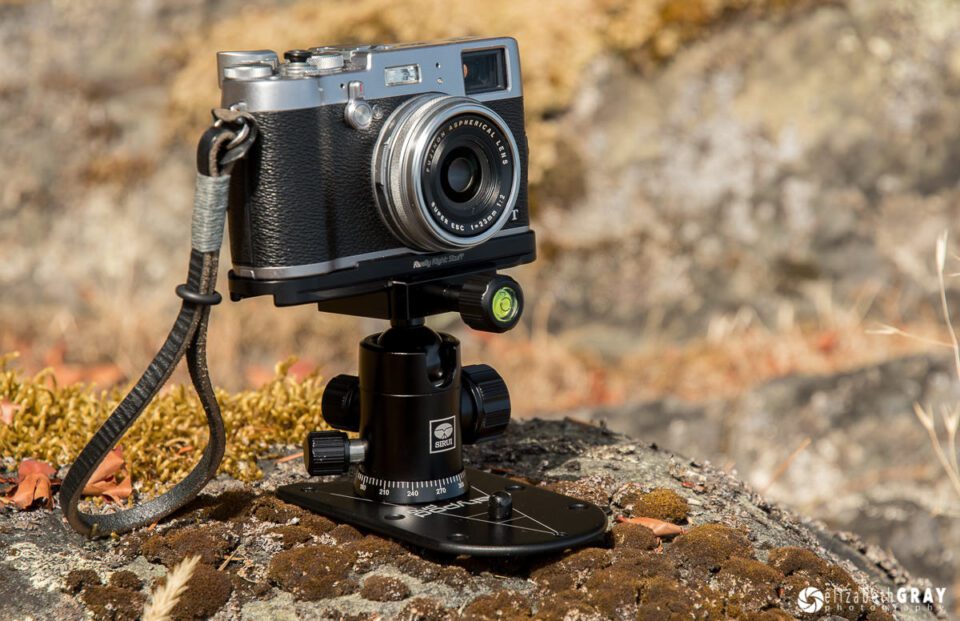
Platypod-4

Platypod Pro

Platypod-5

Platypod Pro

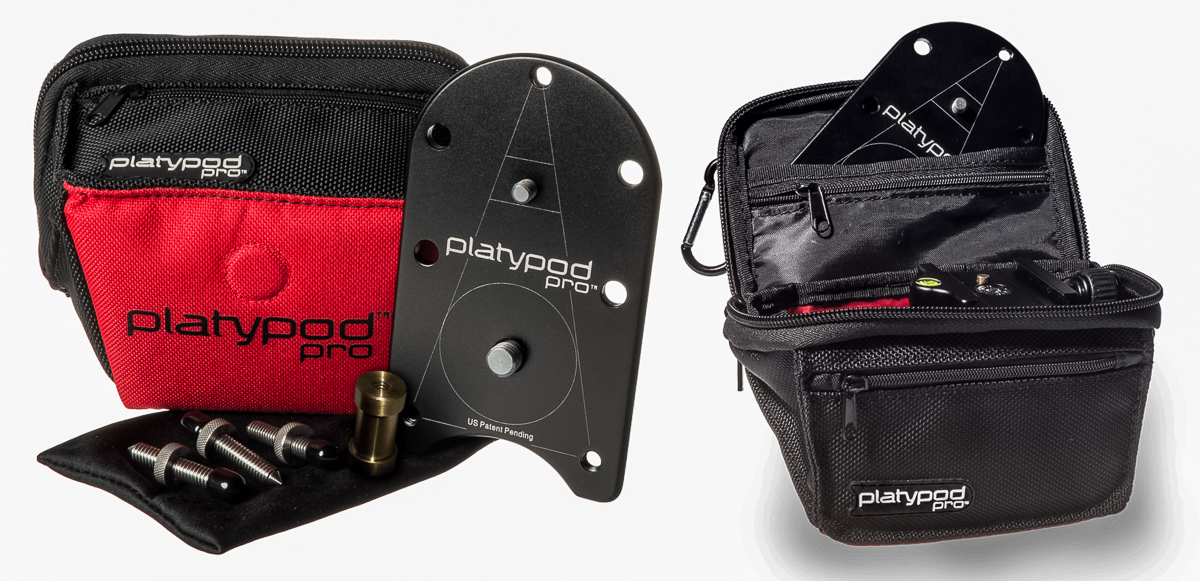
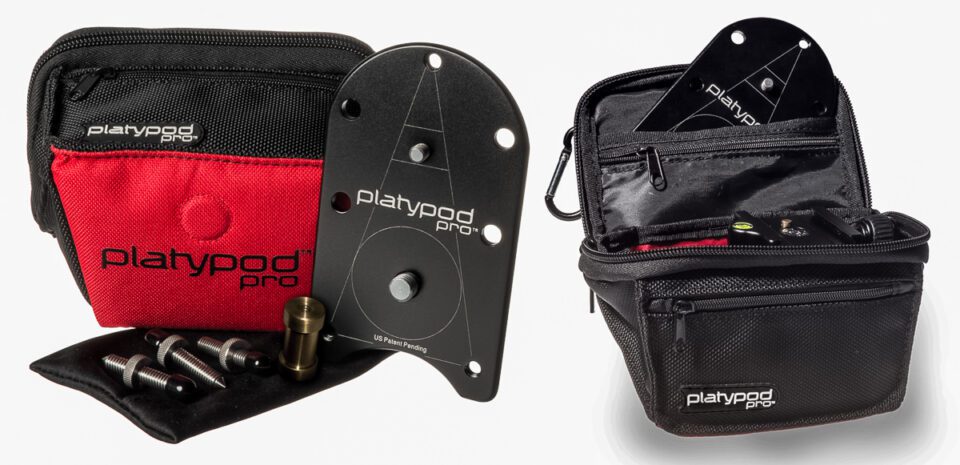
The Pro model can be purchased as a kit, which gives you a few extras. Firstly you get a nylon case. The case is compact and fits the plate by itself. However, with a couple of origami-like moves, it transforms into a box that will hold a small ball head as well. In addition, the kit comes with three screws that have a sharp tip on one end and rubberized feet on the other. They can be threaded into the plate to help stabilize and level it. The kit also comes with a 1/4” to 3/8” female spigot adapter.
Deluxe+Kit+Full_15A0090-min

Platypod Pro Deluxe Kit

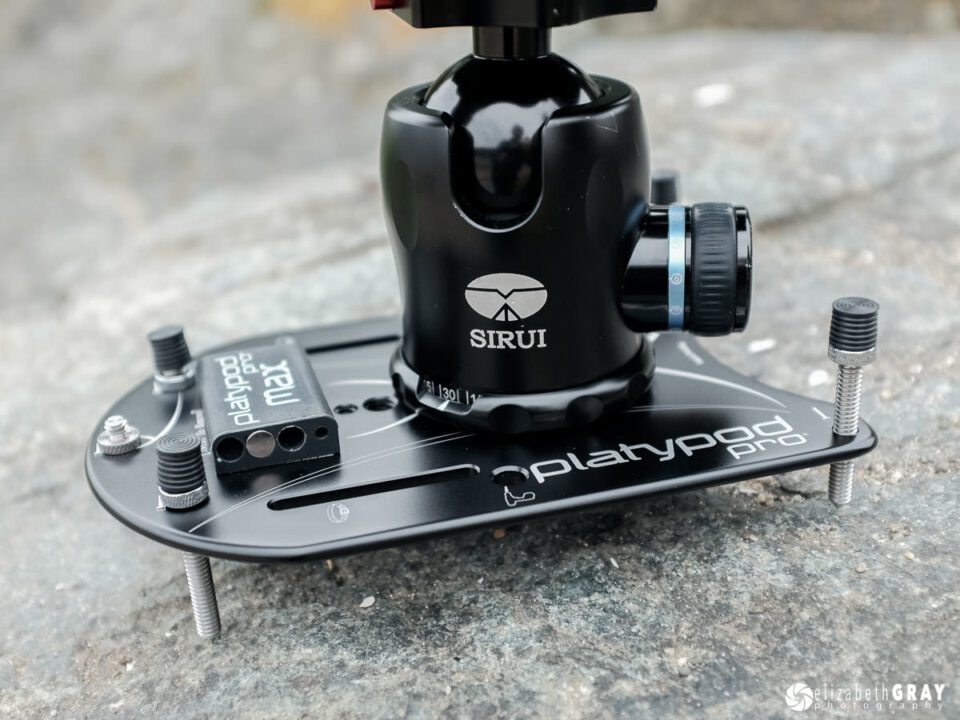
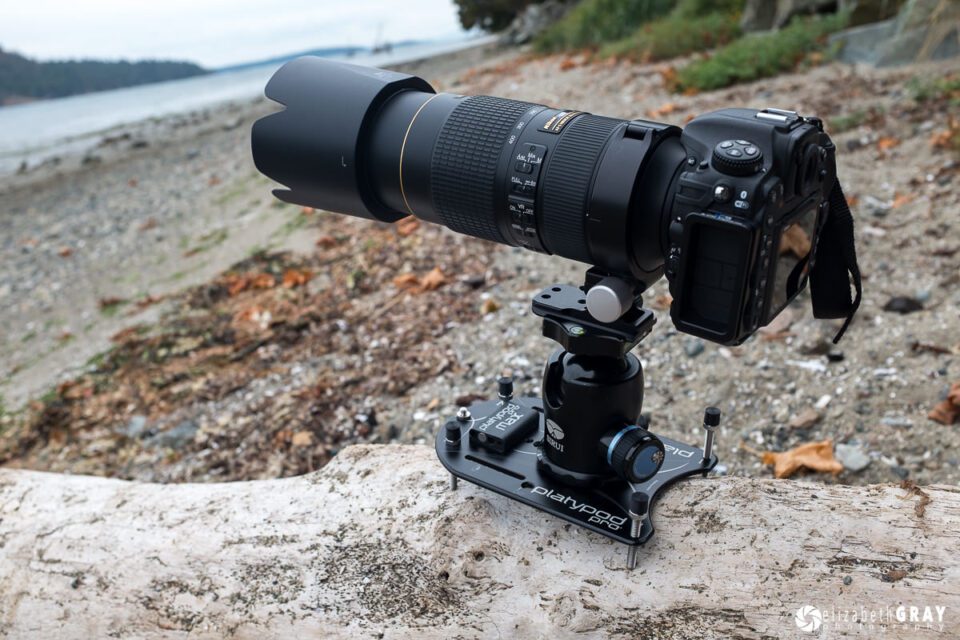
Max is the newest model and is substantially larger than the Pro. As such, it is capable of supporting large DSLRs with much heavier lenses. Max measures 5.25×7.75” and is 5mm thick. Weighing in at 13oz, it is substantially heavier than its baby brother, but still easily portable. I have a Sirui K-40X ball head, which is a large ball head, and it felt very balanced on Max.
Platypod-6

Platypod Max with a Sirui K-40X ball head
Platypod-7

Platypod Max with a Nikon D500+80-400 f/4.5-5.6 lens attached

Max ships with four two-inch long ¼”-20 spikes. Like the Pro’s spikes, these also have a rubber tip at one end and sharp points at the other. The spikes come in a neat little storage box that clips onto the top of the plate. A great feature to help prevent losing them. The spikes work well to ensure that the rig doesn’t slip. The rubber ends won’t mar delicate surfaces, like the hood of your car. Since they are adjustable, they also allow you to level Max on uneven surfaces. Max also has a pair of slots. The slots allow you to strap Max to a vertical pole or post using a belt.
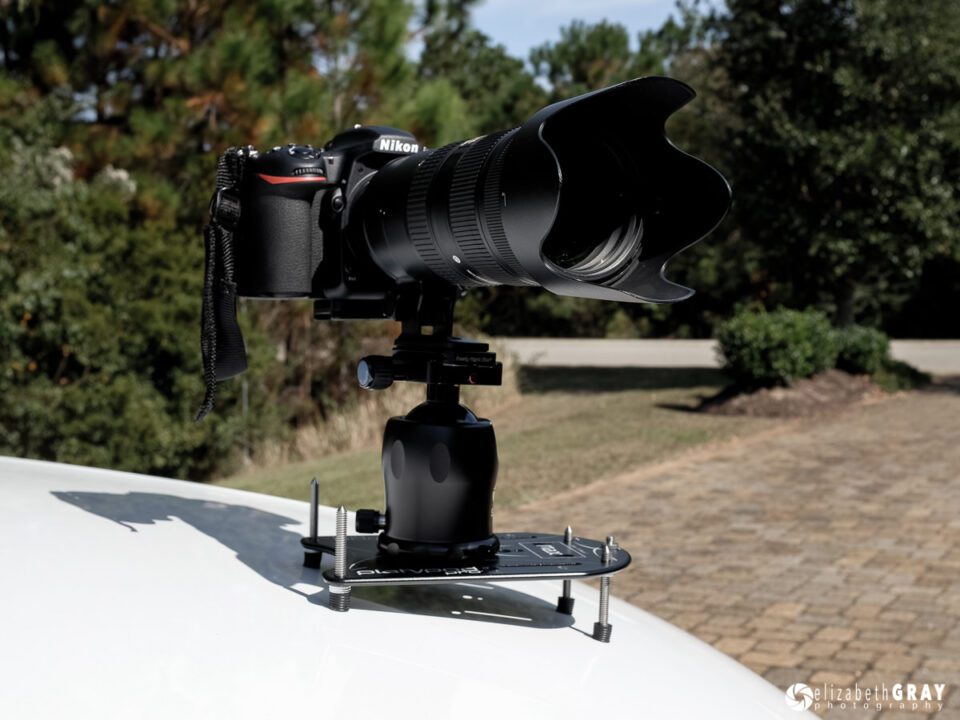
Platypod-9

Max with a Nikon D500+70-200 f/2.8 lens
Platypod-8

Max with a Nikon D500+70-200 f/2.8 lens

So What Did I Think?

I particularly like how convenient it is to throw a Platypod into my camera bag. They hardly take up any room. When I’m shooting with my Fuji X100T or Nikon D500+kit lens (16-80 f/2.8-4 lens), I have the Pro in my bag. And if I’m using heavier lenses, I throw Max in instead.

The Platypods really shine when you need to shoot longer exposures from a low angle. In places where space is limited and it is hard to splay out the legs of a full sized tripod, the Platypods come to the rescue. With a ball head mounted to either one, it is very easy to adjust the camera angle, as opposed to simply setting your camera on the ground.
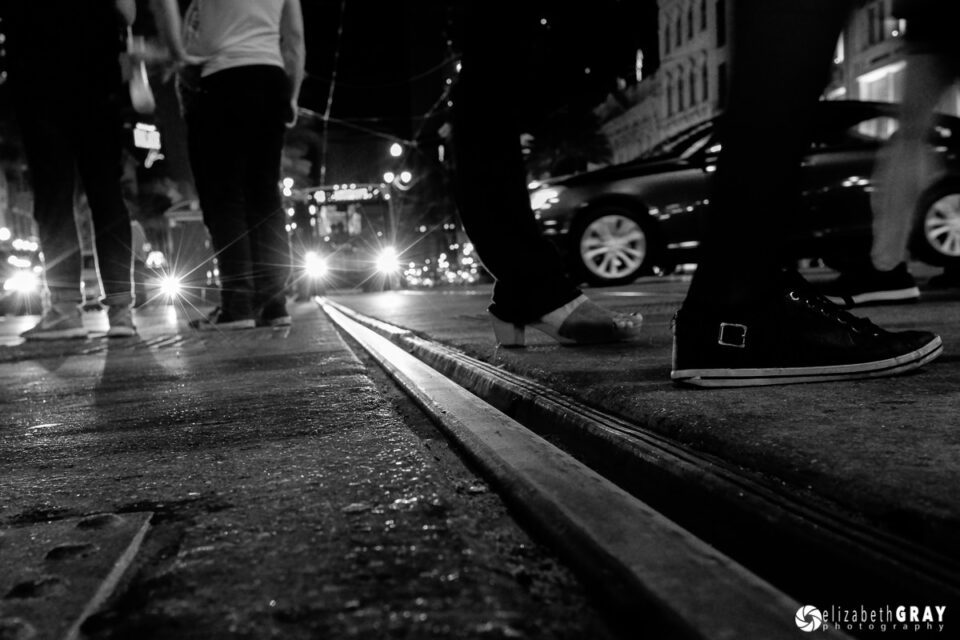
Platypod-10

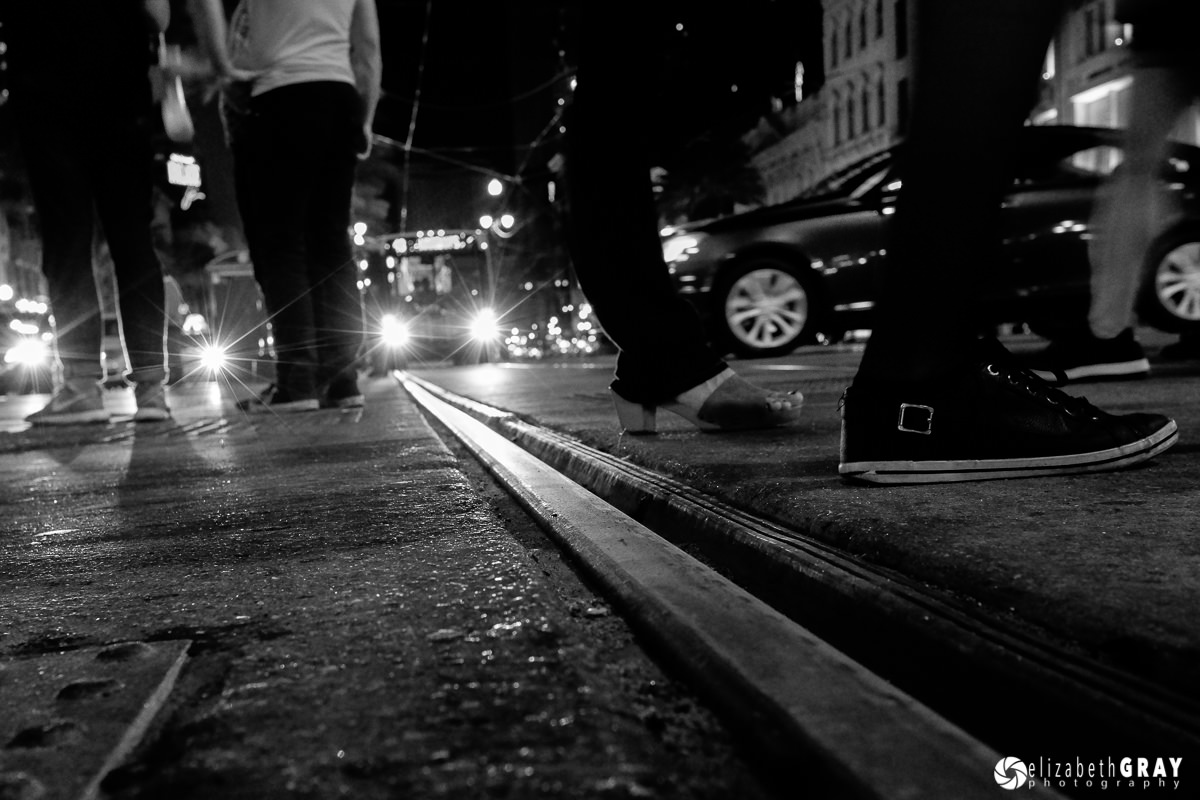
For this low angle image taken with my Fuji X100T and Platypod Pro, it would have been very hard to use a tripod without having its legs stepped on!

At night or for selfies, I can usually find an elevated surface to place my Platypod on. However, Platypods do not have anywhere near the flexibility that a tripod does. I sometimes find it frustrating when the object I want to prop the Platypod on isn’t in the right location. A tripod is easy to move a few feet to the left or right. However, moving a large boulder or mailbox is a little harder!
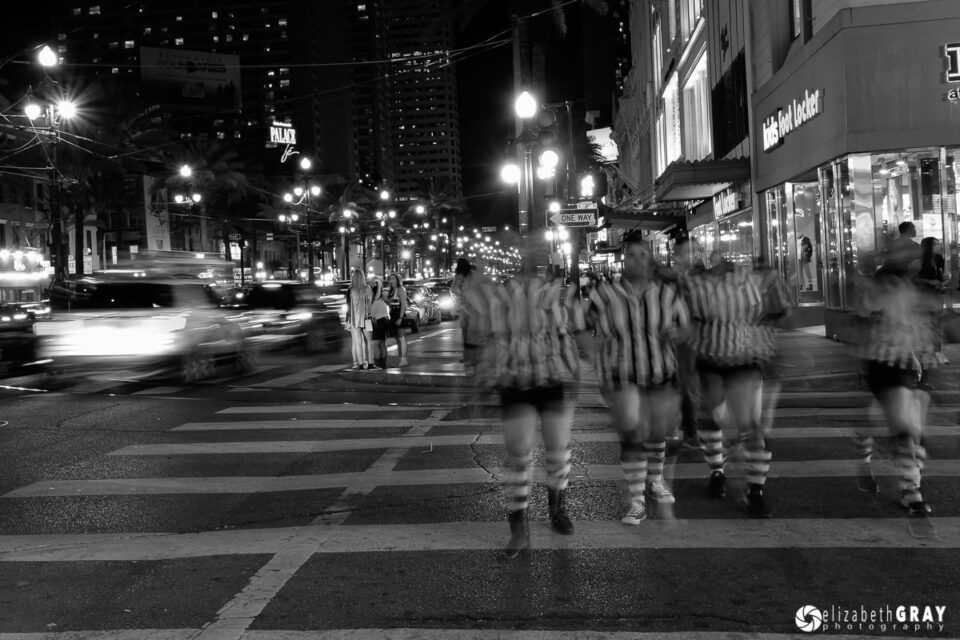
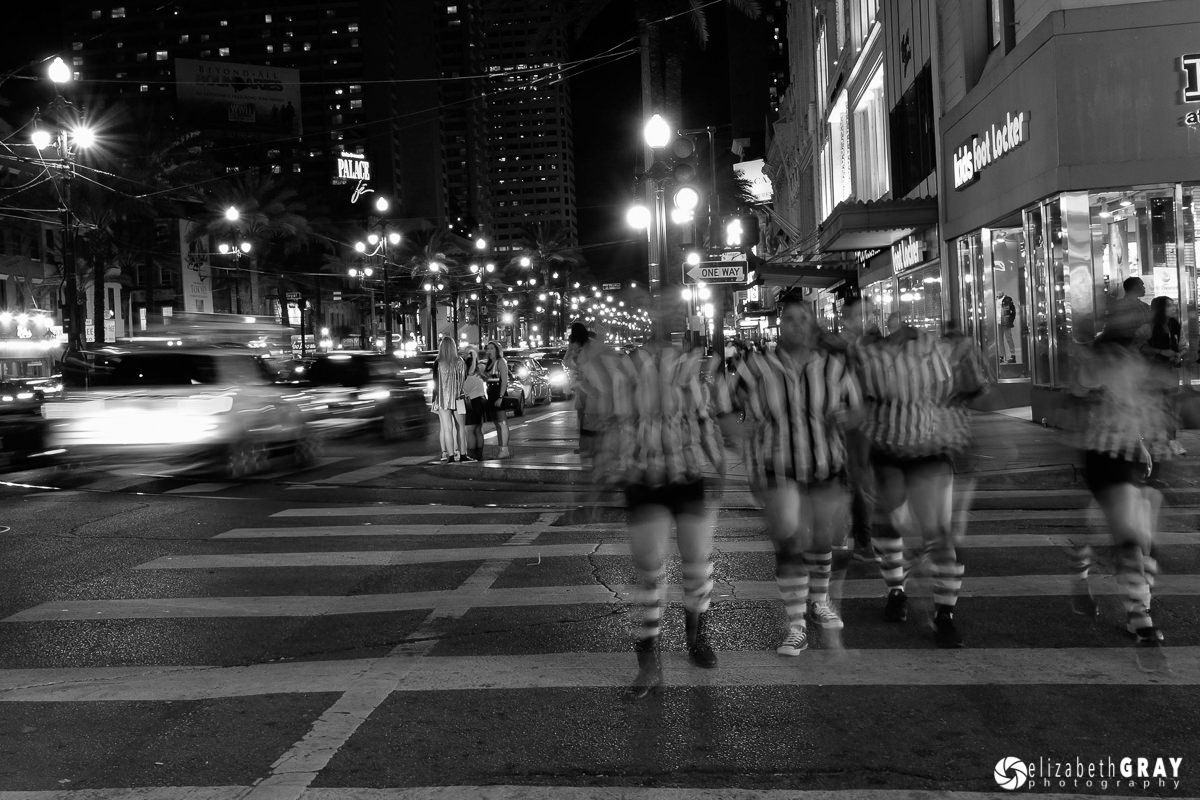
_DSF3692

To get this shot I placed my Platypod Pro on an electrical box near the intersection. It allowed me to get a 1s exposure without taking up a large footprint on the sidewalk, as would be the case had I used a full sized tripod.

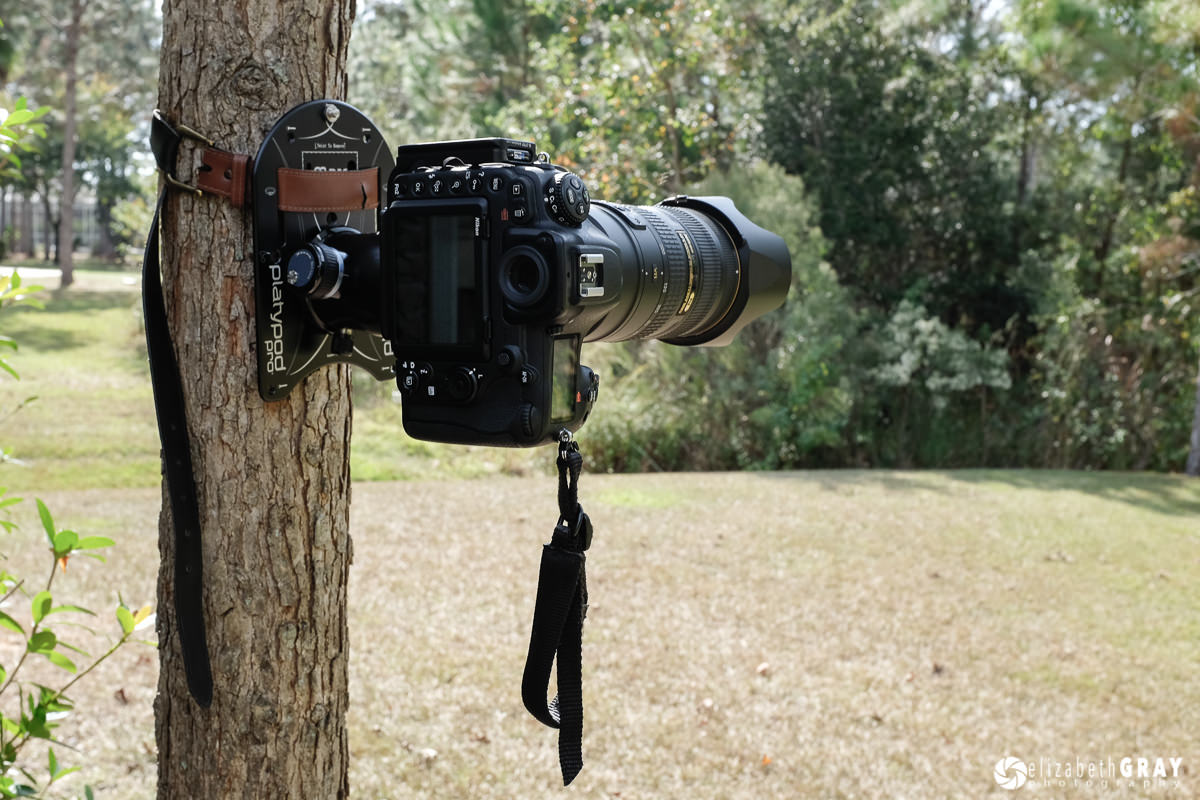
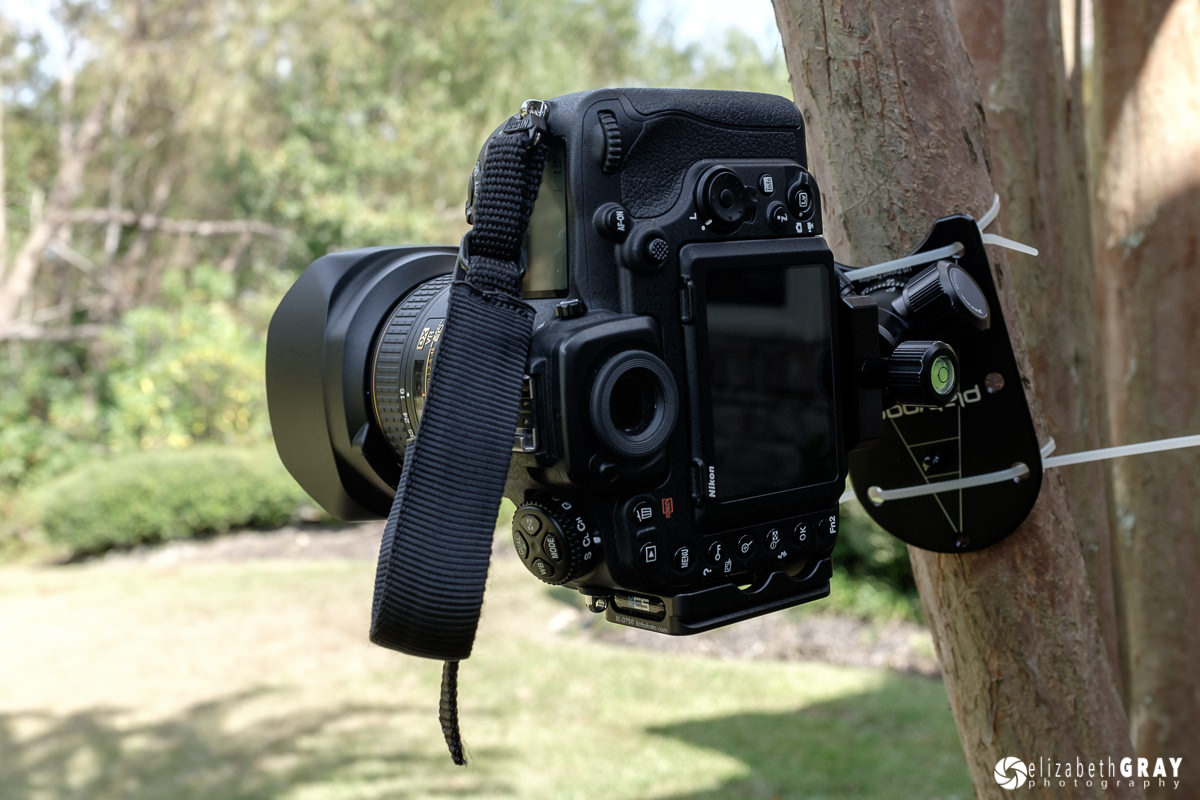
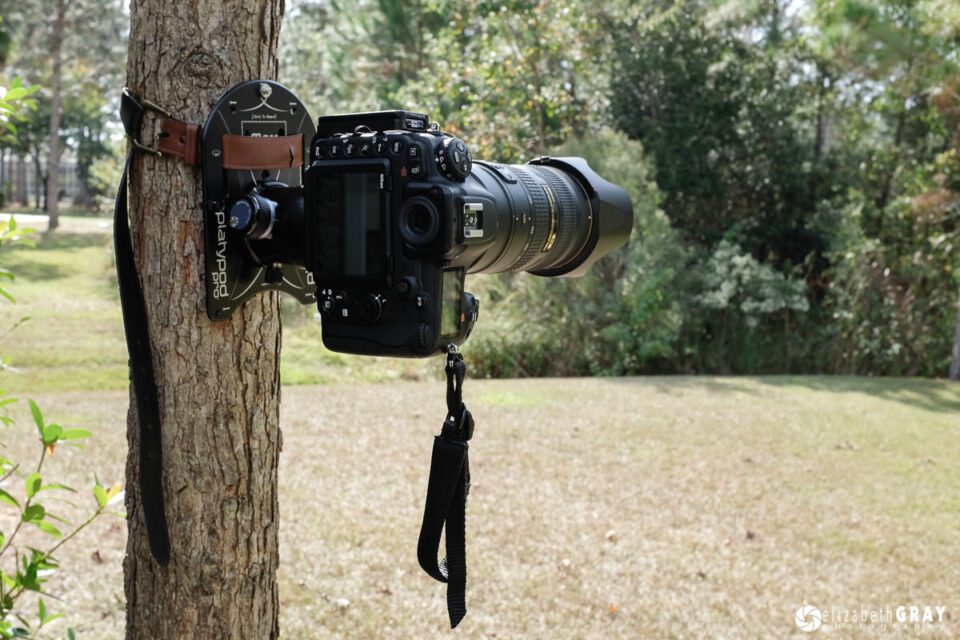
When you can’t find a horizontal surface to place your Platypod on, it is handy to be able to strap it to a something vertical. However, this can be a bit fiddly to do. It takes a bit of time to get the rig safely attached and adjusted properly. I found it much easier to configure the Pro model vertically than it did to strap Max to a post. With heavy gear, you want to make sure Max is not going to slip. Because I don’t usually wear a belt, I did not find it convenient to set Max vertically. On the other hand, it is easy to keep a handful of lightweight cable ties in my bag. The ties are a great way to attach the Pro model to vertical objects.
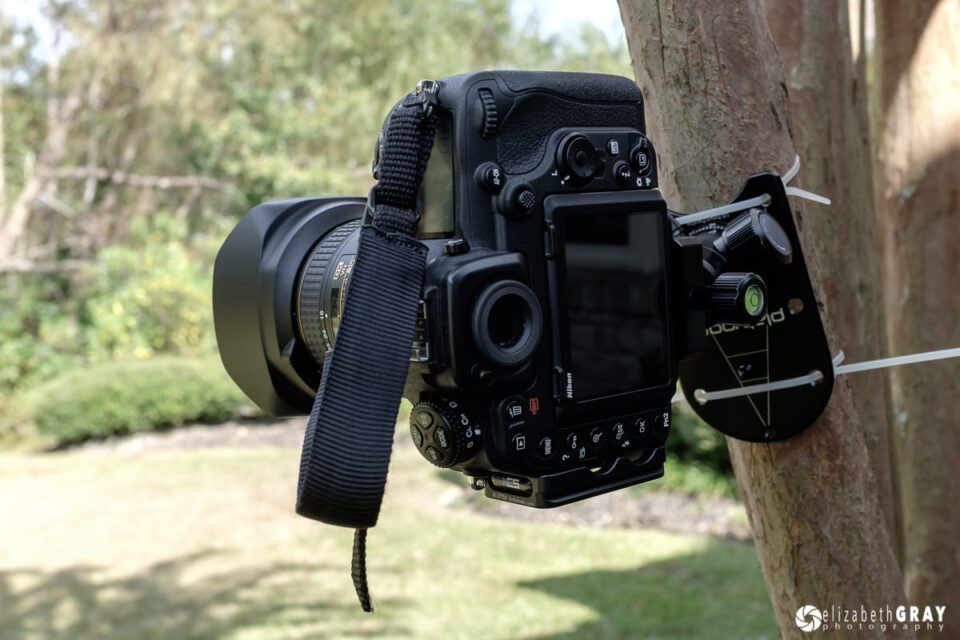
Platypod-12

Pro with a Nikon D500+16-80 f/2.8-4 lens. Cable ties threaded through the holes work well to attach the rig to a tree.

Another benefit to using Platypods is that they can be taken to locations where tripods would be difficult to bring, or are not allowed at all. With your camera and ball head attached to a Platypod, it is easy to balance the rig on a railing, aim the camera in any direction and take the shot.

Conclusion

Platypods are lightweight and compact. They are rugged, very well made and will last a lifetime. They fit easily into a camera bag. As a piece of camera gear, they are relatively inexpensive. When was the last time you purchased a piece of kit for under $ 100?

They will not replace your tripod, but in a pinch, they are a great substitute.

Platypod Pro and Max are the best alternatives I have found to carrying a traditional tripod with me.  They have allowed me to get shots that I would not have been able to capture without a tripod. They are an indispensable piece of kit and have earned a permanent home in my camera bag.

The post Platypod Pro and Max Review – A Tripod Alternative appeared first on Photography Life.

Photography Life
Posted in Photograpy How To | Tagged , , , | Leave a comment

Postcards From Iceland

Don’t worry folks, I’m not really back. This is just a random post on the fly. The new Olympus EM-1 Mark II has apparently been tested in Iceland recently by various review sites and as I was (coincidentally) recently in Iceland myself shooting with the four year old E-M5 Mark I, I thought I might demonstrate that one might not need the latest and greatest gear to return half decent images.

1

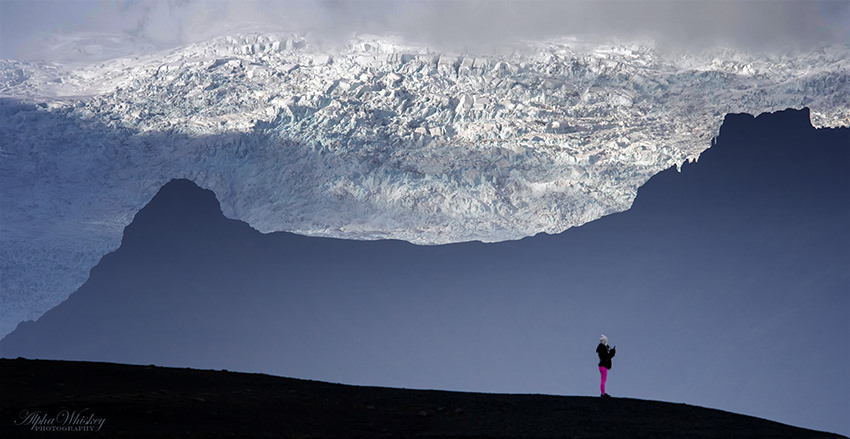
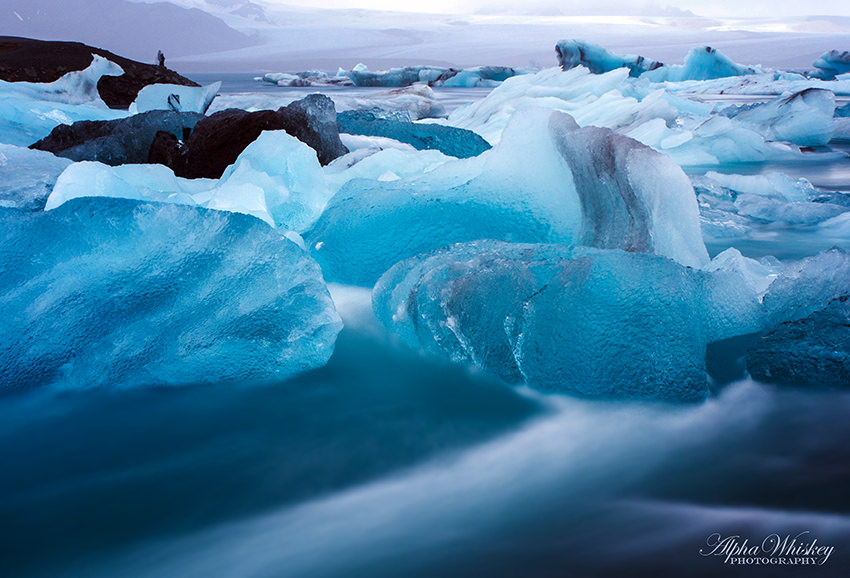
Fjallsarlon Glacier

Now I never wish to cast aspersions on anyone else’s work since I pride myself on encouraging people to go out and shoot. That’s what Alpha Whiskey Photography is all about. But the images returned from Iceland by the reviewers of the new EM-1 didn’t impress me as to its capability (I wouldn’t consider buying it anyway); perhaps they only had a limited amount of time or conditions weren’t favourable. I’m not saying my images are any good (haters start your traffic) – they may put you off micro-four thirds even more, and the reduced sizes and quality of images here certainly won’t enlighten you – but in general, well-taken and composed images can promote and entice viewers to a brand and format more effectively, even if it is from an older model (referring to the camera, not myself). Not that gear should really have any bearing on one’s ability to compose, create or see, of course. But the tool does help us do the job.

2

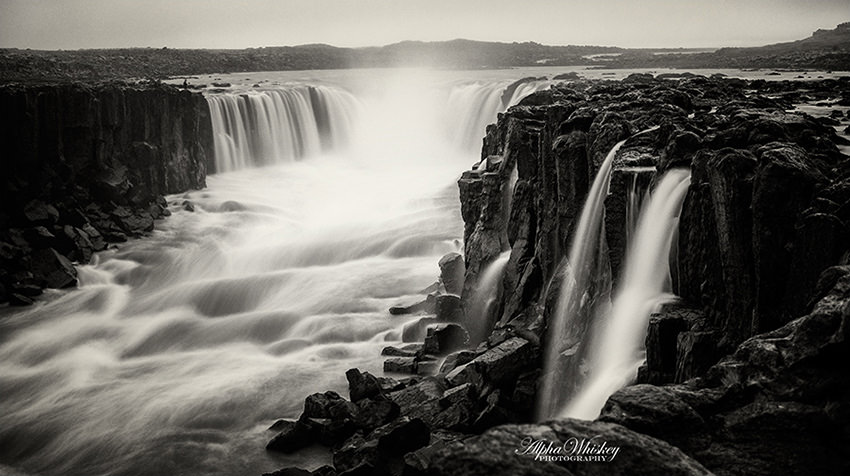
Selfoss

I realise Iceland has been photographed to death and I may not have anything original to offer but I went there because I had some time to kill and most of the images I captured please me (I’ve always said I’m easily pleased). Each of these images had a story behind them, adding to the overall adventure that I enjoyed.

10

Haifoss

I had been to this charming little island before but this time I was on my own, driving around its ring road with Eminence Front by The Who blasting out of an SUV that was also my home for the duration of my trip (don’t worry, I had regular showers).

4

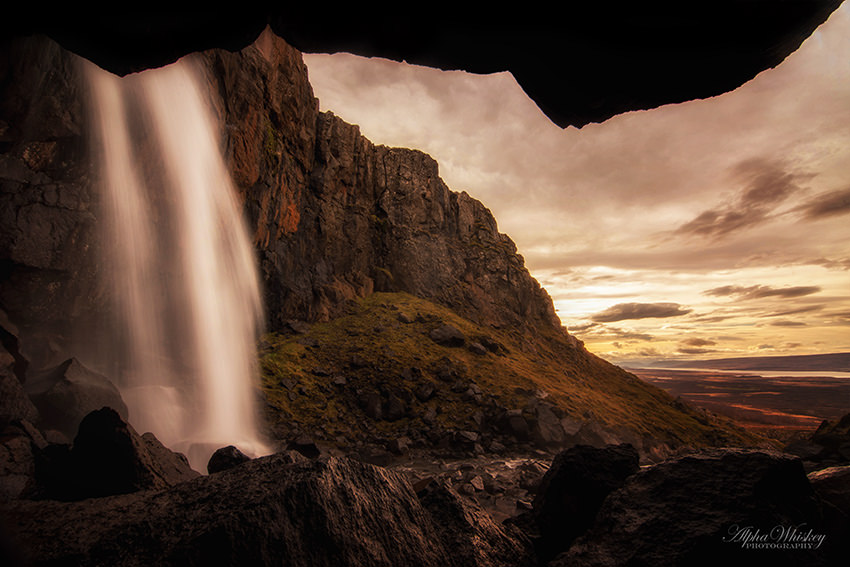
In the cave behind Fardagafoss.

My main aim was to see as much as possible in the limited time I had, which often meant I wasn’t always fortunate enough to have the best light or indeed the best weather. I simply couldn’t be at each location during the golden hour.

3

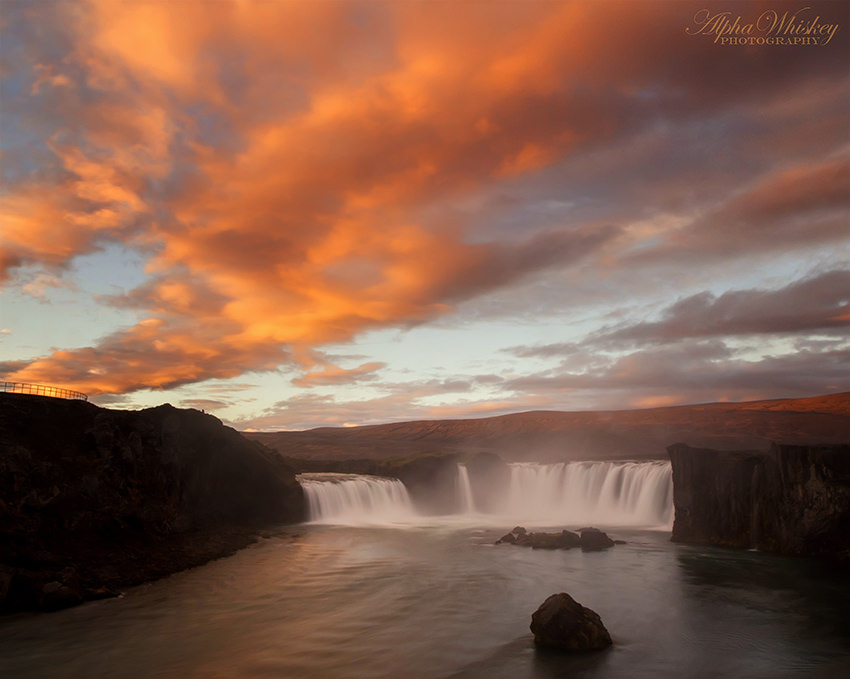
Sunrise at Godafoss.

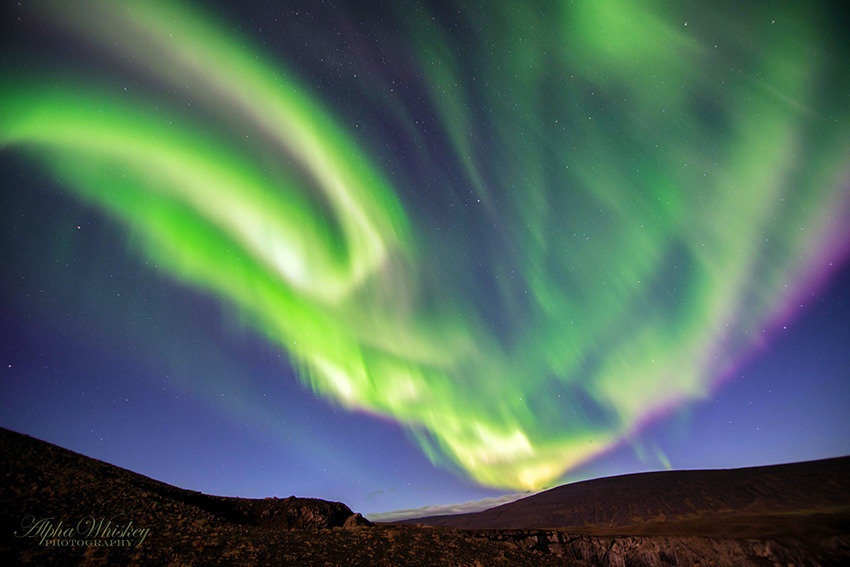
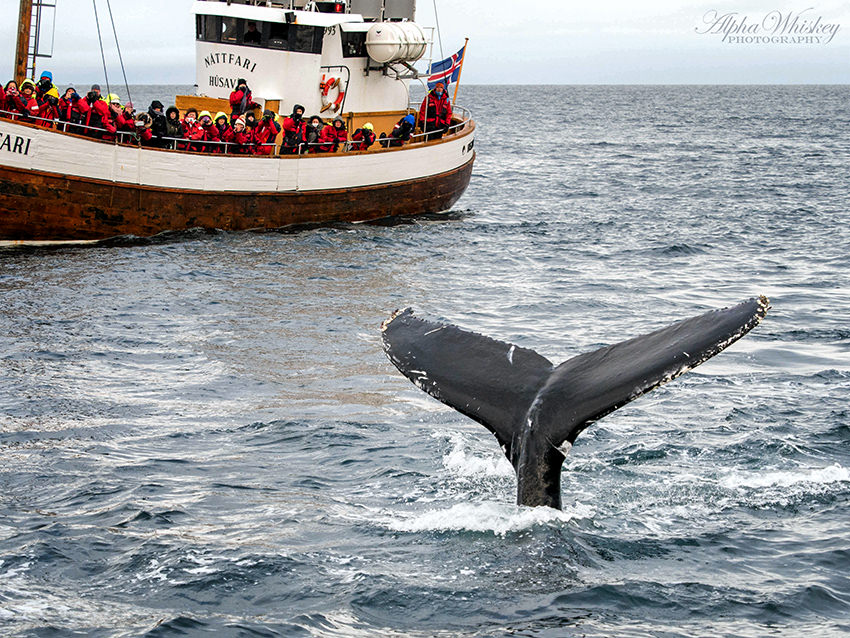
Nevertheless, in less than 8 days I crammed in over two dozen waterfalls, glaciers, geysers, canyons, a volcano crater, humpback whales and the aurora borealis, the last of which was a stunning display that was worth the trip alone.

5

A nice surprise while looking for Alderyarfoss (which I found and shot but by which time I couldn’t care less about).

Iceland is, of course, a beautiful land unlike anywhere else, with contrasting landscapes, volatile weather and spectacular natural features. Much of the country was appropriately dressed for the season in autumnal hues, decorating the countless waterfalls, streams and mountains in a kaleidoscope of colour. It is certainly true that one cannot help but regularly stop at the sight of something unexpected and beautiful. I ended up seeing far more than my itinerary intended for me.

6

Greeting Alpha Whiskey….

6a

…And then running away from me.

Rather bizarrely, the inclement weather towards the end of my trip became particularly severe whenever I visited a place I had been to before, and miraculously cleared up at places I was visiting for the first time. Spooky but jolly kind.

7

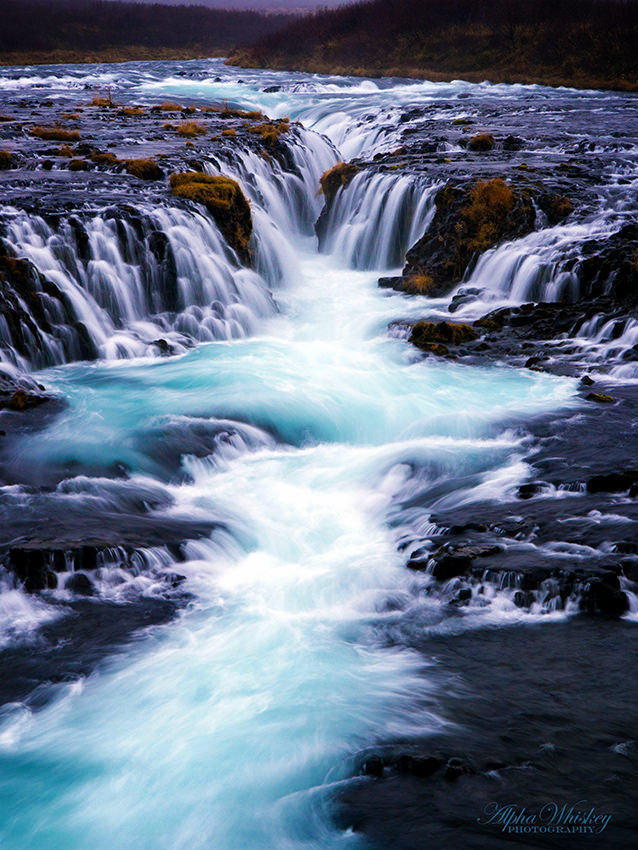
Bruarfoss.

12

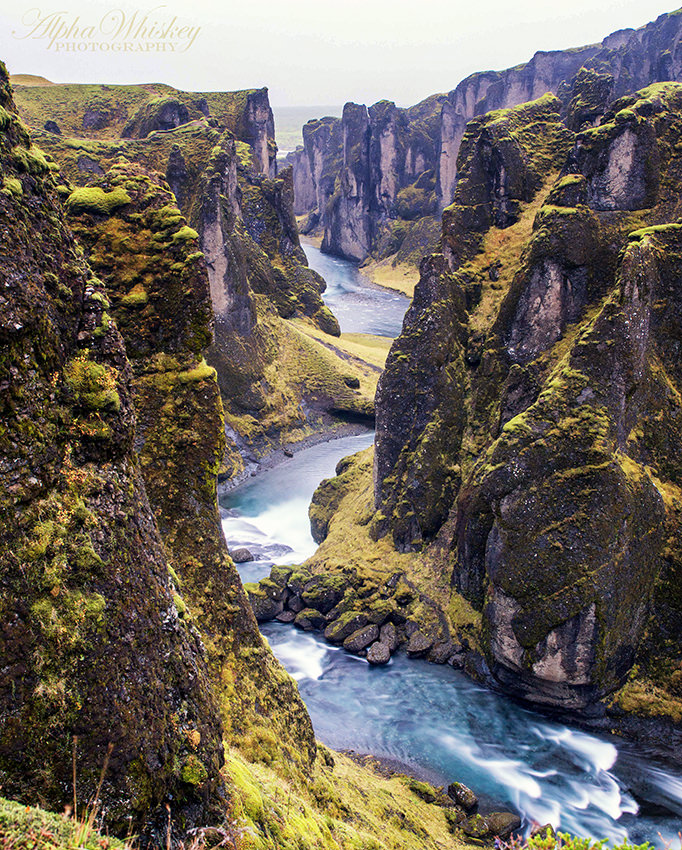
Fjaorargljufur Canyon. Shot at night but made day by a long exposure.

Well, nearly 3000km and a supertanker of diesel later I had made it back to where I had started my journey at Kirkjufell in Snaefellsness, the most photographed mountain in Iceland. A small sense of accomplishment quietly crept under a stronger longing to finally get back home, light up a fat one and swig down a cold one. Job done. It was fun.

8

Kirkjufellsfoss. Where I started and ended my journey. (Possibly the most unoriginal shot in the history of the world but I took it anyway.)

I must thank my good friend Brubaker for all his invaluable help kitting me out for vehicular camping and navigation. Without his help I would literally be lost, cold and powerless. He was due to join me on this adventure but alas draconian employers would not free him from work.

9

Humpback whale dives to feed.

I must also thank my good friend and fellow photographer Parrish who very generously lent me a set of ND and graduated filters, enabling me to capture some long exposures, particularly at the glacier lagoon.

11

Jokulsarlon Glacier Lagoon.

11a

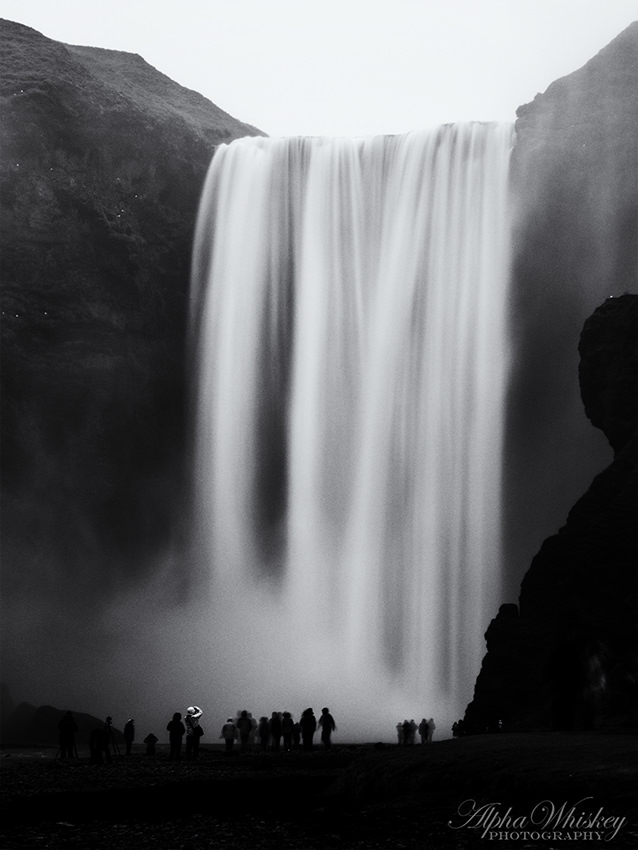
Skogafoss.

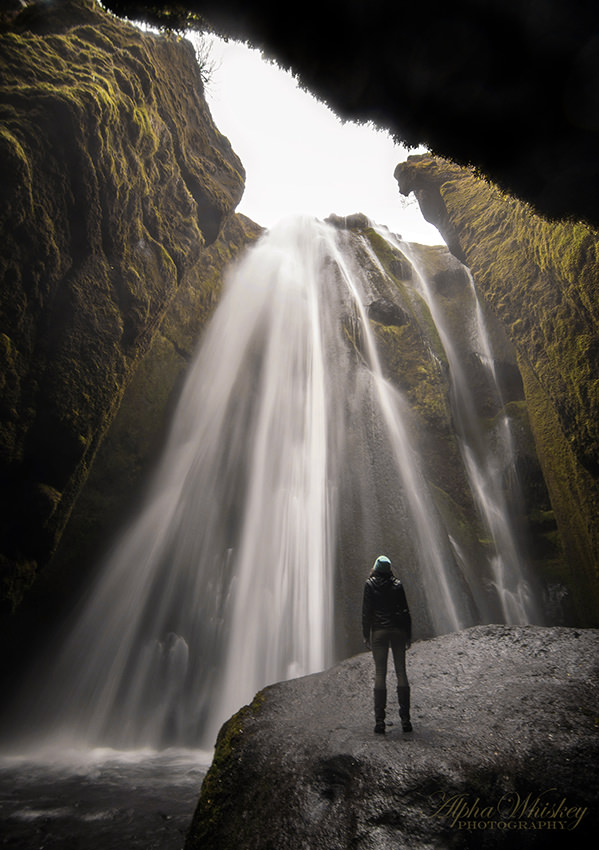
And I also wish to thank the lovely young woman, Joy (from Colorado), also travelling around Iceland herself, who spent a day with me on the south coast exploring hidden waterfalls.

13

Joy under Gljufurabui.

14

Kvernufoss.

Most of these shots were made with the E-M5 and 12-40mm f/2.8 and 40-150mm f/2.8 lenses. It is fortunate that they were all weather-sealed as the relentless soaking they got from either waterfalls or rain did nothing to diminish their operation. I used the DSLR (not weather-sealed) primarily for the auroras (although I did capture a couple with the E-M5), as the larger sensor was more capable at capturing them. All images were processed to my personal taste in Lightroom.

15

Inside the eerily tranquil Asbyrgi Canyon.

16

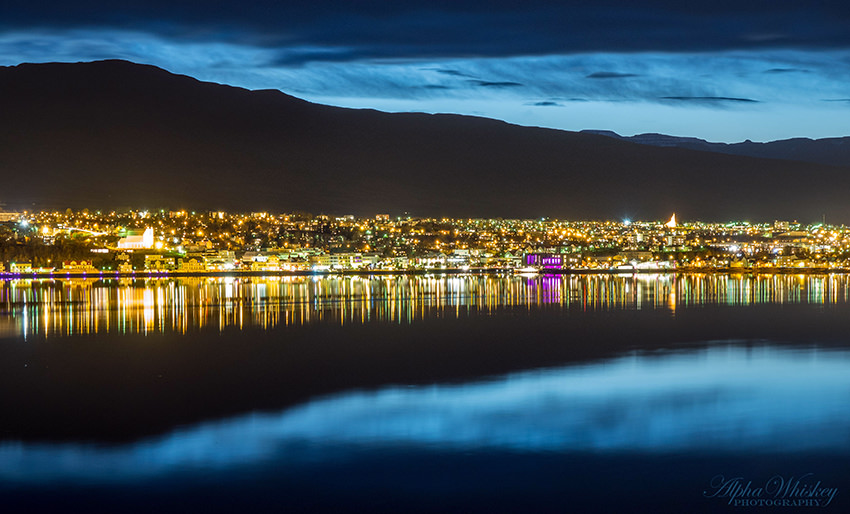
Akureyri at night. A pleasant surprise while driving somewhere.

As usual my article contributes absolutely nothing to anyone, which is why I won’t be posting much more here in future. But I hope you have enjoyed this very small snapshot from my little drive around Iceland. You can see more on my blog, from where this article was reproduced. On to my next adventure…

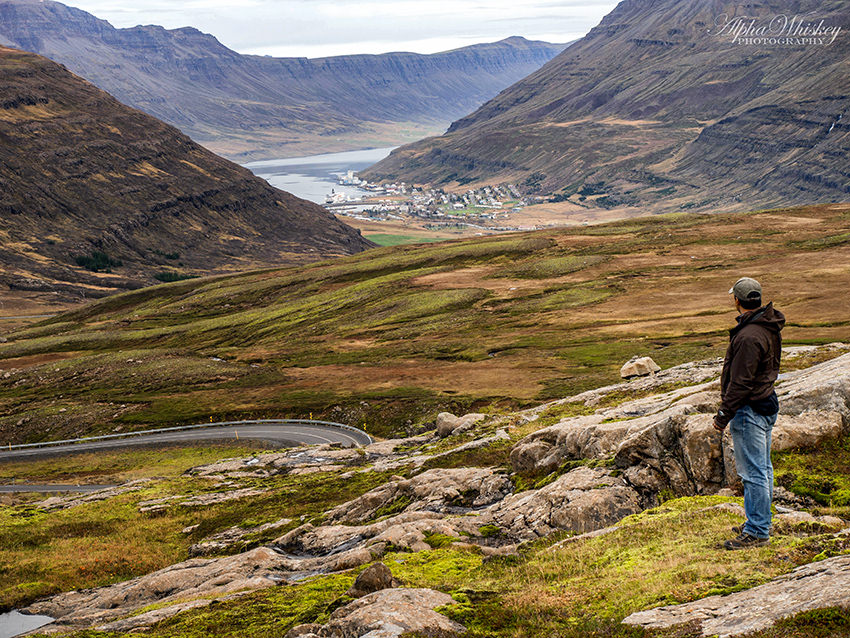
18

Alpha Whiskey looking towards Seydisfjordur in the east.

The post Postcards From Iceland appeared first on Photography Life.

Photography Life

Posted in Photograpy How To | Tagged , , | Leave a comment
Chasing the Sponsorship Rainbow – Part II

Picture

I know blog posts are supposed to be short, but there’s a lot going on when you decide to look for support from a manufacturer or vendor.  Two days ago I shared “Part I” of the topic on sponsorship, but there’s much more to the concept.

A big part of sponsorship is about relationship building. In fact, I can’t think of a better place to start than suggest you pick up Scott and Alison Stratten’s book “UnMarketing.” This is the newly updated second edition. Just click on the affiliated link to the right to read more on Amazon’s site.

So often photographers get an idea their work is good enough to deserve sponsorship and attention from the manufacturers and vendors of the products/services they use. That’s only one small component. Being sponsored by a company is built on a foundation of your style, presence, integrity, enthusiasm and here’s that word again – passion!
 
In “Part II” about chasing sponsorship, I want to hit on various aspects of relationship building, because it’s such a critical component to your success.

6. Don’t just be a hired gun! Hired guns are a dime a dozen – anybody can find somebody to endorse their products.  Make it a point to only approach companies whose products and services you use and believe in.  Also, be careful how many sponsors you line up.  A problem develops when you go beyond 3-4 companies, and their messages get lost.  Your bio/description at a convention program, for example, starts to look like the logos on a car at a NASCAR race.

Years ago at Hasselblad, a very well respected photographer sent me a letter requesting sponsorship and sent the same letter to our competitor, Henry Froelich, then president of Mamiya America Corporation.  His BIG mistake was sending Henry’s letter in the envelope to me and my letter to Henry.  Henry and I laughed about it a lot, and it turned both of us off to ever sponsor this photographer.

7. Stay in contact, but don’t make a pest of yourself. This is critical to chasing sponsorship.  Everybody you approach, if you’re a class act and your work is good, would love to sponsor you in some way, but funding is limited. The staff at any company today is also limited.   You’re sending in work or contacting an entirely overworked spread-too-thin manager to ask for support. Give them time to review your project.  Don’t get in their face. If you don’t hear after a few weeks, no news just means no news.  Just be patient and don’t make a pest of yourself.

And, if you get turned down, send a hand-written note on your personal stationery thanking them for their time. Then, put them on an active list of companies to visit at each convention/trade show you attend in the future. Don’t pitch them each time you see them – just wander by and be friendly.


PictureA pelican caught in the tragedy of the BP oil spill. “I speak for the creatures which have no voice.” Copyright Scott Bourne. All rights reserved.

8. We’re a small industry.  For those of you living in small towns and knowing every photographer within 50 miles, our industry might seem huge, but the truth is we’re relatively small.  Virtually every manufacturer has staff who have worked at other companies.  We’ve all been to the same rubber chicken retirement dinners and often multiple companies will share an industry icon.

As an example, my good buddy Scott Bourne introduced himself at a convention over twenty years ago. Hasselblad had just introduced the X-Pan, and he gave me some stunning images taken with the new camera. He didn’t ask for anything and just wanted to show his work. 

I took them back to the office after the convention. They were sitting on my desk when the publisher of Studio Photography & Design called me. They were doing a story on the new camera and wanted images taken with the X-Pan. They were also hoping to find a photographer who they hadn’t written about previously. I had Scott’s work right there, and he wound up with a six-page story in the magazine, which led to other companies seeing his work and grew his business.

This is an industry where we all know each other.  Don’t assume that because one company can’t bring you on board now; your name isn’t going to stay out there for a little while.  Outstanding images are outstanding no matter what. Just like me passing a portfolio of work to a magazine, you never know where your images might wind up.
 
9. Be consistent in your message.  This is one of the biggest areas I see missed all the time, and it’s more with the already sponsored speaker than a new photographer just getting started. For whatever reason, they forget who’s sponsoring them. Now and then it’s arrogance, but most of the time it’s just getting too busy and too involved and forgetting to really plug their sponsors.
 
10. Most important of all, be patient and don’t give up. Being sponsored is about building your brand and relationships. It’s about people getting to know you, your work and what you represent.  It’s also about the strength and quality of your network.  Today’s most supported photographers never approached most of their sponsors – their sponsors approached them.

After spending years of my career reviewing sponsorship requests my most solid piece of advice is a compilation of hundreds of posts on this blog and others – Don’t compromise on your quality of your images or your relationships!  Create the very best images you can.  Make yourself habit-forming to your clients and the vendors you work with.   

You’re part of one of the most amazing industries on the planet.  If your work is sponsorship worthy, eventually you’ll connect with the right companies and products!


SkipCohenUniversity – SCU Blog

Posted in Photograpy How To | Tagged , , , | Leave a comment

Throwback Thursday – Underwater in ’95

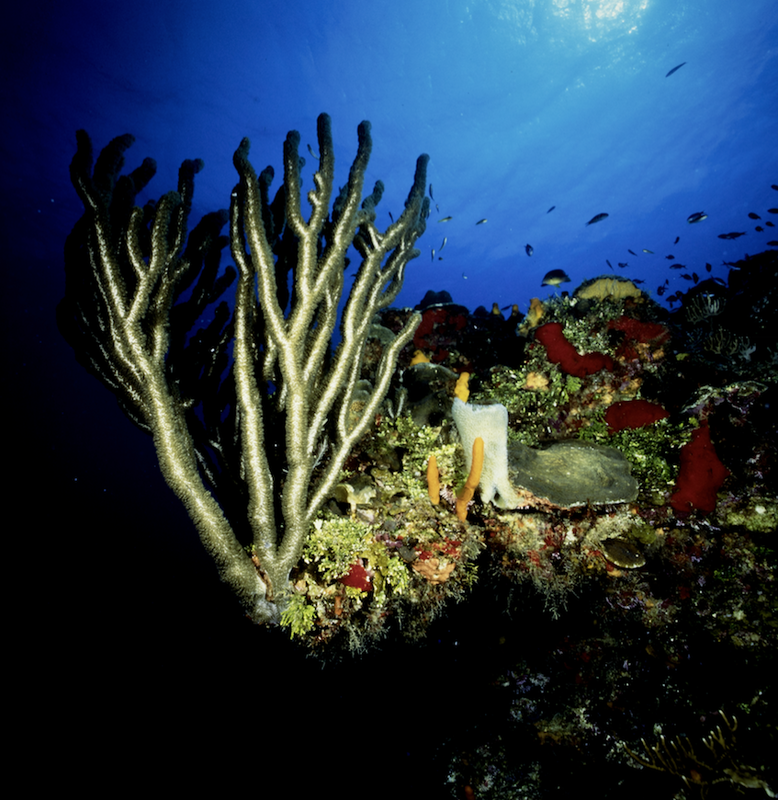
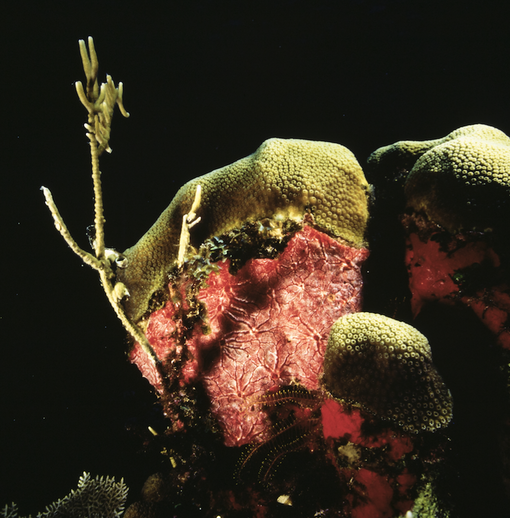
PictureImage from wetpixel.com

It’s a very different Throwback Thursday, but still a fun one to share.

In 1991, Helmut Horn, an incredibly talented artist and Hasselblad shooter, talked me into getting my scuba certification. At the time he was president of a hotel group that managed Cheeca Lodge in the Florida Keys. He generously hosted my introduction into scuba, and opened a door to a world I never anticipated would become such an incredible part of my life.

The backstory on the two images above is perfect, because most of my underwater images over the years were throwbacks – no, I mean they were terrible and needed to literally be thrown back. I have hundreds of “artistically underexposed” images, rarely capturing anything I wanted to keep. However, hanging out with some great friends over the years who captured some amazing images, I grew to have an appreciation for the skill set it took to capture the true beauty of the undersea world. Remember, this is all before digital and with Hasselblad, everything was manual. 

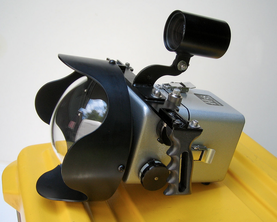
Cleaning out a box in the garage, I recently came across a sheet of eight chromes from a dive trip in Grand Cayman. They were captured with a Hasselblad H38 housing loaded with Kodak Ektachrome in a 903SWC. I had two big Ikelite strobes on arms coming off the housing.

While I love both images above, I can promise you, based on my track record, they were probably both accidents. While being in the ocean became an obsessive passion, I just wasn’t in the water enough to truly practice and master the craft of underwater photography.

However, as I’ve said in the past, the best part of our industry has nothing to do with photography, but the friendships that come out of everyone’s love for the craft. Scuba introduced me to Helmut, then Tom and Linda Danielson and later Bob Rose, together with a long list of incredible friends. We all shared a wonderful common denominator – a love for the ocean.

Happy Throwback Thursday! Take a few minutes and wander through that box of old images stashed away, and then have some fun and share it on your blog. And, even if you don’t want to post the images, just the trip down Memory Lane makes it all worth it!


SkipCohenUniversity – SCU Blog

Posted in Photograpy How To | Tagged , , | Leave a comment