5 times I love to backlight my pictures and how I do it

Put your hand up if you love backlight but struggle with it?

Yep, that was me, too.

But there is something particularly magical and elusive about backlight and it’s so worth learning.

Truth be told, backlight used to scare the bejesus out of me. I avoided it at all costs.

Then, I challenged myself to shoot backlight only for a whole month. Now it’s my most favourite light to use. It adds depth, emotion and magic to images.

I spent hours upon hours analyzing backlit images I loved from other photographers, read every tutorial I could get my hand on, and practiced a ton. There were epic fails when I practiced but the more I pushed, the less fails I had.

Since then, I’ve discovered there are a few lighting scenarios where I can’t resist backligting!

When the sun has just set.

I love a great silhouette, where your subject is nice and dark, but with just enough detail to understand their shape and emotion and lots of detail in the sky so you get to enjoy all the rich colours of the sunset.

  • Spot meter for the highlights in the sky. I often find I am underexposing by metering at least 2-3 stops to the left in these situations.
  • Make sure your subject has a defined shape and you can see details like fingers or hair blowing behind her. You don’t want her to look like a blob.
  • Get all that sorted before photographing your subjects.

Do you love backlight but struggle with it? That was me, too. But I've discovered a few lighting scenarios where I can't resist backligting and I'm sharing them with you!

When the sun is just above the horizon line.

What about a bright sunlight silhouette? This situation can be a bit hard as the light is so contrasty.

  • Again, I find spot metering for the highlights very useful, stopping down as many as 5 stops here.
  • Make sure the light is highlighting your subject, creating beautiful rim light and separating him/her from the background.
  • Consider converting to black and white to get the rich contrast blacks and highlights give, adding depth.

This created one of my favourite images of my daughter (below left). We love going to the beach so she can dig and make sandcastles. As we were walking along, I noticed the sun streaming over the mountain and I just couldn’t resist taking a shot.

There’s a whole lot I love about this image. I love how the little bit of out of focus gives her movement and we see the shape of the spade so well and she looks so intent on where she’s going. The puddle of light at her feet brings your attention straight to her, the rim of light in her hair and the flair where the light is coming over all help to add magic to it.

Save

Save

Save

Save

Save

Save

Save

Do you love backlight but struggle with it? That was me, too. But I've discovered a few lighting scenarios where I can't resist backligting and I'm sharing them with you!

Do you love backlight but struggle with it? That was me, too. But I've discovered a few lighting scenarios where I can't resist backligting and I'm sharing them with you!

When the sun is streaming through the trees.

Golden backlight is my favourite. When the sun is low and warm, it creates a magical haze around my subjects. It makes everything look dreamy. The best time for this is literally 10-15 minutes before the sun sets or after it rises.

  • The biggest key here is to have the sun just out of your viewfinder. You may need to move and slightly turn your body away from the light by a few degrees but you’ll be amazed how this helps.
  • Then use the same principle of metering for the highlights, with spot metering.
  • In this situation, focusing can be tricky. I like to use the focus and recompose method. I focus without the flare and then recompose slightly so the flare filters into my lens.

Here’s another favourite of my daughter. Coming back from the park one evening, she was tossing the ball in the air and I could see the bugs in the light.

Do you love backlight but struggle with it? That was me, too. But I've discovered a few lighting scenarios where I can't resist backligting and I'm sharing them with you!

Do you love backlight but struggle with it? That was me, too. But I've discovered a few lighting scenarios where I can't resist backligting and I'm sharing them with you!

When my car headlights are on.

Who says backlight has to come from the sun? Any type of light source can create beautiful and intriguing situations for backlighting. One that I love is car headlights.

  • Because it’s so dark in this scenario, use an extra light source like a flashlight or phone to shine on your subject to focus, turning it off just before taking the photo.
  • Expose for the highlights in order to create a silhouette that will subtle details like my daughter’s hair and dress in the photo below to see feel the moment.

Do you love backlight but struggle with it? That was me, too. But I've discovered a few lighting scenarios where I can't resist backligting and I'm sharing them with you!

When I’m using off camera flash.

If there’s no light at all, you can still create your own by using a flash or continuous light off camera. I especially love photographing food this.

  • To get a high key picture where the background is blown out, expose for your subject. I find I expose a few stops to the right for this kind of shot.
  • For a different look, you can expose for the midtones so you have shadows to add to the depth of your images
  • The other thing to do is add a reflector to fill in the light a bit or possibly a smidge of fill flash.

Do you love backlight but struggle with it? That was me, too. But I've discovered a few lighting scenarios where I can't resist backligting and I'm sharing them with you!

Join the Clickin Moms photography forum

Save

Save

Save

The post 5 times I love to backlight my pictures and how I do it appeared first on Clickin Moms.


Clickin Moms

Posted in Photograpy How To | Tagged , , , | Leave a comment

Common Camera Settings for Beginners

Single-Point AF-Area Mode

Many beginner photographers often wonder what camera settings they should use to get the best possible results with their current camera gear. While there is no set rule for camera settings that work well in every shooting environment, I noticed that there are some settings that I personally set on every camera I use, which are universal across all brands of cameras on the market. These are the “base” settings I set initially – once they are done, I rarely ever revisit them. In addition, there are particular camera modes that make the process of capturing images easier or quicker, especially for someone who is just starting out. Let’s go through these common camera settings in more detail!

[Read More…]

Photography Life

Posted in Photograpy How To | Tagged , , , | Leave a comment

How to easily adjust your exposure settings in changing light

As an on-location, natural light photographer, I shoot in various lighting situations.

Most of the time during my sessions, the lighting will change as the sun hides behind the clouds, cloud coverage disappears, and storms begin to roll in.

I’m here to help you understand how to change your exposure settings quickly in manual mode during those situations. I recently did a ‘Pointe Ballerina’ shoot and it’s the perfect example of changing light conditions!

What you should know about manual mode.

Manual gives you freedom – freedom to make mistakes, freedom to bend the “rules” of photography, and gives the freedom to excel in your art.

So, what’s the difference between manual mode and any other mode on your DSLR? Great question!

You will find that if you choose any other mode aside from manual, your DSLR will automatically choose settings for you (keep in mind, there is exposure compensation options on these modes but we’re not going to get into that today). To better explain this, let’s take a look at the modes on a DSLR:

  • Program: shutter speed and aperture both chosen by the camera.
  • Shutter-Priority Automatic: shutter speed chosen by photographer and aperture chosen by the camera.
  • Aperture-Priority Automatic: shutter speed chosen by camera and aperture chosen by the photographer.
  • Manual: both shutter speed and aperture chosen by the photographer.

If you have ever had issues getting a shot in low light or harsh light, then you NEED to learn Manual.

Need help knowing how to change your exposure settings quickly as the light changes? I'm here to help!

Need help knowing how to change your exposure settings quickly as the light changes? I'm here to help!

The scenario.

Imagine this, you’re in the midst of a session during midday and the subject is sitting in the center of a bridge. You’ve got your ISO around 160, shutter speed at 1/320 and you’ve got that buttery bokeh at f/2. You’re in an open area under no shade but you have had some cloud coverage so far.

You nailed your first photo. But then, the sun comes out from behind those fluffy clouds. NO!

You take a shot and look at the back of your camera. Your histogram is blown and the photo on your LCD screen suggests you’re taking a ghosts’ portrait.

You find yourself frantically searching the sky for more clouds coming and there are none anytime soon. What do you do? Move to the shade? Perhaps. However, you’ve only got one shot in that pose. Now what?

Need help knowing how to change your exposure settings quickly as the light changes? I'm here to help!

The solution.

First things first, locate that big ball of harsh rays that just ruined your shot.

If you see that the sun will only be out of cloud coverage for a moment, it’s okay to tell your subject that you need to wait on the clouds. They always understand.

If you see that the sun will be out for a while then it’s time to relocate. Move your subject so that the sun is filtered and not so intense on your subject, trees and buildings work well for this.

If you don’t have an open shade options to relocate to and must stay out in the open and deal with the harsh sun, there’s a few things you can do to make the situation easier.

  1. Have your subject look up toward the sky as much as possible. This keeps your subject from having shadows around their eyes.
  2. Position yourself higher than your subject and shoot slightly down at them. This forces them to look up to make eye contact with you, again eliminating the pesky shadows around the eyes.
  3. Use a scrim to filter the light. For this, you will need either a stand to attach the scrim to or an assistant to hold it (if your client brought a friend, they’re usually happy to help).
  4. Use off camera flash to overpower the sun.

For your settings when the sun is moving in and out of cloud coverage, the easiest thing to do is to set your aperture and ISO and then leave them alone. This allows you to simply adjust your shutter speed as needed, make it faster when the sun is brightest and slow it down when the clouds provide some coverage. Remember to set your ISO at a point that will keep your shutter above 1/125 or so regardless of light in order to prevent motion blur.

Need help knowing how to change your exposure settings quickly as the light changes? I'm here to help!

Need help knowing how to change your exposure settings quickly as the light changes? I'm here to help!

Tips for shooting in changing light.

With the cloud coverage ever changing, to avoid making a mistake that you cannot fix in post-processing, shoot in RAW. You have much more versatility with RAW images versus jpeg images.

Every day, every situation, every location, every lens, and every set of clients will yield different results. Ultimately, you will find yourself adjusting your settings a lot during a session. Just remember that even if you go back to the same location and shoot another subject later, your settings will differ.

If you are shooting in harsh sunlight with a wide Aperture, be patient with yourself and take your time finding your focus. It will be harder to focus in this situation but you can do it. Also watch out for chromatic abberation which is more common in brighter situations due to the extra contrast between light and shadows.

Consider all your metering mode options. Spot metering is a great choice for this situation and you can learn more about that here.

Need help knowing how to change your exposure settings quickly as the light changes? I'm here to help!

Save

Save

The post How to easily adjust your exposure settings in changing light appeared first on Clickin Moms.


Clickin Moms

Posted in Photograpy How To | Tagged , , , , , | Leave a comment

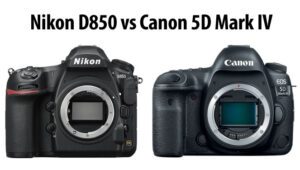
Nikon D850 vs Canon 5D Mark IV

Nikon D850 vs Canon 5D Mark IV

With the release of the Nikon D850, one might be wondering how the Canon 5D Mark IV would compare to it side-by-side in terms of specifications, since both compete directly with one another. The Canon 5D Mark IV was announced almost exactly a year earlier in August of 2016, so it is a fairly recent release that will most likely not be updated for at least several more years. Now please keep in mind that such camera comparisons do not take into account lenses, accessories and other systems differences, so I ask that our readers take such comparisons with a grain of salt. It would be foolish to change systems every time a better camera comes out, because manufacturers like Nikon and Canon are known to leapfrog each other every few years!

[Read More…]

Photography Life

Posted in Photograpy How To | Tagged , , , | Leave a comment

Nikon D850 vs D810 vs D800 / D800E

Nikon D850 vs D810 vs D800 / D800E

In this Nikon D850 vs D810 vs D800 / D800E comparison article, I will go through all the differences in specifications between these DSLR cameras and talk about what has been added, changed or improved with each generation. While both Nikon D810 and D800 / D800E cameras have been very popular among many enthusiasts and professionals for the past few years, the Nikon D850 is clearly a huge step up in many ways for the D8x0 line of cameras. It is the first high-resolution Nikon DSLR that is aimed at many different photography genres, from landscape and macro, to sports and wildlife photography. Let’s take a look at what the D850 brings to the table when compared to its predecessors.

[Read More…]

Photography Life

Posted in Photograpy How To | Tagged , , , , | Leave a comment