18 Surf Photography Tips

Surfing Waves at Sunset

In 2017, I received an invitation to photograph on the Mentawai Islands in Indonesia. My cousin, who is a surfer and makes this trip practically every year, asked me to join them in their next trip. For those who do not know, Indonesia is a surfer’s paradise, with surfers from all over the world visiting this remarkable destination. It has been a while since I photographed surfing professionally, so without much hesitation, I accepted the invitation. In this article, I want to go over some of the things I learned during this assignment and hopefully provide some tips to those who want to engage in commercial surf photography.

[Read More…]

The post 18 Surf Photography Tips appeared first on Photography Life.

Photography Life

Posted in Photograpy How To | Tagged , , | Leave a comment

Finding things in your everyday life to photograph

We all love looking back at pictures that were made of us from our parents and we love looking at our grandparents when they where kids.

In today’s world, we forget to photograph the little things. Instead, we capture the big milestones like the newborn stage, birthdays, senior year, etc.

We forget about all the things that we do daily that we can photograph.

Sometimes I find myself searching for things to photograph in my children’s daily life. I mistakenly think we’re not doing anything special. But we are.

Sometimes I find myself searching for things to photograph in my children's daily life. I mistakenly think we're not doing anything special. But we are.

Sometimes I find myself searching for things to photograph in my children's daily life. I mistakenly think we're not doing anything special. But we are.

What everyday moments I like to photograph:

There are tons of little things that make our kids who they are. For example, how my daughter moves her hair out of her face while she’s washing dishes… how my son loves to cook… how my littlest baby cuddles and cries. All these things make my kids who they are.

I want these little moments photographed but forget to at times. I encourage you to slow down, look at your kids and see what in them you just love and photograph it.

You may have something you do daily with your kids like cooking, reading a book, bath time. Get out your camera and open up a curtain and photograph your kids in their natural element doing these things.

My kids and I love planting flowers and cooking. So, I take detailed pictures of their hands in the dirt and faces as their heads tilt back laughing.

Don’t forget to photograph the experience. Photograph emotions in the moment like laughs, cries, falls, kisses, etc. My husband jokes and says, ” We cann’t do anything without getting out an $ 8,000 camera set up can we?” I laugh and say, ” But my babies know I love them and will cherish these pictures for the rest of their lives.”

Sometimes I find myself searching for things to photograph in my children's daily life. I mistakenly think we're not doing anything special. But we are.

How I photograph the everyday moments:

I always keep my camera around close by for moments I don’t want to miss.

On this particular day, we woke up and my kids got straight to playing. I saw them being sweet and dragging out all their toys so I opened the curtains and took some pictures of them just playing.

Then I took my youngest to the kitchen table and there was the most perfect window light coming in so I took a picture of him playing with his favorite toy. It’s simple but it means a lot to me.

Sometimes I find myself searching for things to photograph in my children's daily life. I mistakenly think we're not doing anything special. But we are.

Sometimes I find myself searching for things to photograph in my children's daily life. I mistakenly think we're not doing anything special. But we are.

There are a few things I keep in mind when I photograph lifestyle.

  1. Get on the child’s level.
  2. Back up and look at the whole room and then do some close up shots.
  3. Pay attention to details like hands, eyes, and things laying around.
  4. Change positions, move around and look at a scene from different angles.

With lifestyle photography, I normally only shoot natural light but I do find myself using my flash on occasion if there’s just no natural light. I try and photograph lifestyle in the early morning hours because the sun is really bright and comes through the windows nicely.

When I do use a flash, I have my Gary Fong lightsphere and point it to a wall to the side so it bounces and comes back to my subject on the side of them. I tend to use a large aperture, around f/1.4 or f/1.8 if I just have one subject, because I like to have a creamy background.

Also, I typically shoot my lifestyle sessions with my Sigma 35mm Art lens. And since I love to have shadows in my images, I underexpose my photos.

Sometimes I find myself searching for things to photograph in my children's daily life. I mistakenly think we're not doing anything special. But we are.

Anything we do we can find something in that moment that we’ll want to remember.

Photograph your kids or clients doing things they love. Remember, these images are going to tell a story of what your family or client loves most.

Never be afraid to grab your camera and photograph something even if it’s not the ideal situation. I took my camera out many times to photograph my husband’s PawPaw planting in the garden with my kids. He passed away unexpectedly and had I not just went with my gut and grabbed my camera we wouldn’t have that beautiful picture of him before he passed at age 84.

Sometimes I find myself searching for things to photograph in my children's daily life. I mistakenly think we're not doing anything special. But we are.

Life is too short. Photograph everything. You can always find something in your day that is worthy of being captured forever.

Clickin Moms online photography forum

The post Finding things in your everyday life to photograph appeared first on Clickin Moms blog: Helping you take better pictures one day at a time.


Clickin Moms blog: Helping you take better pictures one day at a time

Posted in Photograpy How To | Tagged , , , , | Leave a comment

Telephotos: The Ideal Landscape Photography Lenses?

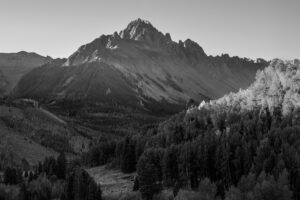
Telephoto Mountain Landscape

It’s no secret that landscape photographers love ultra-wides. If your lens isn’t equivalent to at least 16mm, you just aren’t part of the club. And if you really want to prove your worth, you’re definitely using a 14mm lens, or a 12mm, or, for the truly dedicated, a fisheye. (You can always de-fish it in Photoshop, after all.) But what if landscape photography has another side to it – a side that can be just as good? In fact, that just so happens to be the case. For many pictures, the best landscape photography lenses aren’t wide-angles at all. They’re telephotos. 

[Read More…]

The post Telephotos: The Ideal Landscape Photography Lenses? appeared first on Photography Life.

Photography Life

Posted in Photograpy How To | Tagged , , , , | Leave a comment

20 Sports Photography Tips for Beginners

sports_tips_6

Doing sports photography of your children, friends, or teammates is a great way to capture action-packed memories while having fun at the event. With a camera, you can be in the middle of the excitement at a sporting event rather than sitting on the sidelines (figuratively, of course – you should stay off the field). This article includes several sports photography tips to improve the quality of your photos and help you take better action pictures at games and events.

[Read More…]

The post 20 Sports Photography Tips for Beginners appeared first on Photography Life.

Photography Life

Posted in Photograpy How To | Tagged , , , | Leave a comment

Chromatic Aberration: How to spot and fix it in Lightroom

When I first started shooting, I had no idea what Chromatic Aberration (CA) was.

It’s funny how you don’t notice something, and then when you’re made aware of it, you notice it all over the place!

Luckily, Chromatic Aberration is easy to spot and fix in post processing.

CA will appear in your image along the edges of people and objects. It occurs when a lens fails to capture the wavelengths of color on the same focal plane.

The result is that objects will have a colorful glow around them. This color fringing can appear to be red, green, blue, yellow, purple, or magenta and sometimes an image will contain CA with a few different colors.

It’s likely that you’ll notice Chromatic Aberration in high contrast areas of your images. I usually find it against a bright sky.

In this example, the sun was shining through the trees which caused the sky in the top right of the frame to blow out. Here’s a straight out of camera, high contrast image I shot recently on my Nikon D750 with a retro Sigma 28mm mini-wide lens. Inevitably, there was some CA in the image which you’ll notice in the close up of the top right corner.

When I first started shooting, I had no idea what Chromatic Aberration (CA) was. It’s funny how you don’t notice something, and then when you’re made aware of it, you notice it all over the place! Luckily, Chromatic Aberration is an easy to spot and fix in post processing.

To correct it, I open the image up in the Develop Panel of Lightoom CC and select “Lens Corrections”. Under the “Profile” tab, select “Remove Chromatic Aberration”.

Lightroom will automatically adjust any obvious CA. Sometimes, there are some additional adjustments to make. If this is the case, select the “Manual” tab.

When I first started shooting, I had no idea what Chromatic Aberration (CA) was. It’s funny how you don’t notice something, and then when you’re made aware of it, you notice it all over the place! Luckily, Chromatic Aberration is an easy to spot and fix in post processing.

When I first started shooting, I had no idea what Chromatic Aberration (CA) was. It’s funny how you don’t notice something, and then when you’re made aware of it, you notice it all over the place! Luckily, Chromatic Aberration is an easy to spot and fix in post processing.

Use the dropper tool to select areas with Purple or Green Chromatic Aberration. When you find a spot, your dropper will turn either Purple or Green depending on which color you’re hovering over.

If your dropper hasn’t changed colors, move it around until you find an area with enough purple or green contrast. If Lightroom doesn’t have enough color information in the spot you select, it will prompt you with the following warning: “Cannot set the purple or green fringe color. Please sample a representative fringe color again”.

When your dropper changes color, select that spot on the image. Your Purple Hue and/or Green Hue and Amount sliders will adjust to decrease the CA. You can also adjust the sliders by hand if necessary.

When I first started shooting, I had no idea what Chromatic Aberration (CA) was. It’s funny how you don’t notice something, and then when you’re made aware of it, you notice it all over the place! Luckily, Chromatic Aberration is an easy to spot and fix in post processing.

That’s it! You’ve got it!

Just remember to check the other areas of your frame, especially your subjects, to make sure the CA corrections aren’t overdone.

If they are, you’ll notice a grey border around the edges. Adjust the Purple Hue and Green Hue sliders manually until you regain the proper color around your subjects. Then, continue editing your image as you normally would.

When I first started shooting, I had no idea what Chromatic Aberration (CA) was. It’s funny how you don’t notice something, and then when you’re made aware of it, you notice it all over the place! Luckily, Chromatic Aberration is an easy to spot and fix in post processing.

I like to check for it in each image before I begin hand-editing, but you can also create an import preset in Lightroom to easily remove CA upon import.

Keep it simple by selecting the Lightroom Profile tag adjustment, “Remove Chromatic Aberration”. That way, any minimal fringing will be removed.

Creating a preset of adjustments in the manual tab will not work for every image. It will likely cause grey fringing if the correction is too heavy handed.

Now that you have a handle on what Chromatic Aberration is and how to fix it, keep an eye out for it in your images. It’s amazing what a difference it can make in creating a crisp and clear final edit!

Clickin Moms online photography forum

The post Chromatic Aberration: How to spot and fix it in Lightroom appeared first on Clickin Moms blog: Helping you take better pictures one day at a time.


Clickin Moms blog: Helping you take better pictures one day at a time

Posted in Photograpy How To | Tagged , , , | Leave a comment