Nikon 45mm f/2.8D PC-E Review

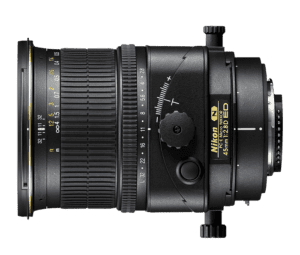
Nikon 45mm

This is an in-depth review of the Nikon 45mm f/2.8D PC-E, also known as PC-E Micro Nikkor 45mm f/2.8D ED, a special purpose normal-angle lens designed for architecture, commercial, macro, and nature photography. “PC” stands for “Perspective Control”, but I will refer to this type of lens as “tilt-shift” in this article.

Photography Life

Posted in Photograpy How To | Tagged , , , | Leave a comment

Exploring faceless portrait photography

The human face is one of the most photographed subjects in the history of the craft. It is our first means of identifying each other. It is how we first read emotion. Every combination of features is unique and provides a wealth of information to those observing it. A face is our introduction to a person and so it makes sense that a portrait would be a photographer’s first choice in introducing her subject in an image.

However, there are times when excluding a face can tell us more about a person or a scene than including it. The anonymity of a faceless image can invoke new emotions. It can allow the viewer to place him/herself in the scene. It can force us to focus on details that we might otherwise miss.

I love shooting faceless images. I enjoy the challenge of giving my viewer as much information as possible without facial features present in the frame. But shooting a successful faceless image takes some planning and intention. These are my favorite ways to capture anonymous images that connect with my audience.

Hair

Hair is a highly effective tool in revealing details about a subject without including his/her face. It can at times give us clues as to gender, age, style, and personality. Movement can be depicted through strands of hair blowing in the breeze or flying out from behind a subject in motion. Hair can imply emotion through its ability to change styles, follow the physical lead of its owner, and hide or reveal the face of a subject.

I love to use hair when possible (and my daughter has alot of it!). I am enamored with its ability to show movement in a still photograph. The way it flows lends a sense of magic to my imagery the way fields of wheat angled by the wind or waves in an ocean lend magic to a landscape.

Even more, I have experienced firsthand how hair can be a significant part of a personality. My daughter’s hair is long and blonde and she is proud of it! Observing her flip it around all the time reveals her girly, playful side and I am always seeking to capture that.

When creating your own anonymous portraits, consider how hair can be used to convey different emotions. In the photo above I used it in more of a happy way. The sun is shining, and my subject is happy and spinning with her hair flying out all around her.

By contrast, hair covering the face creates a sense of drama and guardedness. Having someone’s hair cover his or her face can lend a sense of mystery. Consider if your subject bends her head down with hair covering her face. Without features to piece together an expression, we are left to wonder what she is feeling. Is she sad? Is she angry? Explore that in your photography!

I took this shot for Sweden’s National Day. I am particularly drawn to the contrast between my daughters covered face and the bright happy colors of the flowers and flag.

Shadows

Another way to cover the face in a photography is to get dramatic with shadows. Whether concealing only a portion of the face of leaving all features in darkness, shadows can add mystery and drama to a portrait while simultaneously revealing details that might otherwise be overlooked.

The ways in which you can employ shadows in your work are limitless. Use your imagination and break the rules! Look for harsh light and things that can cast unique shadows such as buildings, trees, or blinds. Move your subject around within these patterns to get the effect you desire.

Your subject can even create the shadow him/herself! Place your subject in front of a brightly lit area and capture a silhouette. Capture your subject’s cast shadow on a wall or on the ground.

See how body language becomes incredibly important in these images. Without facial features to give us information about the subject, we look to how the arms and legs and head are held to decipher the emotion of the scene.

Experiment with your subjects practicing different kinds of activities in these shadowed photographs. Running, dancing, spinning, and jumping are all dynamic movements that lend themselves well to being captured in shadow. Allow yourself to observe and be creative and don’t be afraid to try something new!

Imperfect reflections

Reflections can create a somewhat distorted version of a subject. Consider how a less-than-perfect mirror, a body of water, or foggy glass renders your own reflection. You can use these imperfections to create impactful faceless portraits.

Of course you can see someone’s face quite well if the surface is reflecting clearly, so a window may not be the best way to get a faceless portrait. Seek reflective surfaces that naturally lends themselves to anonymity.

In this photograph, the puddle did not provide a clear reflection. I saw it and knew it was perfect for an anonymous portrait! I love how a puddle simultaneously reveals just a bit of what is below and what is above. It is almost like a visit from the other side. It can be intriguing or scary all at once depending on the subject and the audience.

Intentionally covered

Who has a kid who loves playing dress-up? Take advantage of that now! I loved when my children were younger and would spend hours in their sweet little costumes. Not only do those costumes act as a great motivator to get your kids in front of the camera, but you can also use them to create anonymity in a photograph!

Find costumes with hats, hoods, or masks that can at least partially cover the face (superhero costumes are always a good pick!). You can even create your own costumes with items around the house. Blankets, boxes, buckets and more are all amazing costumes in the right hands.

Only your imagination sets the limits with how you capture your costumed subjects. Let their personalities and personas take flight as they hide beneath their disguises. You might just be surprised at how that shy one shines from behind a mask!

Shooting from behind

This may seem obvious, but having your subject face away from the camera is a great way to keep his/her face out of the frame.

However, taking a shot of someone from behind can do more in an image than simply keep it anonymous. It can also give the image a sense of direction.

Consider how the subject’s averted gaze might affect the viewers of your photograph. They might see the subject as heading somewhere or looking forward to something. The might further consider where the subject is and where she is going. More than they would in a traditional portrait, they might question what has the subject’s attention and explore that more within the frame.

It is here where you can make some creative choices to guide your viewer to more mystery or to answers. Do you want to include context? Then maybe a wide angle lens would be a good choice to include as much of the surroundings as possible. Do you want to create a sense of uncertainty? Perhaps you should consider a closer crop or a perfectly clean scene where the audience cannot answer the questions of where and why. This is where you get to be the artist and guide your audience through your imagery in an intentional way.

Of course, this is only the beginning of the ways that you can begin to explore faceless portraiture. More than anything, I want you to have fun being creative and experimenting as you explore this fun way of seeing your subjects in a new way.

Are you ready to take more creative portraits?

With thousands of exclusive educational articles and a community of experienced photographers to answer all of your questions, Clickin Moms is the BEST place to learn and grow in your photography journey.
The post Exploring faceless portrait photography appeared first on Clickin Moms blog: Helping you take better pictures one day at a time.


Clickin Moms blog: Helping you take better pictures one day at a time

Posted in Photograpy How To | Tagged , , , | Leave a comment

Photographing Scale Model Cars

J1

“It’s not photography; you’re just playing with toys. And Photoshop.”  Well, it sure does look that way. This will either invite complete ridicule or slightly less than complete ridicule but it has been such a ton of fun to do that I could in fact care less. And now I’m getting asked (and paid) to produce bespoke posters and prints so maybe I’m having the last laugh; who knows. Plenty will argue that unless you’re photographing a long exposure seascape at sunrise with the latest Nikon or hauling a massive zoom lens across the polar packs you’re not really an authentic photographer. But photographing diecast scale models has proved to be invaluable for practising composition, framing, lighting and processing, all of which are presumably essential to photography in any genre. To say nothing of demanding a little creativity, craft and invention, and that has made it far more stimulating to me than the usual travel and street stuff.

Photography Life

Posted in Photograpy How To | Tagged , , , | Leave a comment

The Inverse Square Law: creating clean portraits with physics

Articles about light and how to use it in photography are often anything but inspiring. They are filled with technical diagrams, charts, and equations. And if you are into science and math they are super helpful!

But that’s not me (I may or may not have almost failed high school calculus!)…and that’s not this article. Yet I believe that even a less-than-enthusiastic math student like me can understand complex light concepts and why they work. Even better, I believe we can be inspired by what light can do in our photographs and create new, exciting work as a result!

The Inverse Square Law (ISL) sounds pretty scary on the surface. Anything with theorem or law or equation in the title usually makes me want to run for the hills! But I promise to keep the science lesson short because ISL is awesome. This magic little concepts will allow you create a clean scene in even the most cluttered of homes!

A little science and math

The Inverse Square Law states “the intensity of light is inversely proportional to the square of the distance from the light source.” For the maths lovers, that formula looks like this: Intensity = 1/Distance2

I can feel you rolling your eyes. I am right there with you!

Don’t leave me just yet! That crazy-sounding concept is actually pretty simple. All that means is that the further your subject is from the light source, the more gently light will fall on it.

It also tells us that the intensity of the light diminishes exponentially, so thing farther away get darker sooner than you might expect. This is because as light travels across distance it spreads out. So less and less of the original concentrated light power hits the subject.

So, a subject that is twice as far from the light source as another does not receive half the amount of light as logic would tell us it should. Physics is in no way intuitive – gee thanks science! Instead, it receives a quarter of the amount of light (thus the ‘square’ in Inverse Square Law).

OK – I promise to stop with the science explanations here. Let’s get into how we can USE these concepts!

Seeing how it works

What you need to remember is that the closer your subject is to the light source, the deeper the shadows will be and the closer they will appear to your subject. This dramatic interplay of light and shadow is called Chiaroscuro (I may not be a science fan but I do love art history!). Let me show you what I mean:

Here we see the change in light and shadow as the light source moves further away from the subject one foot at a time. Notice how in each sequential image the light disperses, becoming softer. As a result the shadows become less dramatic and the light illuminates more of the hair and ears.

Putting physics into practice

My favorite application of the ISL is to allow it to act as my personal maid. It allows me to erase the clutter of my lived-in home (littered with Legos, and crayons and cars) and make it disappear into lush and velvety nothingness.

All I have to do is put my subject closer to the light!

Related: 5 Spots in your home that have great light

This principle is often applied in-studio to make a white backdrop appear grey or even black. This is accomplished by keeping the subject close to the light source while increasing their distance from the backdrop. As the subject inches away from the backdrop and toward the light, a white background can move along a gradient of gray all the way to black.

The same idea transforms an otherwise busy background into a ‘fake black’ background!

I captured the following images seconds apart from each other. The camera distance and natural light source remained the same throughout. All that changed was my distance (as the subject) from the light source. The result is a significant change in the darkness of the background area.

Can you believe those were taken here?!

When I am close to the window the background appears very dark and my face looks brightly lit and contrasty. (Gotta love those harsh light wrinkles!) As I move further from the window the light disperses more evenly but there is still some distinction. When I move back into the depths of the room there is less differentiation between the light hitting me and the light hitting the background scene. As a result you can see all the clutter.

To employ the Inverse Square Law and allow it to erase the clutter, you want your background far from the light source and your subject near to the light source. You also want to keep other light sources from leaking into the background space.

A step-by-step guide

Your garage or hallway is a great place to practice this technique. This is my step-by-step process:

1.) Look for an area that has a bright light source (a window or doorway) and no light leaking into the background area. You may need to cover windows in the rear of the space.

2.) Move your subject very close to the light source and as far as possible from the background.

3.) If you are trying this in your garage with the door open look for the line on the floor where light and shadow meet. You want to place your subject just inside that line of shade (not on the sunny side).

4.) The messy background will receive only a tiny fraction of the light that your subject is getting. So when you expose for your subject, all that background mess dissolves into rich shadow.

5.) Spot meter to expose for the brightest part of the subject’s skin.

6.) Take your photo and marvel at your greatness.

7.) Dodge, burn, and clone as necessary in the editing program of your choice.

Related: Using the Inverse Square Law for natural light portraits

This example was in our filthy garage. Our garage has windows at the rear so I had to cover those up. I also had to do a little extra burning in post to make that background perfectly dark. But would you believe that our tumble dryer is actually back there in that darkness?

I took this portrait in our lounge next to glass double doors. So that no light could enter the back of the room, I closed the curtains.

I shot this example in my kitchen which has dark cabinetry and white tiles and benches. I brought my son very close to the window and exposed for the highlights in the slime. This meant I was able to lose the background in darkness. His skin was quite underexposed as a result, so I brought the highlights and skin tones back up in post processing.

So that’s it! We’ve played with physics and there’s not a pocket protector in sight. Even better, all that math and science makes it so that we can live in our homes AND create beautiful, clean portraits. Physics for the win! So go out, create, and with the Inverse Square Law know that you now get a perfect score in being fantastic!

Do you want to learn more ways to improve your photography?

With thousands of exclusive educational articles and a community of experienced photographers to answer all of your questions, Clickin Moms is the BEST place to learn and grow in your photography journey.

The post The Inverse Square Law: creating clean portraits with physics appeared first on Clickin Moms blog: Helping you take better pictures one day at a time.


Clickin Moms blog: Helping you take better pictures one day at a time

Posted in Photograpy How To | Tagged , , , , , | Leave a comment

Comparing 5 Top Wide-Angle Astrophotography Lenses

Rokinon 14mm f2.4 at f2.4

If you want to shoot sharp photos of stars, it helps to have the right lens for the job. After all, a good lens during the day might be a dud for resolving pinpoint stars in a photo’s corners at night. Here, I’ve tested five popular wide-angle lenses for astrophotography: the Laowa 12mm f/2.8, Rokinon 14mm f/2.4, Samyang 14mm f/2.8, Nikon 14-24mm f/2.8, and Irix 15mm f/2.4. How do they compare?

Photography Life

Posted in Photograpy How To | Tagged , , , | Leave a comment