The Three Elements of a Good Photo

Sand dunes photography

Every successful photo has three things in common, and they’re not particularly surprising. The proper aperture, exposure, and focusing distance? The right camera, lens, and tripod? Successful use of hyperfocal distance, ISO invariance, and ETTR? No! The three variables that matter the most in photography are simple: light, subject, and composition. 

Photography Life

Posted in Photograpy How To | Tagged , , , | Leave a comment

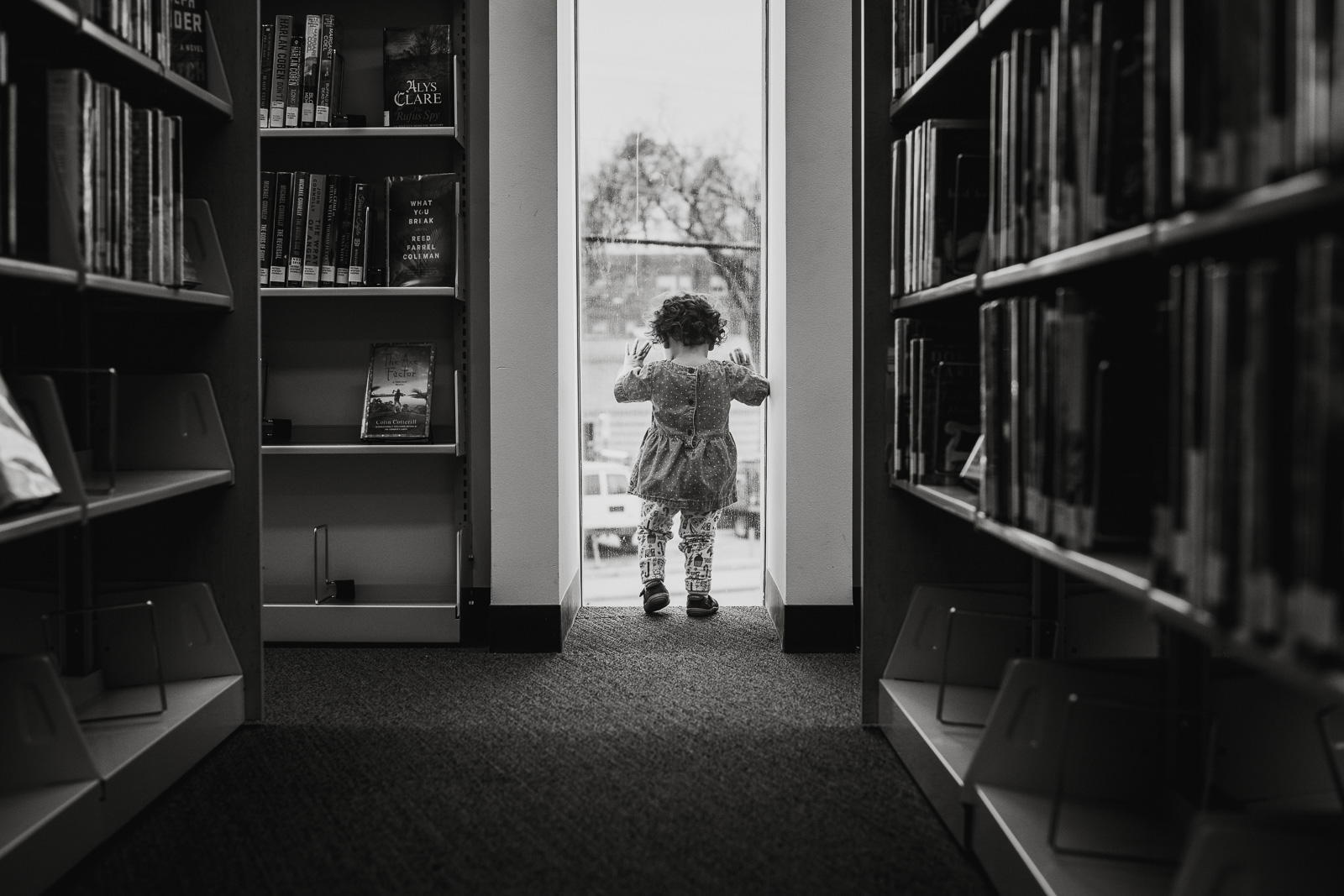
6 Rules of composition that are also rules to live by

The camera is an instrument that teaches people to see without a camera” – Dorothea Lange

Six years ago I picked up-a camera. Little did I know that photography would shape who I am and how I think.

I shouldn’t be surprised as the creative process is deeply personal. Life will always imitate art and art will always mirror life.

In my work, I use every artistic choice as a means of communicating with my audience. In doing so, I have discovered that the rules and lessons of photography are not only applicable to my pictures, but also to my life.

The rules of composition are my artistic first principles. They tell me where to put my subject in the frame. They guide me to create balance and harmony in my photography. And the rules of composition allow me to construct the most pleasing experience for my audience.

So what LIFE principles can we draw from the rules of composition that might also become reflexive? Gleaned from my own experience, struggles and failings these are the rules that work for both photography and life.

The Rule of Thirds: the intersection of purpose and passion

Placing a subject at the intersection of vertical and horizontal thirds lines creates tension, energy, and interest in a composition. While centering the subject might be instinctive, using the rule of thirds allows for a more dynamic photograph.

Along what life axes does your photography run? What intersection creates the most “tension, energy and interest” for you?

For me it’s where my purpose and my passion intersect.

I never set out to start a photography business. I was simply taking pictures with such passion I overlooked that I was regularly booked and starting to make an income.

But eventually, my passion began to wane. My style was stronger than ever, but business no longer excited me. It didn’t make sense!

I realized that in the unfolding of my passion I’d never stopped to consider my purpose. If you find yourself in this position, take the time to really define why you pick up your camera and what you want to do with it. Write down a mission statement and keep it in your mind every time you prepare to take a photograph.

This isn’t just for those of you in business. If you’re a hobbyist who loves to photograph her kids you should still find your why!

If you have all the passion and prowess but are feeling unfulfilled by photography, it is likely that you are yearning for a clearly defined purpose. I’ve been there! And I know that passion will burn out long before purpose.

The strength of your contribution to photography lies at the intersection of your passion and your purpose. If passion is the flame, purpose is its fuel. Find your why and it will feed your passion.

Balancing Elements: We are more than photographers

Balance is a compositional technique that places objects within a frame so they are of similar visual weight. When different parts of a photo command your attention equally, balance is achieved.

This is easier to accomplish in camera than in life! Where is your life most weighted? What has happened to the other interesting parts of you that existed before photography?

I’m an “all in” person who loves the satisfaction of knocking down goals. When photography seized my heart it seized my full attention too.

It’s easy to want to ignore everything else around us when we have a passion like photography. However, it is so important to create balance in the camera and beyond.

Strive to live your WHOLE life. Put the camera down and read a book. Have coffee with an old friend. Take a flower-arranging class. Learn how to wallpaper a room. Nurture relationships and give your passion room to breathe.

The best part? Creating balance in life, just like creating balance with your composition, will make your photography better.

Isolating the Subject: Putting importance where it’s due

When we create an image, we use our in-camera settings as well as the background/foreground to make the subject matter obvious to the viewer. The strength of an image lies in its clearly defined focal point.

We know how to prioritize our subject…do we know how to prioritize our life?

I believe the pursuit of true photographic excellence lies first in humbly acknowledging that we capture only a dim reflection of what REALLY matters. Sometimes, we must put the camera down to prioritize the people and things that matter most.

I faced the crisis of an ovarian tumor eight years ago. I recently I sat in the ER waiting to learn if another tumor had developed in my remaining ovary.

In the chairs across from me a man told his friend that his cancer has returned and was terminal. They cried together and my heart split wide open. I cried into my book for a man who would begin his goodbyes.

I could see myself in him and begged for more time to watch my girls grow while I grew old with my husband. For the five hours it took to run all my tests, not one thought was about my backlog of edits, the session inquiry in my inbox or even this blog deadline. Life has a way of distilling quickly when it might be snatched away.

Some of us know our camera manual better than our personal manual. As often as we do a sensor cleaning (which for me is never often enough!), we need to clean our internal sensor and do a little self-assessment.

Framing: Minimizing distraction and negativity

As we compose an image, we strive to be conscious of which elements to include in the frame and which to exclude. We eliminate distractions that don’t add to the visual narrative.

And yet we live in an external world of distractions! What choices can we make to minimize them?

I still remember the day I joined Instagram. Always behind trends, I was late to the game and curious to understand the hype. Now I know why so many of us are addicted! In an ocean of puffy hearts, it’s so easy to be swept away in likes and comments.

Social media shines where it allows us to celebrate each other. My heart soars when I see art celebrated and community thrive. However, we must be careful to protect ourselves from comparison. We cannot allow ourselves to find value in these fleeting interactions.

We have to choose every day what to let in to our “frame” and what to exclude. There’s only space for so much. If it doesn’t enrich and edify your life, cut it out. Life, like photography, is the art of exclusion.

Perspective: Allow your personality and viewpoint to shine

Our viewpoint has an enormous impact on the composition of our photo, greatly affecting its message. Each time we lift the camera, we’re deciding whether to shoot from eye level, from above, at ground level, from the side, from the back, from far away, close up, and so on. The viewpoints are infinite. So what makes yours unique? YOU!

In life, our viewpoint is what separates us from everyone else. It makes us unique. It makes us wonderful. And if we try to be anyone else, we will struggle to find fulfillment.

So embrace your truth. Define what moves you. Seek what inspires you. Allow those things to emerge in both your photographs and in your life choices.

My family was extremely close growing up. Relocating several times caused us to lean hard into each other.

As a result, I adore photographing families and mirroring their love for each other.

My husband and I underwent a major home renovation when my oldest daughter was 3 to 10 months old. I grieve that I didn’t have to margins to truly enjoy her infancy…only survive it.

Today newborn sessions are my chance to slow down and savor all the little things for my clients.

My life story has shaped who I am as a photographer. Allow your personality and life experiences to infuse your work. Even if it means that you aren’t shooting what is on-trend, I urge you to seek what truly inspires you. For the love of yourself, don’t try to be somebody you aren’t!

Leading Lines: Staying the course

Leading lines draw the viewer’s attention to the image’s main subject. A leading line paves an easy path for the eye to follow through different elements of a photo.

Where do your life lines lead you? What goal is on your horizon?

I imagine photography to be like a long winding road of leading lines with no final destination. When we first pick up our cameras, we may not really looking for a destination. We are just having fun and are excited by creating “blurry backgrounds” and capturing memories. We may be totally off-roading on that photographic path but we’re having a ton of fun!

It’s when the hobby of photography becomes a passion that we’re motivated to speed up. All the rules and techniques we’ve learned become the curbs to keep us on course. We start to notice others on parallel journeys. We see their speed and yearn to match it.

When the passion becomes an obsession, driver beware! We may focus on the road, forgetting to take in the view.

Perhaps we swerve trying to create beauty while forgetting how to receive it. We sense our own acceleration and watch the road that much closer. We might even slam on the brakes afraid of our own speed and feel creatively blocked at the times we least expect it.

Your journey has its own bends, peaks, and valleys. The scenery is uniquely yours. I encourage you to keep moving on your personal photo journey!

But be sure to keep looking up so as not to miss your life whizzing by. Shoot for purpose not approval. Fail and break a few rules in pursuit of your own voice. Above all, remember that there’s no final destination. There’s only the moment unfolding in front of your camera, begging to be immortalized.

Start thinking about the ways your photography affects how you think and behave. I know I need all kinds of reminders and love returning to first principles. I would love to hear what life lessons you have learned from photography so be sure to share them in the comments below!

Want to discover all the ways photography can inspire your life?

With thousands of exclusive educational articles and a community of experienced photographers to answer all of your questions, Clickin Moms is the BEST place to learn and grow in your photography journey.
The post 6 Rules of composition that are also rules to live by appeared first on Clickin Moms blog: Helping you take better pictures one day at a time.


Clickin Moms blog: Helping you take better pictures one day at a time

Posted in Photograpy How To | Tagged , , , | Leave a comment

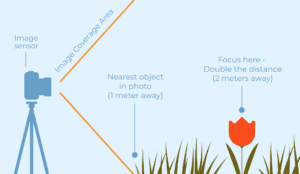
Double the Distance Method Explained

Double the Distance Method

One tricky part of landscape photography, along with other genres such as architecture, is making sure that your nearest and farthest subjects are both as sharp as possible. We’ve written before about a few techniques to maximize front-to-back sharpness, and I thought it would be worth emphasizing one of the most important ones again: the “double the distance” method. Here’s how it works.

Photography Life

Posted in Photograpy How To | Tagged , , , | Leave a comment

What is Auto ISO and when should you use it?

I’m going to share a secret with you. A lot of the time, I don’t shoot 100% manual. SHHHH!

When learning photography, you hear a lot about the importance of shooting full manual. It gives you full control of your camera and allows you to create the photo you envision.

And that is good advice! Shooting in manual with attention to the exposure triangle will help you create images that become photographs rather than snapshots. Shooting full manual is the sign of a skilled photographer.

So why would you ever not shoot full manual?

Well, sometimes we want to focus on the moment. Every once in a while, we don’t have time to perfect each aspect of the exposure triangle before snapping a shot. Other times, you might want to forget about exposure a bit while you work on a new composition technique. And then there are those times you might need to hand your camera off to your spouse for a shot.

Whatever the reason, there are times when your camera’s Auto ISO sensitivity setting can be very handy!

What is ISO?

ISO refers to the sensitivty of the camera’s sensor (or the sensitivity of film). The higher the ISO, the more sensitive the sensor is to light. The lower the ISO, the less sensitive the sensor is to light.

This means that with the same shutter speed and aperture, a photo in the same light with a higher ISO will be brighter and a photo with a lower ISO will be darker.

More than changing the exposure, ISO also affects image quality. In very simple terms, a higher ISO will result in more grain and lower quality color. By contrast, a lower ISO will result produce less noise, better color, and more detail in the highlights and shadows.

What is Auto ISO?

Auto ISO is a setting that allows your camera to select the appropriate ISO value for each shot based on the parameters you set. You specify the maximum ISO value and metering mode. Then, your camera selects the ISO for each shot based on your shutter speed and aperture.

The Auto ISO option is located in your camera’s ISO sensitivity setting menu. On my Nikon camera, the setting is listed under the shooting settings and is called “Auto ISO sensitivity control.”

To use it, select “on” and specify your maximum sensitivity level. You can set different maximums for flash and non-flash.

Setting-up Auto ISO

It’s important to note that turning on Auto ISO isn’t like switching your camera over to auto mode. You still need to choose your settings carefully for the situation and make choices that will help you achieve your vision.

Choose your shutter speed and aperture. Choose a shutter speed and aperture that fit your situation.

Do you need to freeze motion or blur it? Do you need a wide depth of field, or a nice background blur? Take these variables into account as you adjust your settings.

Set your metering mode. Metering is extremely important with Auto ISO because it controls how your camera will make decisions about the ISO value. You should choose the metering mode you would use if you were shooting fully manual.

Personally, I tend to use spot metering for backlit images and matrix metering for full sun.

Related: Metering modes explained and how to know which one to use

Adjust your exposure compensation dial. This is especially important if you intentionally under- or overexpose your images. Exposure compensation tells your camera how bright to make the image. You want it to match how you would normally meter.

I tend to keep exposure compensation dialed down a notch or two when shooting with Auto ISO. I don’t mind some grain in my photos and would much rather have to brighten the photo a bit in post than deal with blown highlights. However, that is a personal preference so just be sure to shoot in a way that matches YOUR style.

Choose your maximum ISO value. Your maximum ISO value might vary based on your setting and the purpose for your photos.

I like grain and don’t like artificial light. So in my personal photos I’ll often let the ISO go as high as 12800. If I’m shooting for clients, I try to keep ISO under 3200 to keep that noise under control.

You’ll also want to keep the lighting situation in mind when setting the max ISO value. If you set the ISO threshold at 3200 but don’t have a good amount of light to work with, your photos may end up underexposed or out of focus from having to compensate using a too slow shutter speed and/or too wide aperture.

When to use Auto ISO

Settings with varied lighting. I have a busy toddler who doesn’t love to follow directions, so I am often chasing after her and photographing her in light that changes frequently.

For example, we have a favorite playground that is half in the shade and half in the full sun. I like to use Auto ISO here because I don’t want to miss a moment or blow out the photo if she runs from one side of the park to the other—as she is likely to do!

In this setting, I’ll usually lock in my shutter speed (usually 1/500 or faster to freeze her motion) and aperture (usually under 2.8 to blur distracting background elements). I turn on Auto ISO, and let her do her thing knowing that I can snap a photo at any time and have a decently exposed image.

Street photography. I take a lot of street photos while out and about with my family. When I’m alone, I have no problem carefully composing a shot, adjusting my settings, and waiting for someone to walk into the frame at the perfect moment. When I’m with family, they don’t usually want to wait around for me!

Using Auto ISO for these strolls allows me to pull up my camera and snap when I see something that interests me, without falling *too* far behind.  I can also quickly spin my shutter speed dial down to blur motion, or up to freeze it, and know that the camera will compensate by adjusting the ISO.

Practicing new composition techniques. I’ve been working on incorporating some new composition elements (layering and microcomposing) in my documentary photos. Using the Auto ISO setting has helped me really hone in on the composition of my shots without stressing about the exposure.

Again, I choose my shutter speed and aperture for the situation before I switch Auto ISO on and make sure I have an appropriate metering mode set.

Related: Just a snapshot? How to use composition to make better photos

Handing your camera off. We all know it can be super intimidating to hand your giant DSLR off to a family member, friend, or stranger to capture a shot with you in the frame. But it is also SO important to be in the picture every once in a while!

When I have Auto ISO set, I don’t have to worry as much about handing my camera off because I know the camera will handle the metering. It’s still tricky to explain back-button focusing, but at least one hurdle is cleared!

Go for it!

Now you are ready to try it out! Set Auto ISO on your camera. Allow yourself to forget about metering for a little while and focus on the moment. Be sure to share your experiences and tips in the comments!

Are you ready to take better photos?

With thousands of exclusive educational articles and a community of experienced photographers to answer all of your questions, Clickin Moms is the BEST place to learn and grow in your photography journey.

The post What is Auto ISO and when should you use it? appeared first on Clickin Moms blog: Helping you take better pictures one day at a time.


Clickin Moms blog: Helping you take better pictures one day at a time

Posted in Photograpy How To | Tagged , | Leave a comment

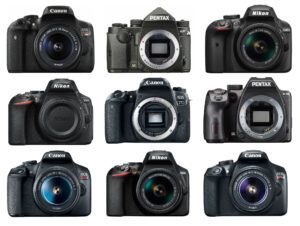
Best Entry-Level DSLRs of 2018, Ranked

Best Entry-Level DSLR

At the beginning of the year, I had a chance to test several entry-level DSLRs side by side and review which ones were the best. Today, I’d like to circle back and rank some of these cameras for photographers who are trying to decide on a DSLR, either for yourself or as a gift; it’s that time of year, after all. Hopefully this list gives you a good idea of which camera will be right for you.

Photography Life

Posted in Photograpy How To | Tagged , , , , | Leave a comment