Sony A7 III Review

Sony A7 III

This is an in-depth review of the Sony A7 III, the third iteration of the company’s ‘entry-level’ full-frame mirrorless camera that Sony released in the spring of 2018. Calling the A7 series ‘entry-level’ is a bit misleading, rather it is less specialized and seeks to appeal to a broader range of photographers at an accessible price point. It doesn’t offer the same high resolution as the A7R series, the same low-light and video-centric features of the A7S series or the pure speed and focusing acumen of Sony’s flagship, the A9.

Photography Life

Posted in Photograpy How To | Tagged , | Leave a comment

How to capture beautiful lifestyle photographs indoors

Does the idea of photographing an indoor natural light session send you into a cold sweat? Will the house have good enough windows? Will there be too many distractions with decor and clutter to photograph a scene effectively? How will you be able to capture “real life” in the confines of an unfamiliar environment?

Photographing indoors, at least when you’re first starting out, can be frustrating.  Light is generally less abundant. Instead of golden sunsets you may have to contend with color casts and clutter.

But there are far more reasons to love in-home lifestyle sessions than fear them. Inside those walls are memories, love, and comfort that you can’t find anywhere else. With a little preparation, you can make any home work for your next session.

Find and use the light

“…above all, know light.  Know it for all you are worth, and you will know the key to photography” – George Eastman 

As with everything in photography, it all begins with light. But what is the best light?  Do we even know what “good” light is?

You might think a room flooded with windows and light from all angles will give you freedom with your camera. In reality, non-directional light often produces less desirable results.

Instead, think about your vision and then find the right light to enhance that. Are you going for moody and dramatic?  Do you want to create soft flattering portraits?  Are you trying to make something unusual?  Do you need to capture one individual or many?

When you look for light sources consider the direction, quality, and intensity of the light.  Think about the mood any given light will create.

Direction

Take time to position your subjects so that the direction of the light is flattering. Check for catchlights in eyes. Look at how the shadows fall over your subjects’ features. Don’t hesitate to move or rotate people so that the direction of the light works!

Quality

Is the light is hard or soft? High contrast and defined shadows characterize hard light. Soft light is more even with smoother transitions between light and shadow. Both can be “good” light, but both will create drastically different results. Make sure that the light matches the mood of the image.

Intensity

Intensity simply refers to how bright the light is.  Remember that our eye is drawn to the brightest part of any image. Moving your subject closer to and further from the light will affect its intensity.

Feeling lost when searching for good light? Here are some ways to find and modify the light that will be available in any home.

Diffuse light pouring through a large window. Diffused light creates softer shadows and minimizes texture. It’s particularly flattering when you’re trying to diminish wrinkles and blemishes.

This is also helpful when creating evenly-lit group portraits. With the addition of a scrim, sheer curtain, or even a thin white sheet, harsh sun pouring through a window can can become soft and glowing.

Locate a directional light source. Directional light is ideal for creating more dramatic side lit portraits with depth and dimension. This kind of light can feel moody and introspective. It creates beautiful depth and shadows, allowing your subjects to feel more three dimensional.

Utilize pockets of interesting light and shadow.  Don’t shy away from dappled light! While not likely to be used for traditional portraits, interesting light patterns can make for great variety in a lifestyle session.  This is your opportunity to experiment and create images with emotional range.

When you do find the light you love, know how to use it! Play with moving your subject nearer to and farther from the windows. Use the Inverse Square Law to hide the clutter in the shadows. Don’t be afraid to boost your ISO.

Join Clickin Moms today

More than anything, practice, practice, practice! As you learn how to harness indoor light, keep a light journal at home. Note how light changes throughout the day (and through the year) in the same spaces. What are the characteristics of that light at each time of day and how could you use it? Paying attention to these things in your own home will better prepare you to utilize the available light in others’ homes.

Keep your subjects comfortable

Few things can derail a session quicker than your subject’s unwillingness to participate!

It is rare that you find someone who loves having his or her photo taken. Most adults feel self conscious and nervous. And oftentimes kids would rather be playing than be performing for the camera.

Whether you’re photographing paying clients or your own family, making your subjects comfortable is key to getting the photographs that you want.

Be you. Kids especially can detect a phony from a mile away. Be yourself and your subjects will be more likely to be themselves. 

Encourage conversation. Not only will this distract from the discomfort of being in front of the camera, but it will encourage authentic expressions that are perfect for photographs.

Mirror what you want to see from your subjects. The people in front of your camera will reflect the energy you put out.  If you want high energy from them you have to offer it.  If you want a quiet, reflective mood use a lowered voice and give gentle directions.

Even if you don’t pose your subjects it’s still important to guide them. Give them prompts and ALWAYS provide encouragement and reassurance.  Phrases like “that looks great,” “that’s perfect,” “It was good when you did XYZ…” give your subjects confidence and will help them to relax.

Put the camera down as necessary. It’s ok to put the camera down and play for a bit to break the ice or shift gears. Taking a few minutes to breathe can buy you significantly more time to shoot in the long run.

If your own kid has “photographer’s child syndrome” (believe me we’ve all been there!) the most important thing you can do is remember that this is meant to be fun! Keep your shooting time short and keep playing after you’ve put the camera down. This communicates that you enjoy your child and aren’t only there to play when you get a picture out of it.

must haves

OUR INDOOR PHOTOGRAPHY ESSENTIALS

Profoto A1

Sometimes you find yourself in a shooting location with zero light. Don’t let panic take over! Having a tool like the Profoto A1 will allow you to create beautiful light. Use it on or off-camera with the included modifiers or bounced off a wall and you will be able to make any space work for you.

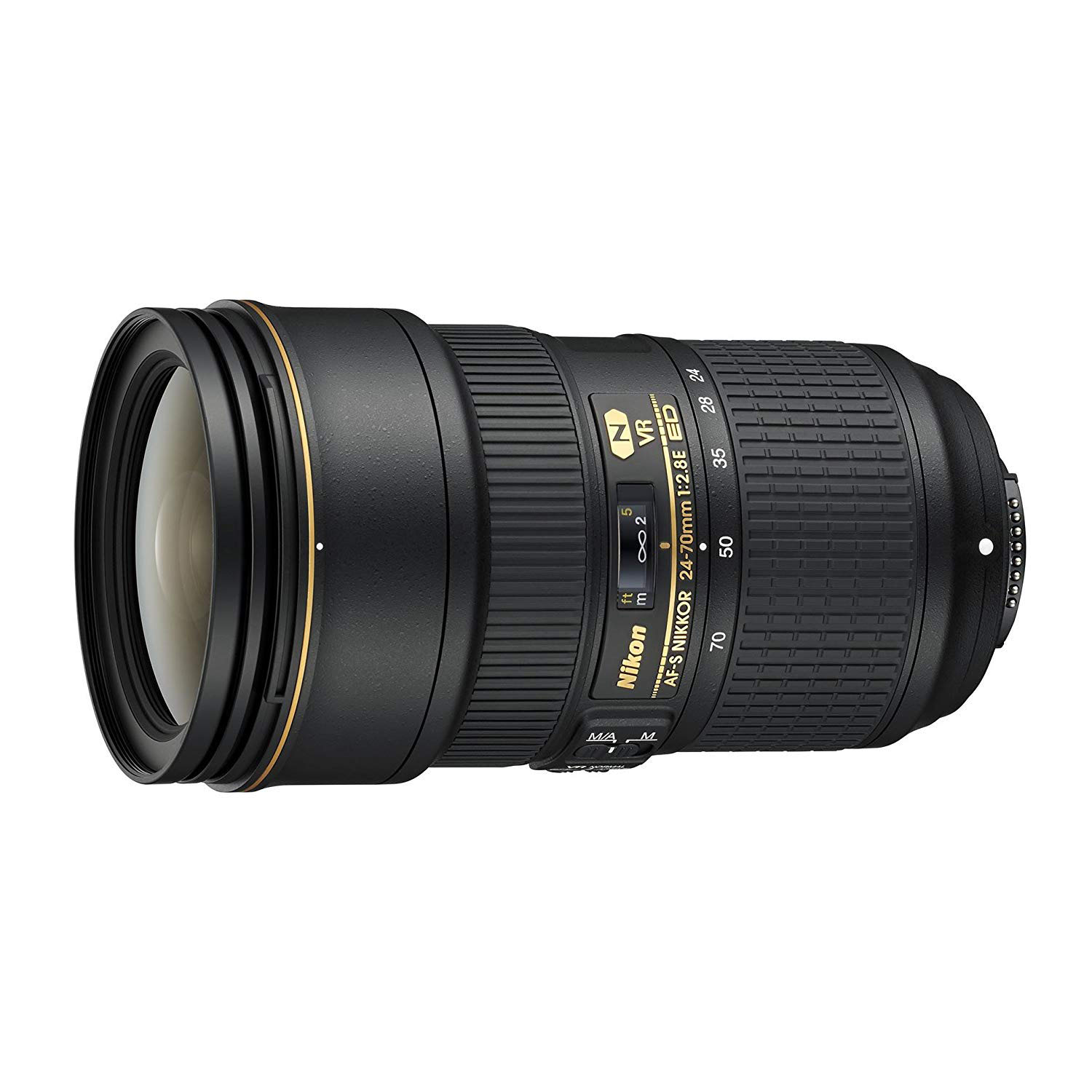
24-70mm zoom lens

Having a versatile lens is key to success in fast paced lifestyle sessions. The 24-70 will give you wide angle context shots and beautiful close-up portraits without having to waste time swapping lenses. Even better, the fixed aperture lets you shoot in lower light situations without sacrificing ISO and the Vibration Reduction allows you to shoot at slower shutter speeds without missing focus.

A full frame DSLR

A full frame DSLR will allow you to shoot in lower light situations with better performance. The Canon Mark IV (pictured here) is known for its superb ability to shoot with a high ISO with minimal grain…key for those in-home sessions where the light might not be in abundance.

Create technically sound images

So you’ve found your light and your subjects look perfect. How do you create technically sound images with changing light, moving kids, and background chaos?

In my experience, it comes down to two main things:

Nail exposure in-camera

Are you afraid to push your ISO because you’re worried about noise? You are more likely to introduce that grain when you increase brightness in post. Instead, raise your ISO and ensure correct exposure in camera.

Learn to understand your histogram. Look for spikes that show shadow clipping or blown highlights. Also learn what well-exposed mid-tones look like. I can’t recommend Sarah Wilkerson’s Flawless e-learning resource enough for this.

Take a moment to slow down and check your settings when you move from one set up to another.  Make sure that you are properly exposed to get the best quality photos possible.

Use a proper shutter speed

Wondering why your images look blurry? It could very well be that your shutter speed is too slow.

So many photographers underestimate shutter speed requirements. While 1/25 second may seem fast, it’s quite slow when you have wiggly kids in front of the camera. Adjust your ISO and aperture so that you can keep your shutter speed nice and fast while maintaining proper exposure.

As a general rule I stay above 1/250 of a second when working with kids. Even a good laugh is enough to get lots of blur at a slower shutter speed. I increase to at least 1/500th if they’re running and a minimum of 1/800th if they’re jumping on the bed.

Work to achieve variety

How do you achieve variety from an in home session? There are only so many rooms and even fewer places that feel photo-worthy!

Don’t you worry. There are plenty of ways to get lots of variety indoors.

Use various lenses and/or focal lengths

Having a range of lenses and focal lengths is ideal. This can be in the form of a zoom lens or having a few lenses ranging from wide angle to telephoto in your bag. This will allow you to get beautiful portraits alongside photos with lots of context. You won’t need to move a bit to get drastically different views in the same location.

Shoot in various rooms

Visit as many rooms in the house as possible, even if it’s only for one shot. Don’t discount a room because it’s not suitable for portraits or group shots. Sometimes there will be an amazing patch of dappled light on the kitchen floor or a cool spot on a window ledge. Take advantage of that light and add range to your session.

I’ve shot in bathrooms, kitchens, stairwells, garages…you name it! Be light led and see where it takes you!

Change your perspective

Don’t feel as though you must shoot everything front-on.  Take a 360-degree approach to shooting your subject. Get down low, climb on a chair, shoot from the side and from behind. All of this will add desirable variety to your session.

Compose around clutter…or make use of it!

Lived-in houses are full of stuff! This can make it hard to achieve the minimalist vision you might have in mind.

Remember, however, that no matter how this home looks, it is home to the people who live there. You can move furniture or tidy toys to get a less-cluttered shot, but sometimes keeping those things in the frame tells a much better story.

So don’t panic when you are tasked with shooting indoors! With these tips you will be set for success and will be well on your way to creating images that you and the people in front of your camera adore.

Clickin Moms online photography forum information

The post How to capture beautiful lifestyle photographs indoors appeared first on Clickin Moms blog: Helping you take better pictures one day at a time.


Clickin Moms blog: Helping you take better pictures one day at a time

Posted in Photograpy How To | Tagged , , , , | Leave a comment

Being a minimalist photographer in a maximalist industry

In your personal life, how do excess things, experiences, and relationships affect you? I don’t think that any of us would claim that having extra “stuff”— both physical and emotional—is something that we enjoy. Most of us see the value in having the things we need, the people we truly love, and to-do lists filled with the experiences we enjoy.

However, we live in a world that give us the opposite message. We are constantly told that more is better and than if we just have *this* thing and *that* thing we can be happier.

The photography industry is no different! There is always something new to buy, some new technology to invest in, and another piece of gear that promises to make us better. And as a person who is striving to live a life that allows me to collect only what I need, this presents some challenges!

Applying minimalism to your work does not mean that you have to function on bare bones. I am not going to tell you that you can only have one camera and lens forever! Instead, it is more about being able to differentiate the essential tools from excess things. Minimalism in photography will allow you to clear space in your head and your camera bag to help you be the artist that you are meant to be.

Why do we feel the need to acquire more?

We want to keep up with everyone else. We photographers are really good at talking about gear we love! When we see someone whose work we admire talk about the gear that helps makes her great, it’s natural for us to want it, too.

Shiny object syndrome. Opening a brand new box with everything wrapped so nicely is a pleasant experience. Sometimes the mere newness of a piece of gear is enough to entice us to invest.

Join Clickin Moms today

Fear of missing out. No one wants to be left behind! Sometimes we can acquire more just to ensure that we aren’t outdated or falling behind in this rapid world of technological advancement.

We are gatherers by nature. If we have some empty space or a clear surface, we feel the pull to fill it up because we have the space.

Becoming a minimalist in a maximalist industry

We already know that not having too much is a way to keep ourselves at peace as artists? But how do we achieve this when so much is telling us to keep buying and collecting?

First, I want you to take inventory. Think about which items you really need for your photography. Consider the gear that you use most frequently and the subjects that you really love photographing.

If you are a birth photographer, you won’t need a giant zoom lens. As a portrait photographer, what are the best two lenses for your purposes? Do you only shoot outdoor sessions with plenty of natural light, do you really need that new new low-light-capable camera body?

Being a minimalist will also encourage you to push the limits of the gear you have, making you a stronger photographer in the long run. Just because a lens is marketed for one type of photography doesn’t mean you can’t find a way to use it for another!

Finally, if you still see a need for a new piece of gear, bring it on! By taking the time to really evaluate how it will serve you and what its role will be in your workflow, you will appreciate the investment that much more.

Pacing education

I am never going to discourage you to learn new things as a photographer. One of the best parts about what we do is that there is always something new to learn.

However, I know too many people with piles of learning resources that have never been opened. They are always buying the newest ebook, listening to the hottest podcasts, and taking all of the workshops. But they are never implementing anything that they have learned!

I know these people because I was one of them! I had a chunk of downloads from different webinars or opt-ins in a folder labeled “unread” for the longest time. At one point I couldn’t even remember anything that was in there!

Not only do all these things take up space or time, but they also add a whisper in your subconscious that says, “You still haven’t gotten to this…” And I think we can all agree that this is a whisper we don’t want to hear!

The truth is, you will never be done learning. But we will serve ourselves so much better if we only invest our time and resources into what we can learn and implement right now. Take time to seek out educators you really admire who are teaching the things you really want to learn. Invest in them when you are in the right frame of mind to learn from them best. That way you will truly be learning and growing and won’t find yourself frustrated and discouraged by a pile of untouched resources.

Pare down social media and marketing

There is no question that social media has become an integral part of the photography industry. It is how so many of us share our work, how many of us get clients, and how we find others to inspire us.

And yet if you are on all of the social media sites and posting as often as the “experts” tell you to post, you are never going to be away from your computer or your phone. And I don’t know about you, but being stuck to a screen 24 hours a day doesn’t seem to give us much time to be photographers, does it?

I am here to tell you that you can be a social media minimalist and still be a successful photographer. You simply have to evaluate how to make this kind of marketing work for you rather than being chained to all of the things.

First, figure out how you like to show up in the world. Maybe you’re connecting with people really well through Instagram, or maybe you love networking with people at local events. Finding a venue that fits your personality is going to make marketing feel less like a chore and more like it feeds your passion. That’s the kind of thing we can add to our plate with confidence.

Next, figure out what works best for your ideal clients. Chances are, this will align with your own personality and preferences. But take the time to see where your ideal audience is most engaged and make a conscious effort to have a presence there.

Social media is often a necessary part of what we do as photographers, but it doesn’t have to be all-consuming. Taking a minimalist approach will allow you to actually enjoy sharing and interacting on social media rather than feeling oppressed by it.

Become choosy with clients and photography opportunities

When money is tight, it is hard to not accept any kind of session that comes your way. I get it! But I have also learned the hard way that not all clients are my clients. And not all clients are your clients.

If we take on work that doesn’t fit what we want to be creating, we are going to resent it. And even if we have a bunch of projects that we love, there is truth to the phrase “too much of a good thing is not a good thing.”

How can you be a minimalist about your clients and photography? Only show the kinds of work that you want to keep creating. If you like documentary style sessions but have a bunch of posed portraits on your website, clients are going to expect posed portraits! It is better to have a few documentary shots than to have a bunch of work that sends the wrong message to your audience.

This next step to minimalism is particularly hard for me. You have to learn to say “no” sometimes. What if a client doesn’t want what you create? What if they aren’t willing to compensate you properly? Perhaps your calendar is just too full. In these scenarios, you will have to turn people away.

And that is really difficult to do as a businessperson! Especially if you are a people pleaser. But I promise that taking the less-than-desirable work off your plate will make you a better, happier photographer.

There is joy in minimalism

The amazing thing about having less things to manage is that we aren’t really missing out on anything at all Clearing out the stuff that isn’t essential or beneficial to us means that we have more time and money to spend on the things that truly matter to us. We clear space to invest in the things that bring us joy. And we should be all about maximizing joy.

Clickin Moms online photography forum information

The post Being a minimalist photographer in a maximalist industry appeared first on Clickin Moms blog: Helping you take better pictures one day at a time.


Clickin Moms blog: Helping you take better pictures one day at a time

Posted in Photograpy How To | Tagged , , , , | Leave a comment

Super Wolf Blood Moon Eclipse on January 21

Total Lunar Eclipse Wallpaper

If you are located in North or South America, you are in for a real treat to see a spectacular total lunar eclipse on the night of January 20th, 2019. This particular lunar eclipse is rather special, because it will take place with the moon being at its closest proximity to the Earth (Super), it will take place in January (Wolf) and we will see a reddish tint during the lunar eclipse as a result of light being refracted by the Earth’s atmosphere (Blood). Don’t miss the chance to photograph this unique event, because the next total lunar eclipse in our region will not take place until May of 2021.

Photography Life

Posted in Photograpy How To | Tagged , , , , , | Leave a comment

How to Avoid Blurry Photos

Dusk in Amiens

There are four major factors that cause blurry photos, and all four of them are important to remember for every picture you take. Here, I will explain how to avoid each type of blur, or minimize them as much as possible, in your photography. Specifically, the four sources of blurry photos are motion (from the camera or subject), out-of-focus blur, diffraction, and lens aberrations.

Photography Life

Posted in Photograpy How To | Tagged , , | Leave a comment