At the All Star break, a little baseball story from long ago….
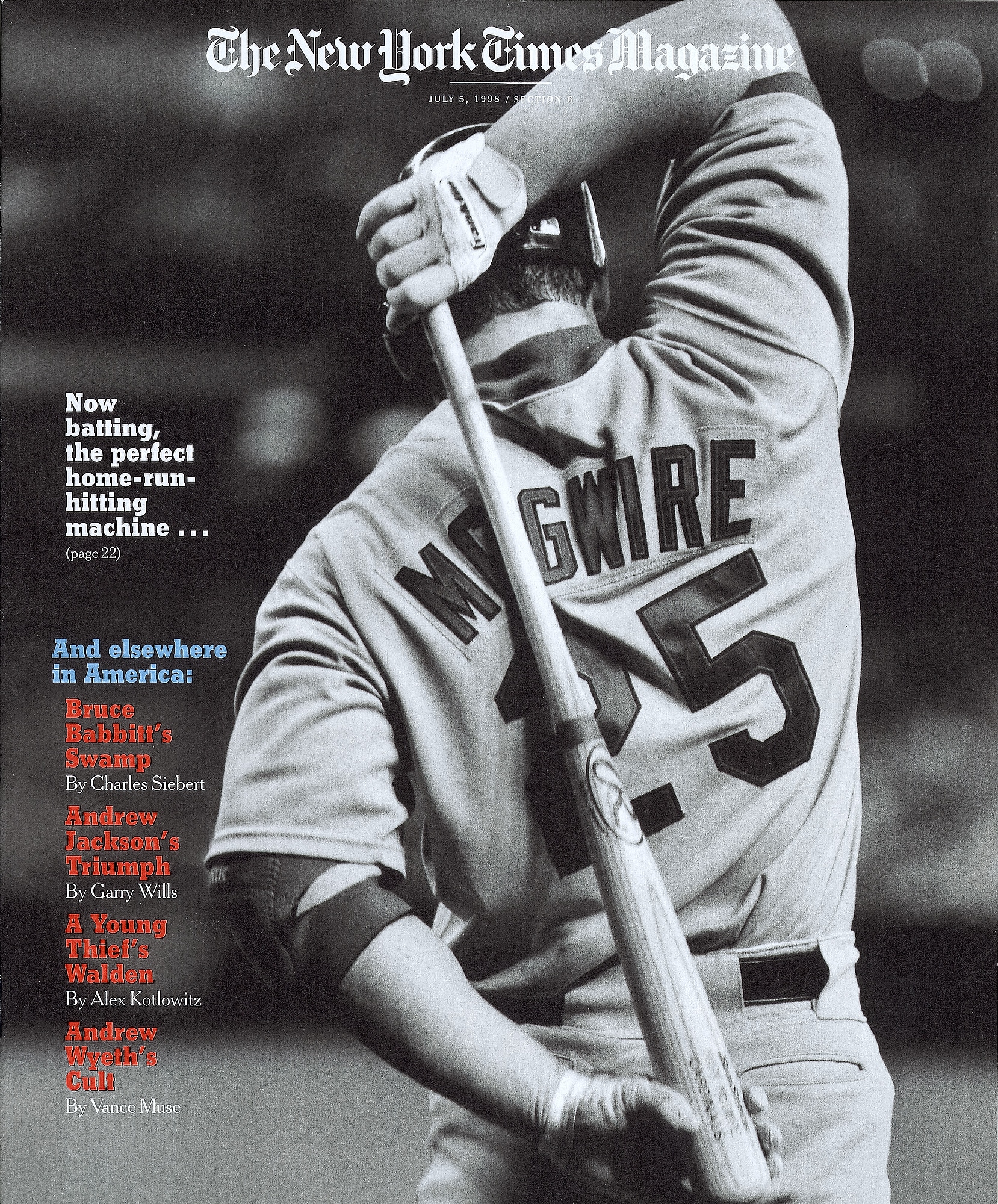
Back in the day, during the fever of Mark McGwire’s home run chase, The NYT Sunday Magazine assigned me to shoot a cover story about McGwire and his preternatural ability to hit a baseball a long, long way. He was closing in on Roger Maris’ record of most dingers in a season, and he had the world’s attention.
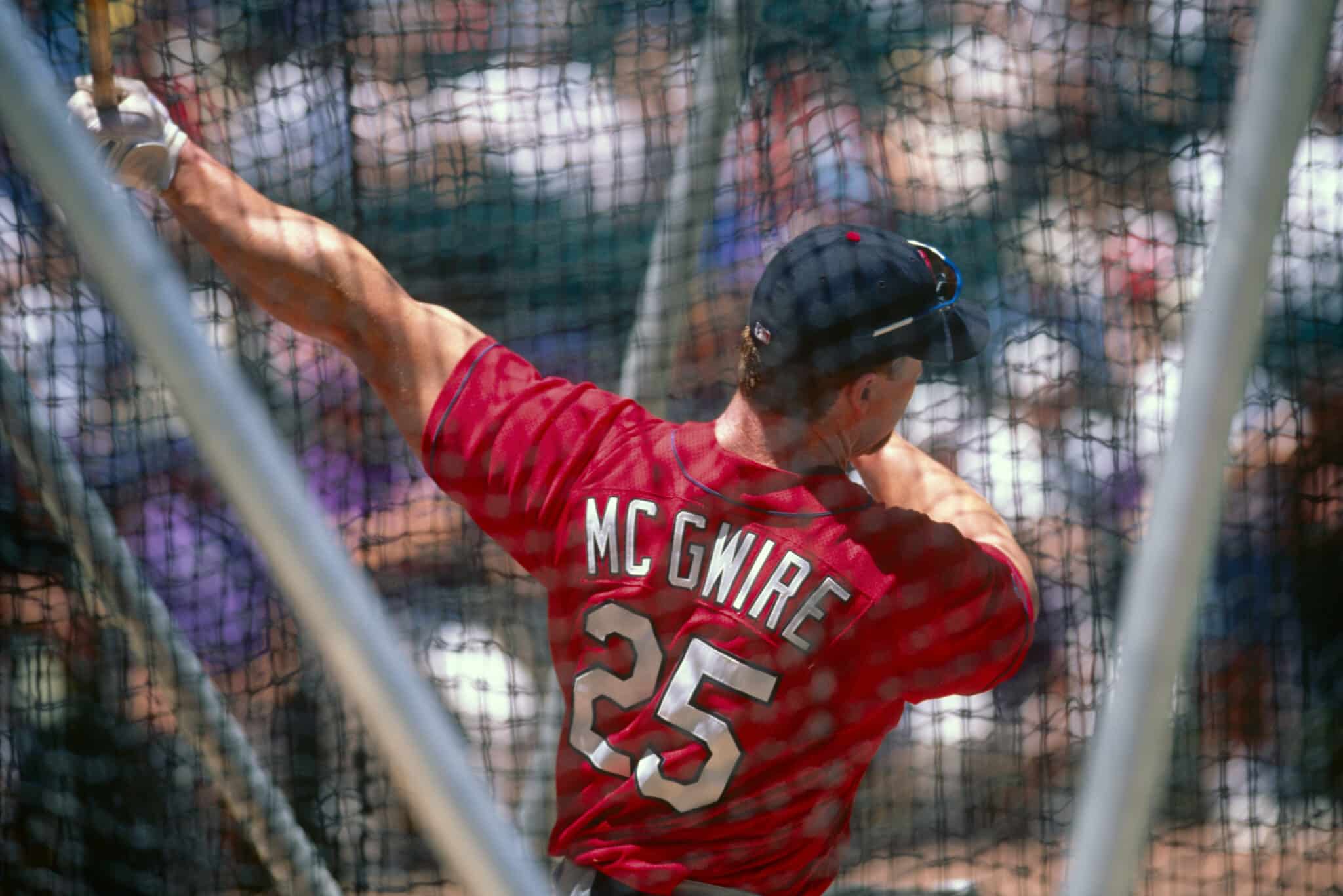
Even though the glazed, adoring eyes of the sports media world were riveted, and desperate reporters clamored, McGwire issued a blanket notice to the media. “I’m not talking.” And he meant it. He spoke with no one, citing the concentration required to consistently hit the ball over the wall. I remember tremulously standing in the dark tube of the hallway that led from the locker room to the field as McGwire barreled along. Next to me was Walter Iooss, a truly legendary sports photographer. As he brushed by, Walter quickly blurted out, “Mark, 30 seconds!” His plea fell on deaf ears and large shoulders. I figured, well, if the big dude ain’t posing for Walter, he ain’t posing for little old me, that’s for ding dang sure.
I pulled out the long glass and went to work.
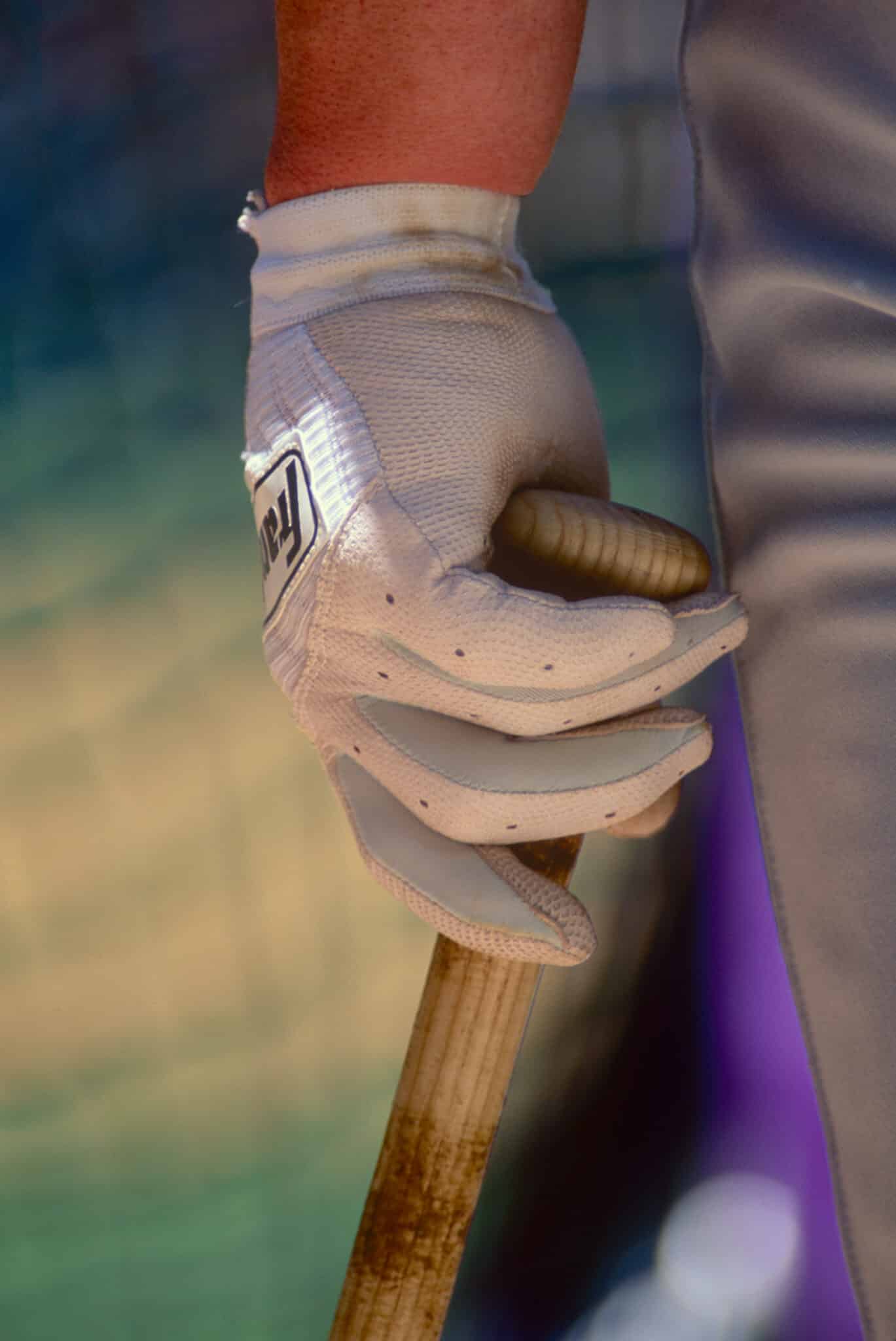
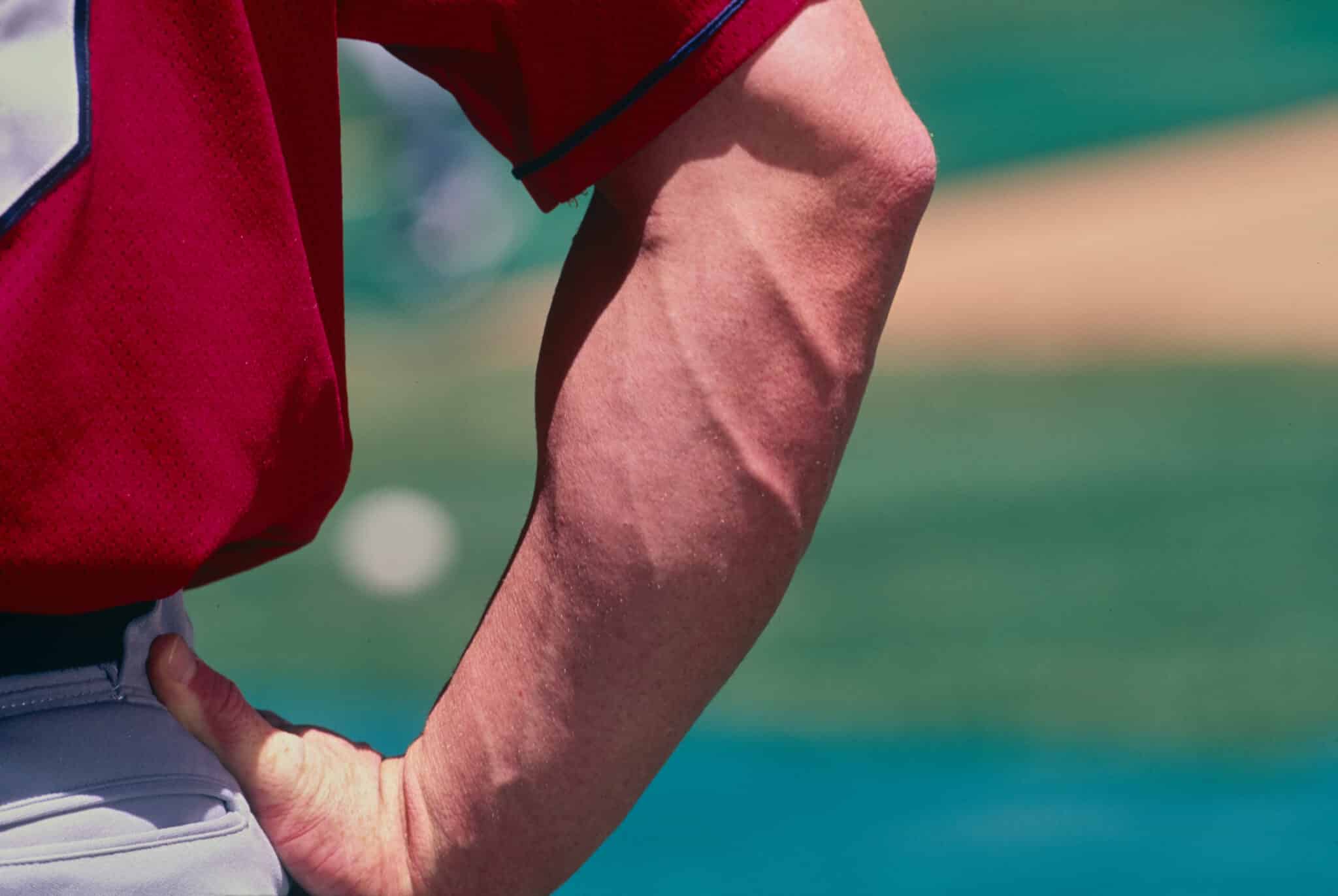
In many ways, it was like wildlife photography. Use a big lens and shut up. I took pieces of him.
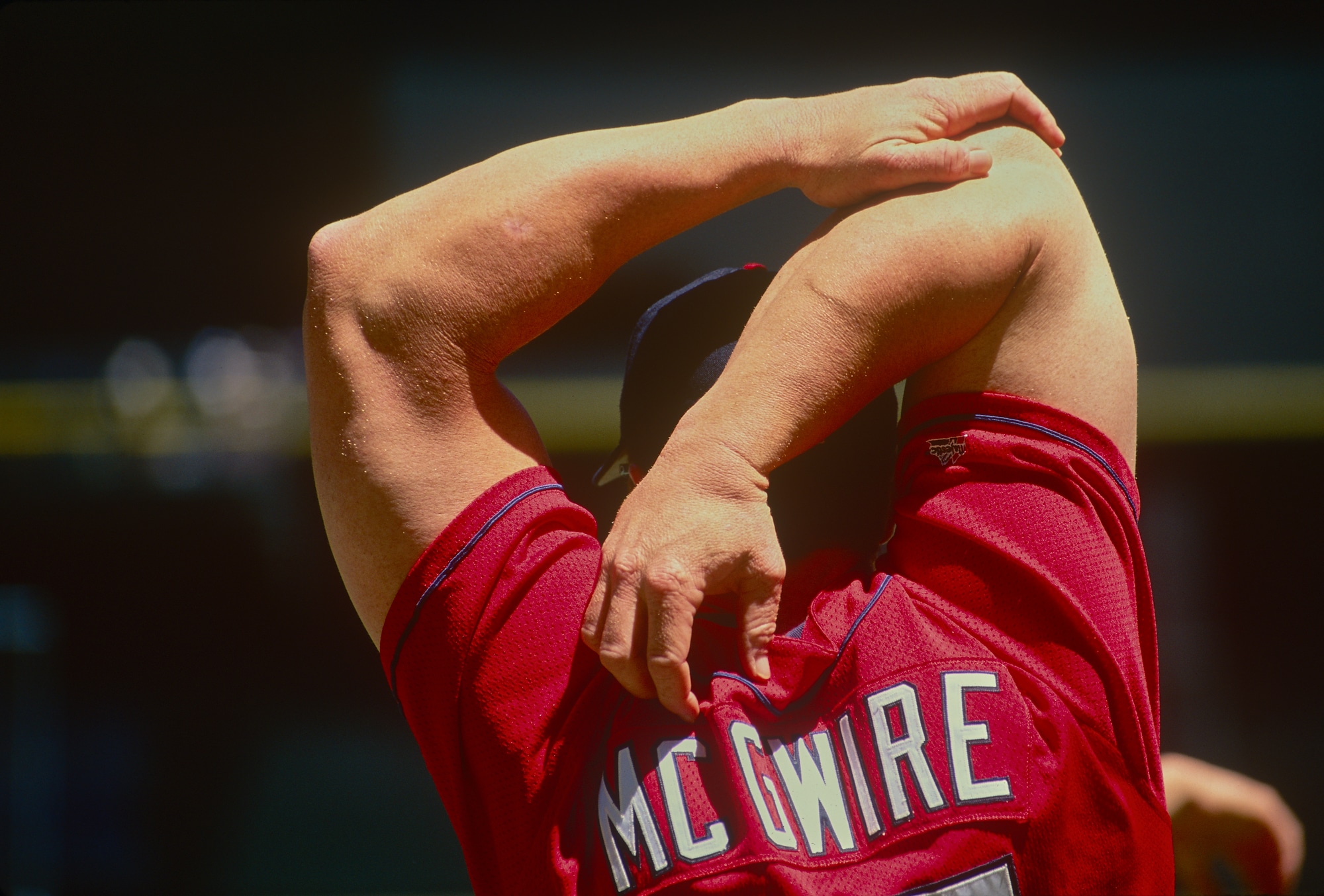
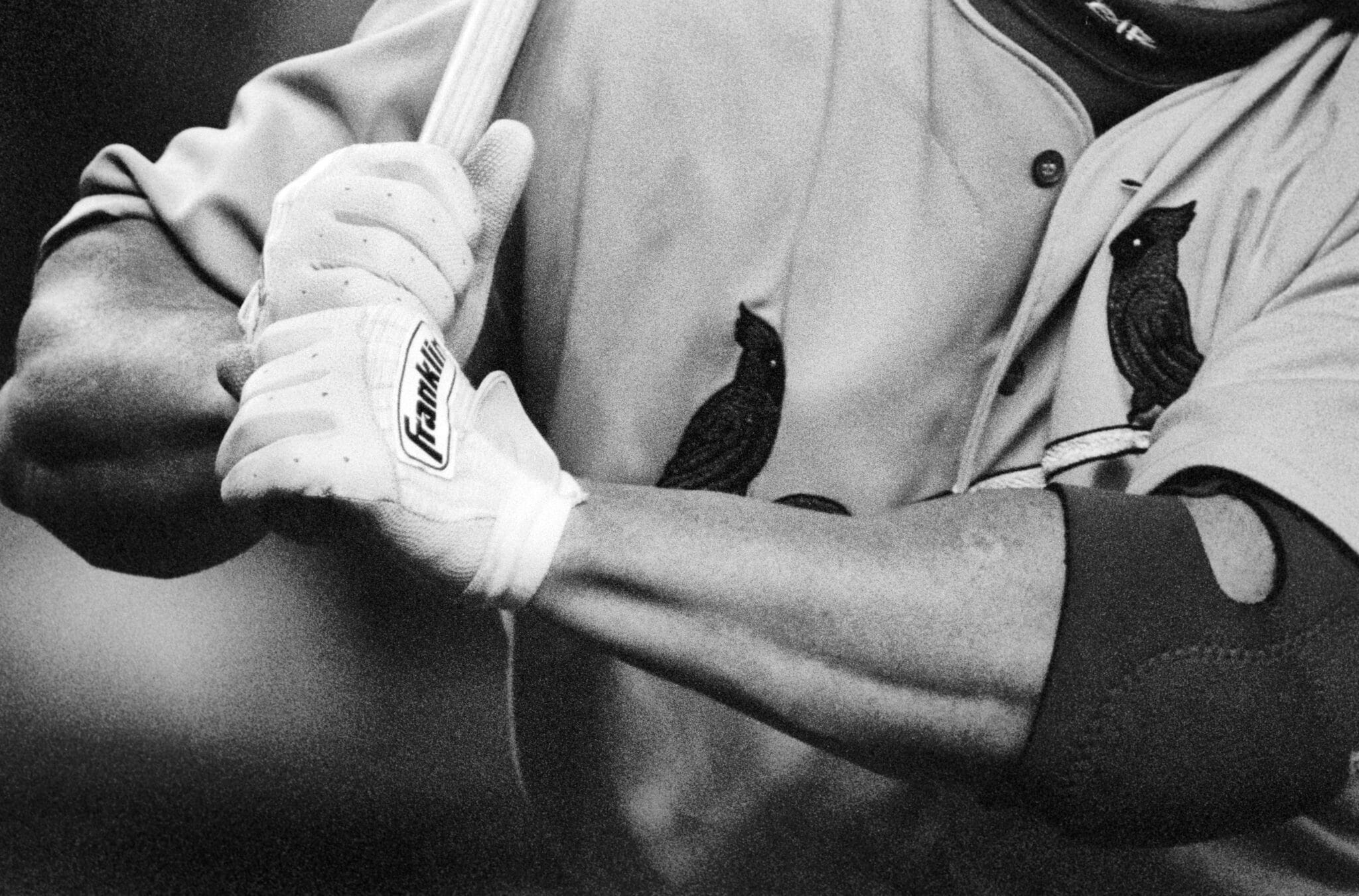
I wasn’t getting a portrait session, so I went after him as a mosaic, collecting bits, and hoping they would all fall together at the end into some sort of discernible picture that would be deemed worthy by the intelligentsia of the New York Times Sunday Magazine photo crew.
Cause after all, they were paying me the big bucks. Here’s a copy of my invoice below. I was super happy to get the cover and some decent space payment, as the magazine was notoriously cheap. I think the day rate at that point was maybe $ 350 per day? They used the dodge of “Hey we are part of a newspaper, so we don’t pay magazine rates!” Not that magazine rates were much better, pulling in at that point at about $ 500 a day.
A simpler invoice for a simpler time, 1998.
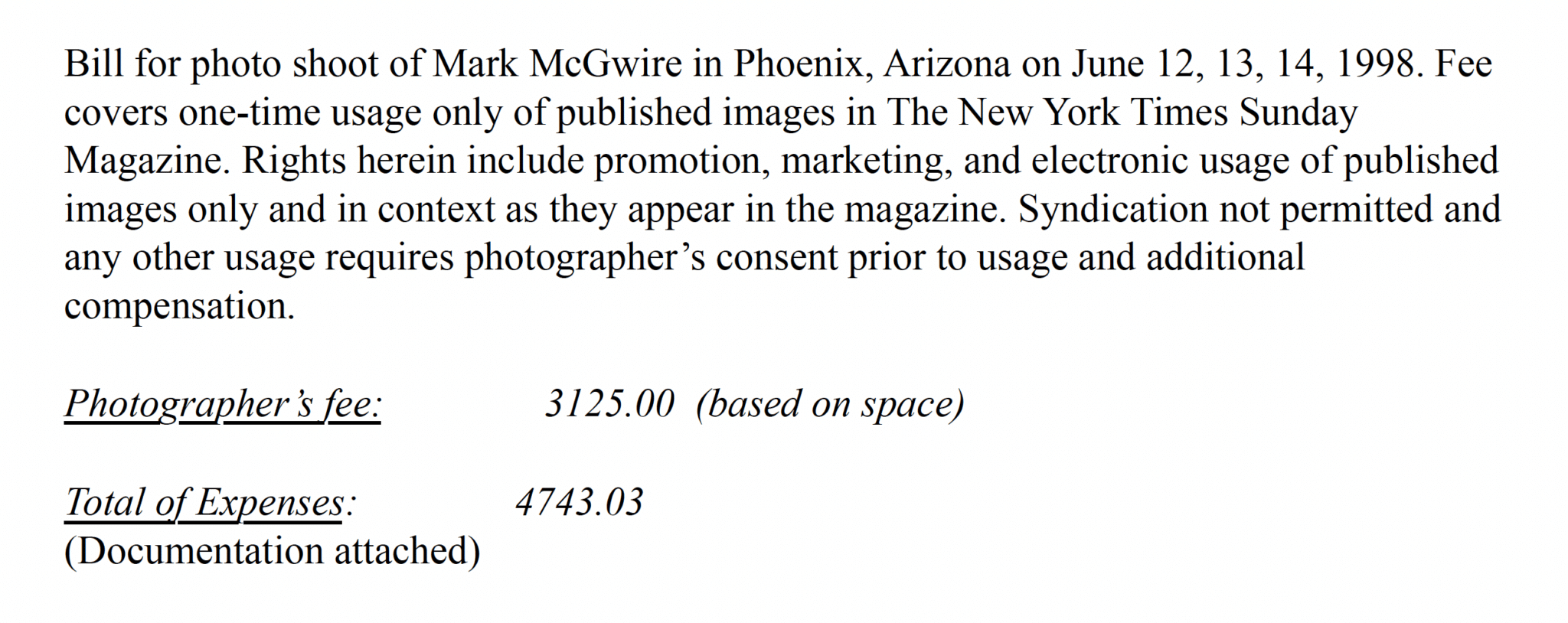
I was genuinely elated about the space payment. (It was traditionally day rate against space. If you worked one day and got a cover and three double trucks, you got paid the page rates. If they ran nothing, you got the day rate.) So, per the above, I would have only gotten about a grand without scoring the cover and some good picture play within the story.
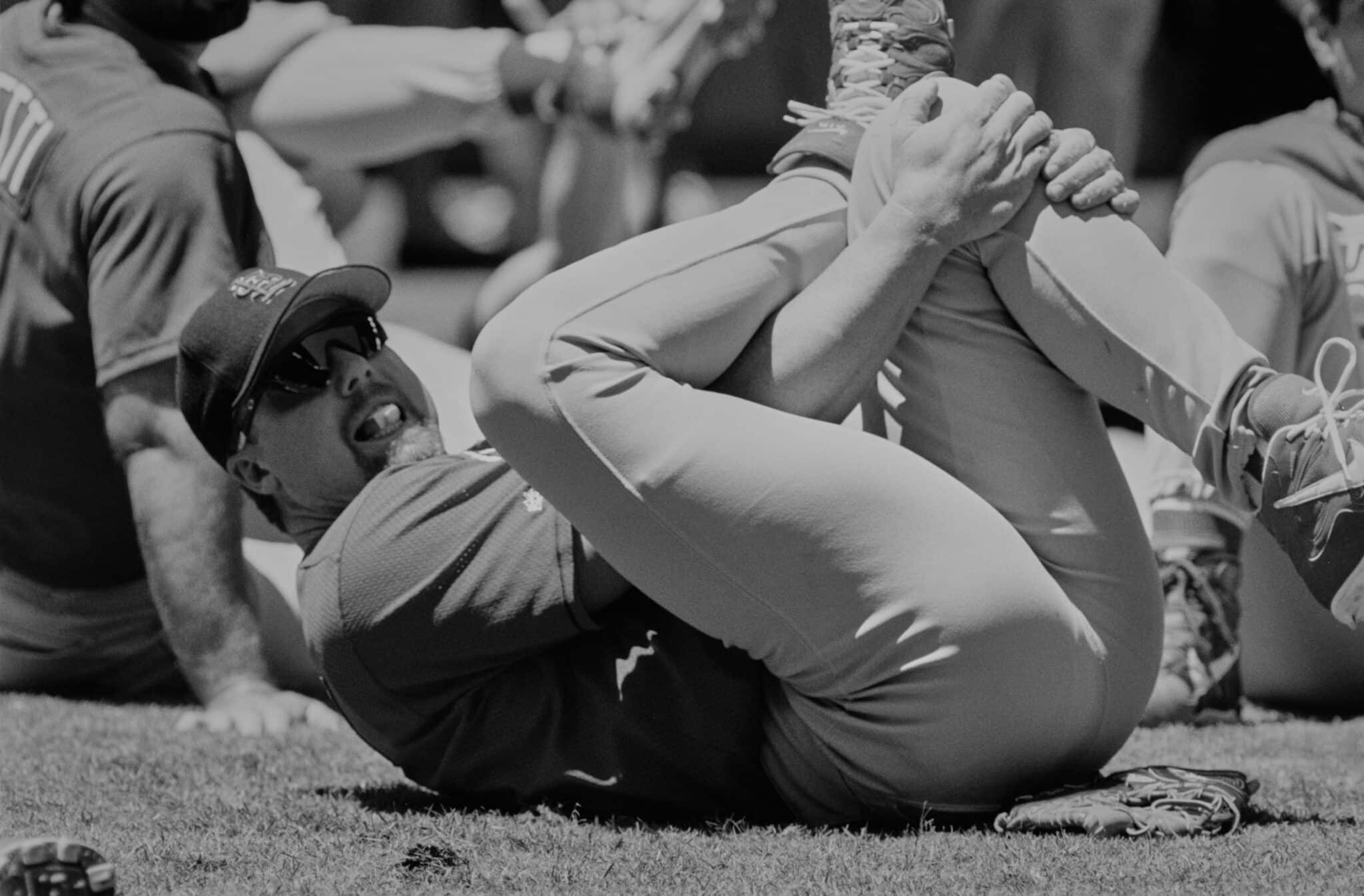
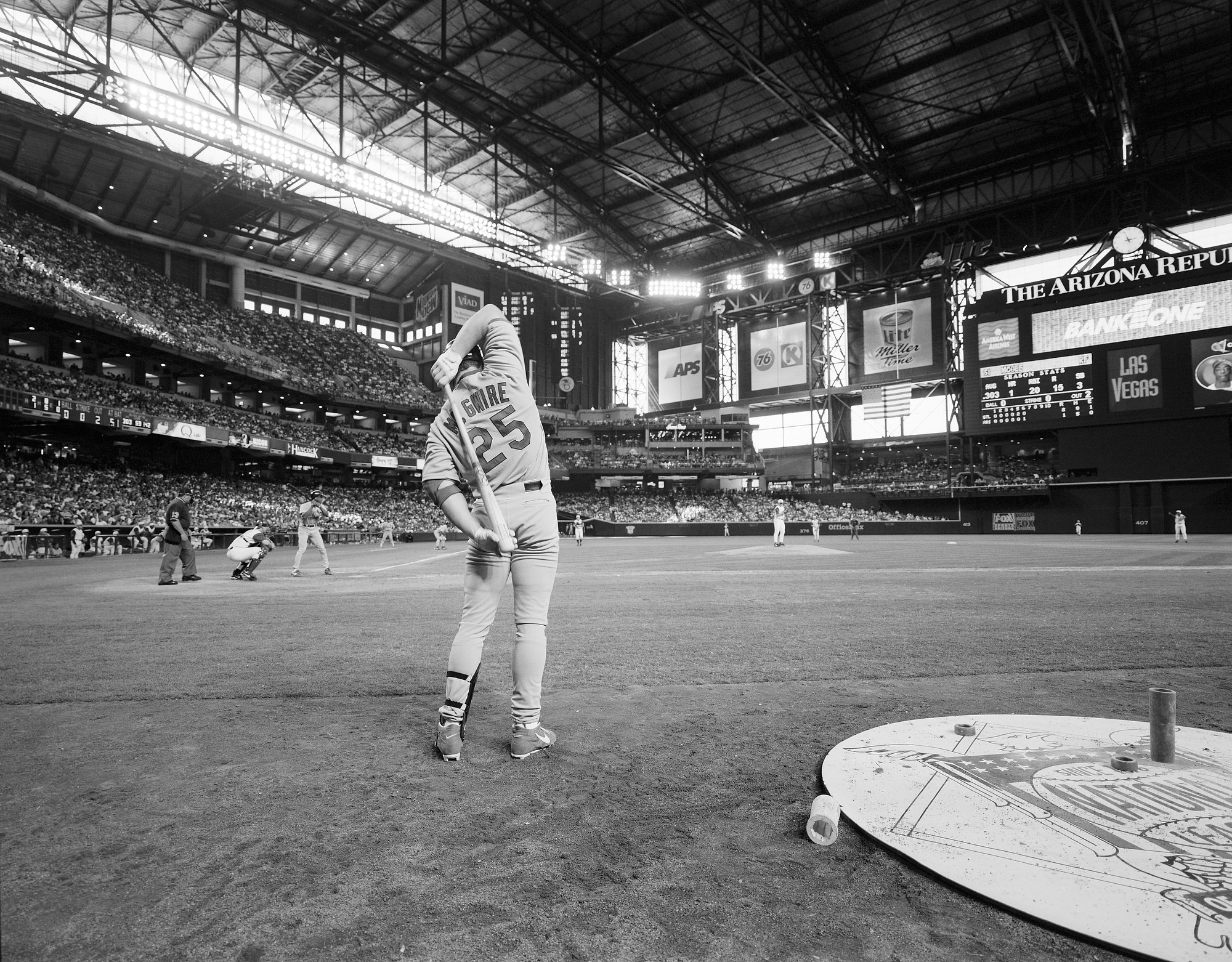
Like clockwork, McGwire did this stretch prior to every time at bat, and I kept hustling from the photo pen to an aisle behind the plate to grab frames, which did not please the hot dog vendors and the “Beer here!” guys. A photog planted on the steps was definitely an impediment to commerce, but then again, aren’t we always? I also actually tried to get the ball team to delay deploying the retractable roof at Chase Field, citing lighting conditions. I was shooting a cover story dammit! I needed good light!
Like McGwire, they weren’t talking.
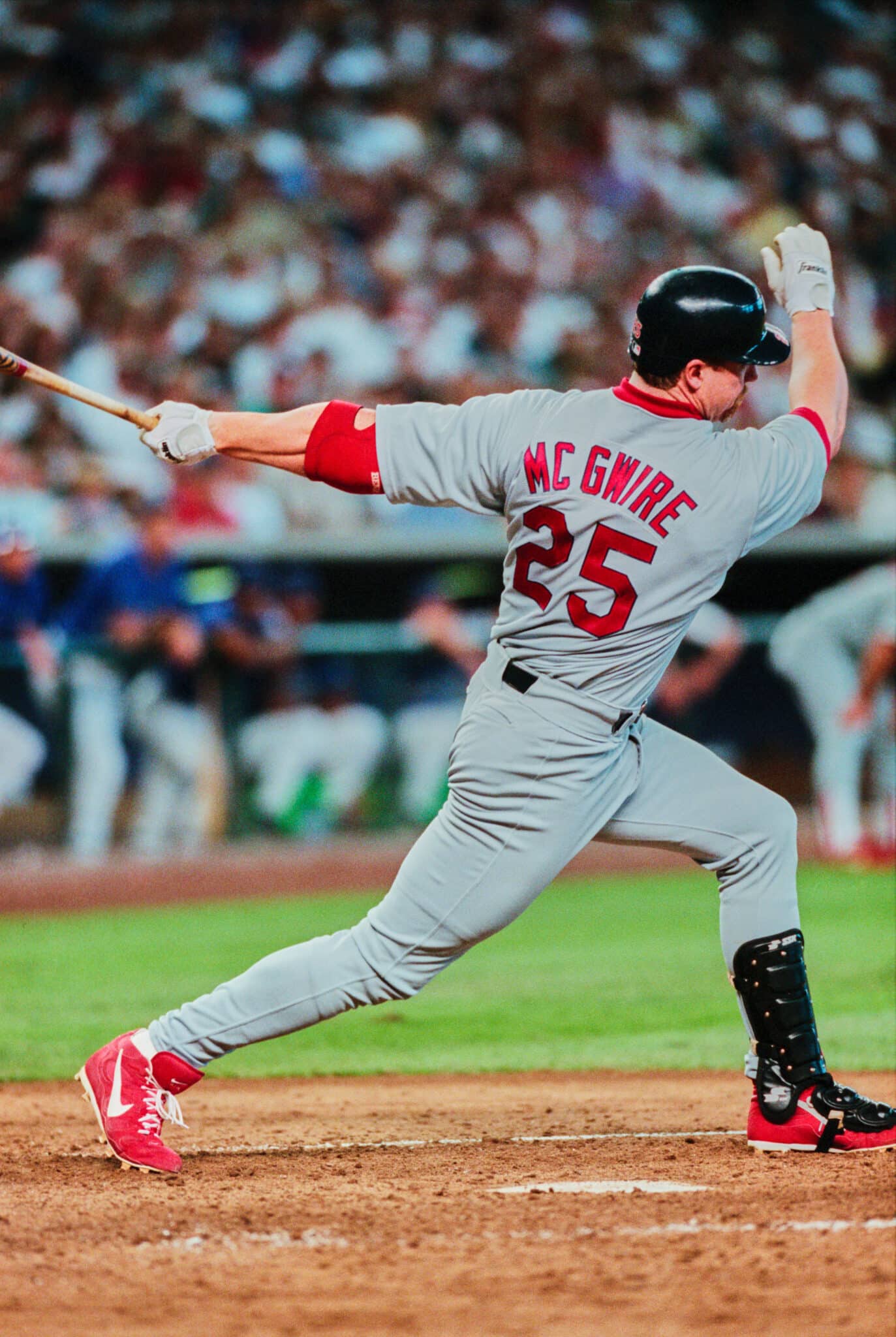
I bounced from B&W to color transparency to color neg as the roof closed and darkness, along with air conditioning, ensued. The mag ultimately ran the whole story in B&W. (Prior to going in the field, I had waxed rhapsodic to the editors about shooting B&W and establishing a historical continuum from the season of Maris, and they gave their blessing.)
And ultimately, it was all a lot of fuss for naught as stories about McGwire’s steroid use eventually came tumbling out. The “perfect home run hitting machine” as described on the Sunday Magazine cover was fueled by more than workouts and a good diet.
But we didn’t know that then, at that moment, in that game. The crack of McGwire’s bat on the ball, the cyclone of his swing, gripped the stadium when he was at the plate. For me, I was nervous all game. Had to shoot every swing, lest it not be a miss, and the ball went screaming for the upper deck. I hustled, feverishly changing out rolls and types of film. Getting near the end of a roll? Okay, switch it out quick ’cause if he goes yard on the next at bat, you want frames in the camera to burn as he rounds the bases, and gets the high fives. I think I worked four cameras. Three motor driven Nikons and a Mamiya 7 with a 43mm wide angle. (Not super practical as 120 rolls only had 12 frames, but super nice to look at.)
I tried everything. After all, it was day rate against space.
More tk…
The post A Cover Story, Without a Word Spoken appeared first on Joe McNally Photography.